Walking across Virginia, Buddhist monks make their way closer to D.C., months after leaving their Texas home,
buoyed by love, tended by strangers at every stop. And somehow that, for me, quells the awful—at least for a bit.
I can’t say how following the journey of men on foot, silently moving in the name of peace helps, but it does. Somehow.
It is in the somehow that I live lately. It is in the somehow where, come to think of it, I have always lived.
Somehow I can rise again, even on another foggy morning in what seems like an endless winter of fog,
and I can feed the huge black kitty in my house who, after I inherited him a year ago, has decided that I am his,
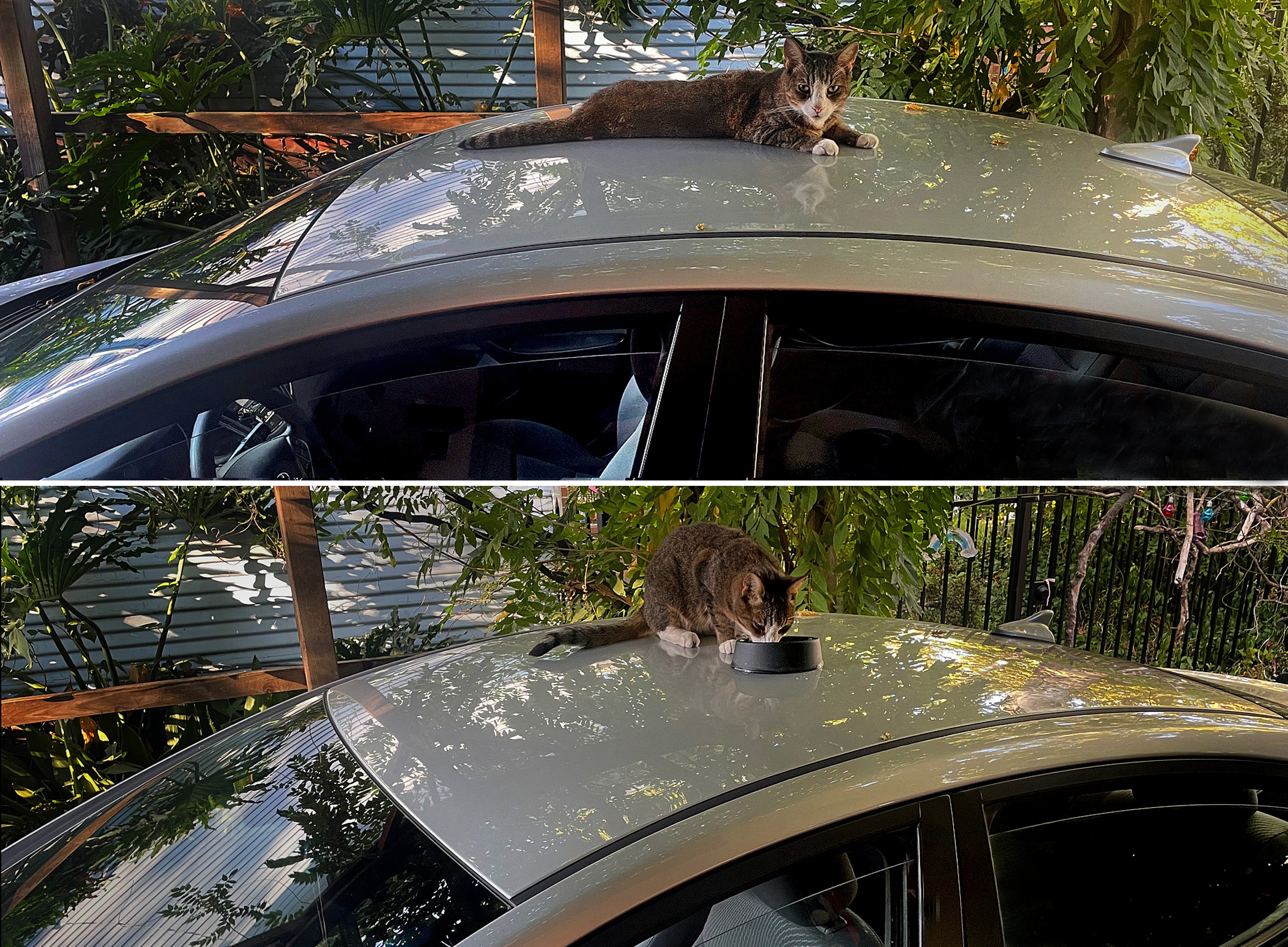
as well as Hercules, the neighbor feline, who appears mornings on my porch, as if he does not get fed at home.
I can relate. “It’s always more fun to eat out, dude,” I tell him as he dives into the pâté du jour.
It’s in the somehow that we do the smallest things for others, and, of course, in that, for ourselves.
Somehow, even on another gray Saturday morning, I can gather up bowls and snacks, as I’ve done
thousands of times. I can unplug the laptop and sheath it in its soft sleeve imprinted with typewriter keys.
I can make copies of the prompt, retrieve keys to the loft, and drive to the place where writers arrive,
where, around a rectangle of long white tables, they spill words onto pages, which do not clatter, but land softly
under pens, under typing fingers. And when I ask, “Who wants to read?” someone always speaks up.
And somehow, in the gentle voices burbling into our thirsty ears, we perk up like cats waiting
to be fed, eager for the kind of sustenance we too often forget that we need.
•••
For the Team Haag writers who gather in the loft and online to write their art out with me. I continue to be grateful for your companionship and the community over many years.
Peace is not something to be found outside; it must be cultivated from within. Even in a divided world, peace is possible—not because the world changes, but because our hearts change. —Venerable Bhikkhu Pannakara, leading the Walk for Peace
•••
We are carrying the heaviest things these days— one among us with a massive old walnut tree threatening her house where a woman and her son with brain cancer live.
One among us having been recently rear-ended, the effects of which are pinging through her body like jolts of electricity—she, too, with a beloved in the late stages of cancer.
All of us staggered by the weight of cruelty and meanness of a corrupt leader and his minions in what we used to think of as our country, the land of the free,
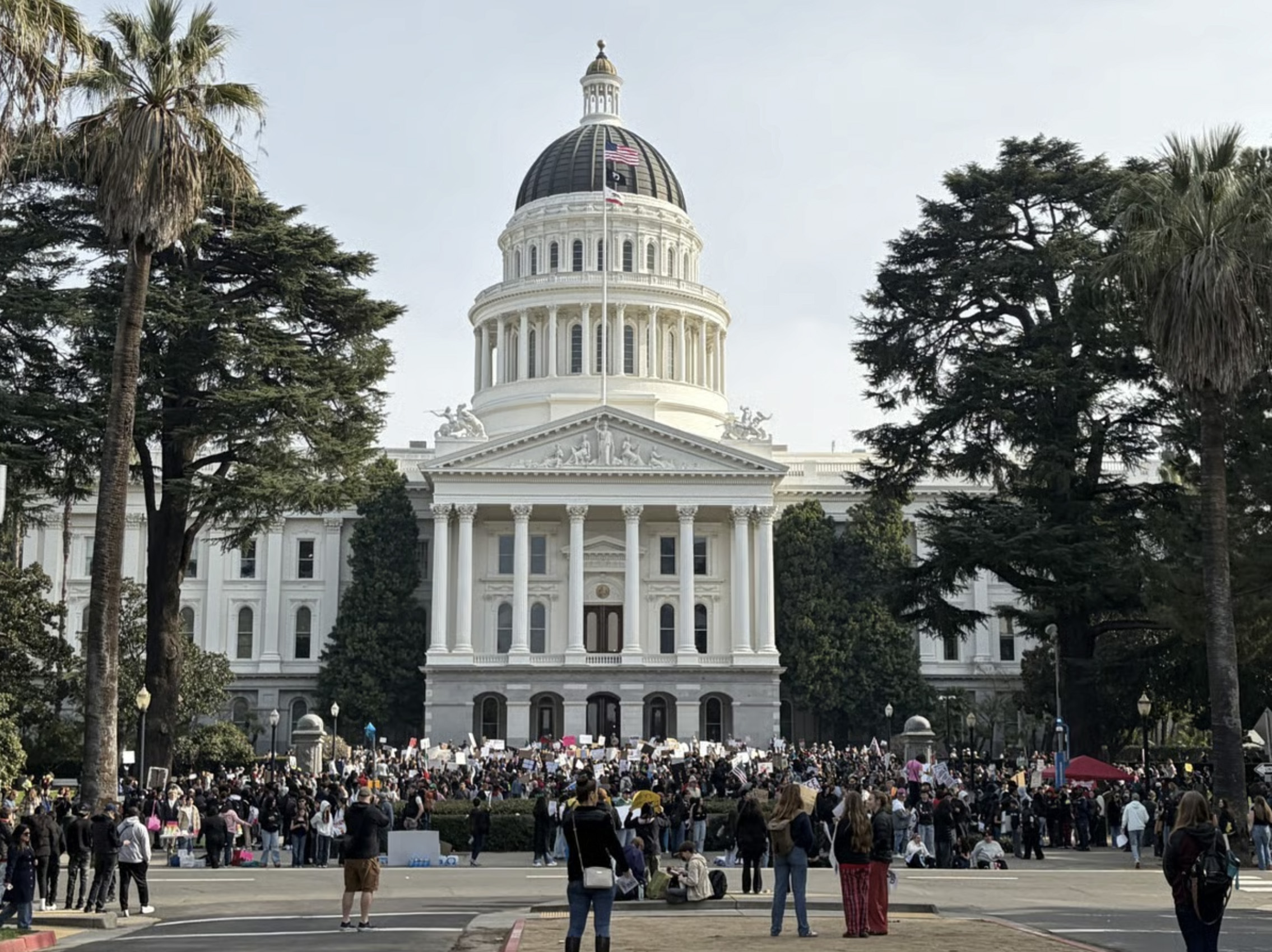
the home of the brave. On our knees, wishing for relief on a day when hundreds of teenagers walked out of school, then miles to the Capitol of our state,
joining so many outraged, so many carrying signs: Wake up, America. We need to relearn empathy. Uncle Sam pointing his bony finger,
saying, I want YOU to defend democracy. We’re ready to defend; we’re saying no. But the walnut tree and the broken car and the aching body require TLC first.
So let us, just for a moment, put down the heavy, rest our arms, take a load off. Let us write, as a Buddhist monk suggests, walking with his brother monks across
America on a 2,300-mile peace pilgrimage: Today will be my peaceful day. Then breathe mindfully, sending kindness and compassion into the world.
It will feel like so little. It may look like nothing. But, the monks would tell you, it is everything to awaken the peace that lives within us all.
Students gather in front of the California state Capitol during a Jan. 30 protest against federal immigration enforcement in Sacramento. The student-led demonstration drew approximately 1,500 participants. (Photo: Greg Micek / CapRadio)
Everything we do, each small act, leaves an impression. Make it one of kindness, empathy, reason and peace. —Janine Vangool, Uppercase magazine
•••
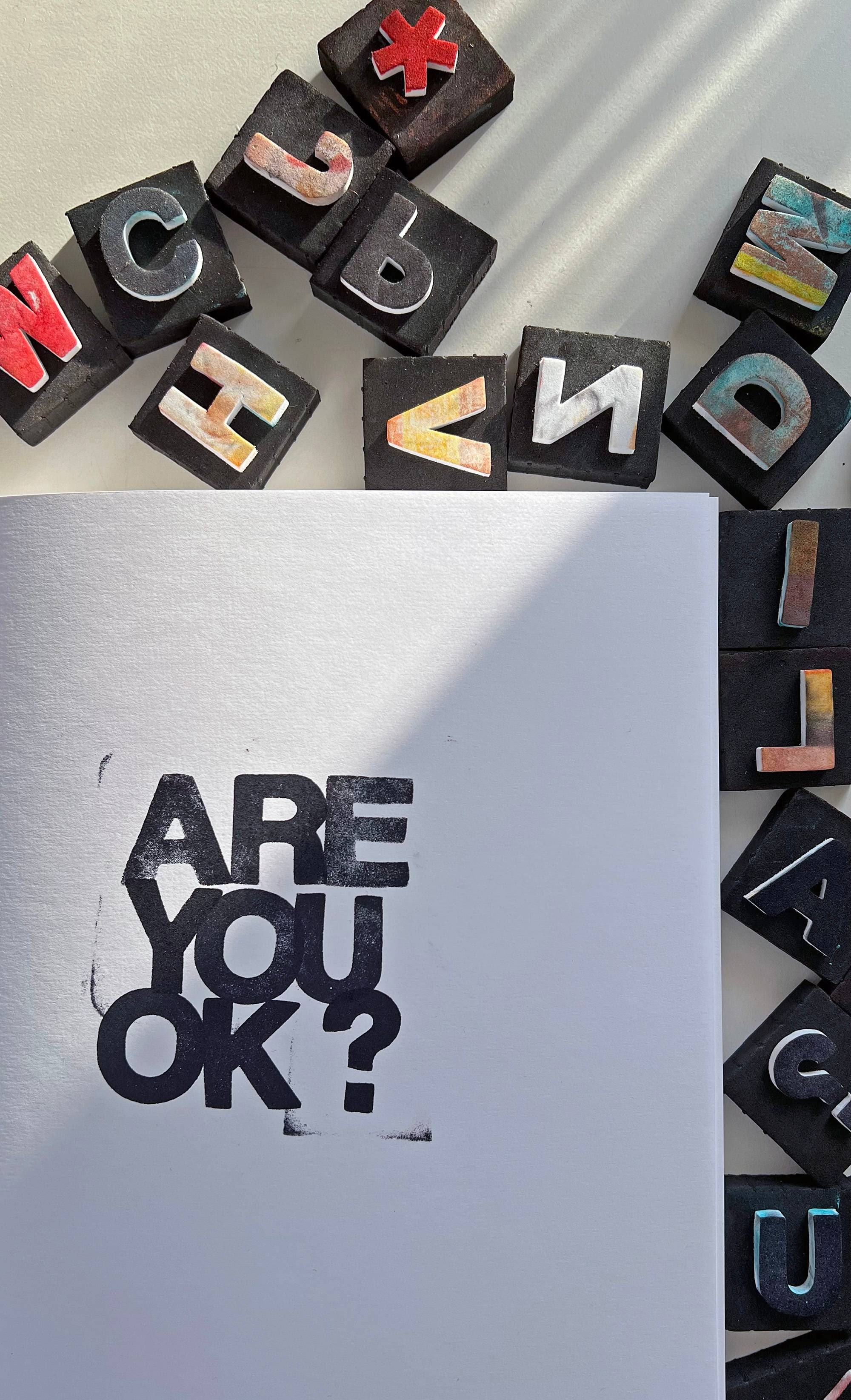
She asks in her weekly online newsletter in big block print letters:
ARE YOU OK?
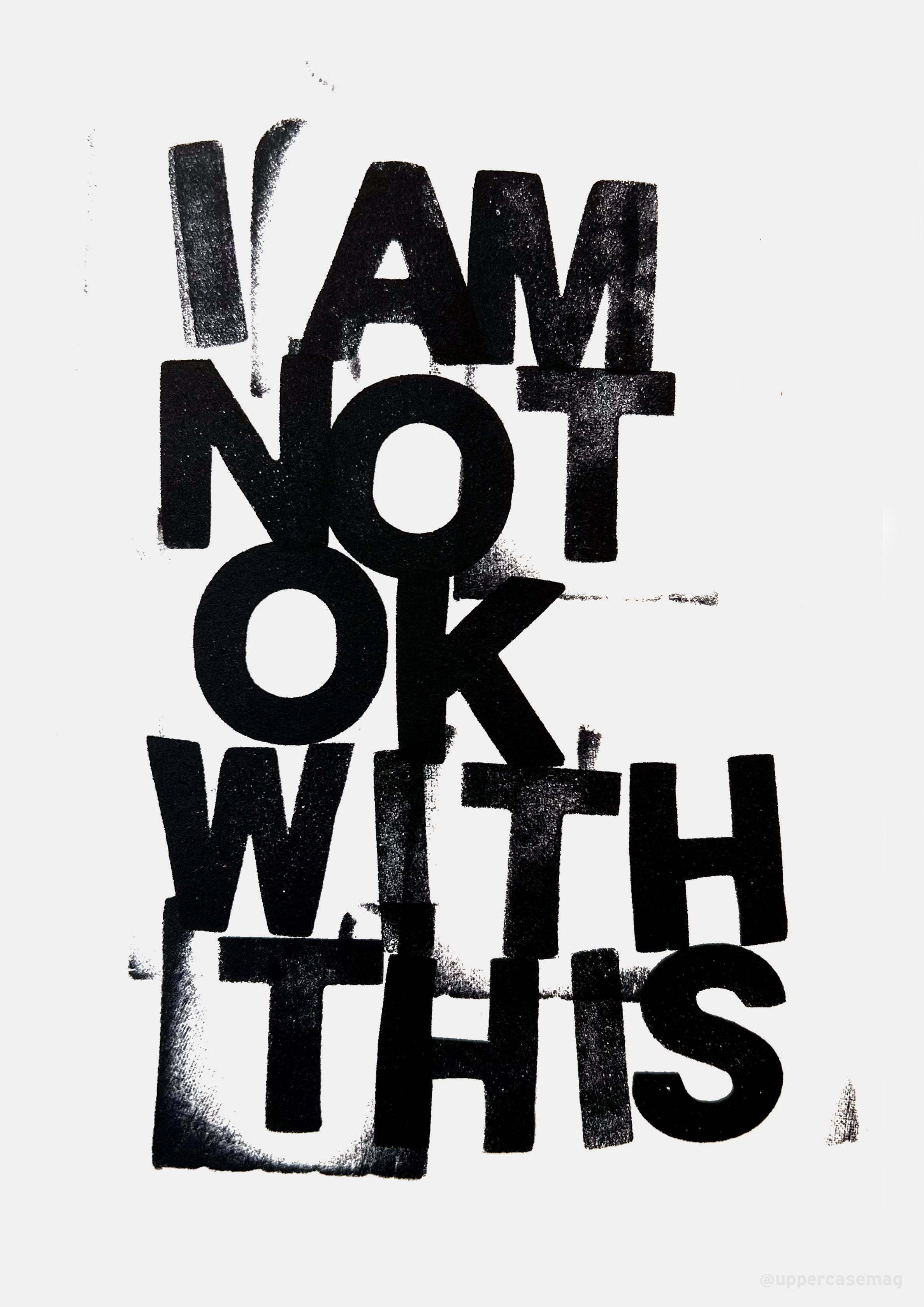
In another photo, she adds,
I AM NOT OK WITH THIS
And who is, really? In these times of unnecessary tumult and meanness.
In this moment when so many are reaching out with kindness,
as if we can counteract the ugly, the awful, with a hand extended,
perhaps offering a flower to someone walking by, as the hippies,
bless them, did in what feels like such a long-ago time.
Peace and love, baby. We’re singing that refrain again, along
with We shall overcome someday… and Give peace a chance.
Not OK at all. But may we, with a series of small, big-hearted acts, leave an
impression—a big or a small one— with all beings everywhere
of kindness, empathy, reason and peace.
•••
In memory of Alex Jeffrey Pretti, whose last words before being killed by ICE agents, were, to an injured woman he was trying to help, “Are you OK?”
And in honor of the venerable monks and Aloka the Peace Dog of the Huong Dao Buddhist Temple, walking 2,300 miles from Fort Worth, Texas, to Washington, D.C., to spread awareness of peace, mindfulness, compassion, loving-kindness and unity.
With gratitude and thanks to all who have helped them on this journey— from their own team to the police and firefighters, volunteer medical and veterinary professionals, and the thousands who have come to feed, see and listen to the venerable monks and Aloka, the peace dog.
With thanks for the inspiration to Janine Vangool, editor and publisher of the beautiful magazine Uppercase, “made with love in Canada,” as her website says, which you can find here.
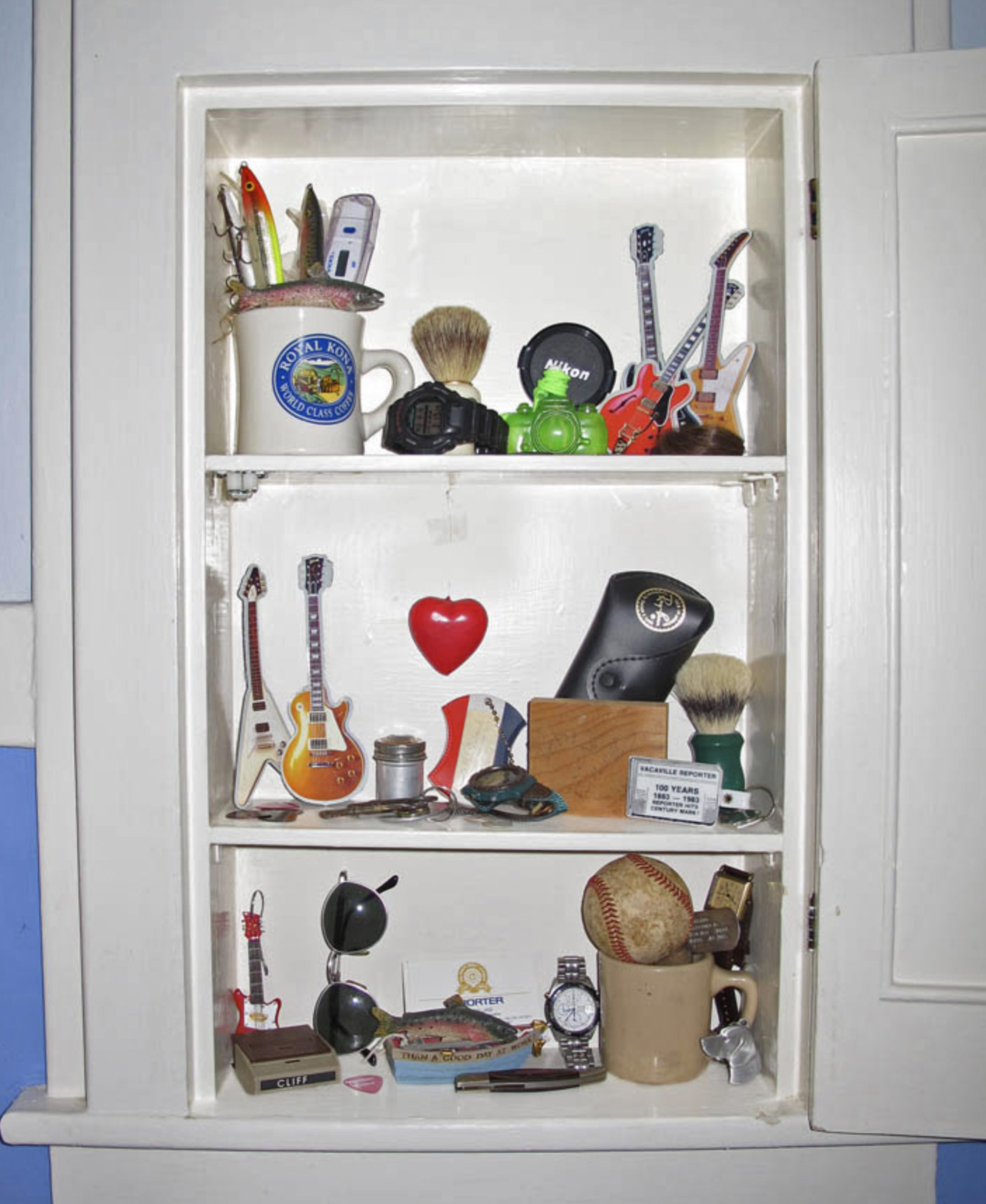
When did I turn it into an altar of sorts? Did I gather the items one by one, or did I collect them for a time before installing them in the mirrored chamber?
It wasn’t that I’d been avoiding his bathroom or the medicine cabinet— they’d been empty for quite a while— but in the time of after I found his baseball on a closet shelf, scuffed and stained, and I palmed it, wondering where the mitt he’d bought me had gotten to.
And I looked up and saw him in the then, tall and grinning in the backyard, teaching me to properly throw and catch the summer we moved into the house, as we began to make it ours.
In the after the baseball went to live in what had been his medicine cabinet, with some of his last guitar picks and magnets of electric guitars. I added his favorite watch, a single dogtag, two pairs of sunglasses, a small metal film can with bits of his ashy self, along with a square hunk of pine wearing his scrawl in fat woodshop pencil:
toots first cut love cliff
Parachuting into the then, I hear the whine of the new table saw in our garage just outside the back door, a portent of furniture to come.
Lately I open the medicine cabinet door, when I need a hit of him—on anniversaries, his birthday—to palm the baseball, finger the guitar picks and magnets, peer through the sunglasses. I pick up the wood block and the film can that rattles like a tiny maraca when I shake it, along with four fishing lures in the shapes, if not the actual colors, of slender fish.
And I lift his last coffee cup, hold it as he used to, imagine it falling to his lap after the final breath, then put it back in its spot on the shelf, feeling his smile, then close the cabinet door with a small pat of a grateful hand.
•••
In memory of Clifford Ernest Polland (1952–2001)… for no particular reason… just because I opened the medicine cabinet.
Because when kindness stands firm, the world softens—and hope quietly grows. —the Venerable Buddhist monks from the Huong Dao Buddhist Temple in Fort Worth, Texas
•••
The day after a nurse is murdered in Minneapolis, eighteen days after a poet is murdered in Minneapolis,
peace keeps walking through snowy North Carolina with nineteen venerable Buddhist monks making
their way on foot from Texas to Washington, D.C. Not protesting or carrying signs, but in the company
of a four-footed one named Aloka, the peace dog. Every day a beginning, every step a new step
in this land of the free, home of the brave, though many of these monks walked for years
through the forests of India, Thailand and other countries. Walking with blisters and
sore feet, eating only what is offered to them, overnighting in warm places offered to them,
tying yarn around wrists of well-wishers with prayers of peace for so many who have waited
in the cold to see them, asking only that we keep peace within ourselves, perhaps writing daily,
Today will be my peaceful day. And they rise and walk, no matter the conditions, as so many
here have walked and marched, are walking, are walking now and marching,
remembering that peace lives in all of us, that step by step, breath by breath,
peace continues to move forward, a movement of the heart,
peace keeps walking.
•••
In memory of Alex Jeffrey Pretti and Renée Nicole Good.
And in honor of the venerable monks and Aloka the Peace Dog of the Huong Dao Buddhist Temple, walking 2,300 miles from Fort Worth, Texas, to Washington, D.C., to spread awareness of peace, mindfulness, compassion, loving-kindness and unity. They are expected to arrive in Washington, D.C., around Feb. 11.
You can see photos of previous days and follow their journey here.
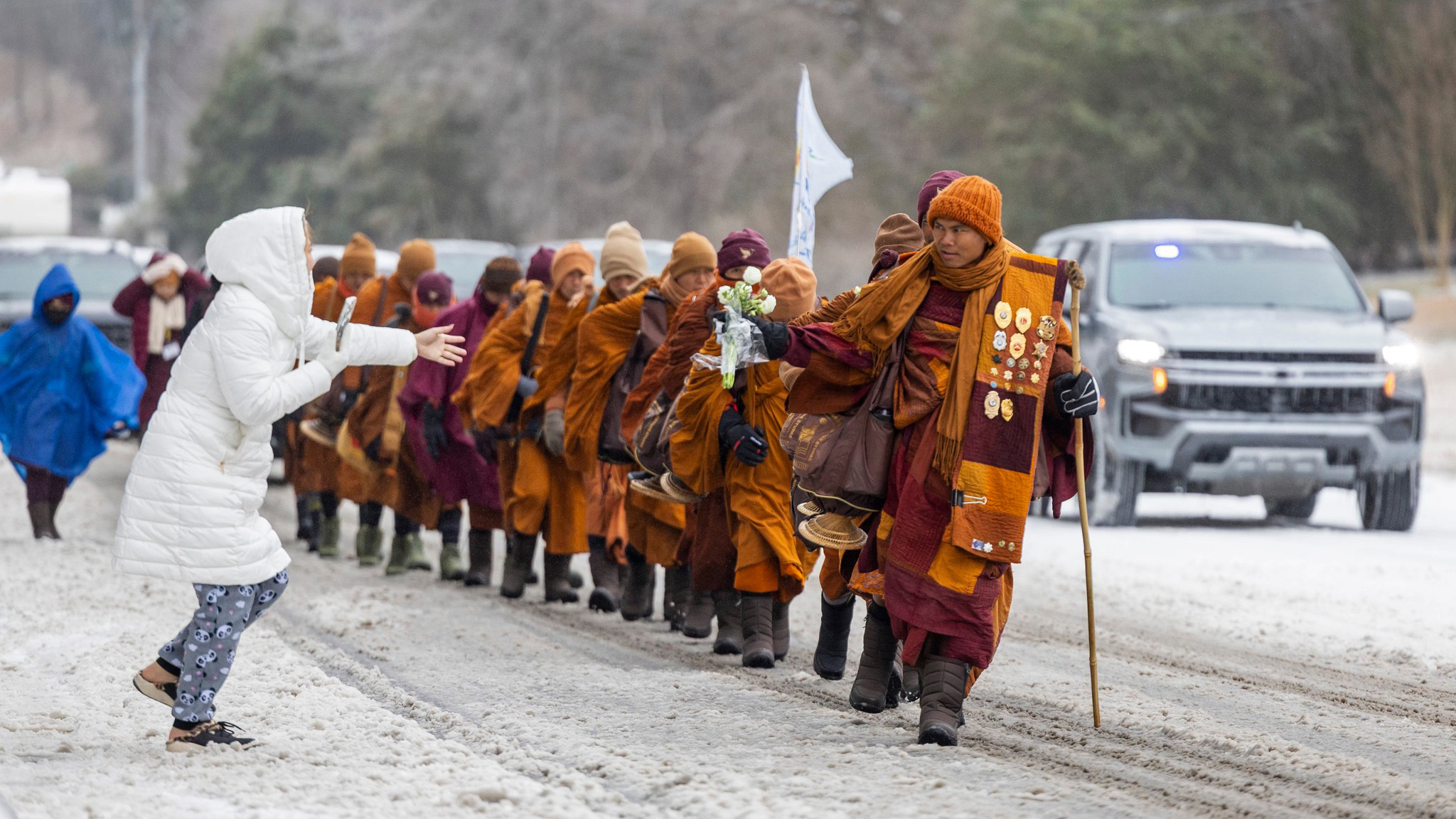
Despite winter weather conditions, a procession of Buddhist monks walks Sunday, Jan. 25, 2026, in Raleigh, NC. The monks are making a 2,300-mile pilgrimage from Texas to Washington, D.C., as part of the Walk for Peace, an effort to promote peace, compassion and national unity. (Photo: Travis Long / The News & Observer)
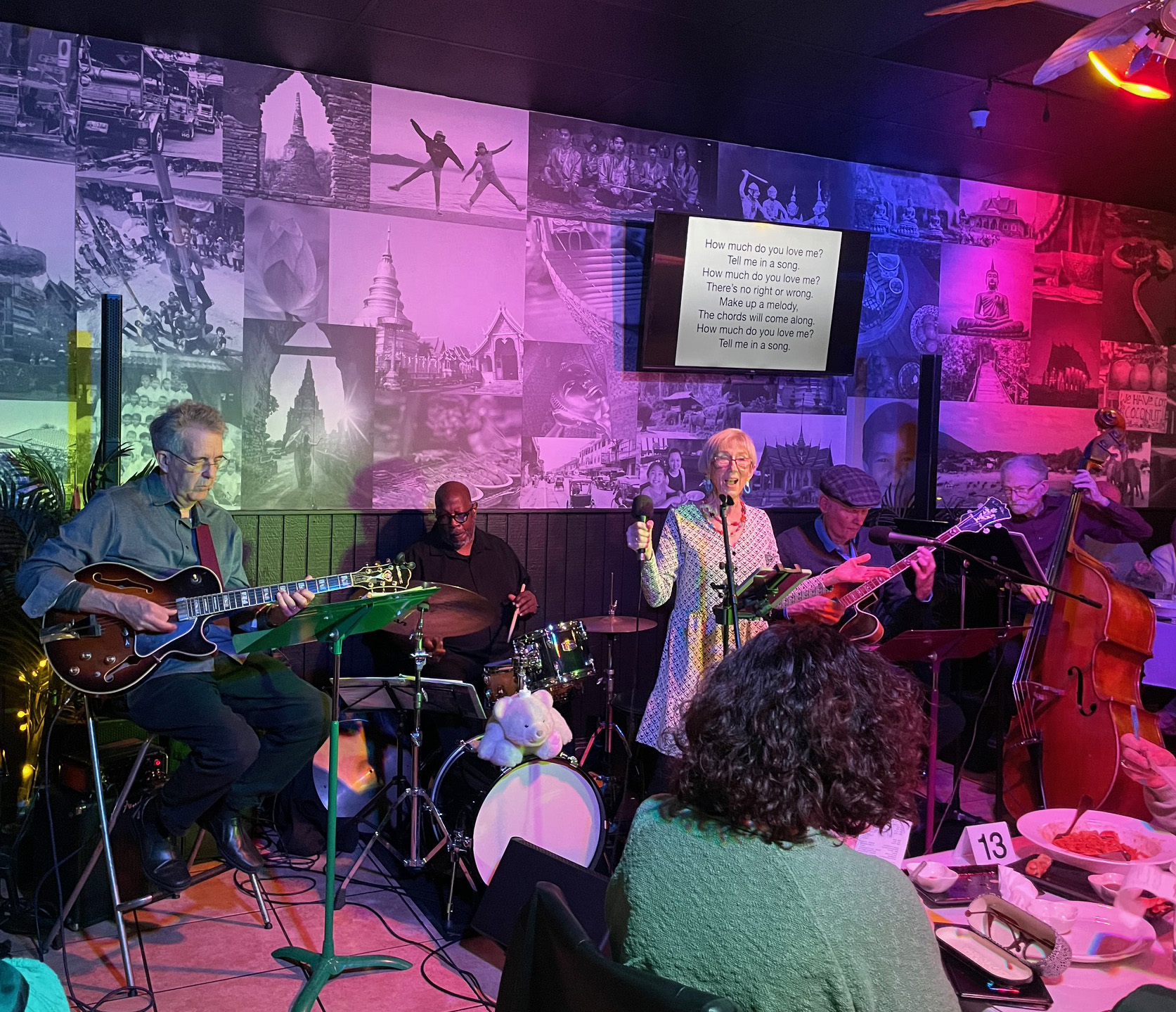
And there in the first moment that Shelley sings on her birthday,
her adoring fans and friends remember (as if we’ve forgotten)
one reason of many why we love her her voice plucking our heartstrings:
It only takes a moment to be loved a whole life long…
It’s in the music, a two-way street, the vibrant jazz singer sending
her love into the world with every note.
How much do you love me? Tell me in a song…
She does, and singing along with her, we do, too.
•••
Happy birthday, dear Shelley!
With thanks and appreciation to Shelley Burns and Avalon Swing for another great show at Twin Lotus Thai in Sacramentoof classic jazz by oh-so-classy musicians!
Avalon Swing (from left)—Tom Phillips (guitar), Jeff Minnieweather (drums), Shelley Burns (vocals), Bill Dendle (guitar) and Shelley Denny (bass). (Photo / Jan Haag)
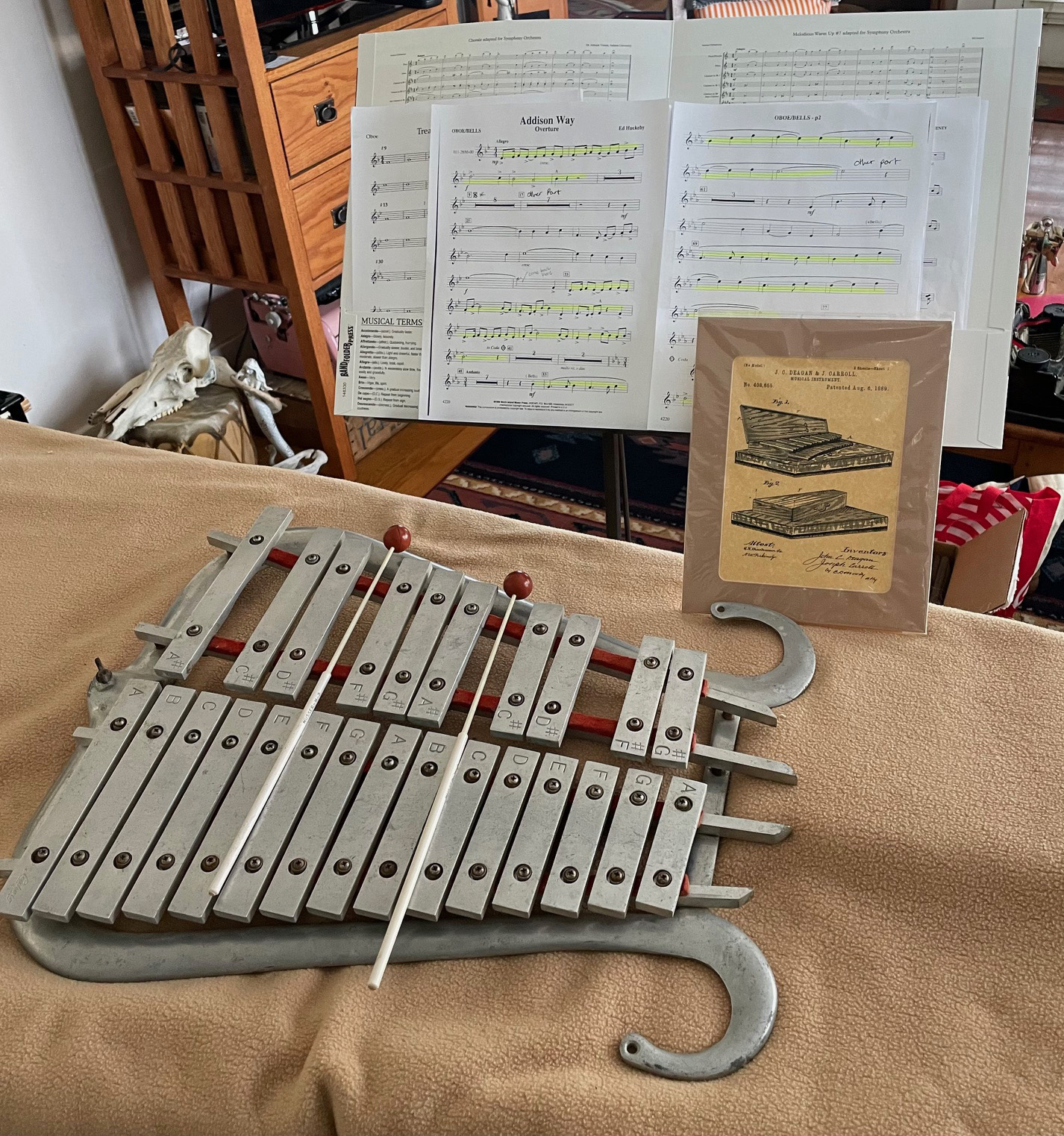
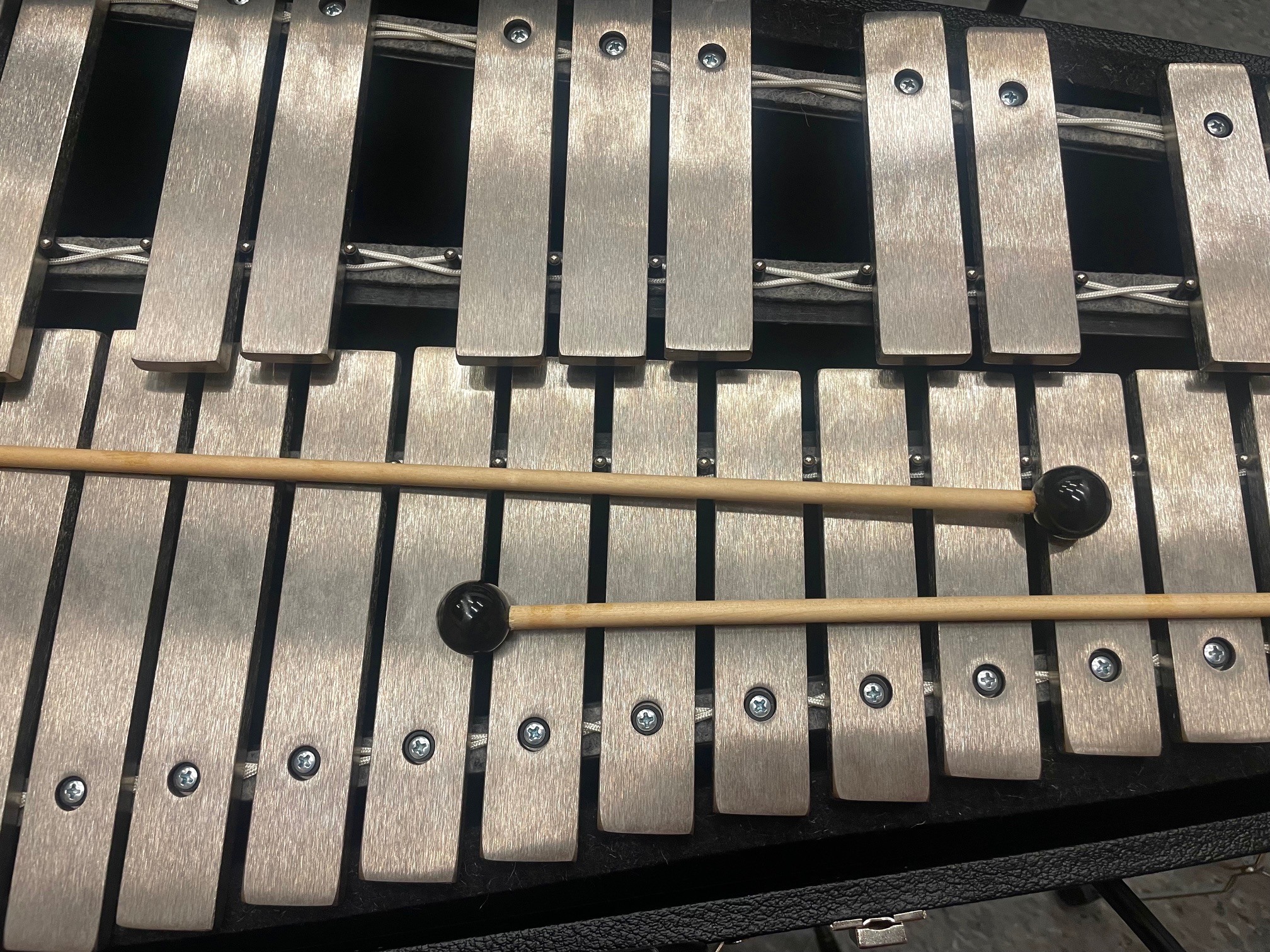
What body memory kicked in the first night back in band that had me automatically flip the hard mallets to their nearly silent plastic ends to practice the bells part?
I peered at the music on the stand before me and gently tapped the silver glockenspiel keys laid out like a small gleaming piano keyboard, learning which notes go where when.
It was not a difficult part, but it’s been a minute, as the kids say (or used to say?), and my fumbling hands did not hit the right notes in the right rhythms for most of the first practice, getting lost in the music more than once.
Yet, standing at the back of this small symphonic wind ensemble in a new-to-me band room and director, I felt a frisson tingle my spine, a sweet hit of dopamine that I remember from long ago as the low brass warmed up, as the tremble of tympani opened a familiar spot below my ribcage.
And, doing the breathing exercises along with everyone flowing air through their horns, I remembered the advice of my long-ago percussion teacher—
that we in the back of the band making music by striking instruments need to breathe with everyone else so as to be on the same page, even when a little lost, trusting that, with practice, I will catch up just fine.
•••
For Dr. Molly Redfield and the Folsom Lake College Symphonic Wind Ensemble with my thanks for including me in the band,
to the music teachers who, among others, first shaped this girl drummer a half century ago: Tom Blackburn, Tim Peterman and Stan Lunetta,
and to my cousin, Dee Dietz Hann, the first girl percussionist I knew, who inspired me to pick up mallet instruments, as she did so very well.



 Güd wrtr