

(In memory of Ed Kato, artist of Kalaupapa,
on this day of thanksgiving)
There, on a peninsula of great suffering,
nearly a hundred years after thousands
were banished to die, an artist picked
up his paintbrush again and again
to record in oils what he saw around him,
on canvas, on the Welcome to Kalaupapa
sign and dozens of others—not least
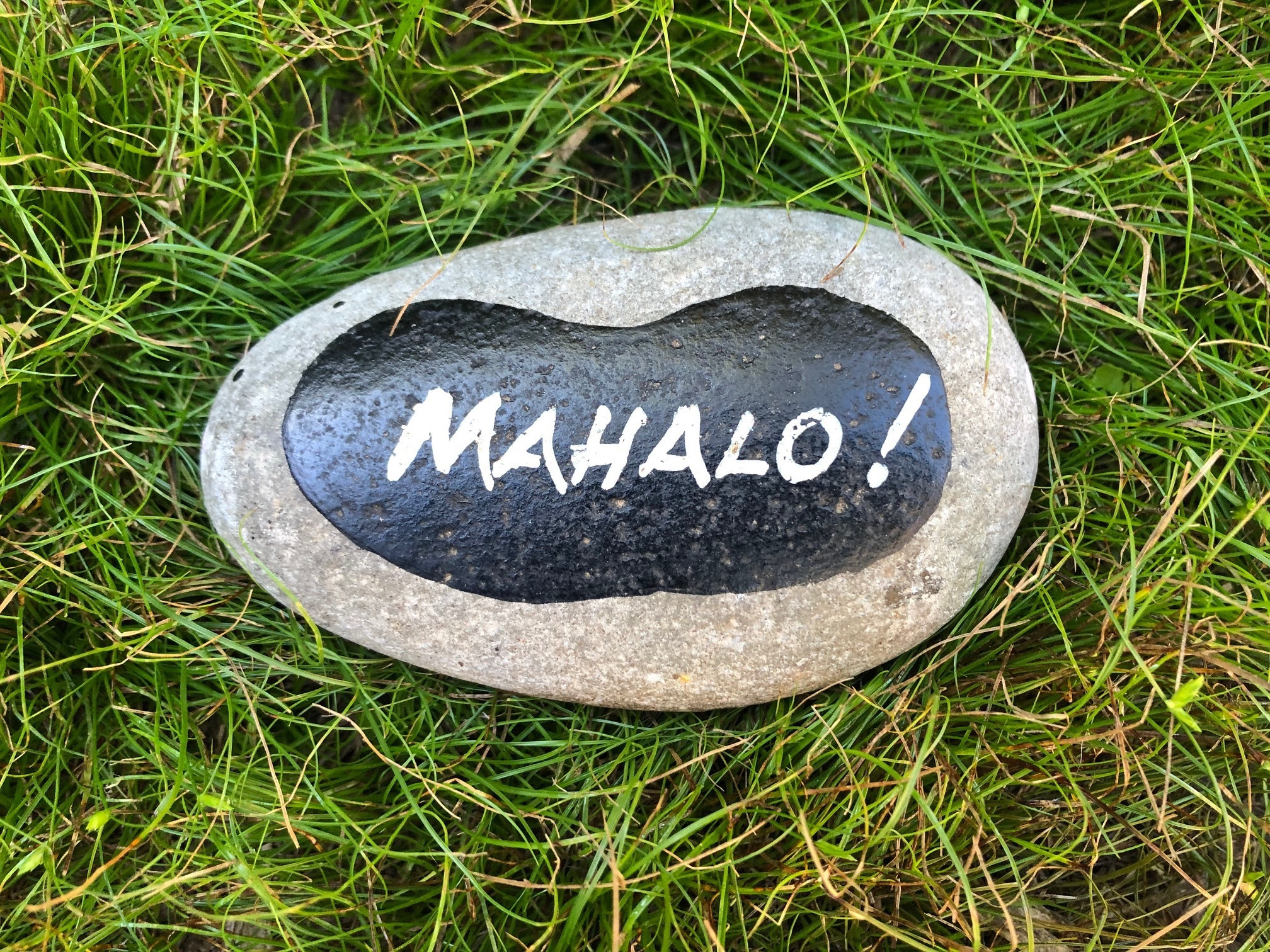
on rocks he left around the settlement.
Smile—it no broke your face, reads one
next to a grinning countenance.
At the grave of the nun who later became
a saint: Peace to all who enter here.
And the simplest of all, from a man
branded a leper, who thrived and loved,
who lived and died with a grateful
heart: Mahalo.
•••
Dick and I have been fortunate to make several trips over the years as volunteers through the Sierra Club to the Kalaupapa peninsula on Moloka’i. Dick first hiked down to Kalaupapa on a Sierra Club outing in 1970, not long after the site was opened for tours to a limited number of visitors. We continue to be moved by the stories of the more than 8,000 people forced to live and die there in isolation because they were afflicted with Hansen’s Disease, commonly known as leprosy.
The first patients were sent there in 1866. With new drug therapies developed in the 1940s, there was no need for further isolation, but it wasn’t until 1969 that the century-old laws of forced quarantine were abolished.
Many former patients continued to live the rest of their lives at Kalaupapa, though, one of the most beautiful places in Hawaii, honoring the legacy of their kupuna (ancestors) and many who served there, including Father Damien De Veuster and Mother Marianne Cope, who have been venerated as saints in the Catholic church.
Today Kalaupapa is a National Historic Park, but visitors are allowed only on a limited basis. No tours are currently available as they have been in the past.
However, Ka ‘Ohana O Kalaupapa is a nonprofit group that promotes the value and dignity of every individual who was taken from their family and forcibly isolated on the peninsula known as Kalaupapa on Moloka’i, Hawaii, due to government policies regarding leprosy (now also called Hansen’s disease).
Ka ‘Ohana has produced an array of educational materials and exhibits, helped more than 900 descendants learn more about their Kalaupapa ancestors, created a virtual concert, “The Music of Kalaupapa,” and worked with the state Legislature to designate January annually as Kalaupapa Month.
Their biggest project is The Kalaupapa Memorial, which will display the names of everyone who was admitted to Kalaupapa. Ka ‘Ohana deeply appreciates those who would like to support their efforts to honor the people of Kalaupapa and to perpetuate their lives and legacies. You can learn more about the group and, if you’re so moved, make a donation to Ka ‘Ohana O Kalaupapa here.


 Güd wrtr
Thanks Jan, th