
noun:
1. The condition or quality of being complete or whole.
•••
On my knees on the soft garden mat,
bare hands telescoping into cold earth—
because it’s spring, allegedly—
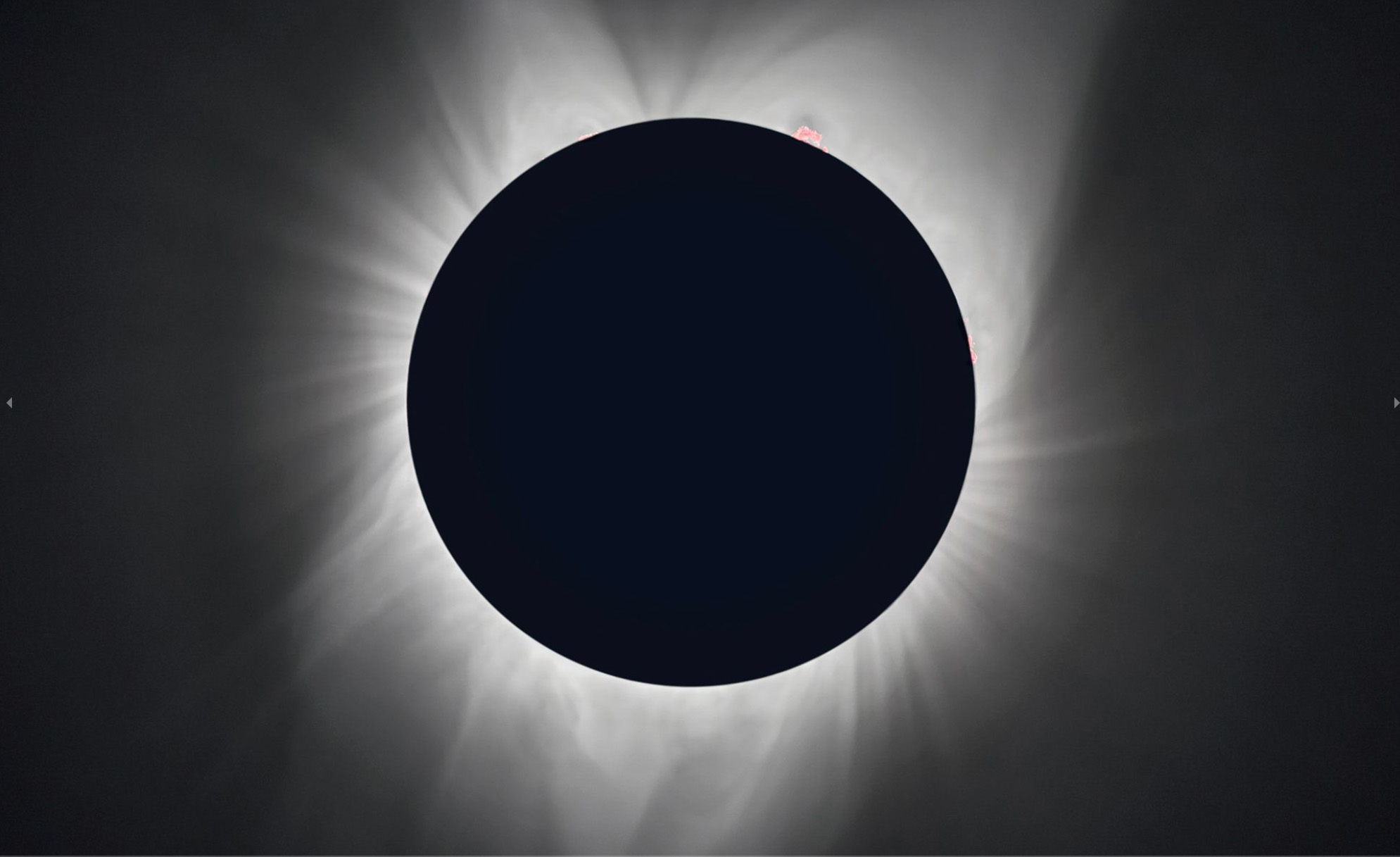
I think about the total solar eclipse that
I will not see, far as I am from the path
of totality. What a wondrous coincidence,
I read, that a 2,100-mile-wide ball of rock
240,000 miles away appears to cover
an 870,000-mile-wide ball of gas
over 90 million miles away. If the sun
were a bit bigger or closer, or if the moon
were a bit smaller or farther,
totality would not occur. Up to
my knuckles in freshly turned soil,
it strikes me that I’m as
complete and whole—a humble bit
of terrestrial humanity—as I’ll ever
be, whether or not I stand in awe
and watch the heavens as an
obscuring rocky body briefly
blocks the ball of gas that
is our nearest star, haloing
the shadow of moon, then
moving on in its reliable
trajectory—looking up,
as we earthlings love to do,
at what we think of as sky.
•••
Quotation in italics and statistics from an opinion piece in the Washington Post by Sabine Stanley, professor of earth science at Johns Hopkins University and author of “What’s Hidden Inside Planets?”


 Güd wrtr