
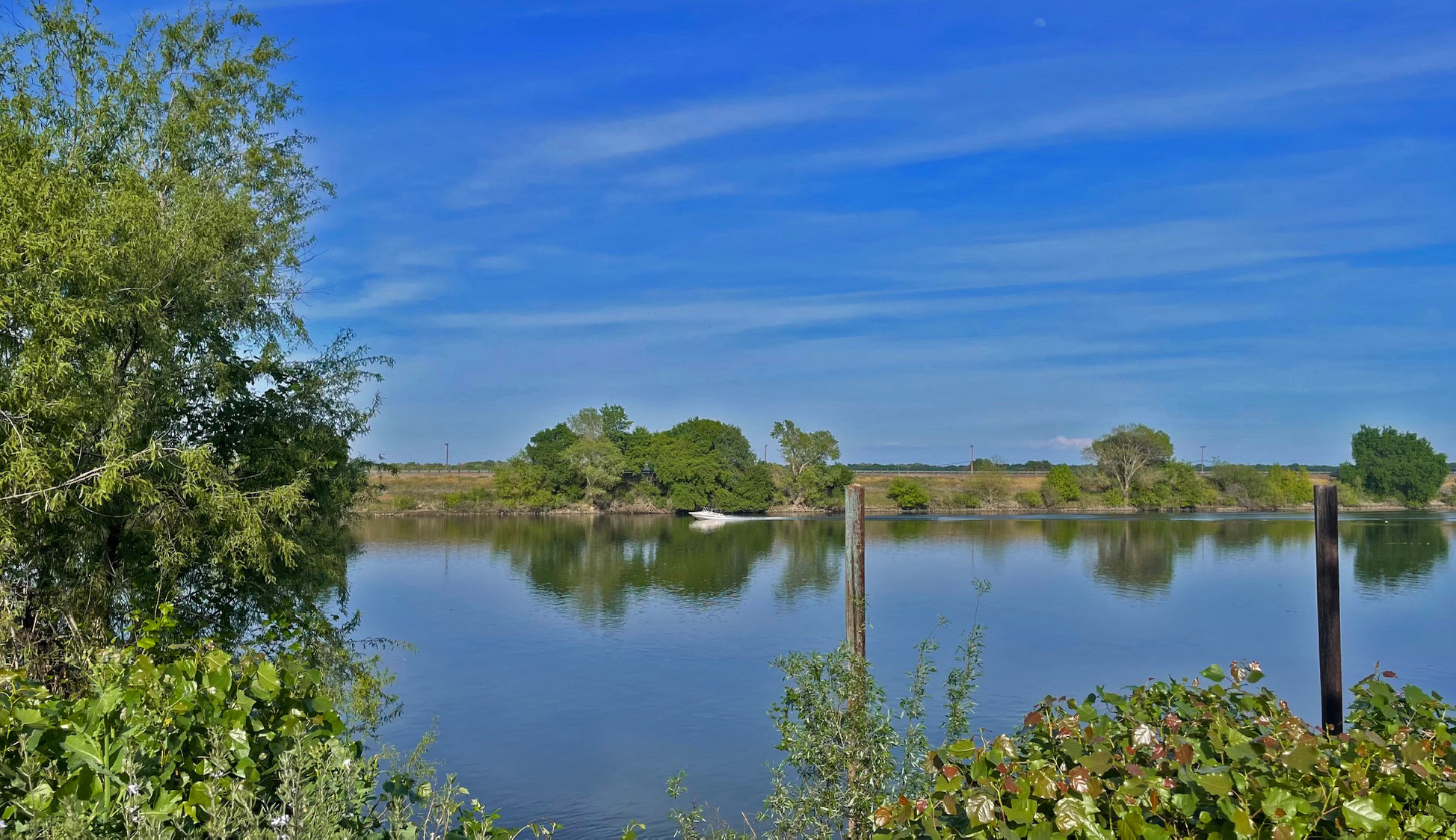
After a mid-afternoon linner
at a spot down the river road that
feels as if we’re miles away from
our city,
we cross the Freeport Bridge
to another county and head
south for some miles, the river
to the port side
on a spring Saturday that feels
out of time. It could be any time,
any year, the timelessness of
the river
meandering, as it so reliably does,
through the Delta, bound for the sea.
We have no place to be, no particular
place to go
when I pull off and stop so we can
stand in late afternoon sunshine
and watch a single boat motor north,
listen to birds,
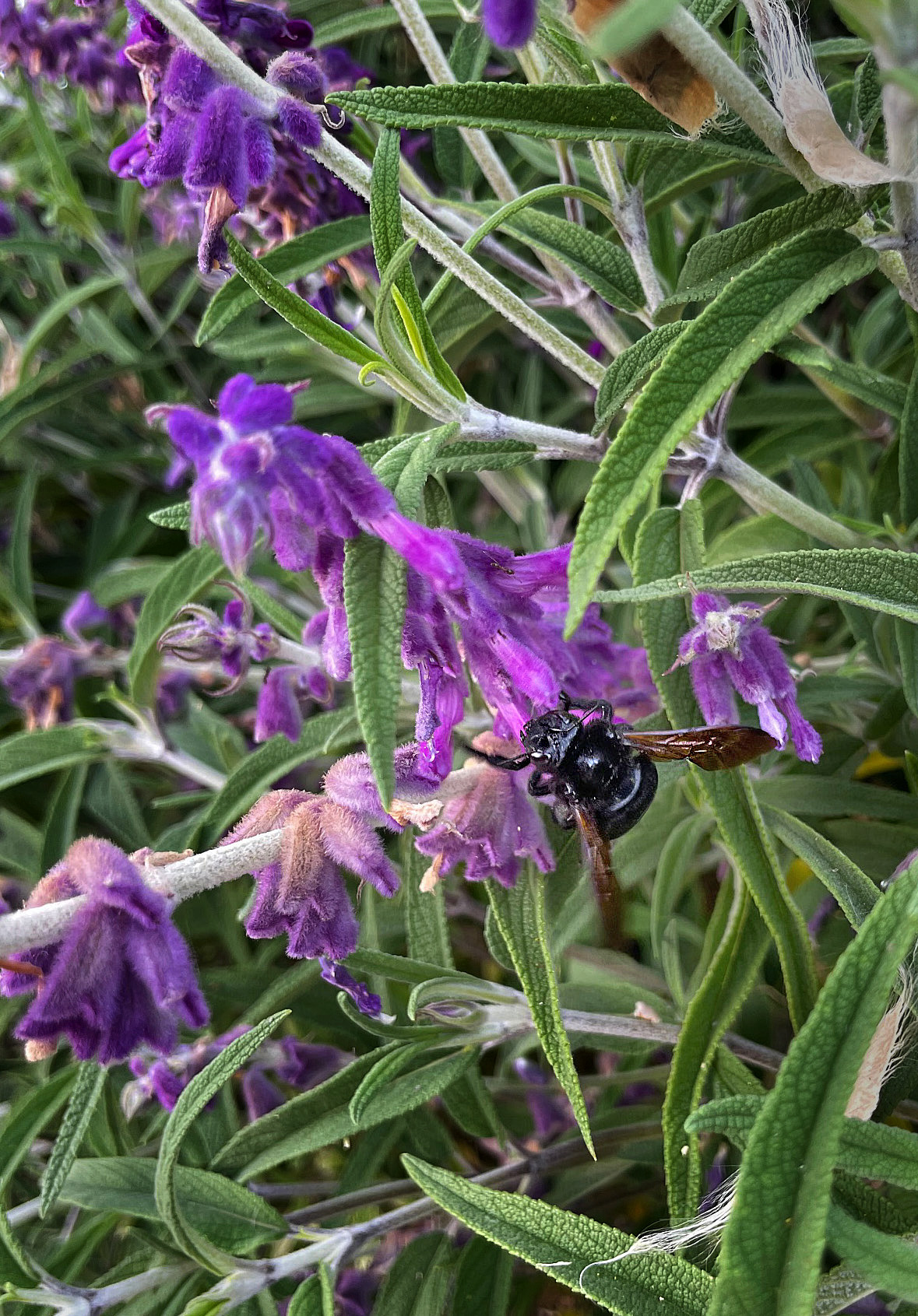
spy on fuzzy black bees helicoptering
around long stands of purple vetch,
dipping in for sips of pollen. How
blessedly lazy.
How pleasant. How ordinary this
purposeful pause as we sit on a bench
with each other and our memories,
watching the river run.


 Güd wrtr
In spring and summer, vetch vines will cover my five-acre riverbottom pasture so densely that it creates an enormous, ropy, tough, purple carpet at about knee depth. That many flowers also smells heavenly. The plant’s seeds, originating from a number of different varieties, were brought over to this country in the 18th and 19th centuries by European settlers (such as the ones who farmed this land starting in 1860), who planted it between crop rows for weed control. I can testify that it works because nothing will grow where vetch covers the ground.
These clever husbandmen and women also knew that planting vetch meant they did not need to add fertilizer. What scientists now understand is that since vetch is a legume, it fixes nitrogen in the soil, standing in nicely for manure–creating a much more pleasant parfumerie! It also kept unwanted animals and livestock away from their food crops because vetch contains high concentrations of toxic amino acids, making its green parts bitter and unsuitable as forage.