Flippering into the sea, bounced around by waves more than I like, always a beginner every time
I hit salt water, fogging the mask, trying to clear the snorkel, liquid reminders that I am a
visitor in this world. When I finally feel my shoulders relax and fin gently, no matter
how strong the surf, my breathing evens out, and the convict tang darting below me
seem to linger a bit, the shy humuhumu not zipping away as fast. And when a great
domed shadow appears, flying slowly through her realm, I hang suspended, think,
aloha, honu, grateful for a visitation from this long-lived sea goddess. Then
I don’t mind the surf nudging my floating tourist self landward, where I will stumble
as I find my footing, sink into soft sand as the tide pulls out and I wobble,
subject to gravity and air, merely human again.
•••
convict tang: a tropical surgeonfish with a creamy/silver body and black vertical stripes
humuhumunuknukuapua’a: Hawaiian triggerfish, the state fish, with a blue upper lip and a black chevron down its sides; name checked in the song, “My Little Grass Shack in Kealakekua, Hawaii.”
(In memory of Ed Kato, artist of Kalaupapa, on this day of thanksgiving)
There, on a peninsula of great suffering, nearly a hundred years after thousands
were banished to die, an artist picked up his paintbrush again and again
to record in oils what he saw around him, on canvas, on the Welcome to Kalaupapa
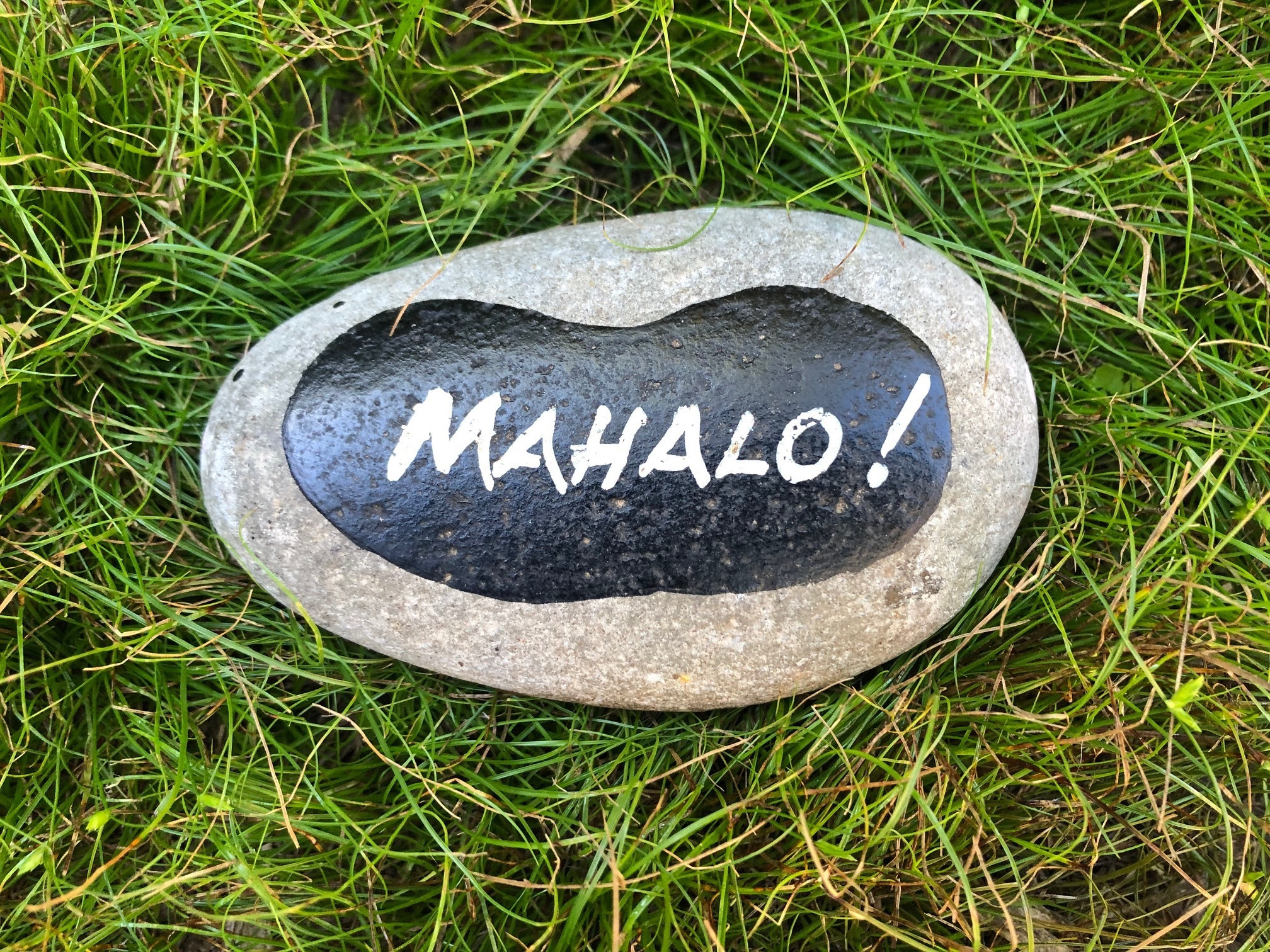
sign and dozens of others—not least on rocks he left around the settlement.
Smile—it no broke your face, reads one next to a grinning countenance.
At the grave of the nun who later became a saint: Peace to all who enter here.
And the simplest of all, from a man branded a leper, who thrived and loved,
who lived and died with a grateful heart: Mahalo.
Photo courtesy of Valerie Monson, Ka Ohana O Kalaupapa
•••
Dick and I have been fortunate to make several trips over the years as volunteers through the Sierra Club to the Kalaupapa peninsula on Moloka’i. Dick first hiked down to Kalaupapa on a Sierra Club outing in 1970, not long after the site was opened for tours to a limited number of visitors. We continue to be moved by the stories of the more than 8,000 people forced to live and die there in isolation because they were afflicted with Hansen’s Disease, commonly known as leprosy.
The first patients were sent there in 1866. With new drug therapies developed in the 1940s, there was no need for further isolation, but it wasn’t until 1969 that the century-old laws of forced quarantine were abolished.
Many former patients continued to live the rest of their lives at Kalaupapa, though, one of the most beautiful places in Hawaii, honoring the legacy of their kupuna (ancestors) and many who served there, including Father Damien De Veuster and Mother Marianne Cope, who have been venerated as saints in the Catholic church.
Today Kalaupapa is a National Historic Park, but visitors are allowed only on a limited basis. No tours are currently available as they have been in the past.
However, Ka ‘Ohana O Kalaupapa is a nonprofit group that promotes the value and dignity of every individual who was taken from their family and forcibly isolated on the peninsula known as Kalaupapa on Moloka’i, Hawaii, due to government policies regarding leprosy (now also called Hansen’s disease).
Ka ‘Ohana has produced an array of educational materials and exhibits, helped more than 900 descendants learn more about their Kalaupapa ancestors, created a virtual concert, “The Music of Kalaupapa,” and worked with the state Legislature to designate January annually as Kalaupapa Month.
Their biggest project is The Kalaupapa Memorial, which will display the names of everyone who was admitted to Kalaupapa. Ka ‘Ohana deeply appreciates those who would like to support their efforts to honor the people of Kalaupapa and to perpetuate their lives and legacies. You can learn more about the group and, if you’re so moved, make a donation to Ka ‘Ohana O Kalaupapa here.
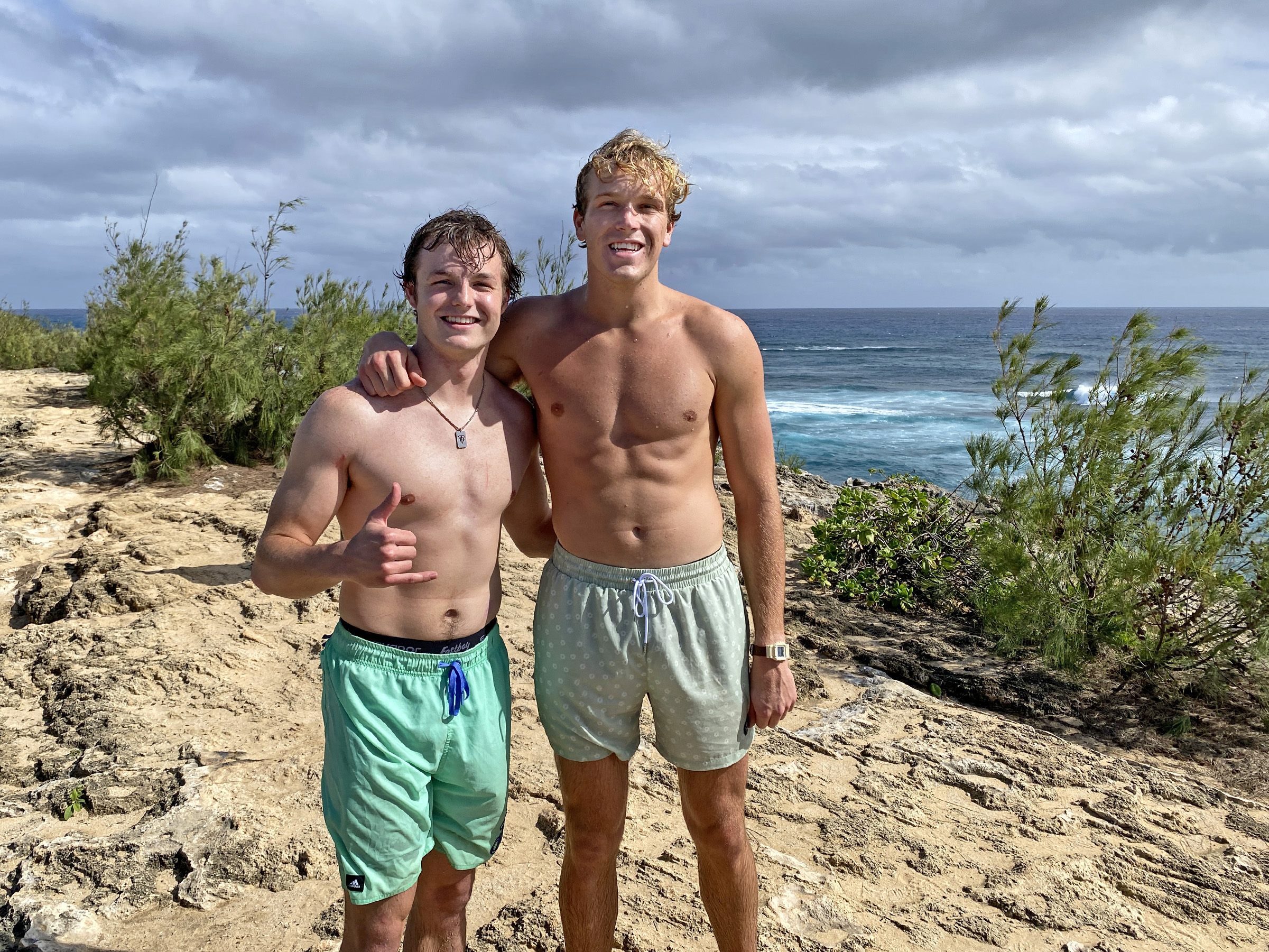
Logan and Preston, atop the cliff at Keoneloa Beach
Every big leap entails a huge risk, but the literal ones have us gasping as we watch young people hurling themselves off a golden cliff into the sea some 40 feet below.
Still, we walk up top to see the view— not least the turquoise and royal blue water where ginormous honu swim, doing their finest rock imitations, flippering effortlessly in the surf to nibble on limu on the real rocks hugging the ocean floor.
There they are, the brown saucers huge even from four stories up, and we smile, our day made.
A young woman hugs the edge, deciding whether to take the leap as her boyfriend in the water calls up encouragement from below.
Don’t do it! I want to say. Never take a leap for someone else—only if everything in you insists that you must leap and your heart leads you to. Otherwise, stay put.
As she debates, two young men come up barefoot, clearly ready to make the jump—college kids, if I’ve ever seen them. Vacationing from Utah, they tell us later. They seem ready, confident but not cocky.
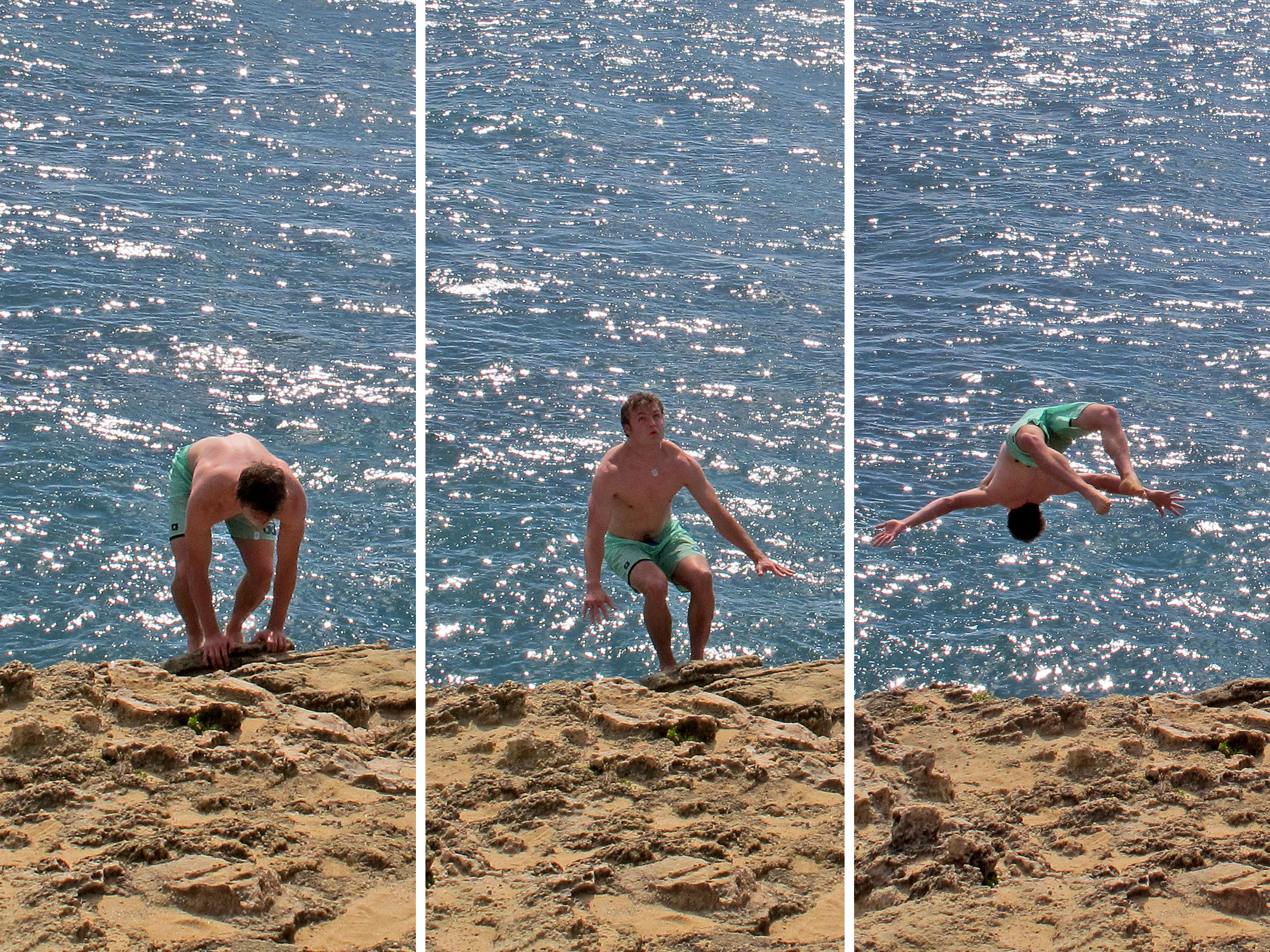
We offer to watch their fanny pack cradling their phones while they’re gone; they grin and thank us, move to the edge. Logan stands, back to the water, makes a graceful backward arc into the water. Preston says, “I’m a jumper,” and leaps, arms in the air.
Both land safely, wave happily as they bob in the swells, Preston calling, “Turtle! A huge turtle!” as one of the larger honu swims near. We laugh. They can grow up to five feet long and live some 80 years—
as one of us at the top of the cliff has done in his eight decades on the planet. Together we gaze at the big fellow in the water, wish him an equally long life— with no leapers landing on him— and all the limu he can eat, easily found.
•••
• honu: Hawaiian green sea turtle
• limu: seaweed in Hawaiian
Logan leaps in a graceful back flip / Photos: Dick Schmidt
(for Kai Owens, our seatmate on our Nov. 19 flight to Hawaii)
They start them here young, as little as two or four, on boogie boards in swells so small they barely qualify as waves.
But that’s how you learn, my rangy seatmate on the plane tells me, as he heads home for Thanksgiving.
“Pitched, pummeled and pounded,” his dad likes to say about surfing— a risky sport—but I’ve never met a surfer who didn’t happily embrace the thrill and try to ignore the potential for harm.
He’s 18 now, going to college in Northern California, but he can’t wait to get back to Haleiwa to throw himself off the tall rocks at Waimea today and tomorrow hit the predicted 6 to 8 footers.
He’s just beginning to maneuver through the world like he shreds waves, for the first time filling out the required state form on the plane by himself— though he’s forgotten his town’s ZIP Code, transposed two letters in his middle name and signed his name with a squiggle because his handwriting doesn’t lean to cursive.
He reminds me of some of my former students, so raw and unformed, so sweet and earnest. Yet I have every confidence that this young kane will get home, wax his stick, set the soles of his long feet back on warm sand after too much time away,
and be riding waves with his buddies every day for the next week, sliding into zippy cutbacks and elegant kick outs— salt in his eyes, gratitude in his heart— perhaps getting a little pummeled in the process, storing up aloha for the rest of the semester.