Mr. Wiley used to call me now and then from his desk at the local newspaper. Good reporter that he was, he knew just when to catch me between classes, often
sitting in my office with a student journalist editing the third draft of a sports story— me asking dumb questions like, “Will people know what an inside cut is?”
And Walt’s voice would twang in my ear: “I’m suckin’ wind here—whaddya got there on the campus?” He always made me chuckle, and I’d run my hyped-up
brain over stories the students had done— or should have—to offer to the local columnist looking for items. I think of Walt often now, happily retired from
the newspaper game and living nearby, especially on afternoons like this one when I lace up my tennies and head out into the day for a walk, eyes peeled for
items of interest that might find their way into poems. I’m suckin’ wind, too, Walt, but you taught me to trust that there’s always something out there
that’s news to someone, that a snippet or an anecdote just might prompt a smile or a shake of the head to someone reading this very piece,
and saying to a some other one in their vicinity, “Well, wouldja listen to this, Erma. The little poet lady has gone and given us another poem.”
You’re walking along a sidewalk, scuffing over divebombed leaves, more of them every day, and your feet brush an ordinary page,
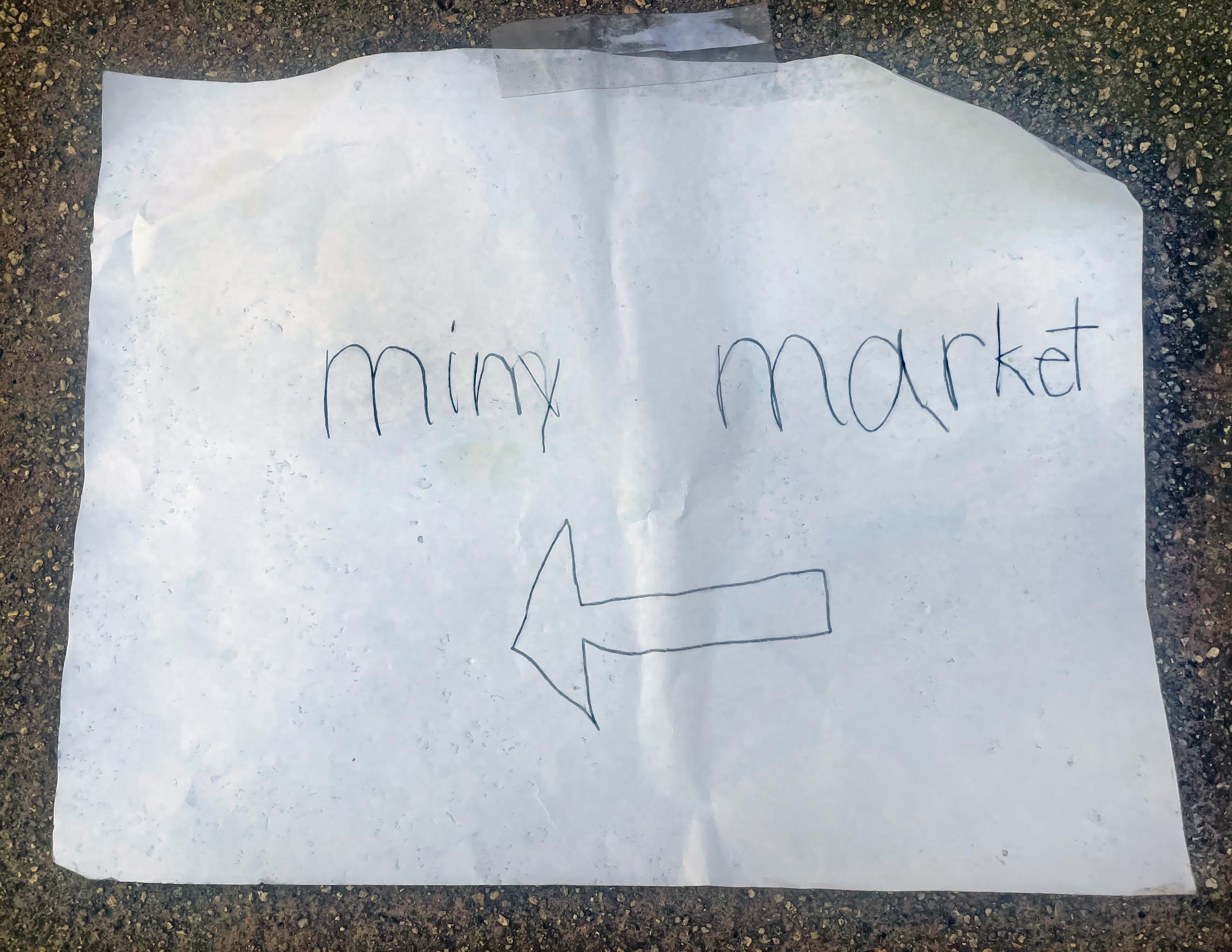
white, dirty, a piece of clear tape affixed to the top, and you stop, look down, to see faint writing there, in wobbly pencil:
miny market ←
with a definitive, left-pointing arrow, and you bend to pick it up, to puzzle it out. Was this the work of a young (you imagine)
entrepreneur with a tiny sidewalk grocery store? Was it staking a bold claim as “mine” with a wee misspelling?
You fold it in half, put it in a pocket, carry it home, thinking that you will dispose of it properly. But days later it sits on the counter by the phone,
your old-fashioned, plugged-in-the- wall device that only a few people think to call you on these days, and the sign catches your eye every
time you walk by, imagining a girl behind an upended cardboard box parked on that sidewalk, offering, say, apples on a fall day. You hope
that kind passers-by stopped at her mini market, hefted an apple and paid her with bright coins, just to see her gap-toothed smile,
to hear her small voice thank them as the charmed grownups grinned at her clever sales strategy, and, not least, her creatively spelled sign.
So once upon a time, before there was Aunt Jan, there was just Jan… no, wait, there was her sister, Just, Donna, who married Just, Eric, and they
wanted to have a little Just or two, and they did— first Lauren (who little brother Kevin called Nonen because he could not say l’s or n’s for a long time)
and then Kevin (who became Kebbin Kebbin Bo Bebbin). You know these two as Mama and Uncle Kev, but they were the people who made Aunt Jan,
well, Aunt Jan. Little Nonen and Kebbin had an Unca Kiff, too, who was married to Aunt Jan, and we miss him muchly, as we do the grandma
and two grandpas who are no longer with us, though GG, your great-grandma, is (I know, this gets complicated), your grandma’s mama. And after your
mama grew up and married your papa, oh, how they wanted a you, but you took a long time to show up, my boy. We weren’t sure there would ever be a you.
But there you were one day, growing inside your mama, as babies do, and there were a whole lot of friends and relatives of your mama and papa’s waiting
to see you. And now you’re here, and I know this is a whole lotta people passing you around and smiling at you and holding and feeding you.
Like Aunt Ashy, married to Uncle Kev, who seems to be one of your favorite people, along with third cousin Charlotte and her dad Johnny,
whose lap you slept in this afternoon. And cousin Dede, who is Charlotte’s grandma and mother to Robyn, who is Charlotte’s mama. Not to worry.
You don’t have to keep track of who’s who and who goes with whom. That’ll come later. This is all to say that I’m Aunt Jan—actually,
Great Aunt Jan who goes with Great Uncle Dick— and, as I told your mama when she was born on my 29th birthday:
You’re gonna love me. I’m gonnabuy you things.
But mostly I want you to know that some people (and you are a people) believe that we choose our families before we land in these bodies,
and if so, you picked a really good one. Yeah, I’m a bit biased, but look at you on the floor, rolling from your back to your tummy.
You go, Henry. Keep on rollin’, little guy. You gotta whole bunch of fans here cheering you on.
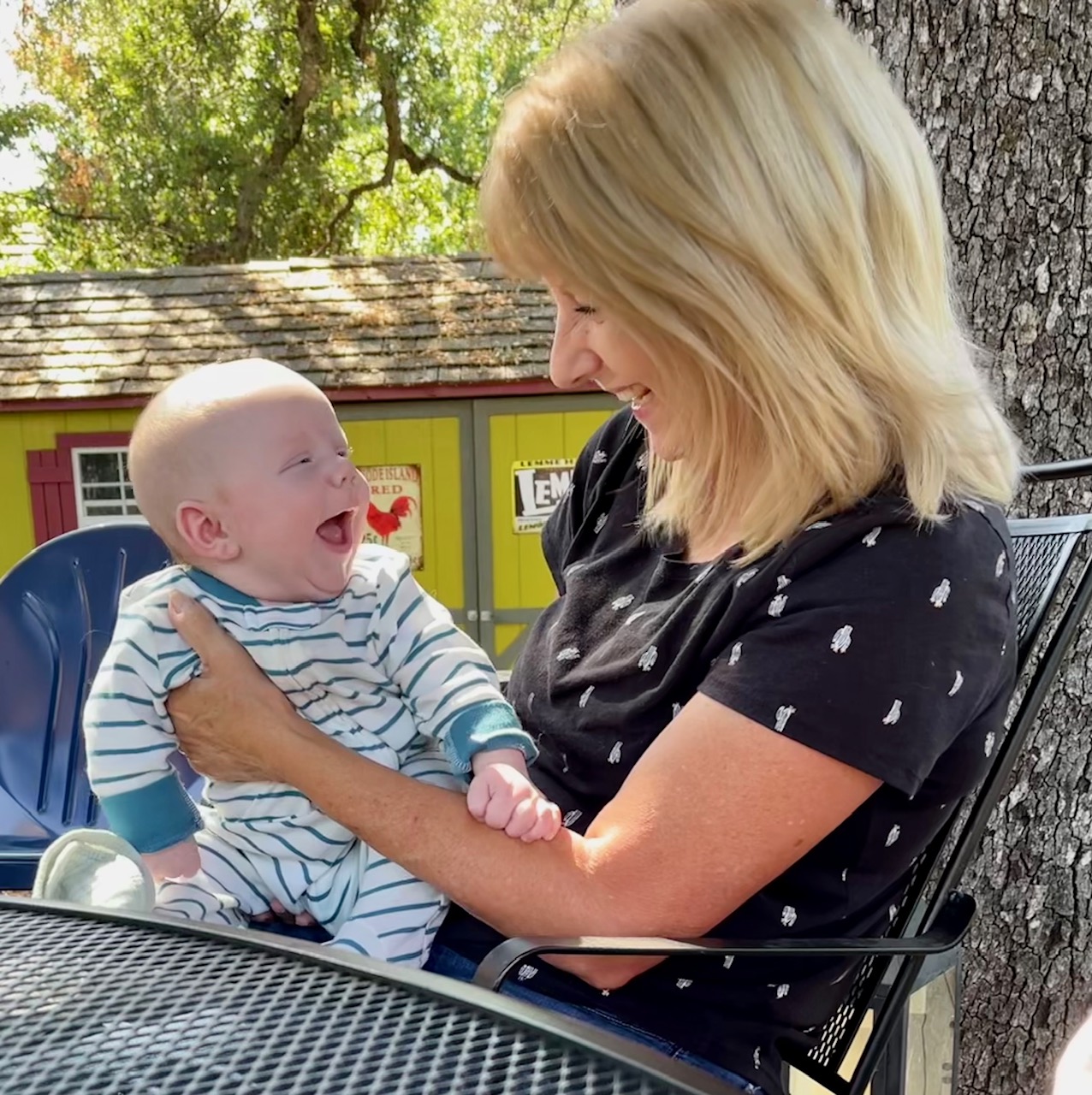
Lauren Just Giel and her son Henry / Photo: Jan Haag
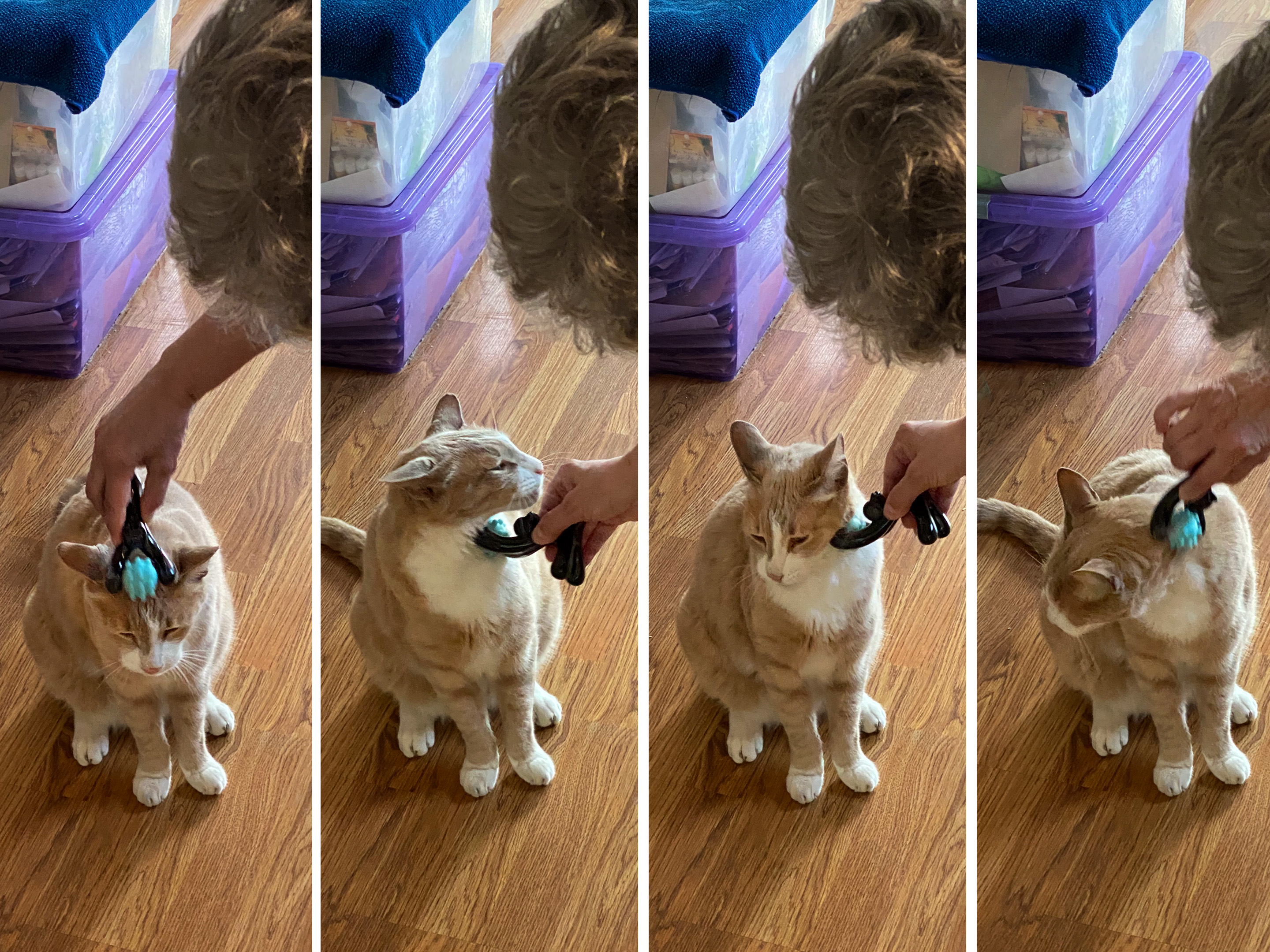
Diego walks in the house calling and will not stop until he finds me. He’s not seeking food, just reassurance.
Where are you? There you are. You were gone, and I couldn’t find you.
I’m here! I call, knowing without looking that he’s paused in the doorway as I type. I hear scratching in the catbox, and I know he’s found another kind of comfort, which makes me shake my head:
You were just outside; you could go out there.
But no, he covers, hops out with sandy feet, comes to me, still typing. He sits, looks up, purrs.
Poki joins us, hops up on the box next to me, four penetrating eyes relaying an insistent message before they wander off to curl into naps:
Here you are. Here you truly are.
•••
(Originally published with the title “You Are Here”)
Even when you walk the same street two hours later, things look different—
picket fence shadows slanting northward, bread plate-sized sycamore leaves wind-pressed against a retaining wall.
The walk home feels different, too— mid afternoon sun on your face, a vigorous breeze skittering the leavings under so many trees silently preparing to release the year’s foliage, standing tall as they have for generations along this busy street.
A bicycled boy from the middle school down the sidewalk, stops, waits for you to pass, and, two blocks later, another boy, both helmeted, pedaling furiously, and just now a pig-tailed, plaid-skirted girl from another era walking home from the Catholic elementary school where, earlier, you heard children’s voices ricochet off the playground.
You smile at stepping stones painted in rainbow colors, the texture of criss-crossed palm tree bark, picket fence shadows, and the unspoken trust of plastic-sheathed dry cleaning flapping like translucent ghosts, hanging on a front porch mail slot, delivered from the cleaners a block away.
You walk, speaking into your phone, looking as if you cannot move without this electronic device, drivers in cars probably judging you, but this is the way without pen and paper you capture the poem, gathering.
And, oh, what a gift it is, this neighborhood in this city of trees that has sheltered you for decades, the familiar sidewalk curving onto your block where you pass your favorite neighbor ginkgo, still green-fanned, this old friend that will release its bounty next month, goldening the lawn around it.
You walk home in spots of light and periods of dense shadow, an obvious metaphor, you think, hardly poem-worthy,
but you grab it out of the air, set it down on a line, just to see how it looks.








 Güd wrtr