You know how you wake up some mornings, the bad dream running laps in your brain, telling yourself it’s not real, but you carry the hangover of free-floating anxiety in your satchel of woes, which, most days, you can set in a corner, say, There, there, to the worries that do you no good to fret over?
For whatever reason you’ve shouldered them today, along with the persistent headache that points to something blooming outside that’s bugging you, so you go back to bed for a while, hoping that it will ease, that you might doze, awaken again feeling better, but no soap, so you lie there thinking, This is dumb.
You rise with a groan and make the bed so the cat can assume his usual place in your spot—or, more accurately, his spot that you’ve borrowed overnight—and while there is much to do—always much to do—you think, Start with easy, pulling on shorts and a lightweight T-shirt, adding your shades and, slipping into the flip-flops by the back door you keep there, tugging on the somewhat stuck door that swells in summer.
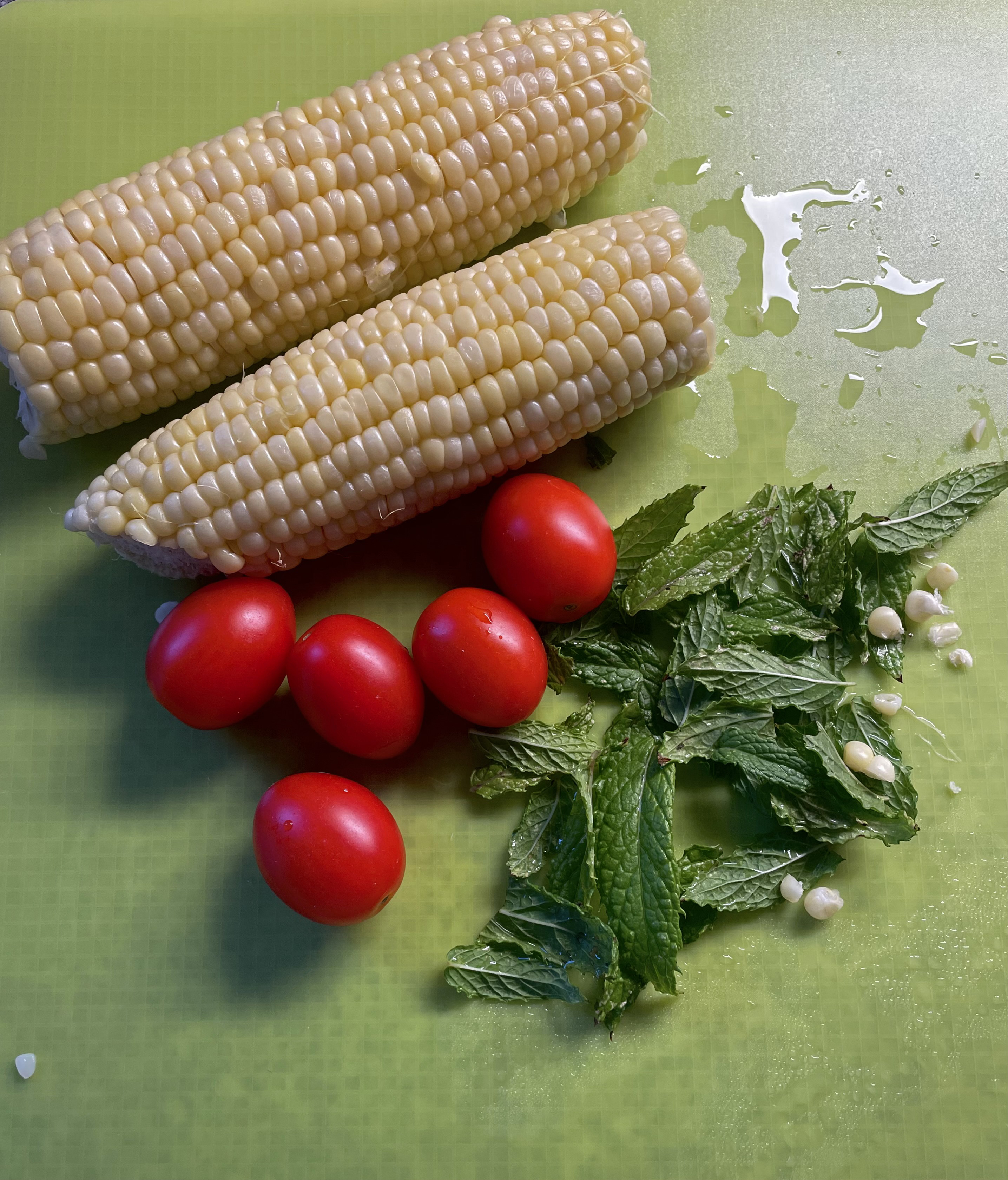
When you step into the sunshine, you feel a bit like Dorothy walking into Oz, blinking behind your shades, and because it’s a watering day, you pick up the magic wand, turn the spigot and presto! There’s the delicate shower of water that you aim at the leafy arms of the tomato overgrowing her wire cage like a too-small bra, a simile that makes you smile because the plant variety is, after all, named Juliet.
As you set aside the squirter and gently touch one of the reddest ovals, low to the ground, the first cluster to bud, it comes off easily in your hand, which lifts you somehow. And you cup another little gem, and another, and now you hold a trio of tomatoes, as if they were just waiting for you to show up, which you deposit in a small cardboard square box and take some photos, which you think is a bit silly—just tomatoes, for heaven’s sake.
But that’s the point: Holding a bit of heaven in hand that you grew from a sprout, even as you chuckle, thinking, All I did was plant her and water her, knowing that forces far greater than you shaped and continue to nurture Juliet—and you, for that matter—an everyday miracle that softens your old heart into once again loving this loveable life.
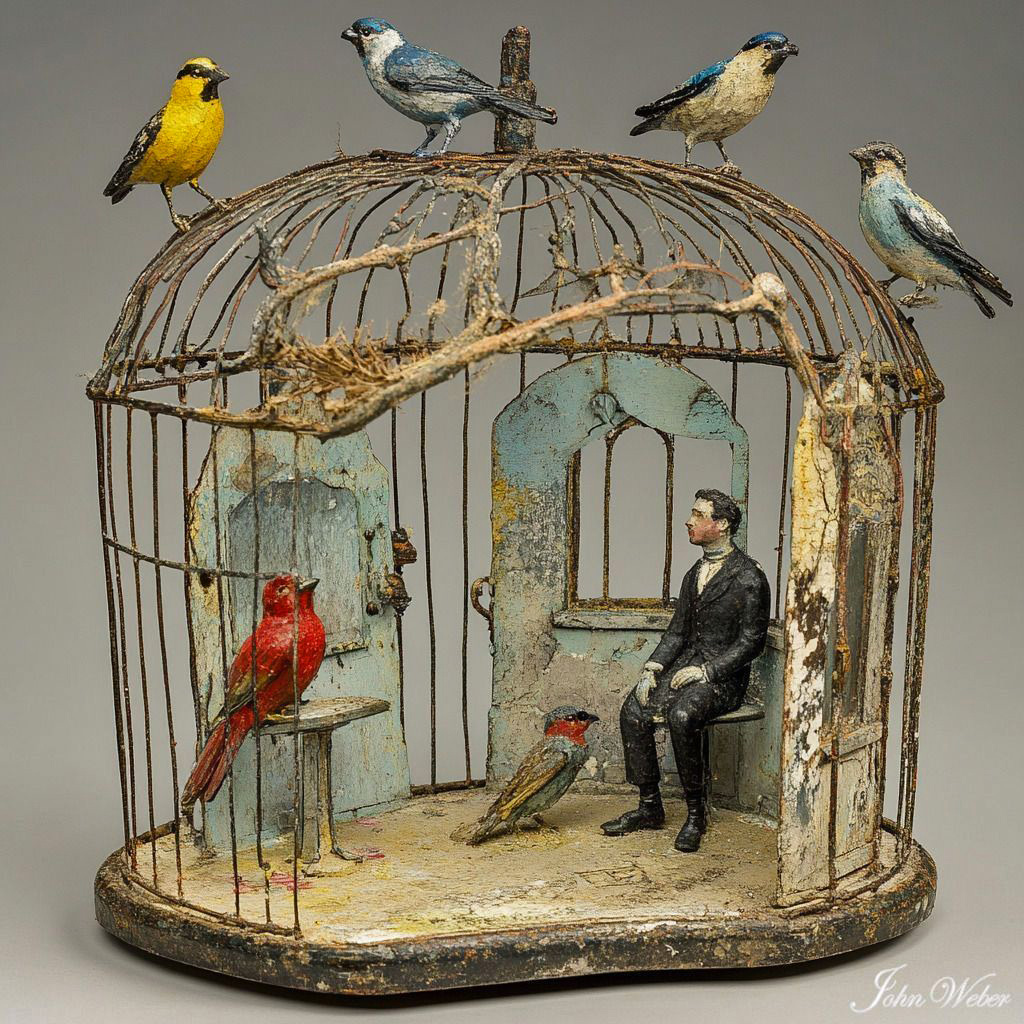
If you believe that you were not born to sing, then you must allow the birds to tutor you,
sitting in places where they do, allowing them to feel comfortable enough to vocalize near
you in your scary human suit. You will think, at first, that they are all brilliant sopranos,
with their warbling trills, and, if you are fortunate to study with an owl, you may
want to imitate its throaty hoo-hoo. And you should, for allowing your throat
to open and sound to emerge is what you do every day. Singing is just sustained talking,
after all. And the point is not to be good or to necessarily harmonize with others.
The point is to sing out on a deep breath a note of meaning—perhaps a joyful one,
but ones of sorrow and despair, too— a long note. Do not worry if it wavers
or your voice breaks. Listen. The birds falter, too. Join them. Let them remind
you that you are of a species that is born in song. Sing your own tra-la to the wingéd
ones in trees, especially to those in cages. In fact, open the cage and slowly climb in.
Do not mind the feather ruffling; settle in on any available perch. Leave the door open.
Open your mouth. Let a note take wing. See what happens.
•••
(For singers everywhere—
like my friend Lilly Ganly, a rock ‘n’ roll singer who turns 17 today—
and Martha Kight, my high school friend, still singing, still acting her heart out,
and my friend Katie O’Rourke, music teacher, opera singer and chorus member, who, with members of Chanteuses, a Sacramento women’s chorus, recently performed at Carnegie Hall in New York with dozens of singers from around the country.)
Sculpture: Where did you learn to sing? / Artist: John Weber
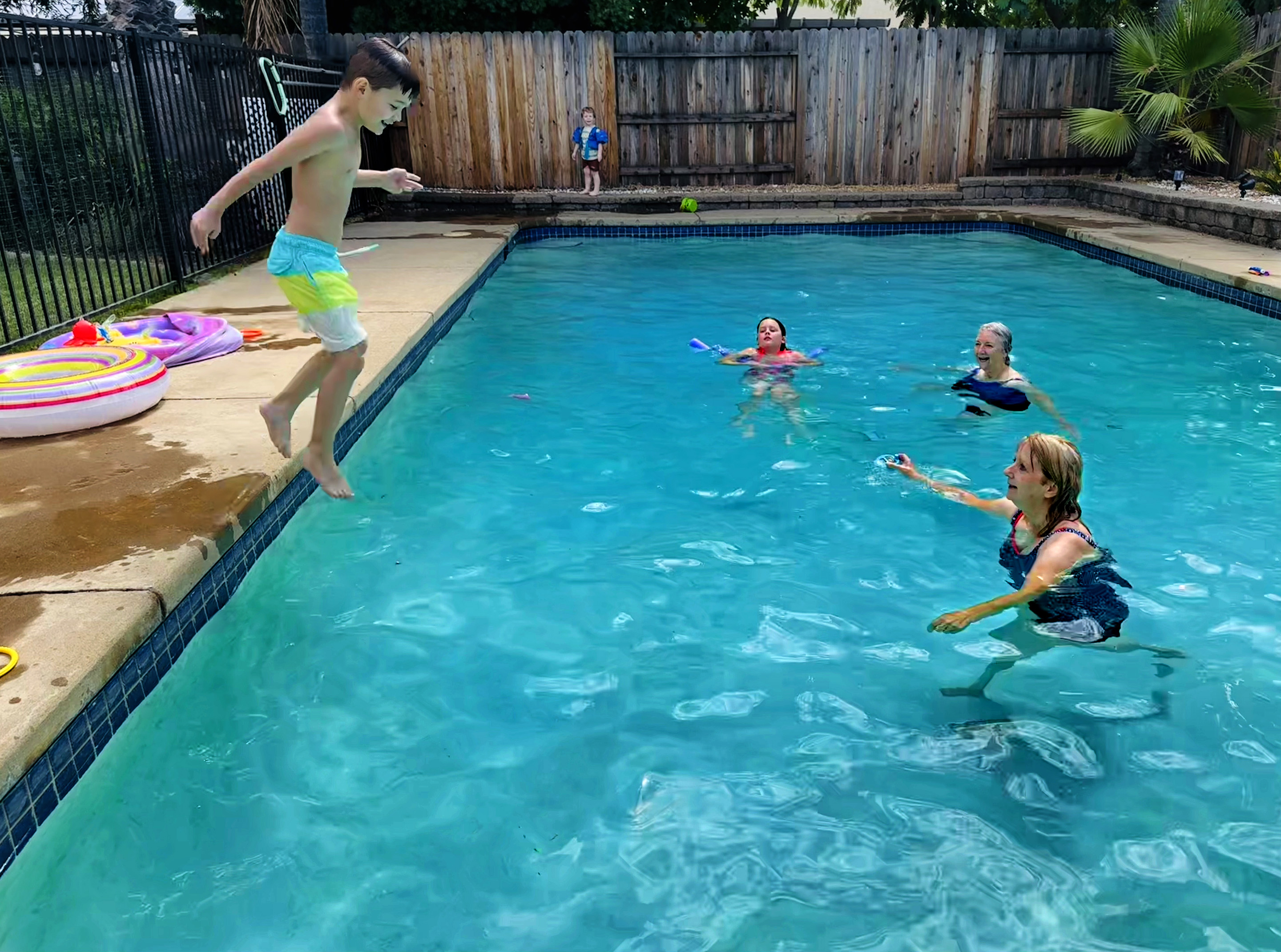
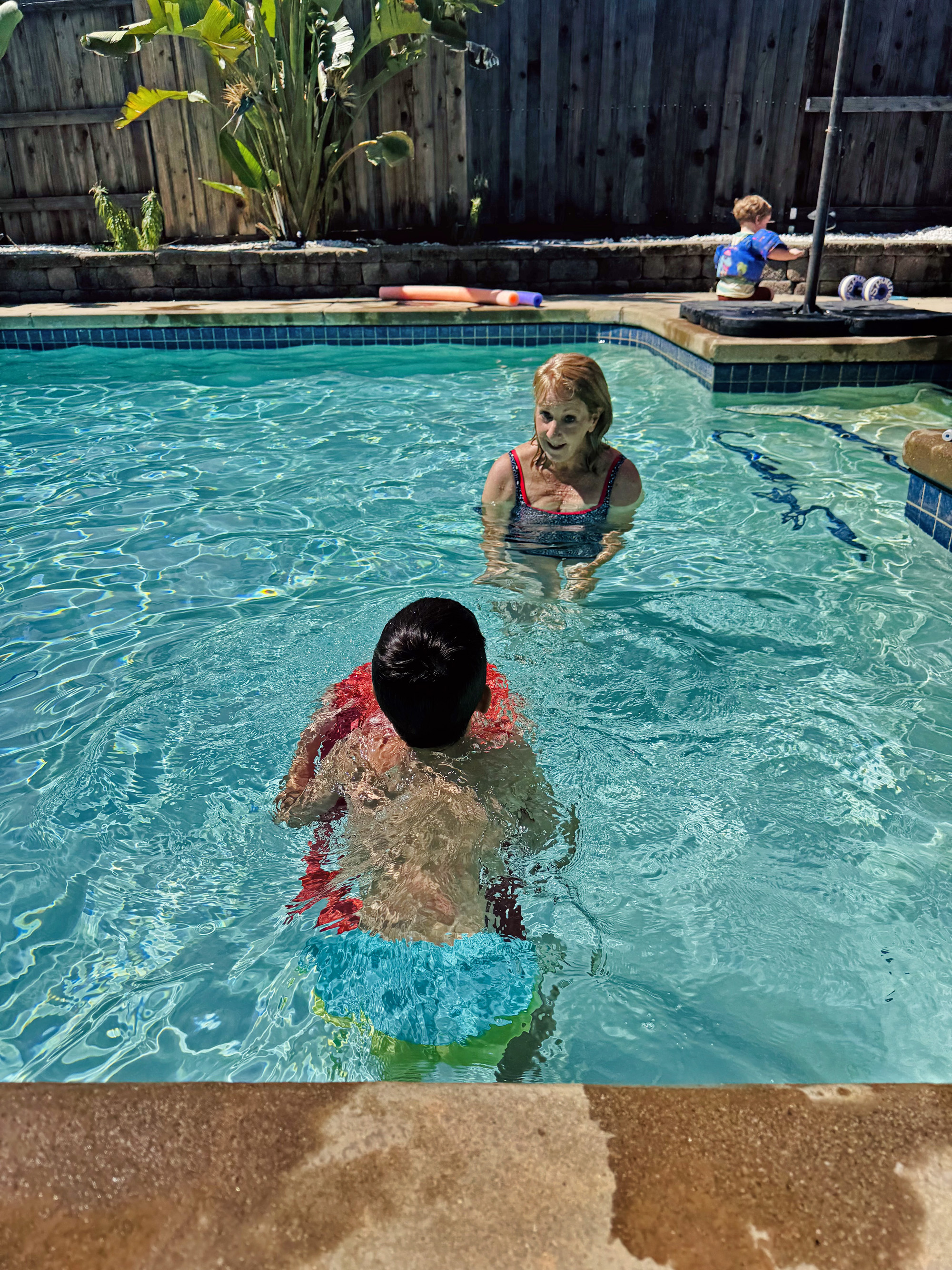
Six-year-old Lane calls across the pool, “Mom, watch!” His 11-year-old sister Grace echoes, “Watch ME, Mom!”
And at the shaded end of my niece’s pool, their Mom watches—this woman who styles my niece’s hair—along with her mother, as my sister and I,
old enough to be these kids’ grandmas, work one-on-one with each child, seeing what they can do in water sparkling under a July morning sky.
Every time one of the kids calls, “Mom!” I think, You watchin’, Ma? Your girls are back in the pool givin’ swimmin’ lessons a good
half century after we spent our summers doing so—first as water safety aides, then as full-fledged instructors, working with all manner
of humanity, from babies to toddlers, adolescents to teens, girls on the synchro team, even with sweet-faced adults with Down syndrome.
It’s been a minute, I realize, taking a deep breath before tucking into a surface dive to head for the bottom of the pool,
feeling my fingers connect with a weighted purple plastic ring that our beginner swimmers are not quite ready to retrieve.
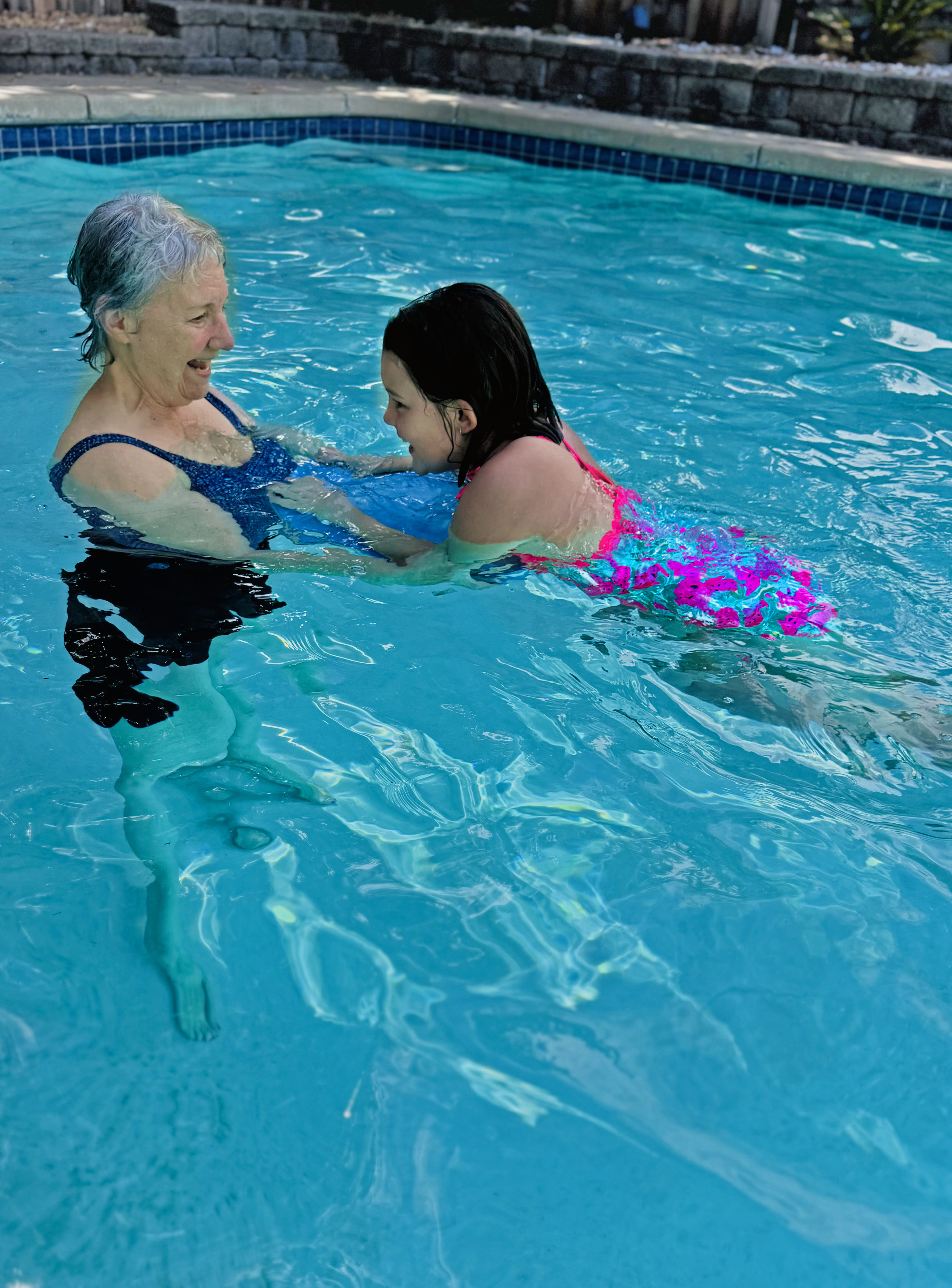
But look at these two on kickboards, gaining strength and confidence with every lap across the pool, Grace remembering not to plug
her nose but blow out bubbles upon dunking herself, Lane doing his version of a cannonball, feet first, an easy touch, bouncing up,
as we instructors look on, near enough to help, but far enough for them to learn to trust the support of water, of their people,
as we hear far-away echoes of ours, the parents who put us in pools, who urged us through swimming lessons that we later taught,
who put us on water skis in a big lake, who volunteered at our swim meets—Mom with her referee’s whistle on the side of the pool—
their “atta girl”s filling my ears as my little sister-now-grandma swims alongside a boy kicking his way across the pool, as I dive again for the bottom,
as I push off, looking up into the blue.
•••
In memory of our mother, Darlene Haag, on what would have been her 95th birthday. Thanks for everything, Ma.
And thanks to my sister, Donna Just, and her daughter Lauren Just Giel (along with husband Gerald Giel and children Henry and Rosie) for hosting the swimmin’ lessons. So much fun!
(Top) Grace on the kickboard with Jan; (above) Lane kicking toward Donna / Photos: Lauren Just Giel
(On the 250th anniversary of the adoption of the Declaration of Independence of the United States of America)
1. First, there’s no perfect. Just working toward it, a willingness to improve, to strive for better, for what truly matters.
2. There have always been those in this experiment in democracy who see themselves as perfect, those who seem to strive for what most benefits them.
3. Many of us, however, strive for what truly matters: equality for all in a land where each voice matters, thinking matters, ideas and books and discussion matter, where all shades of skin, all languages and accents, all genders and non-, believers and non- matter, where there’s more than enough for all in this nation of plenty, this land of the allegedly free, home of the unbelievably brave.
4. Far from perfect when 10,000 people—who seem to matter only as a problem to those in charge, who must be sent away—are arrested days before the country’s 250th anniversary of its founding, the one promising liberty and justice for all.
5. Far from perfect when one thinks he matters most, knows best, who starts wars because he commands the firepower to do so.
6. Here’s what matters: Your tired, your poor, certainly as much as your healthy and wealthy. For it is on the backs of the least of us that have, since humanity began, been broken on behalf of those who were: —richer —whiter —straight and gender-conforming —educated —privileged in every way
7. We have learned many things in two-and-a-half centuries, among them: There is no perfect union. But there is, in the hearts of so, so many, the continued willingness to treat all—and that means all— with kindness, with generosity of heart,
all of you reaching out to all of me, me reaching back, saying, “How can I be of service?” and “Thank you for yours,” and “There is no them. We are all us.”
8. Our worst is not the best of us. The best is the best of us, which still exists. In you and you and you. And me. In us.
9. This heartbreaking moment is not how it ends.
10. It cannot be how it ends. Amen.
•••
With gratitude to Brandi Carlile and Sista Strings (Chantee Ross on violin and Monique Ross on cello) for their beautiful rendition of “America the Beautiful” at the Statue of Liberty.
“Crazy bastards,” my father used to say when he saw young people doing dangerous things—
like riding motorcycles or hot-rodding motorboats on the lake on hot summer days—this from a guy
who had famously water skied barefoot in his 20s. “Probably drunk,” he’d say, no stranger to a Manhattan,
though, as a responsible grown-up all about safety, he did not drink and drive—boats or cars.
My father’s condemnation swept through my head like a Delta breeze on the first day of July when
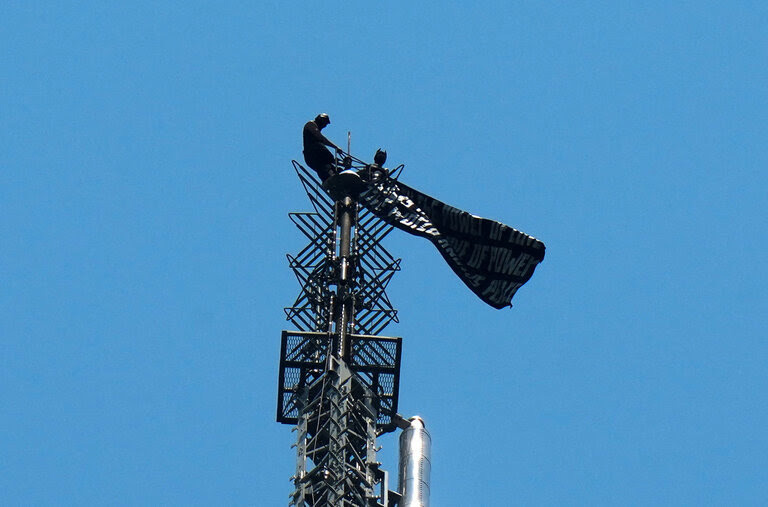
I read that two people in their early 30s on the actual island of Manhattan had needle-climbed
the Empire State Building’s 200-foot spire, unfurling a black flag that read:
When the power of love beats the love of power the world knows peace.
Even with the forgotten comma after the introductory clause (like this one—give your self-editor a rest, Jan),
my old heart softened, turning to moosh when I read that Ivan Beerkus had proposed to Angela Nikolau as they
stood atop the off-limits-to-the-public landing (duh!) before climbing down and being arrested (double duh!).
But what a story to tell their kids, huh? Or anyone, really. “We climbed 1,454 feet in a rebellious act of devotion,”
they can boast. The power of love, indeed. Crazy bastards, for sure. But oh, how I’m applauding
those two lovebirds, flying in their own way to a spot most of us mere mortals can only (thankfully)
imagine—all, yes, all—in the name of peace.
•••
If you’re up for a literal birds’ eye perspective, you can watch the video of Ivan Beerkus and Angela Nikolau’s Empire State Building spire-topping view here.
If you’d like to read The New York Times story, you can do so here.
Ivan Beerkus and Angela Nikolau’s atop the spire of the Empire State Building / Top photo: Adam Gray / Reuters ; (Photo above) Beerkus proposes to Nikolau on the spire / photographer unknown / Instagram
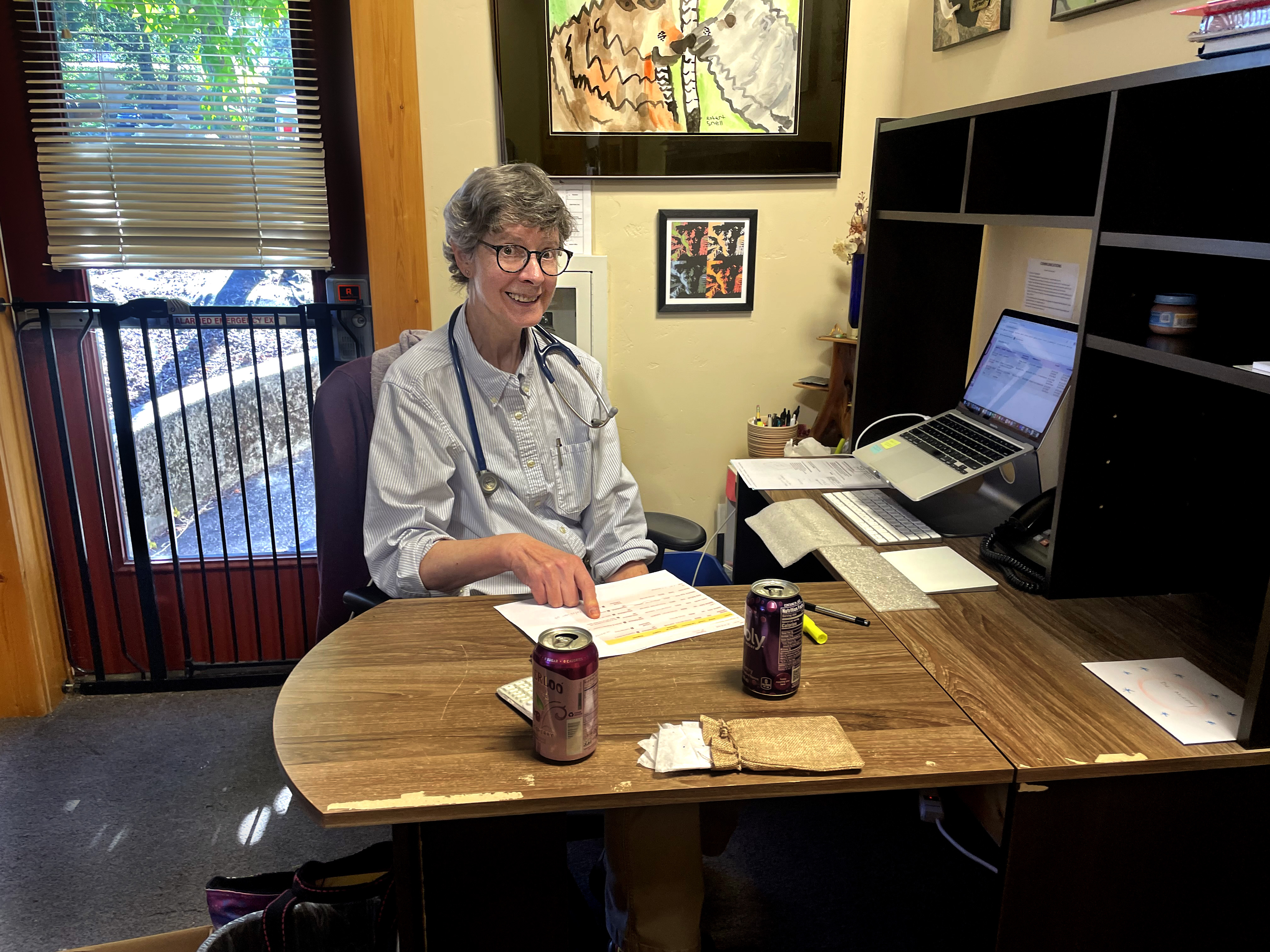
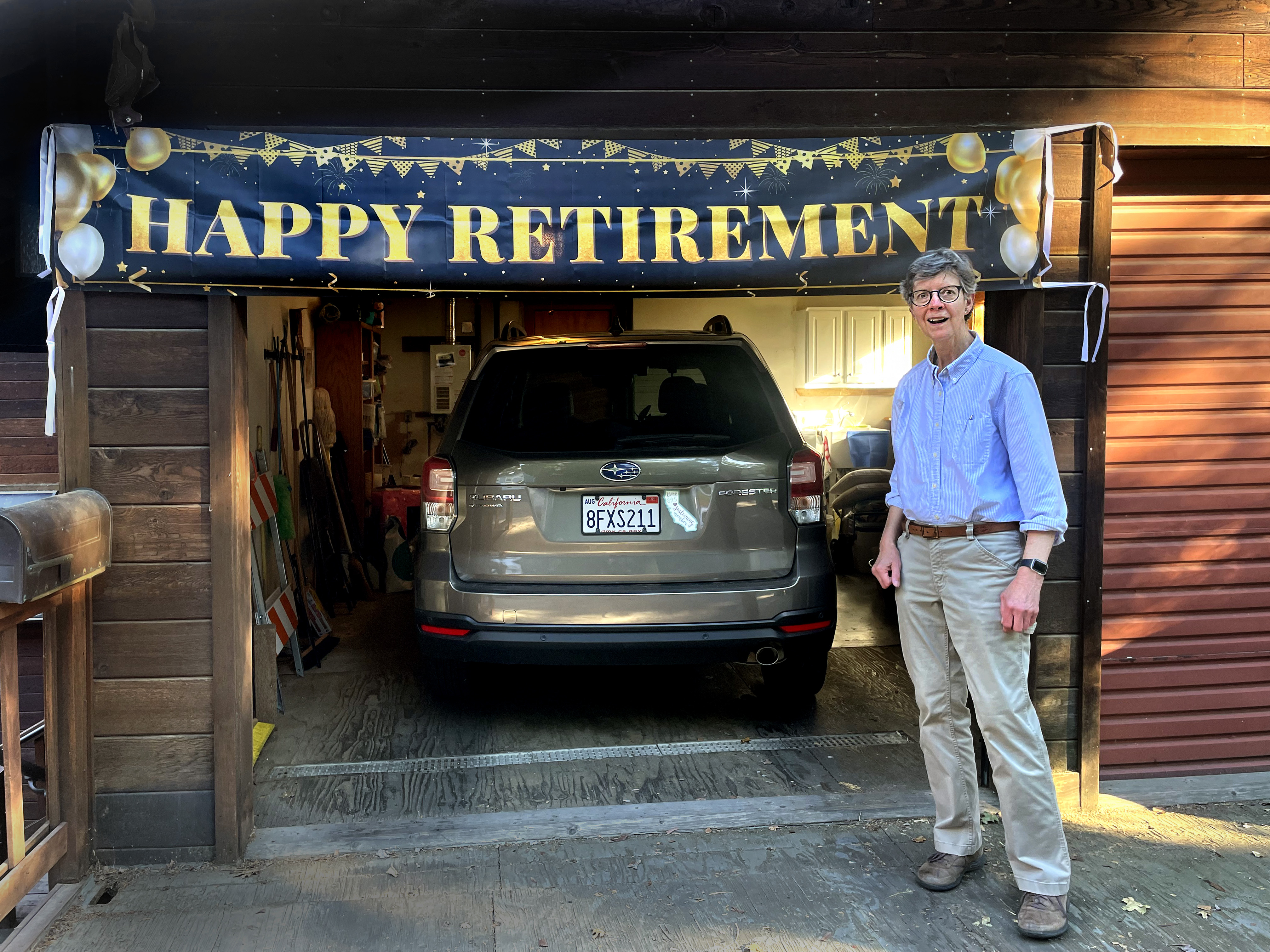
(for the original BFF, Dr. Susan Lester, upon her retirement as a veterinarian, Nevada City, California)
1. At age 9, sit in a circle on the floor with your best friend next door and her younger sister along with a cardboard box of month-old kittens.
2. Outside the biggish box, have a smaller box of fresh kitty litter waiting.
3. Lift one kitten gently from one box into the other.
4. Gently lift one of kitten’s front legs and direct it to paw the gritty surface.
Note: Some kittens will resist this. OK, most kittens. They will sniff. Some may, as babies do, try to eat the sandy stuff. Discourage this by picking up kitten and gently distracting it.
5. Return kitten to litter box. Try again.
6. Watch as kitten, quite on its own, figures out, scratching sand or not, that this is a place to go.
7. You and your de facto sisters heartily congratulate kitten—and selves— for a “job” well done.
All these years later, you recall that these kitties, along with every pet you met, were the ones who began to train you,
quite unaware, that you’d be spending much of your adult life with kitties and doggies, caring for thousands
of four-leggeds who, along with their two-leggeds, are beyond grateful to and for you.
Job well done, Dr. Sue.
Dr. Susan Lester winds up a 32-year career as a veterinarian, retiring from Four Paws Animal Clinic in Nevada City. (Photo / Jan Haag)