(in honor of Live Long and Prosper Day, Leonard Nimoy’s birthday)
We think Star Trek, but Jews know that it’s the gesture for the Hebrew letter Shin, the first letter of the word Shalom.
And the man who created it, who parted the fingers of his right hand for the rest of his life in salutation, knew that it calls for healthy and prosperity—
live long and prosper.
People don’t realize they’re blessing each other with this, said the Jewish man who gave the world Spock.
That we are hardwired to love and lose is what comes again and again— the euphoria of spring springing into sudden, bright leaves where there were none days ago, green harbingers that will age through summer, grow brittle by fall.
It is the way of things:
That decline into the time when passage to the next place is possible, mourning what was, learning to let go.
That love emerges in the form of unexpected beings who appear, lend a hand, a heart, a word, companion spirits, seen and unseen, who arrive with armfuls of compassion,
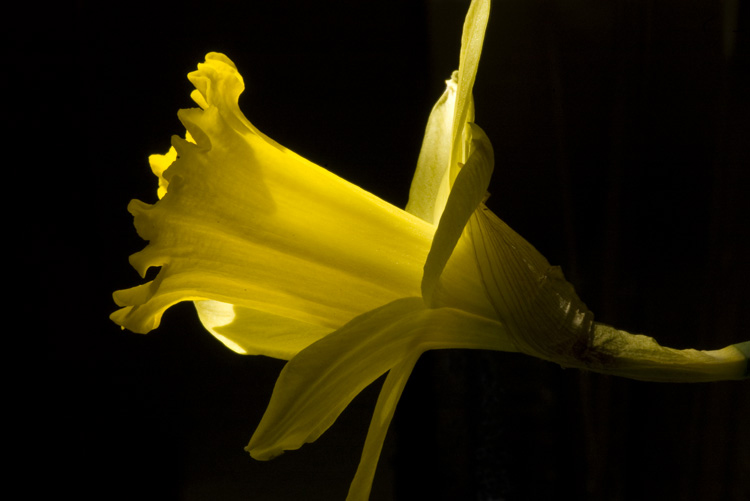
kindness falling like soft rain after a long dry spell, moistening hard ground, coaxing out of hiding green stalks topped with dancers in fluted yellow skirts to courtesy in the breeze.
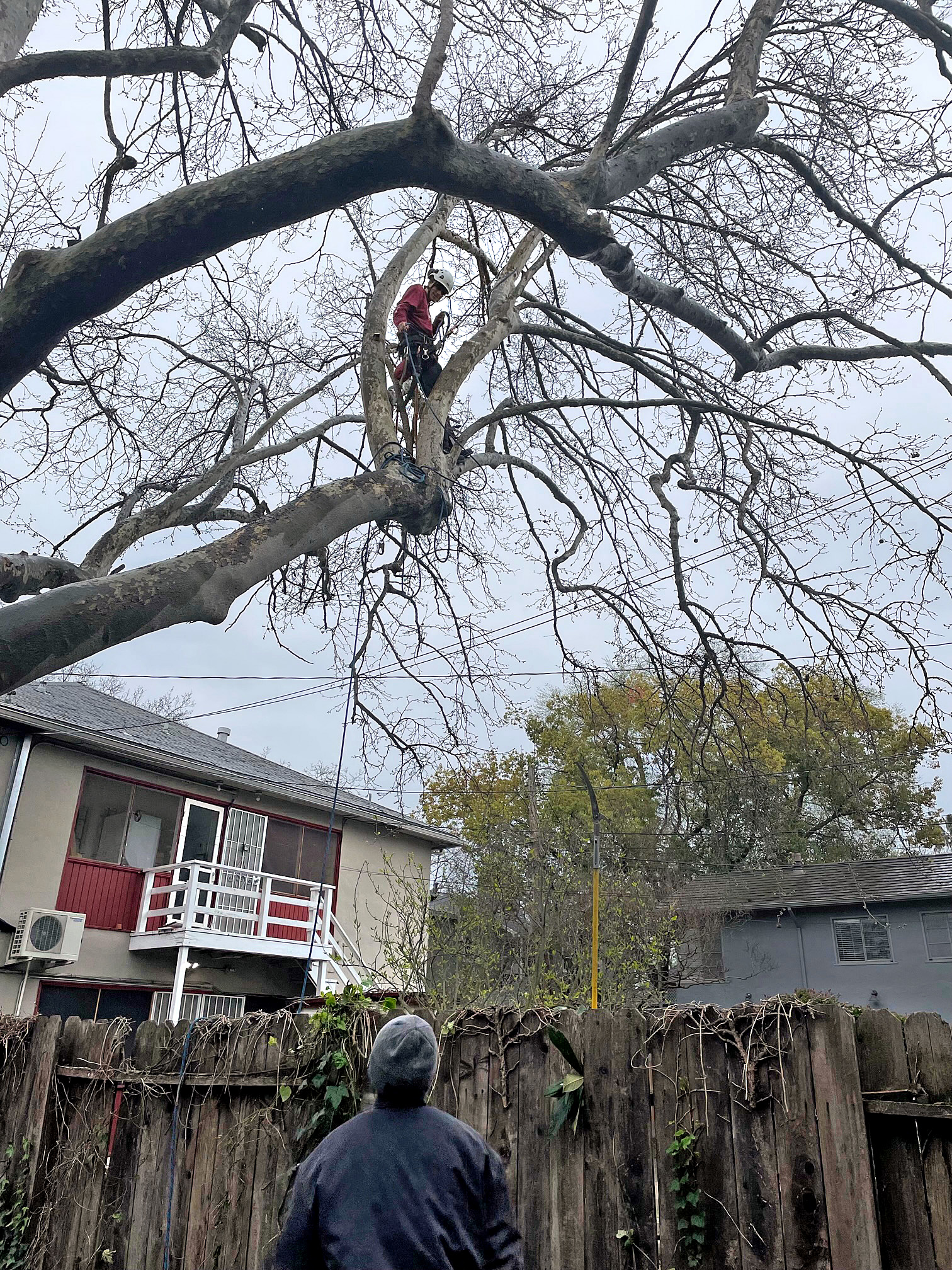
Three young men showed up not long after 8 a.m. ready to carefully trim the old sycamore, its caretaker a bit trepidatious about what Braden, the climber, might decide to remove.
It’s a heritage tree, the estimator said, which means that they take extreme care with the old girl— no chainsawing, just long-handled pole cutting here and there,
there and here, on a day of chilly mizzle. Braden, the sculptor, dangling from the rope high in the sycamore like an orangutan hanging by a long arm, taking his time, surveying, removing what isn’t needed—
wielding the chisel not unlike Michelangelo, young at his craft but evidencing a good eye, moving through the century-old limbs like the pro he is, at a vantage point I envy, one I’ll never see—
while groundsmen Austin and Max apply chainsaw and rake to a couple of volunteers, one of which has died, beneath the great tree.
They are artists and barbers, surgeons and coroners, as well as those who tidy up after the messy business of disposing of death, of tending the living who, after the team’s good work, will, the tree gods willing, continue to rise tall and strong.
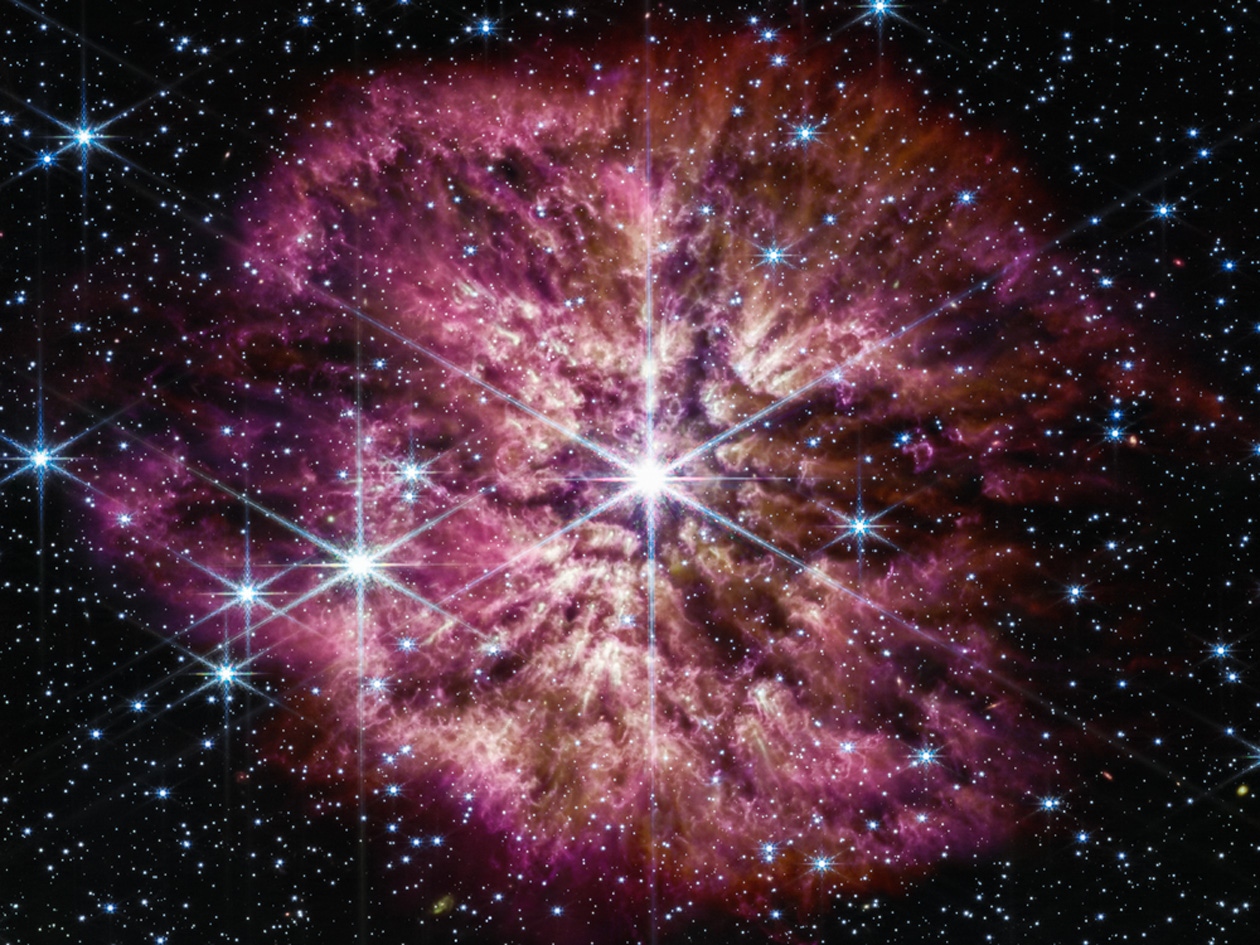
But how pretty, like a peony blasted open with a starry center, WR124 surrounded by watercolor
gases that signify its approaching end, before it undergoes a turbulent transformation, before it supernovas
into glowing cosmic dust. It’s shedding its outer layers now, a molting star, petals loosening at the edges as we
do when the end is near, letting go of what’s not needed—in this case, 10 suns’ worth of universal material.
It’s hard to look away from the bright core, even though we know its days are numbered, even though we
remember it as a brilliant fireball of orange, red, yellow dazzling energy. It’s a mystery, what happens at the end,
especially if we’re not there to see it. But all that starstuff it flings into the universe makes us us—we who are
forged in iron and calcium from ancestors that exploded billions of years ago, as this one will one day,
spreading shimmer and dazzle through the cosmos, baby planets born in star nurseries, creating all that is, bringing
me to you and you to me in this twinkling moment we share, exquisite, yes, radiant,
and oh, so finite.
This composite image of the WR 124 star combines observations from Webb’s Near-Infrared Camera (NIRCam) and Mid-Infrared Instrument (MIRI). Photo / NASA, ESA, CSA, STScI, Webb ERO Production Team





 Güd wrtr