Six months

I’m delighted to report that I’ve been writing and posting daily poems for six months now (since Nov. 1, 2022), and it’s truly become a nourishing daily practice. The words and images show up fairly easily most days, and, when they don’t, I find that I’m the one getting in the way. Then the practice becomes to breathe, maybe take a walk and get out of the way so they can show up.

They’re not perfect, and I’m reminded daily to post them anyway and not be attached to how many people like them or comment on them… or don’t. But when they do, I have to say, my heart soars.

So thank you, if you’ve been reading and liking them… whether you hit that button on not. You can also sign up (in the little box on the right side of the home page) to get an email about my daily posts at my website, https://janishaag.com/ , (and you can see the poems there with nifty things like italics, which I can’t do reliably on FB).

I’m grateful to folks who post their art and/or words daily online like James Crews, Rosemerry Wahtola Trommer, Joe Chan, Kathy Keatley Garvey, haikuandy (aka Andy Dugas) and so many more. You don’t have to post your creative work daily to allow it to make someone’s day… you just have to share it in some way.

Mahalo nui loa on this gorgeous Lei Day, which it is in Hawaii! 🌺

Posted in Uncategorized | 1 Comment

Plant migration

For two weeks the plants
overwintering on the front porch
have waved at me each time
I come or go, their gentle signal
that it’s time to move back to the back,

to the deck under the big sycamore
for far more fresh air and sunshine
than they see all winter. But they’re
safer from frost tucked up close
to the old stucco house, even if
the two tall ficus lose more than
half their leaves between fall
and spring.

The poor withered aloe plant looks
pathetic—it always does—but
it’ll perk up in a few weeks, along
with the leggy begonias, with some
fresh light.

Somehow the bright-eyed
Johnny Jump-Ups remain perky,
the little tri-color violas reseeding
with no help from me.

Year after year the patio/porch pots
prove to be the most forgiving plant
friends. Even the round bowl of
heat-seeking succulents has thrived,
even as these lizard plants and I are
jonesing for spring sun, craving
heat to thaw our roots.

And as I carefully walk each one
down the driveway like a bride
en route to the altar, I whisper,

Happy spring! Welcome back to
soaking up the long-light days,
basking in sprinkler showers,
sprouting and growing, truly,
finally, warm at last.

***

If you’d like to listen to Jan read this poem, click here.

Photo / Jan Haag
Posted in Uncategorized | 2 Comments

Presence

Walking the labyrinth,
clocking its distance because
someone asked, on the way

in I come upon a small
oblong black bug heading
the same way I am,

and I pause, bend to
look closely, its little
legs chugging it from

shade into sun ever
so slowly, taking its time,
walking its own walk

as we all must do,
and I step over it to
continue on the path

to center (.2 miles, it
turns out, one way),
and later, on the return,

I pause to look for my
my walking companion,
but it has disappeared,

at least from my view,
though I smile knowing
that the wee presence—

or perhaps a large one
in a tiny form—is still
around somewhere,

even if I can’t see it.

Photo / Jan Haag
Posted in Uncategorized | Leave a comment

Prolific

Make sure you’re not too prolific. You could be taking words and punctuation away
from someone more needy.

—Duchess Goldblatt on Twitter, April 21, 2023

Because, after all, there are only
so many words to go around—
and there, in only two lines, I’ve used
a dozen of them—though more than

a dozen years ago researchers estimated
that there’s somewhere north of a million
words, and that’s just in English. And while
most English speakers know upward of

40,000 words, most of us use half that
many, which is good because that leaves
more for others. And that’s not even
considering all the commas, perhaps

the most deceptively simple but tricky-to-use
punctuation mark, and the equally
mystifying-to-many apostrophe, as well
as double quotations Americans use around

spoken words, the single quotes much
of the rest of the English-speaking world
employs. Not to mention my beloved
em dash—the width of a lowercase “m”—

the granddaddy of dashes, longer than
the en dash– (the width of a lowercase “n”),
and longer still than the trusty hyphen-
that lovely mark that both divides and joins.

Oh, it goes on and on. I realize now
how selfish I’ve been, wantonly using
oodles of words (many of them the same,
so does that count?) over so many years,

not rationing my commas, delighting in
the occasional exclamation point, and,
of course, halting a thought with a full stop.
Perhaps I can donate some rarely used gems

like facetious and henceforth, some
precious semi-colons and colons to those
who have so few. Here: Take them. Use them;
treasure them as the gems they are.

I’ve happily employed more than my fair
share in this lifetime, though, truth be told—
dear word gods, let this be so—
I pray that I’m not done yet.

***

You can listen to Jan read this poem here.

Jan Haag, editor-in-chief, The State Hornet, 1979-80
Posted in Uncategorized | Leave a comment

Twist

(or Why I love exercising with Shelley)

Because the music, magically channeled
from her phone to the small turquoise speaker,

is so good, gets us moving, and her
delightfully peppy self makes moving fun

(to paraphrase Fleetwood Mac), and she
can’t help but belt out R-E-S-P-E-C-T

when Aretha does. And because I fall into
high harmony with Artie on “Mrs. Robinson,”

I’m not noticing the slightly annoying pull
in my upper right leg, and most of all

because when the Isley Brothers swing into
“Twist and Shout,” Shelley’s hips move

accordingly, and so do those of her oldie
students, each of us with one leg bent,

up on toes, twisting on one side, then the other,
and because if this is exercise, singing

and dancing the body parts, I’ll happily take it—
Well, shake it up, baby, now

Twist and shout…

Posted in Uncategorized | Leave a comment

Pink hollyhocks

The stalks shoot up first, though
you have done nothing to deserve
them—months ago you pruned
the spent stalks to the ground, yet
here they are, restarting from last

year’s leftovers, fuzzy green lengths
extending slender arms ending in
palm-sized leaves. And all along
the new stalks, tiny buds cluster like
friendly tumors, ones that will grow

and eventually burst into frilly
magenta rosettes, taking over the bed
by the garage, growing taller than
you, sending you searching for
sturdy sticks to prop them up.

They don’t last long in vases;
they’re meant to live right where,
like gangly teenage boys, they
send up all that height, that
heady profusion of pink,

glorious for a few weeks, then
the green fading to sickly yellow,
blooms dropping, reseeding nearly
instantly as others sprout
alongside their fallen brethren—

beaming at you every time you
venture outside, delighted by
the stately towers, the grand
columns of color just beginning
this prolific season that always

seems as if it will never end.

You can listen to Jan read this poem here.

Posted in Uncategorized | Leave a comment

Band practice

That’s me in the back at the xylophone,
mallets in hand, next to the drummer on
the set, watching the director up front with
an intensity I usually reserved to study

the boy I had a big crush on when
he boarded the bus each afternoon,
silently swooning when a swath of
chestnut hair fell across his left eye.

It’s tricky to play and read music and
watch the director up front with the baton,
and I’d leave band practice winded,
even though I wasn’t blowing into an

instrument, even though some people
thought the percussionists in the back
had it easy. You count all those measures
of rest and then come in with a two-octave

run up those wooden keys with your
tiny mallets, and see how you do,

I wanted to say—and probably did a
time or two.

To be sure, I wasn’t anything like my friend
the tiny-footed piccolo player piping out
the ear-piercing solo to “Stars and Stripes
Forever,” or the ace trumpet player

hitting the screechy high notes in jazz
band. To me, they were the superstars.
But from my place behind everyone
I had the best view of music being made,

even if we were far from accomplished,
even as many of us were still figuring out
how to read tricky syncopations and
managing difficult fingerings on instruments

we were still learning. Those were the
first-date moments, the getting-to-know-you
years, when we fell in love with music
foreign to us but considered classic

to older folks, when, if we were lucky,
we embraced our horns and grasped
our mallets with the passion of the
newly smitten, when—no matter

how many wrong notes or incorrect
entrances—we found ourselves happy
to be there, part of the band, making
music with our friends.

***

You can listen to Jan read this poem here.

Gaurab Thakali / The New York Times
Posted in Uncategorized | Leave a comment

Mother’s lilacs

She wanted to walk down the hill
of backyard lawn to see the lilac
in full bloom up close—prime
time for her favorite plant
at its fragrant peak.

So, as I watered the potted plants
on the patio, she carefully made
her way to the lawn, urging me to
come with her. Now that she finds
it difficult to detect nuances in
bright light and deep shadow,
I’m inclined to follow.

So I set down the hose, trailing
my mother to the slender tree
set into the ground years earlier,
after another longtime resident
had died.

It’s supposed to be a bush,
Mother said, but it’s tall—
not a solid profusion of flowers
but one oblong globe per branch.
She stood a respectful distance
away while I zeroed in on a
particular blossom for a sniff
and a sigh.

Still, she was not close enough
to inhale that heady fragrance
she loves, so fleeting it’ll disappear
in a couple of weeks or so.

Let’s go see the other one,
she said, already heading
off across the grass.

Though she couldn’t see it from
where we stood, she knew that
the other lilac had twined itself
amid the towering oleanders, and
when she reached the shade line,
she stopped.

Can you see them? she asked.
Yes, I said. Right in front of you.
Overhead, too. It’s dripping with lilacs.

Still she stayed rooted, and, reaching
for me, put her slender, ringed
fingers into my hand so I could
lead her slowly into shadow.

Oh, now I see it, she said, freeing
her fingers to touch and linger
on the tight clusters.

Here’s one low enough to smell, I said,
but she didn’t move till I took her hand
again and guided her to the nose-high
blossom. She inhaled, smiling into lilac
memories rising with the molecules
of a scent she has long loved.

Oh, yes, she said.
Oh, yes.

And we stood in the shade together
a bit longer before moving, each of us,
back into the light.

You can hear Jan read this poem here.

Mom and her lilacs / Photo: Jan Haag
Posted in Uncategorized | 2 Comments

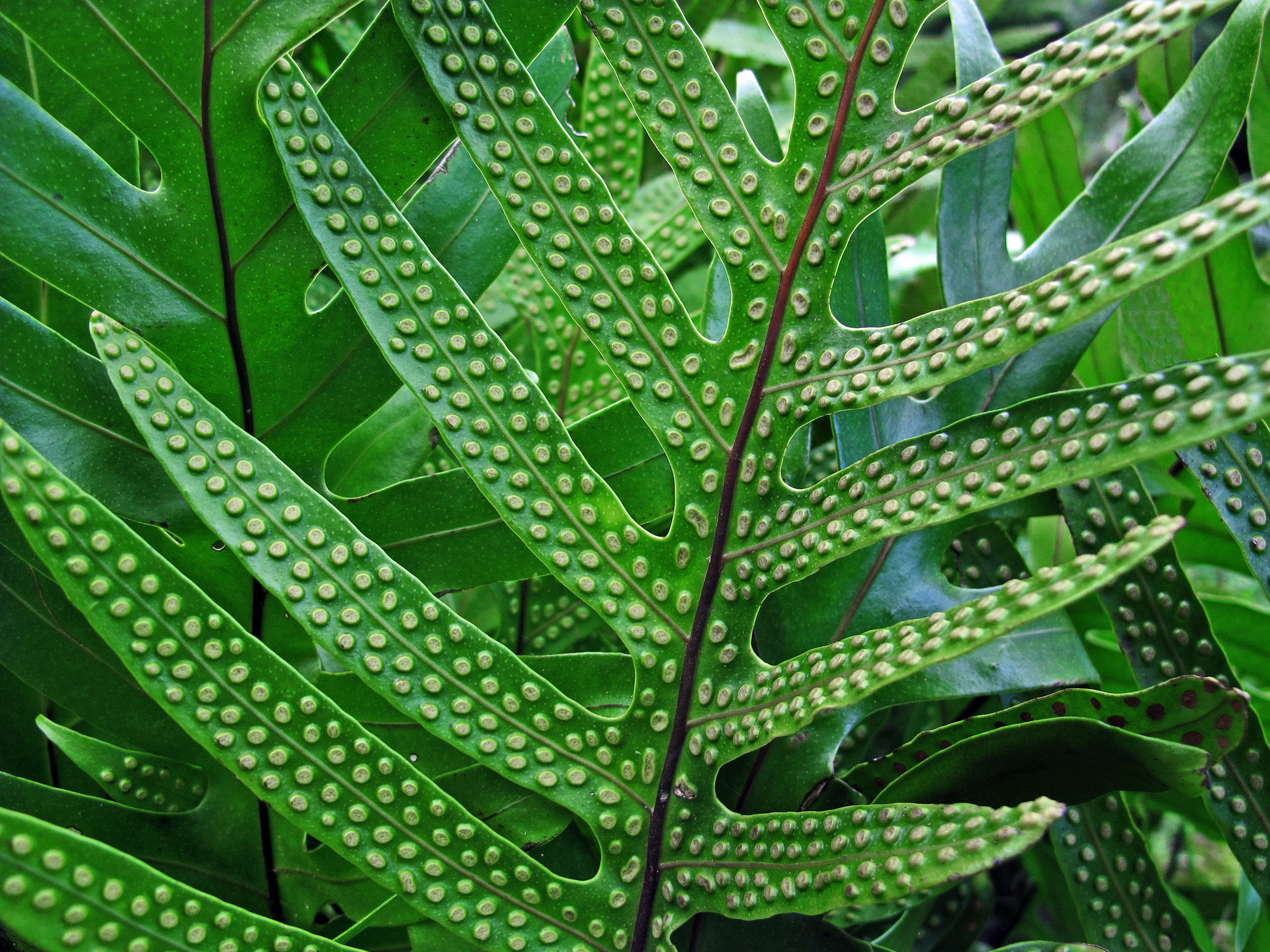
You taught me to see

for Dickie

You taught me to see light
falling through a broad leaf
from the underside,
its green veins illuminated
like a manuscript,
shining with lifeblood,
and the lacy fingers of ferns
hanging shaggy in rainforest
damp, droplets poised
just so at the tips,
pointing to something
else to be looked at
closely, to be studied
in the eyeblink it takes
for a shutter to open
and close, to capture
what many people bypass,
then praise after they
see it spring to life,
framed, hanging—
when they call it
art.

Limahuli Garden leaves, Kauai / Photo: Dick Schmidt
Posted in Uncategorized | 1 Comment

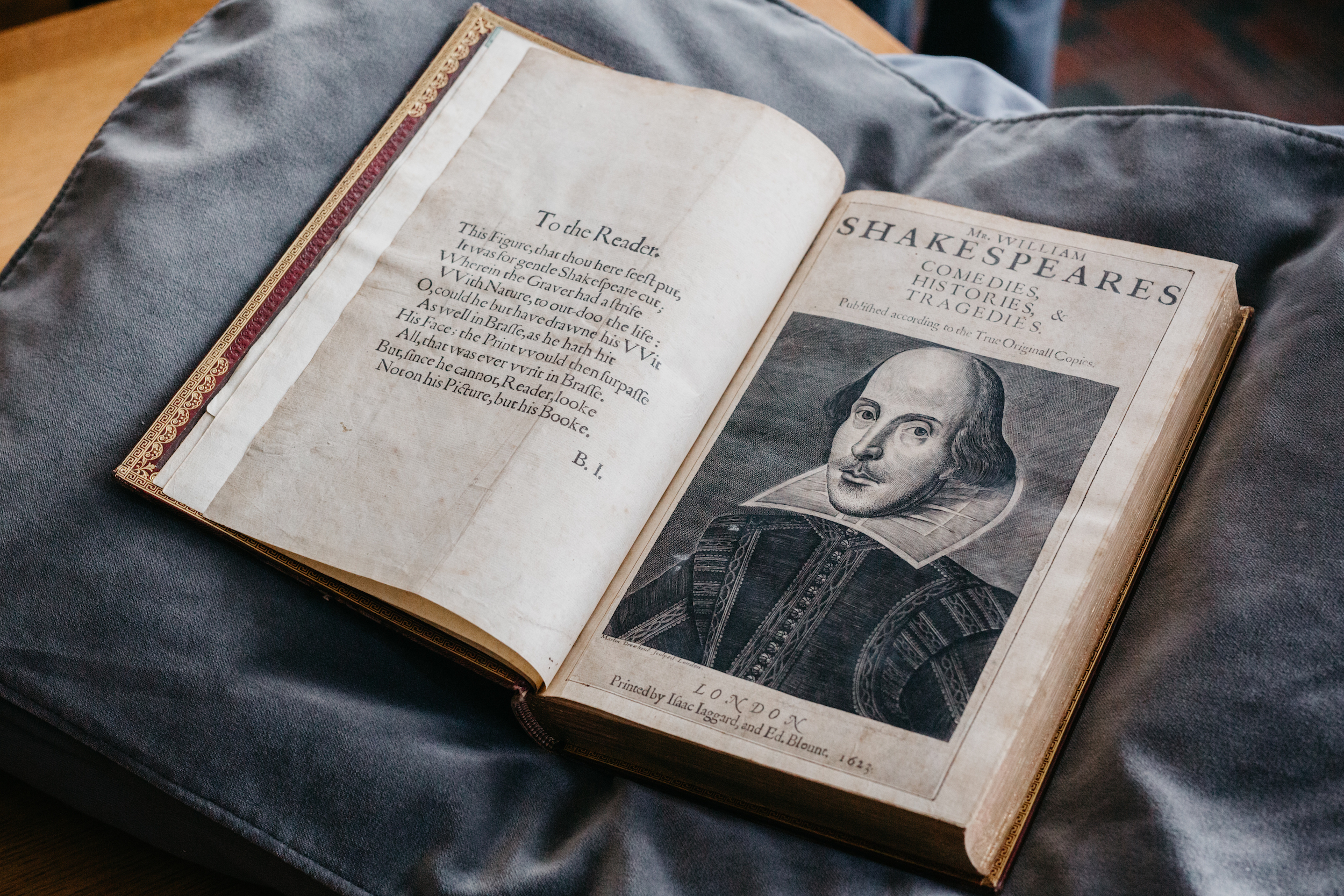
Poet dude

William Shakespeare’s birthday is traditionally celebrated April 23, though the date of his birth was not recorded. But because he was baptized April 26, 1564, which often happened when babies were three days old, his birth is celebrated on the 23rd, which, coincidentally, is also believed to be the date on which he died 52 years later.

***

Why’s dude so famous?
a student once asked me.
Because he’s perhaps the greatest writer
in the English language,
I said.

The student, a lanky kid made
more for basketball than literature,
said, You call that English?
And I said, Yeah, a really old-style
English,
to which he nodded,
and said, Show me.

So I went all fangirl, whipping out
a little Macbeth contemplating murder:
Is this a dagger I see before me?
A sonnet or two, a little love poetry:
I do love nothing in the world so well as you—
is not that strange?

A little philosophy from Prospero:
We are such stuff as dreams are made on,
and our little life is rounded with a sleep.

And a full-court press from Ophelia:
We know what we are,
but know not what we may be.

And I recited and showed him
scenes from plays—Juliet panting
after Romeo, King Richard hollering for
a horse, any number of sword fights.
The student listened, he nodded,
didn’t seem enraptured.

He went away for the summer,
returning, to my surprise, to sit
in the front row of my creative
writing class, telling me he’d been
captivated by the old poet dude—
he’d watched all the movies; he
wanted to write poetry, too.

And he did, full of meter and rhyme,
though I told him he didn’t have
to do it that way. And he came
to my office after class and said,
Ma’am, I gotta rhyme!
I just gotta rhyme!

So he did, touching my old heart
with rhymes that were something
more than rap, that sang, as he said,
with the iambic and the pentameter,
among other rhythms he didn’t
even try to name.

And when he presented me with
a sonnet—14 lovely lines, a fine
rhyming couplet at the end—
written for his lady love,

I swear I got misty-eyed
listening to the young poet dude,
of whom, I had no doubt,
Will and I were both so proud.

Will’s works / First Folio (published in 1623) at the University of British Columbia Library
Posted in Uncategorized | Leave a comment