
The memory of your face,
your voice, your embrace,
your last kindness, so that,
as I leave you in this moment,
if I should not return,
you will remain tucked
into the folds of my heart,
my brain, my cells,
where you will stay,
ever as I go.

The memory of your face,
your voice, your embrace,
your last kindness, so that,
as I leave you in this moment,
if I should not return,
you will remain tucked
into the folds of my heart,
my brain, my cells,
where you will stay,
ever as I go.
I am drawn to the circular path,
the one-way passage to the center,
then retracing the same way out,
though it never looks the same.
I gave her the little silver spiral
set onto a turquoise glass pendant.
I don’t recall how often she wore it,
or if she did, our lady of the zillion
necklaces, which she left to my sister
and me.
This one is more her style than mine,
but the spiral reminds me of a labyrinth,
my favorite walking meditation that
always settles something, even when
I don’t know what the something is.
As I walk the path and wind the curves,
I’m suffused with a kind of calm,
the same cool color that hangs
just below my clavicle.
Peace arrives unbidden,
descending as a form of grace—
another gift that I had no idea
she was leaving behind,
one I could not have found
until after she was gone.

(for Donna and Lauren and Rosie)
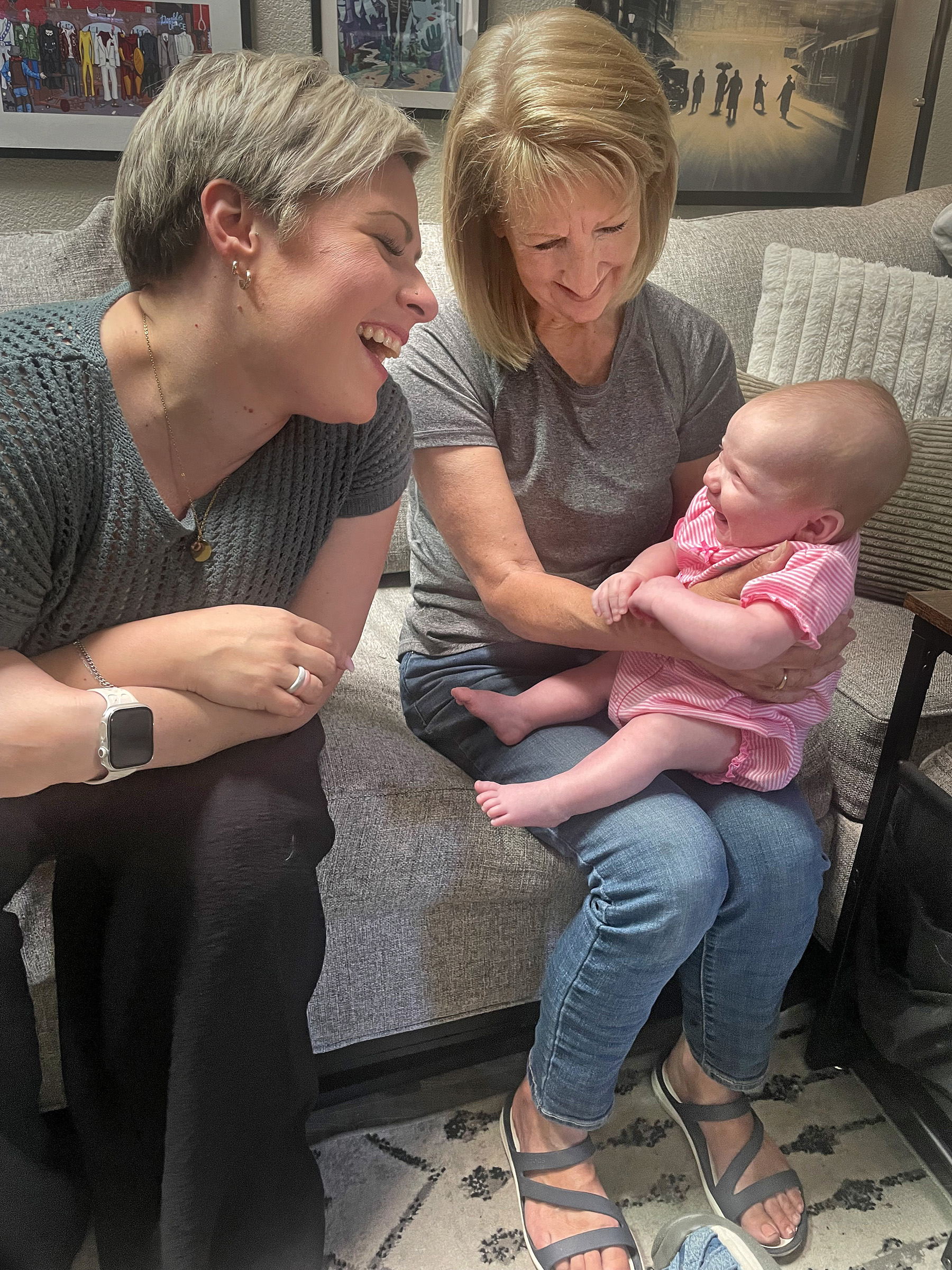
We love the boys, too,
but these three generations
of Just girls have my heart,
my sister who made me an aunt
on my 29th birthday, then my niece
who made me a great aunt
(You’ve always been a great aunt,
Aunt Jan, she loyally told me)
with Henry, about to be 2,
and now with Rosie, who at 2
months makes eye contact and
laughs and holds up her head
with surprising strength for
one so fresh out of the egg.
As the family matriarch
floated off into mystery
on the winter solstice, our
newest girl was still baking
inside her mama. Sitting
now with Just these three,
I cannot help but be amazed
by the going on-ness of it all.
“Every generation improves
the breed,” our long-gone
grandpa used to say,
and these three are living
proof of that. I hope that he
and the other ancestors—
them’s what made us—
drop in now and then
for visits, that they are
delighted by what they
started and how it so
blessedly continues.
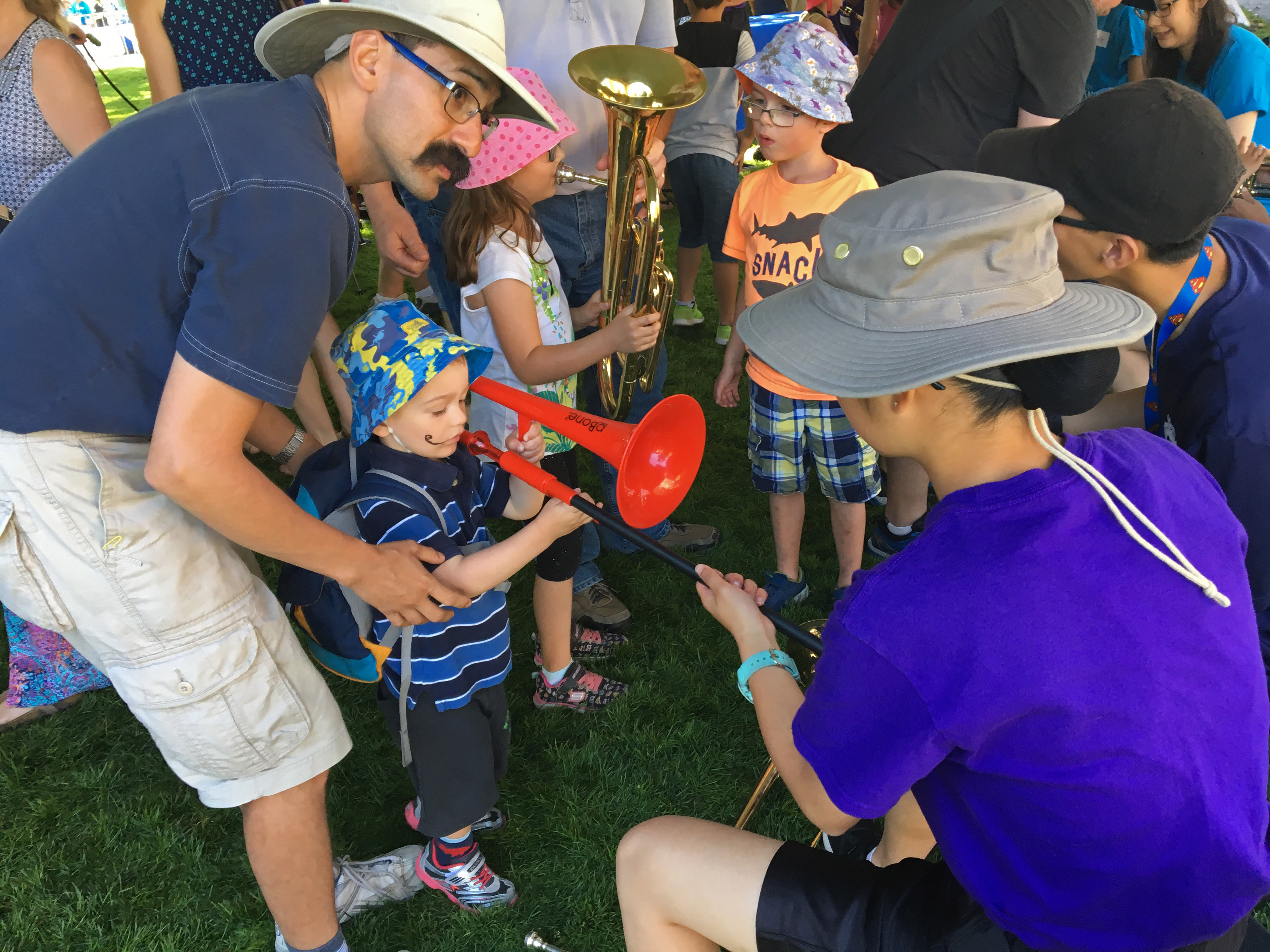
Creativity is a way of moving through the world, every minute, every day … Noticing what you find interesting, what makes you lean forward. And knowing all of this is available to use next time you sit down to work, where the raw data gets put into form.
—Rick Rubin, “The Creative Act: A Way of Being”
•••
Holding hands with creativity
turns out to be a way of being in a world
it’s sometimes hard to be in,
a form of faith that says,
There’s something in here
that needs to get out—
through a pen to a page,
through a brush dipped in paint,
through a horn blown alone
or with others to make a joyful
or sorrowful noise. So many ways
to let creativity take us
by the hand and say, Here,
sweetheart. Sit here and just
for a little, let this leak out of you.
Maybe others will see it or hear it.
Maybe it will touch someone else.
Maybe it won’t. But really,
it’s for you. Always, only, for you,
this way of being—no other way to be—
which takes not so much belief
but trust that your voice
is worthy of the page, or
the canvas, or the place where
you put the horn to your mouth,
and notes appear to hang in the air
for the briefest of moments,
then disappear, until you make
more of them, and more,
and more.
•••
(For the painters like my brother-in-law Eric and the trombone players
like my nephew Kevin, and the actors and composers and sculptors,
for the photographers like my dear Dick Schmidt, for the writers
who write with me and the ones I admire from afar, living and dead,
thank you for your gifts of creativity.)
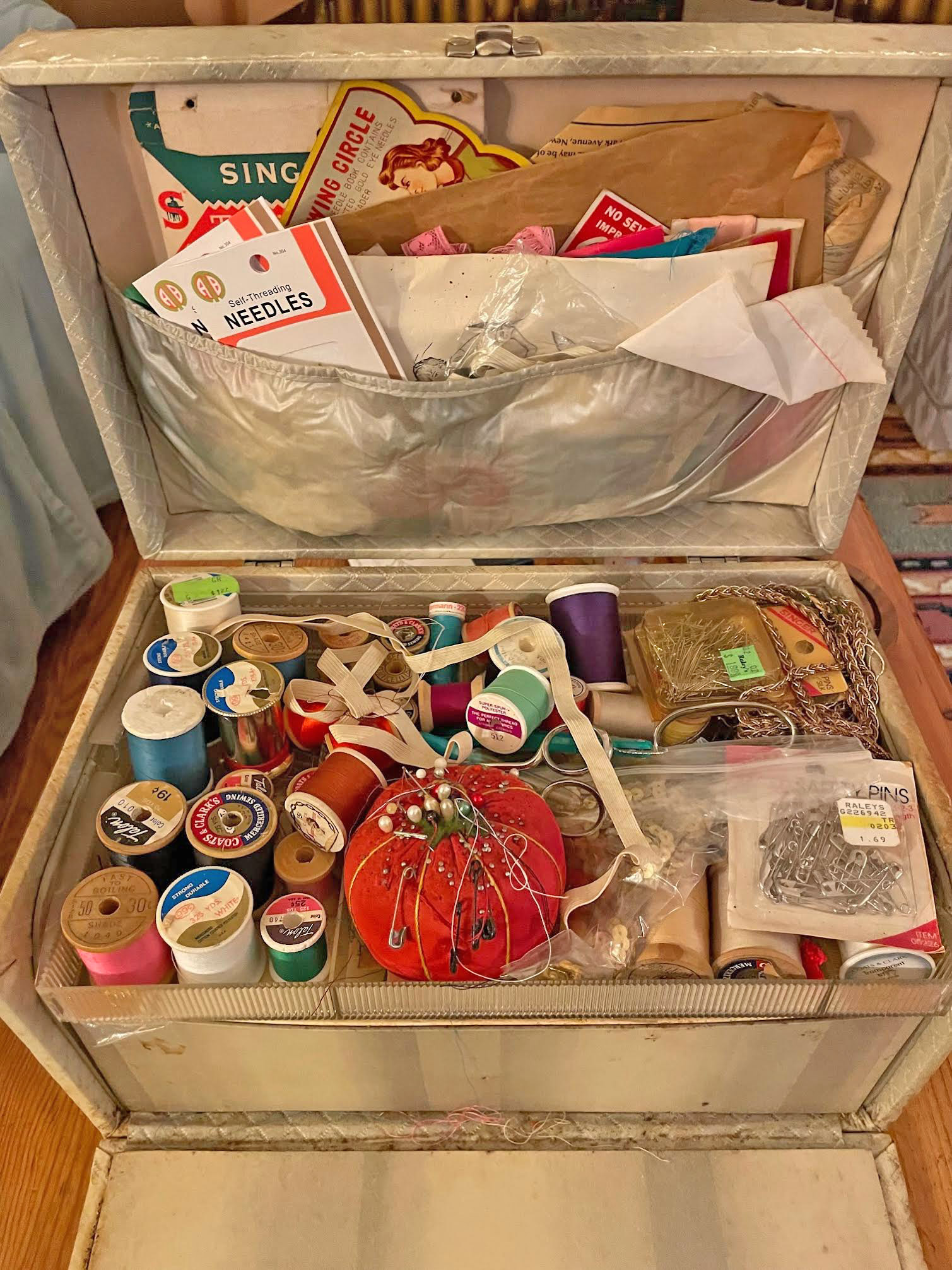
It seems like forever since I last opened
my mother’s sewing box, a motley collection
of notions she rarely used but kept on hand
just in case.
The strawberry pincushion with its elegant,
pearl-topped stabbers rests there with any
number of threaded needles, their unwieldy tails
proof that they are ready for action. See also
the seam rippers, a measuring tape or two,
safety pins, stray elastic, scissors used only
to cut fabric.
Hooks, eyes, snaps, elastic, interfacing, bias tape.
And my favorite—the palette of thread with colors
so vibrant I wanted to lick them like ice cream
atop a cone when I was a kid.
Why, of all her things, did I bring this sagging,
soiled thing home? Because, like too much else,
I could not bear to throw it away. Though she
rarely sewed and had limited skills with a bobbin,
she taught us how to tack on buttons and whip stitch
a hem. My clumsy fingers did not easily accept
the challenge, but my sister took to the machine
and set it humming,
Look at that bold purple thread, the seagoing
dark turquoise, the strawberry pink, the pistachio
green. How could I not want to preserve that
yummy spectrum of possibility?
How could I ignore the notion that so much
can be made from bits and bobs, that these colors,
aged but so vibrant, still live, waiting for
someone to finish what was long ago begun?
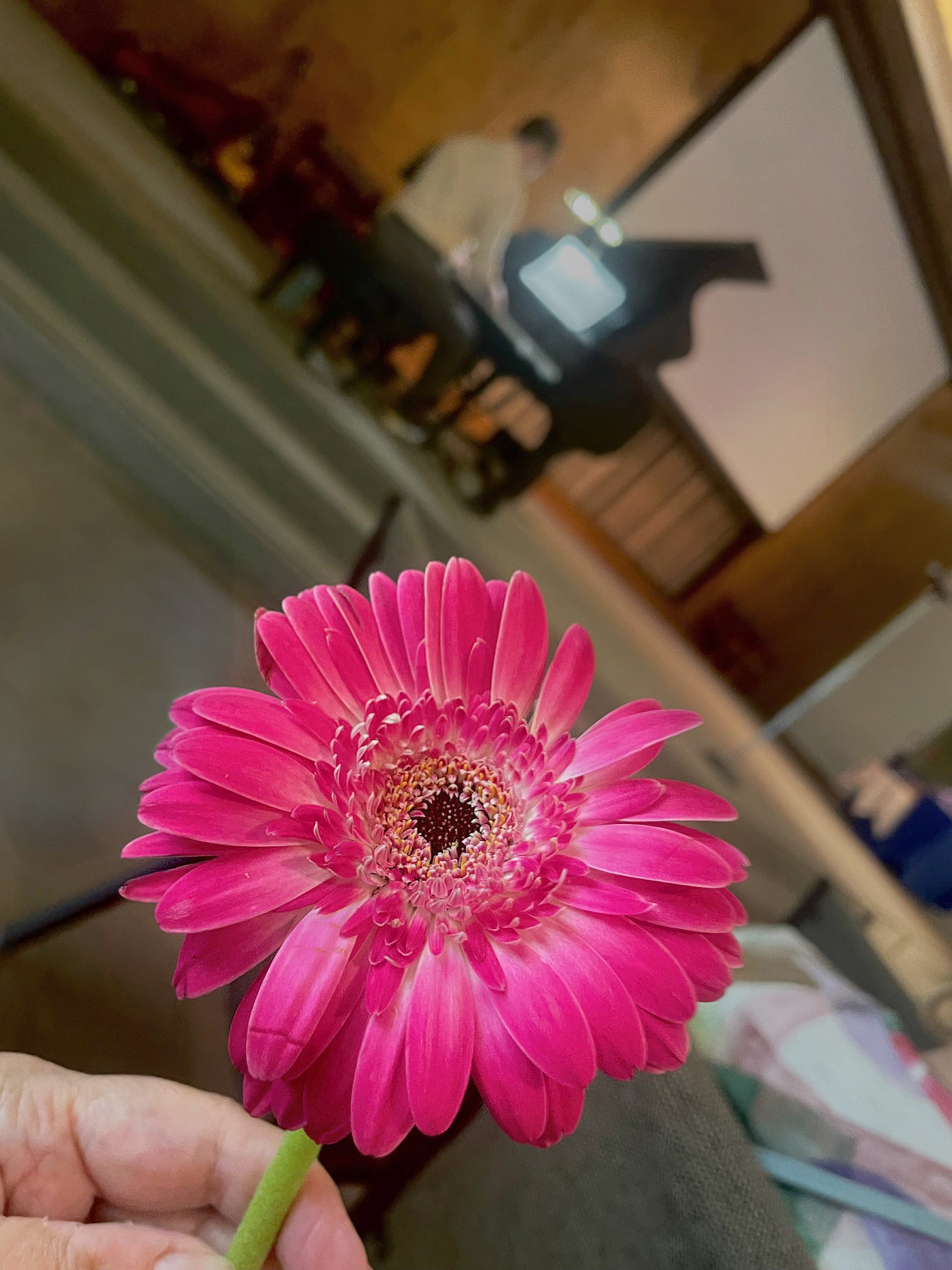
This is a flower, a gift from the earth from which it grows. May you know that the earth provides all you need. May you know beauty, and may all you do be a blessing to the world. You are the earth.
—from the Welcoming New Life ceremony for the children of the Unitarian Universalist Society of Sacramento, June 1, 2025
•••
There is no spiritual blemish
to be washed away, says the pastor
looking at the children, many of them
in their parents’ arms, assembled
before the congregation,
which cannot help smiling at
such a mass of squirmy-ness
and sweetness, as these little ones
from tiny to taller are welcomed
into this community of kindness.
They are gladly received—
nothing asked of them,
no atoning necessary—
embraced by strangers,
many of whom will come
to feel like family,
thankful for all the blessings
all of us have been given,
with an unwavering faith
that there will be better days,
that these children will
become a force for healing
in the world, for justice
and wholeness.
After watching child after child
receive a flower and a blessing
of water, air, fire and earth,
let us each accept the gift
of a flower chosen for us,
as we then select a flower
and offer it to another—
a holy nudge in floral form
so that we assembled souls
might also live as blessings
to the world.
•••
Thanks to the Unitarian Universalist Society of Sacramento—
especially the Revs. Lucy Bunch and Roger Jones—for their
embracing community, which extends so much kindness
and welcome to all.
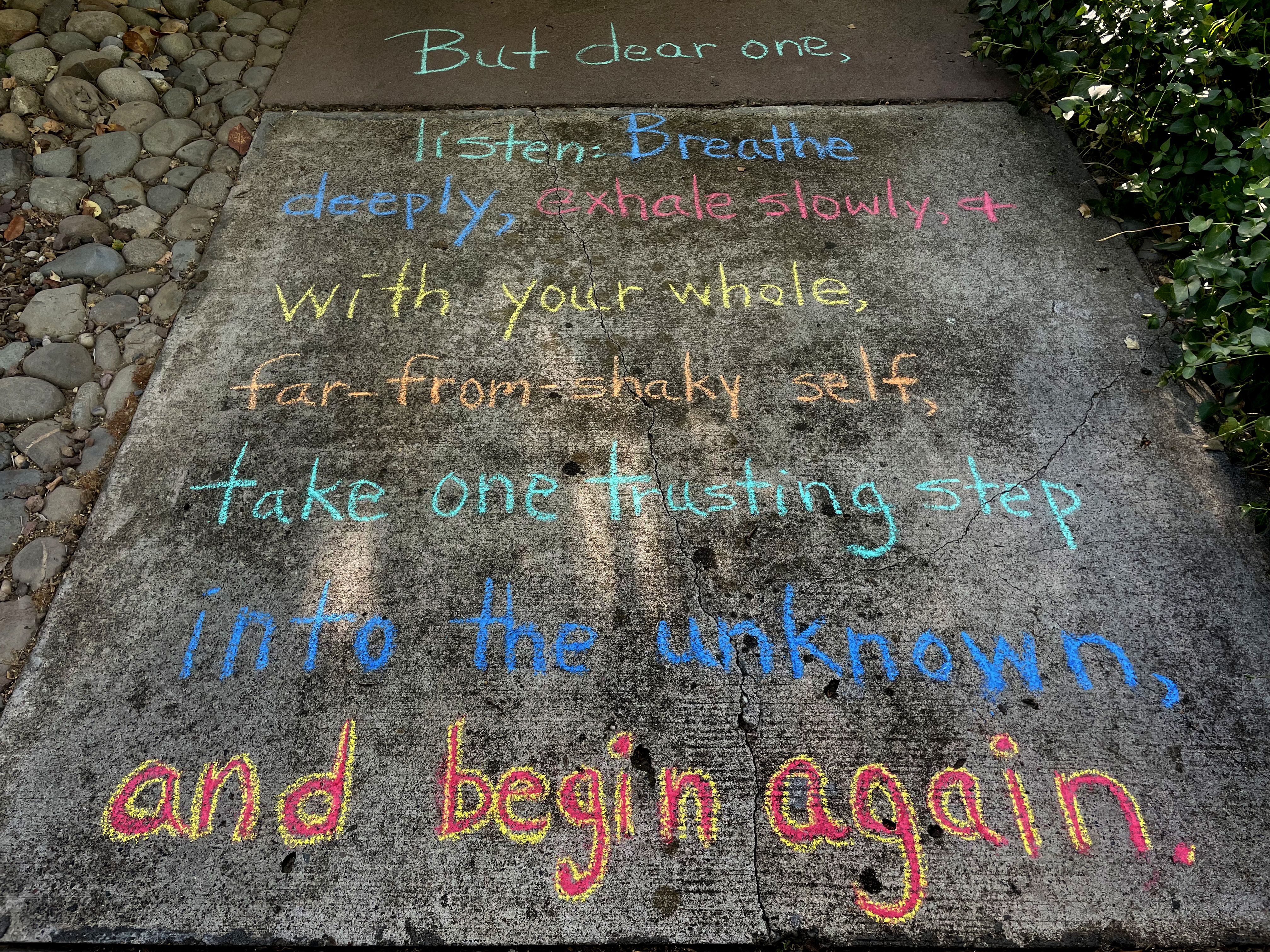
An experiment in driveway poetry (on my driveway). It’s the ending of an older poem, “This season”:
But dear one,
listen. Breathe
deeply, exhale slowly and
with your whole,
far-from shaky self,
take one trusting step
into the unknown,
and begin again.
You can read the whole poem here, if you like.
I drive by the big billboard that says
in four-foot-tall Times New Roman:
Who adopted who?
and the old English professor in me
blurts in the car, before I can stop myself,
Whom! Who adopted whom!
I knew I needed to retire when, one
sparkling morning in a writing class,
I explained this picky grammar distinction
for the approximately 12,745th time—
the subject who does the action;
the object whom receives it.
You wouldn’t say, She adopted she,
would you? No? She adopted her, yes?
Well, her and him and them and whom
are all objects. All receive action done
unto them… When about this time that
student in the back row piped up with,
Who said it has to be whom?
Why can’t it just always be who?
And for the first time I heretically thought,
Yeah, why not? Why sometimes
farther and other times further?
Why sometimes less, sometimes fewer?
I mean, seriously, said the student.
Does it really matter in this crazy world?
And I thought, nope, you know, it really
doesn’t in the great scheme of things.
We have fussed far too long over stuff
we don’t need to, and usage morphs
over time anyway. Someday, I told them,
whom will fossilize like a dinosaur,
and you will happily go who-ing
through the rest of your long lives.
And it will not matter, not one whit.
So if you happen to think of your
old fart grammar professor whom-ing
you in the distant past, know that
I will be smiling upon you from my
spot in the grammar-verse, you,
who* I greatly admire, you little
linguistic rabble-rouser, you.
•••
*Yeah, that last “who” should really be “whom.”
Can’t help myself.

I’m pretty sure they gather in my back yard,
the dead loved ones and the ancestors,
chatting quietly in the night,
their voices rustling like the susurrations
under the whispering sycamore leaves
big as bread plates every summer.
I lie awake sometimes, listening to
their murmurs, imagining that they’re
talking about me.
They must have so much to talk about—
like band members assembling for practice
before the director takes the podium.
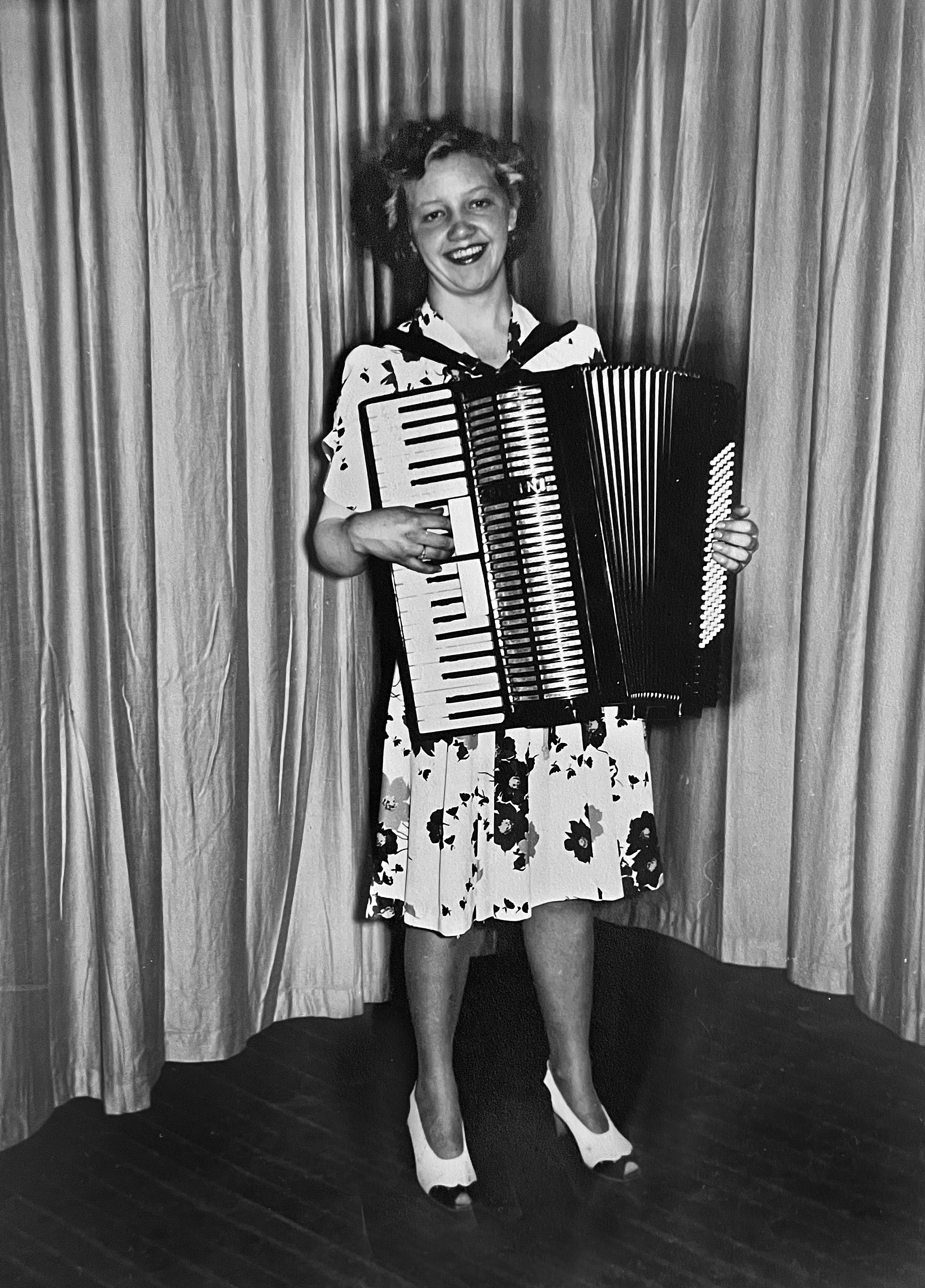
Auntie Lo has taken up her accordion again,
her favorite childhood instrument,
which, while not often found in a band,
works here just fine. My father, her brother,
weighs in on clarinet, though he also
reportedly played a wicked xylophone
in the basement of the house their
father built in Illinois, the storehouse
of so many horns and drums.
I wonder what my mother will play,
she the most recent family member
to join them. Perhaps she will sit
next to her father, the concert pianist
and organist, their four hands
stretching long over the keys,
playing duets, laughing. The grandmas
and grandpas, uncles and aunts sit nearby
applauding, as they used to when
my little sister and I performed
“A Spoonful of Sugar” accompanied
by Auntie Lo’s piano flourishes.
And more audience: my grinning best friend
and my lanky late husband and—
oh, look!—assorted dogs and cats
scampering under the big sycamore
tree once again. These beloveds whisper
and bark and purr through my dreams,
sing in my veins. Sometimes I rise,
go to the window, part the blinds
and look into the darkened backyard,
nicely spotlighted by a waxing moon,
imagining that if I soften my gaze,
I can see these dear ones engaging
in ghostly gossip as they tune up,
then turning to reach for me,
as I reach for them.
I see you from time to time,
jogging down J street as I drive by,
and I want to stop, leap out
of the car, and holler, “Baby!”
As though you came from me,
as if, ages ago, I had not had you
removed like a wart barnacling my
insides, before you could grow lungs,
draw breath. All these years later
you run by so casually alive,
a vibrant 30-something, long
hair swinging, sometimes caught
up in a ponytail, as you jog
past a woman who might have
brushed your hair, taught you
to walk and swim, driven you
places, had I kept you safe.
I cannot undo that decision,
one I did not regret for years
and mostly still don’t. But
when I see you now and again,
my woulda-coulda-shoulda
daughter, what is left of my
old uterus shrivels a bit more.
I blow you a kiss and send you love,
imagine you turning toward me,
smiling, hearing you call me
Mom.


 Güd wrtr