Bells

What body memory kicked in
the first night back in band
that had me automatically flip
the hard mallets to their nearly
silent plastic ends to practice
the bells part?

I peered at the music on the stand
before me and gently tapped the silver
glockenspiel keys laid out like
a small gleaming piano keyboard,
learning which notes go where
when.

It was not a difficult part, but
it’s been a minute, as the kids say
(or used to say?), and my fumbling
hands did not hit the right notes
in the right rhythms for most
of the first practice, getting lost
in the music more than once.

Yet, standing at the back of this small
symphonic wind ensemble in a new-to-me
band room and director, I felt a frisson
tingle my spine, a sweet hit of dopamine
that I remember from long ago
as the low brass warmed up,
as the tremble of tympani opened
a familiar spot below my ribcage.

And, doing the breathing exercises
along with everyone flowing air
through their horns, I remembered
the advice of my long-ago percussion
teacher—

that we in the back of the band
making music by striking instruments
need to breathe with everyone else
so as to be on the same page,
even when a little lost,
trusting that, with practice,
I will catch up just fine.

•••

For Dr. Molly Redfield and the Folsom Lake College Symphonic Wind Ensemble
with my thanks for including me in the band,

to the music teachers who, among others, first shaped this girl drummer
a half century ago: Tom Blackburn, Tim Peterman and Stan Lunetta,

and to my cousin, Dee Dietz Hann, the first girl percussionist I knew, who
inspired me to pick up mallet instruments, as she did so very well.

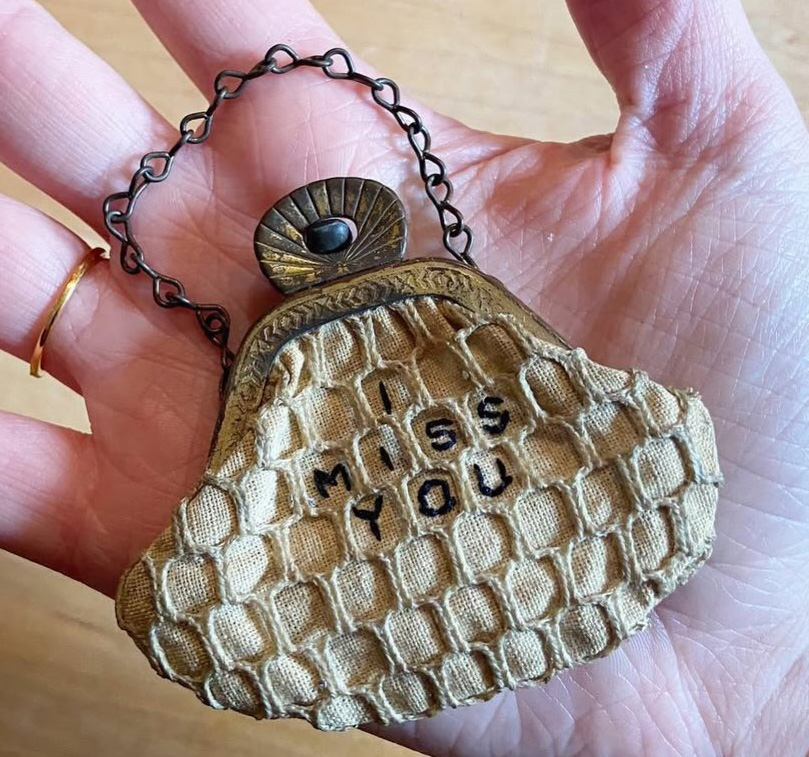
Glockenspiel / orchestra bells (Photo: Jan Haag)
Posted in Uncategorized | Leave a comment

Paperwhites

I step out the back door a bit before
midnight, walking into the dark
carrying the small basket of cardboard
and paper bits bound for the recycling bin
outside the gate when it hits me:

the sweet, musky scent of paperwhites
blooming their tiny heads off next to
the garage, bending gracefully as
as ballerinas in their tiny white tutus,
the unmistakable fragrance signaling
the first blooming things in the yard.

It’s mid-January, so the member of
the narcissus family is something
of a miracle to friends socked in snow
across the continent, which makes me
wish to bottle the scent and send
it to them.

I release the recyclables and, returning
through the gate, the heady fragrance
hits me again, and, as I step toward
them, inhaling deeply,

there’s my late best friend
murmuring in memory,
Smells like a French whorehouse.
And I laugh into the night, still pretty
sure she had never been near one.

But then I think of others who recoil
at this smell that reminds them of cat pee
or dirty socks. Why my nose likes indole
(the biochemical also produced by
gardenias, jasmine, tuberose and,
interestingly, Chanel No. 5),
I have no idea.

But the pollinators and I dig it,
so tomorrow when, with luck,
the sun will brighten the little
white dancers, perhaps I’ll catch
a glimpse of early bees at work.

And if not, I’ll just bend, sniff
and return their smiles, these first
signs of floral radiance to come.

Paperwhites, my house / Photo: Jan Haag

Posted in Uncategorized | Leave a comment

Unremembered peace, forgotten joy

Whatever may be the tensions and the stresses of a particular day, there is always lurking close at hand the trailing beauty of forgotten joy or unremembered peace.

—Howard Thurman
philosopher, theologian, Civil Rights leader
1899–1981

•••

How quickly we forget the bliss,
much less the simple okay-ness,
when the awful comes to call.

It doesn’t knock politely;
it barges in, knocking over
the furniture, upending

our carefully cultivated calm,
smashing the peace into,
well, pieces. The awful

settles into our chests, our
bellies, our throats like a
wicked virus unwilling to leave,

determined, it seems, to
take us down, down, down.
But just over the shoulder,

if we look, we see forgotten
joy waving its little snapshots
at us. Making cookies with

the grandchildren. Holding hands
with a beloved, even for the last
time. Taking a kitty or doggy

into our arms, on our laps,
smiling when they nuzzle in
for a pat. Unremembered peace

sticks close, too, often delivered
in small doses—a spoonful
at a time. But it can be enough

to usher the awful out the door,
even for a moment or three. It will
nose its way back in soon enough.

May we pick up joy’s snapshots,
tucking them into the photo albums
of our hearts, helping us hold

others with great tenderness.
Let us sip sweet peace, chase it
with a dollop of chocolate sauce

and a lip-smacking mmmmmm!,
which brings us back to joy,
not forgotten at all.

The late, great Redford kitty with his fabulous blue eyes / Photo: Dick Schmidt

Posted in Uncategorized | 4 Comments

Making something out of nothing

Soap bar prints, “Purgatory,” 2009, by Jesse Krimes

Leave a message
for whoever is coming next.
Even if nobody is coming next.

—Elizabeth Gilbert

•••

Like the imprisoned man who
impressed mugshots printed
in newspapers onto small bars
of soap, then hid them between
playing cards.

Or internees during World War II,
imprisoned for their Japanese ancestry,
making art from found materials—
tin cans, fruit crates, onion sacks—
turning the ordinary into the lovely.

Like the man who carved teapots, teacups,
candy dishes and inkwells from slate
in the Utah desert, along with the creative hands
of painters, of sculptors who turned shells
into floral pins and figurines.

Each of us makes something from
seemingly nothing every day,
messages to others who might
happen upon what we’ve made.

Or maybe not.

What matters is that we made
something from something
discarded, something unwanted,
figuring out how to do
the undoable,
through trial and error,
sometimes under threat
of punishment.

We made something.
Sometimes people.
Sometimes art.
Sometimes love.
All of which are
so not nothing.

•••

For Eric Just, my talented artist of a brother-in-law, on his birthday, with admiration and love.

Teapot made from found slate by Homei Iseyama while in internment camp during World War II, Topaz, UT.

Posted in Uncategorized | 4 Comments

Band

I stand at the kitchen counter holding a pair of slender hickory drumsticks I haven’t used in four-plus decades. My 35-year-old nephew, a middle school band director, has told me that no one holds drumsticks the way I was taught—the left hand turned up, thumb up, stick lying in the webbing between thumb and index finger, index finger loosely wrapped around; the right palm turned down, stick between thumb and forefinger.

The traditional grip, they call it. Military drummers used it, and jazz drummers. But nowadays, my nephew says, drummers exclusively use the match grip—both palms facing down, like the right hand in the traditional grip. What tympanists use on the big (as they used to be called) kettle drums, which I also used to play. Or on the xylophone and marimba.

I look up the grips online—as one can do nowadays—and I read that the match grip uses twice the arm muscles as the traditional grip, “allowing for more control and power. Match grip is literally physiologically superior,” it says.

Just reading that makes my hands ache.

What am I doing, heading back to a community college night band at age 67 and (almost) a half? I promised myself four years ago that, after retirement, I would do things I hadn’t had time to do as an always-teaching, never-idle college professor. Take an art class or at least try to swash watercolors across paper just for fun. Pick up music again. Go back to a band—concert or symphonic since I am not a jazz drummer, though I love jazz.

And there’s a reason now in the family. Sort of. My nephew the band director is married to a woman whose sister runs the music program at a nearby community college. Molly, the college band director, is a Ph.D. stand-up jazz bass player, who like her father, is now running a music program. Molly’s father, Clay, played saxophone in the night junior college band my sister and I played in as high school and early college students. Clay went on to become a doctor of music and teaches at the university down the street where I went to school long ago and where my nephew, the band director, got his degree in music education.

As they say, family is complicated, but in this case we are all musically related.

Molly started a nighttime jazz band at this community college couple of years ago, thinking, correctly, that musicians and music teachers in the area could come play together one evening a week. She’s done the same thing with a symphonic band. And her father Clay has joined both bands as a percussionist.

The first time I saw him behind a vibraphone in the jazz band, I about fell over. “You’re playing vibes?” I said, stating the obvious at the end of a pop-up jazz band concert in the college library a couple of years ago.

“Yeah,” he said a bit sheepishly. “I’m learning.”

Music professors have to learn to play every instrument, at least a little, so they can advise their students. So Clay must have had some percussion experience. And over the past couple of years, attending Molly’s bands’ performances, I’ve been impressed watching Clay’s progress as a percussionist—especially at the most recent concert when he was playing tympani quite well in the symphonic band.

And besides, just before that concert, at Thanksgiving at my nephew and niece-in-law’s house, I talked to both Molly and Clay about joining the symphonic band. “Do it!” they both urged. And so, after lots of challenges trying to negotiate my former college district’s insane online registration system (always a problem for my former students, too), I have officially enrolled in my first community college class in more than 40 years.

The first band class is next Thursday, and I have no idea how to prepare. Percussionists play whatever the music calls for, often pieces that involve a lot of counting measures of rest, waiting to come in here and there. Or they can require, say, a tricky bells or xylophone part, a run up the keyboard with two mallets held in, yes, the match grip. Don’t ask me to try four mallets on a marimba.

Honestly, I hope I end up on the bass drum. Or a triangle. I can probably handle a triangle. I have one at home. I can practice that.

In the meantime, I have recovered my heavy-duty metal music stand from the garage, dusted it off and set it in front of my marimba, which usually slumbers under a few layers of fabric to protect its four octaves of rosewood keys. It’s a beauty, made in the 1950s, and my mother bought it for me twenty years ago because I’d always wanted one. I found it on ebay, offered by a percussionist in Boston who’d taken lessons from one of the most famous Boston Pops percussionists back in the day. He wanted $5,000 for it, including shipping, which must have cost a fortune, since it had to be taken apart and shipped in wooden crates.

I still think it was a bargain, and, bless her, so did my mother who said she’d wished she could have afforded to buy me a marimba when I was actually playing in bands. But I went on to become a professional writer and journalist, eventually a teacher, and left music behind.

So last week I retrieved my old black stick bag from a tall bamboo basket and pulled out fuzzy tympani mallets with ends that look like falling-apart cotton balls and the skinny drumsticks and the triangle. And I am practicing on the kitchen counter—having long ago given away my practice pad and snare drum—using the match grip, then taking that same grip to the marimba where I peer over the gorgeous rosewood keys at the music on the stand and try to remember how to read music. Treble clef, the right hand on the piano. For tympani, I will have to remember bass clef—the left hand on the piano.

I don’t have a piano, so I’m picking out things on the much larger but identical keyboard that is a marimba, the overgrown xylophone that is the cousin of the metal vibraphone that Clay plays in jazz band. I used to have one of those, too. I am trying to stay loose and enjoy being a beginner again, a raw lump of human who loves music and is willing to try to play badly as my body recalls motions it used to know well. Relearning how to read music is like regaining a lost language—rather like going back to a sport that’s both physical and mental.

At this age I don’t mind walking into a band room and declaring myself a beginner, something I never would have done in the days when it was all about showing up prepared and looking competent. I’m chalking up to maturity this willingness to embrace beginner’s mind. Or perhaps it’s part of a greater life journey, a full-circle movement back to a much earlier me.

Or maybe it’s because I’m looking forward to standing at the back of a collection of people making music, adding little bits of percussion here and there, but mostly being carried away on a wave of sound that is unique every time the same parts are played. All of this will be done with a group of disparate humans who come from very different lives, working together to produce something lovely—or as at least as tunefully as they possibly can.

Jan Haag, freshman drummer in marching band, fall 1972 / Photo: Darlene Haag
Posted in Uncategorized | 4 Comments

New moon night

It always looks darker when the new moon rises
because from where we sit, we cannot see the sun
illuminating the far side of our nearest neighbor.

And on this new moon night before the day
honoring one who gave his life on behalf of all
who struggle, when so many are being made

to feel less than in the country I think of as mine,
we remember the man who said that he might not
get to the promised land with those he marched with.

But, Dr. King, they are still marching.
We are still marching, making our voices heard
on behalf of those whose are suppressed.

Keep marching, keep marching on.
’Cause your ancestors are all the proof that you need
that progress is possible, not guaranteed.
It will only be made if we keep marching,
keep marching on…

In your name, and the name of all
that is fair and kind and good,
even on the darkest of nights.

•••

You can watch the terrific performance of “Keep Marching” (written by
Shaina Taub for her brilliant musical, “Suffs”) by Alex Newell and
Broadway Inspirational Voices.

Dr. Martin Luther King Jr. linked arms with (from left) Ralph Abernathy, James Forman, the Rev. Jesse Douglas and John Lewis as they marched from Selma to Montgomery, Alabama, in a series of three marches along the 54-mile highway, between March 7–25, 1965.
Photo: Steve Schapiro / Corbis / Getty
Posted in Uncategorized | 2 Comments

Ground fog

Driving home tonight
through cataracts of gauzy air

that have curtained themselves
all the way to the ground,

the long ago returns
in soft focus—

driving an hour home on
narrow levee roads winding

through the dark
after lying in his arms for hours,

barely able to see beyond
my headlights

for more reasons than one.

How did I ever safely make it home
to the man waiting for me?

How reckless.
How besotted by

the fog of love overtaking
all good sense and reason.

How I didn’t question it then.
How perhaps I still shouldn’t.

Great blue heron in fog, American River / Photo: Lewis Kemper
Posted in Uncategorized | 2 Comments

Overthrow

(In memory of Queen Lili’uokalani of Hawaii,
1838–1917, on the 133rd anniversary of
the overthrow of the Hawaiian kingdom)

•••

It is not the first time that the country
I think of as mine has muscled its way
into another and bent unwilling
people to the will of outsiders.

There’s a long list of which we should
be ashamed, including the overthrow
of the last Hawaiian monarch
on this day in 1893,

a queen deposed by a group of
mostly American insurgents,
mostly for their financial gain,
altering the history of the most
isolated islands on the planet
forever.

They later put the queen on trial
in her own throne room, accusing her
of plotting against those who usurped her—
or at least knowing about the attempt—
convicting and imprisoning her on
the second floor of her palace.

Each visit to that room leaves me
in tears as I stand before the quilt
quilt where the queen’s embroidered
handwriting lives—the one she and her
companion stitched after being convicted
of treason against the country that had
forcibly taken her kingdom from her.

Nine quilt blocks, some fabricated from
the queen’s clothing, inscribed with the dates
she took the throne and abdicated it:

Her Majesty Queen Liliuokalani.
Imprisoned at Iolani Palace. January 17th 1895.
Companion Mrs Eveline Melita Kiloulani
Kaopaokalani Wilson. Released Sept 6th 1895.
We began this quilt here.

To think that my country, ’tis of thee, could
attempt the overthrow of another innocent
island—the world’s largest—ignites long-
simmering outrage I thought I’d quelled.

But here we are, and I am as deeply shamed
by the actions of would-be empire builders
as some must have been in the 1890s,
as I whisper a long-ago overthrown queen’s
motto: ʻOnipaʻa.

May those islanders, like their Hawaiian
counterparts more than a century ago,
stand firm, steadfast, immovable in purpose
as they strive to protect what is so rightfully
theirs.

The quilt stitched by Queen Lili’uokalani of Hawaii and her companion, Mrs Eveline Melita Kiloulani Kaopaokalani Wilson, while both were imprisoned in 1895 in ‘Iolani Palace, Honolulu, Hawaii.
(Quilt preserved and maintained by the Friends of ‘Iolani Palace, Honolulu, Hawaii.)
Posted in Uncategorized | 2 Comments

The quiet gift of stretching

I’m pretty sure the headline meant
the body, with an image of a woman
with leg in the air, actually
stretching.

But my mind went to trees lengthening
their long spines toward the light,
bending as necessary, or perhaps
by desire,

and I thought again how fortunate
I am to be able to fold at the waist,
give my own flexible backbone a break,
and—really, how simple,

rising on a long breath—to imagine
my skull opening a tiny bit, lifting
toward the light, stretching toward
what is possible,

even if I’m not quite tall enough
to perceive it. Yet.

Bamboo, Batumi, Georgia, Botanical Garden / Volha Vasilevich, Dreamstime

Posted in Uncategorized | Leave a comment

Nothing Day

Though some folks with a wicked
sense of humor decided to name
their stretch of Arizona desert

Nothing, and though today on someone’s
humorous calendar has been dubbed
Nothing Day, I can’t designate

even one of the increasingly fewer days
that lie before me as nothing. I hope
to have many quiet days ahead with

no particular thing pressing on me,
but let there never be a Nothing Day.
And if I imagine that there is, let me

take myself outside for a walk down
the block to witness so much Something
in the seemingly ordinary.

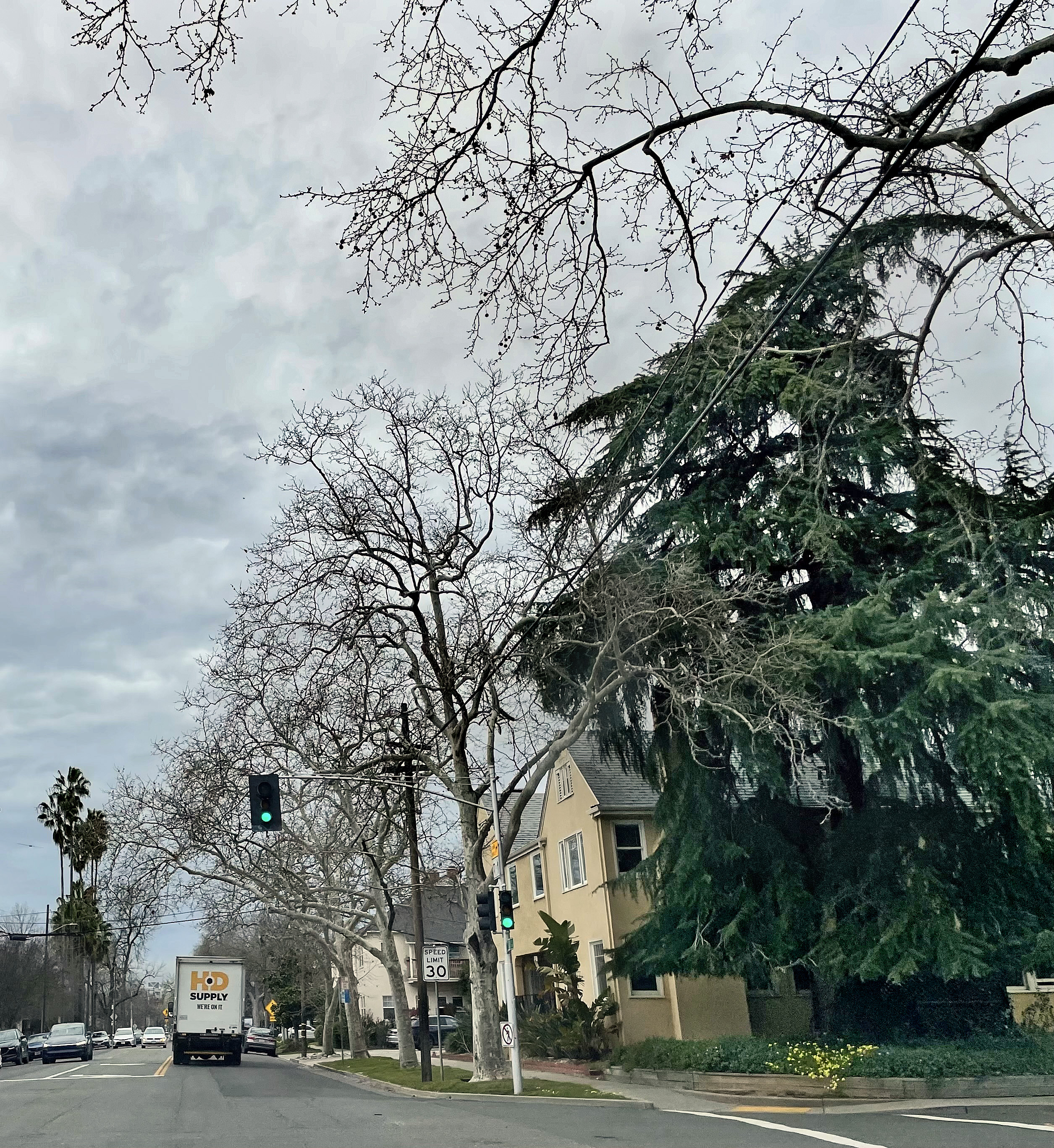
Like the fact that the sun is shining
on winter-bare trees busily preparing
foliage that will soon pop out,

days when I will again find myself
marveling at the cycle of things
that die as other things ready

themselves to be born, gloriously
“ta-da!”ing their way into the world,
this world, our world, right here,

regenerating without human
interference—miraculous, really—
not nothing at all.

Nothing, Arizona / Straight 8 Photography / Shutterstock
Posted in Uncategorized | 4 Comments