Soft kitty cry,
I reach out a hand
touch the soft, smile, sigh.
When he cries, I hear
her voice answer him from
her place in the firmament:
Maxi, I’m here.
This, now, is how
she appears to
both of us.
•••
(for Mom)

Soft kitty cry,
I reach out a hand
touch the soft, smile, sigh.
When he cries, I hear
her voice answer him from
her place in the firmament:
Maxi, I’m here.
This, now, is how
she appears to
both of us.
•••
(for Mom)
This old dog loves to learn
new tricks, squirelling away
newly acquired facts
like, well, you know,
not caring about mixing
metaphors or other
annoying rules. Like today,
reminded by my favorite
bug writer/photographer
friend writing about
Valley carpenter bees,
aka teddy bear bees,
that, in the words of an
esteemed entomologist,
“Boy bees don’t sting.”
That’s right up there
with “Big girls don’t cry,”
in my humble estimation,
so now I’ve got that earworm
(to use a nifty science term)
buzzing around my brain.
Who knew that the blond,
fuzzy boy bees with green eyes
are not only dreamboat
carpenters but also great
defenders of the nests as well
as doing their part with
female teddy bear bees
to make baby teddy bear bees?
Another reason not to fear
flying blond teddy bears because,
now I know (sing it with me),
“Boy bees don’t sting.”
•••
If you need to hear this (and you know you do),
give a listen to “Big Girls Don’t Cry” by Frankie Valli
and The Four Seasons (1962). Songwriters: Bob Crewe
and Bob Gaudio.

Good night, sweet ones,
as you head into the dark.
Oyasuminasai—wishing
you restful sleep, as they
say in Japan.
Buenas noches to your
yawn, to your mind
curling around itself
readying for rest.
Buonanotte, whisper
Italians, as your
lashes kiss each other
and settle into sleep.
Oíche mhaith,
they say in Ireland, as
you try to wrangle your
tongue around it:
eee-ha wah
Or, as they say in Jamaica,
Gud nite, boonoonoonoos,
darling one,
Gud nite.
Some people like to build boats in the basement.
I like to do things to food.
—Julia Child
Bless me, Julia, for I have stepped
again into the kitchen where I have
few natural gifts,
and though I am not tackling any
of your greatest hits (still working
up the nerve to attempt
your French onion soup), I have,
in recent weeks, made five batches
of custard, and dazzled the man
in my life by showing up in his
kitchen with ingredients chopped
and ready to sizzle in the wok
for chicken stir-fry. Forgive my pride
in carrying off this simple meal
reasonably well (the chopped
Brussels sprouts were a nice touch,
if I do say so myself), but I count this,
along with my friend Lisa’s split pea
soup that my mother loved in winter
and my grandmother’s brownies—
ideally not consumed together—
as one of a handful of kitchen
accomplishments (besides
opening umpteen cat food cans
over many decades). You who
dropped a whole turkey on the floor
(“well, that didn’t go very well”)
and picked it up and kept going
on live television remind me
that food failures happen,
that we laugh and start again.
And if I keep this up, I might
get brave enough to try your
Quiche Lorraine, the secret
of which, you said, was cream
in the custard, and, oh, Julia,
custard I can do.

All this light on Easter,
as so many wish for
and don’t have,
along with warmth
and tenderness and
blossoming things.
But hope, even under
a waning gibbous moon, 🌖
is also given this day,
every day, really,
to all beings everywhere,
not least, dear one,
from me to you.

Did I ignore the words
starting to ticker tape
their way across my brain,
imagining that I could
collect them later?
When, in fact, they would roll
away like spilled jellybeans, and,
needing to walk onto the next thing
and the next, and the next,
I could not go back and retrieve them.
Now, in the midst of running errands,
between the pet food place and the bank
and the sandwich place and the grocery store,
I sit in the parking lot and dictate
what is showing up, having no idea
if it is any good or not.
Not caring, really, just mindful
that it is almost Easter,
and jellybeans have been strewn
in front of me,
and, after all these years,
I have finally figured out that
the only sin is to walk by all those gifts
and not pick up at least a few bits
of sweetness.

To pay attention, this is our endless and proper work.
—Mary Oliver
This is my work in the world—
walking where spring has greened
the many waist-high grasses
and thickened the bracken and
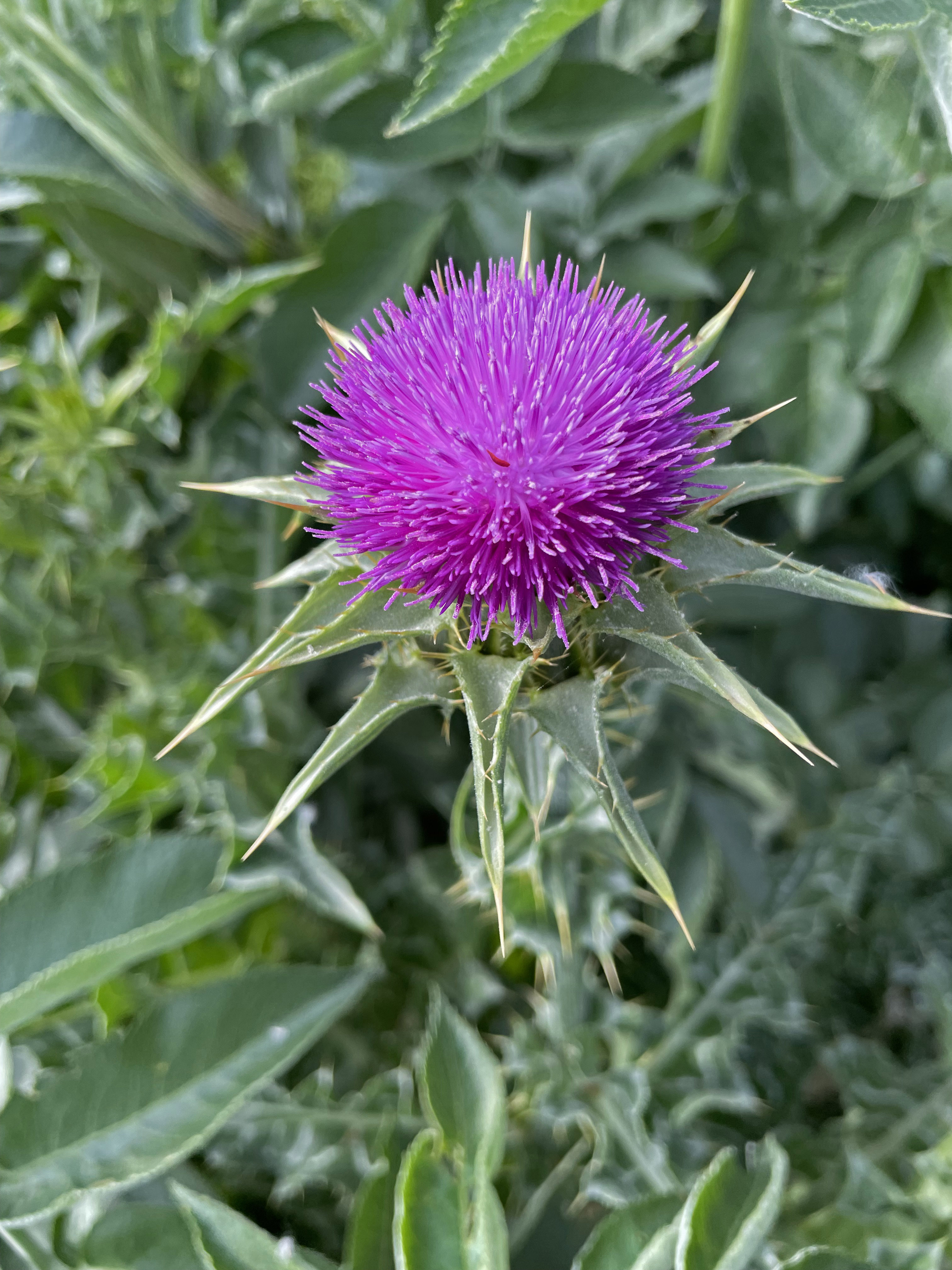
sent up the tall spiky milk thistle
and the propeller-like wild radish.
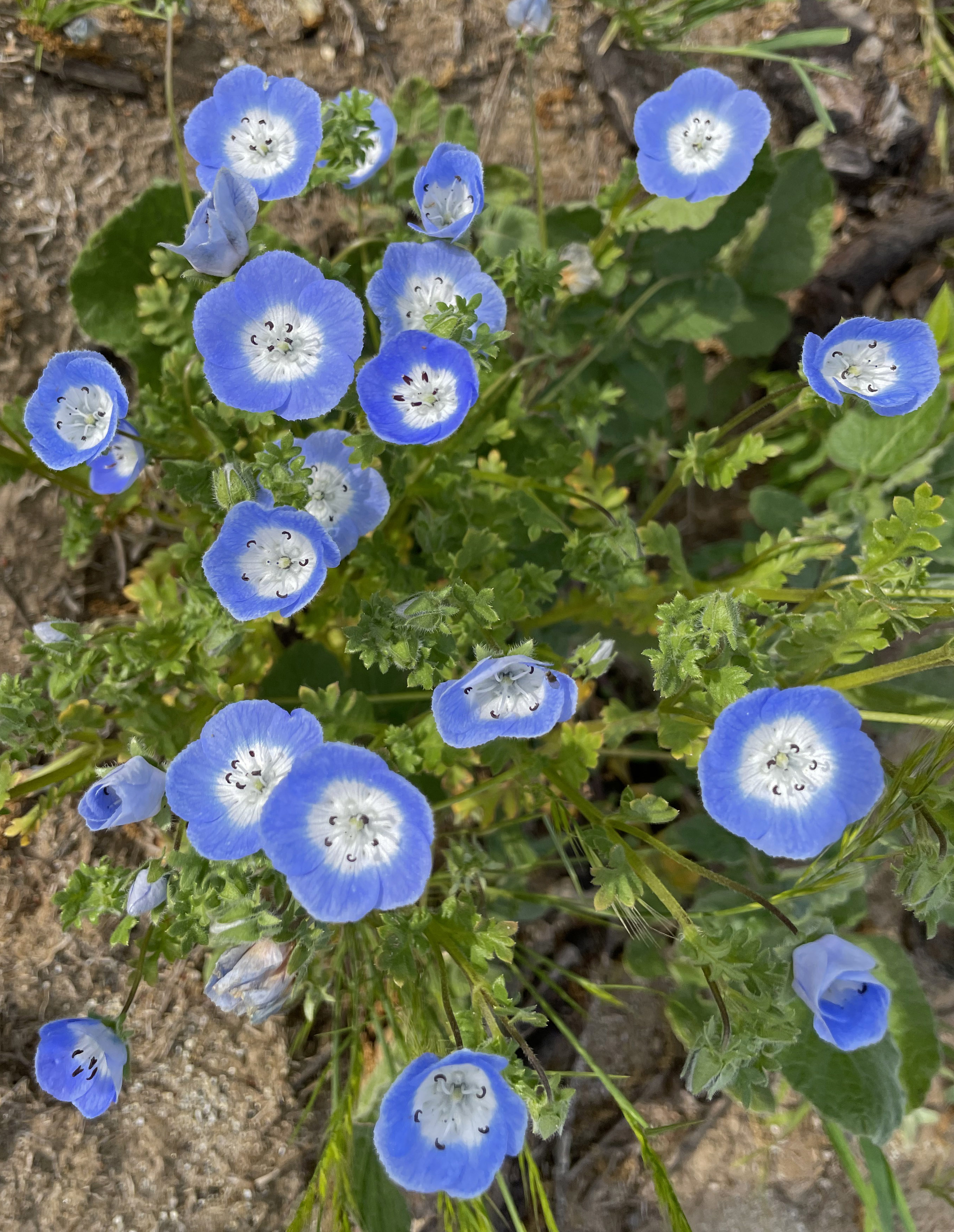
I stroll really, often pausing mid-step
to bend and peer at something
blooming like an eager teenybopper,
its petals shimmying in a just-right
breeze. And though I may have
a glimmer of its name buried
in the overstuffed filing cabinet
of my brain, that’s not what’s
important. I snap its photo
anyway, wanting to capture
the whatsits at its peak, sparkly
and young and full of life—
as we all are for a time.
I remind myself to pay attention
to the tiniest of everyday miracles
because what better work
is there than to walk through
the world and acknowledge
the lovely ones, whether we
know their names or not?
Those who likely see
themselves as the most
ordinary of living things,
but whose very existence,
however fleeting, blesses us all.
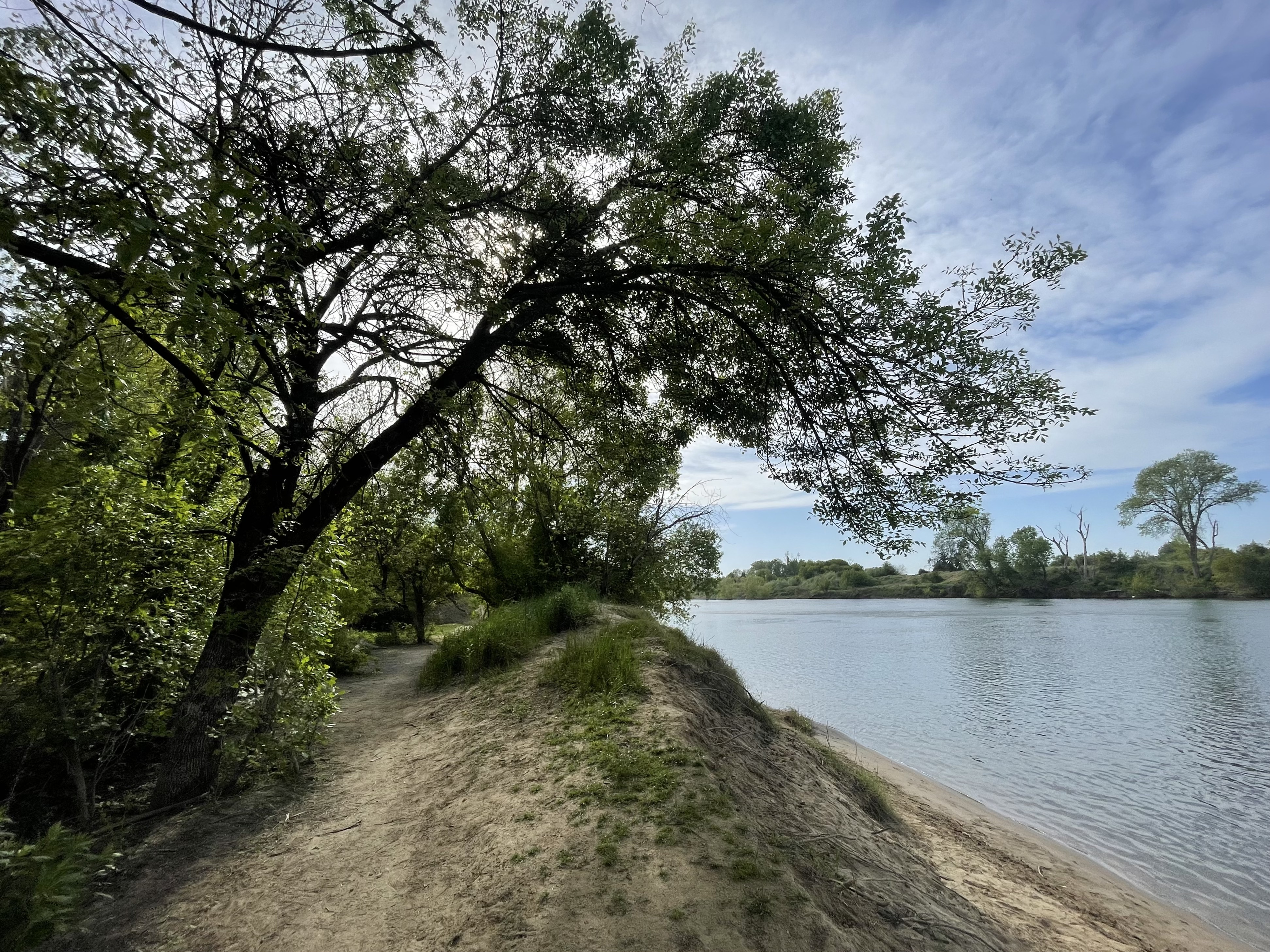
Needing the water
but far from the ocean,
I take myself to the river closest to me,
the same one that turns into a lake
by the house where I grew up,
then is strained through the teeth
of a great dam and released to flow
40 miles to the city where I now live.
I can’t explain why some days
I need to see water and motion
on its way to the sea that I am missing.
Call it longing, call it grief,
call it a settling.
But when I find my way to the riverpath,
walking and stopping to take pictures
of new purple vetch in high season,
its florets hanging like ringlets
off a young girl’s head,
I am startled by a splash and the arf!
of one of the resident sea lions.
His massive head emerges, a fish
in his jaws, which he flings across the water
in a pinniped game of fetch,
then dives after it.
I am completely taken out of myself,
caught up in the marvel, in the interplay
of life and death before me—
perhaps of actual play, too—
of being just one organism
in a great ocean or a swift river,
whether walking or swimming
or flying or crawling,
as all of us making our way
through this world
somehow manage to do.
•••
You can watch the sea lion I saw toss his fish here.
(for Dickie)
Forgive me as I take again
the sacrament of avocado,
which I know you find
distasteful, its texture
lining your mouth like
mushy wax. Even I
object to an unripe
specimen’s chalky taste,
and if they go bad, they
go bad, baby. So turn
your back as I peel, then
scoop the creamy innards
from this ready-to-be eaten
indulgence, not thinking
about the fact that it’s a
fruit (it contains a seed,
after all) or its good fat
and fiber and an alphabet’s
worth of vitamins, not
to mention the antioxidants
that are good for eyes
and brain. No, I’m just
anticipating the smooth
after the mashing on
a hot summer afternoon,
the first bit of green glop
in the mouth, along with
the little B vitamin glow
that comes after loading up
up a tortilla chip with fresh
guac and reintroducing it
to my eager tastebuds,
relishing the first swallow,
the holiest bit of communion
I know.

Deep pink ones pop like over-inflated balloons
all over my front yard, as they do everywhere
these days of floral abundance springing into action.
I did not plant each geranium—my next-door
garden goddess did from sprigs of her own plants—
though the newbies struggled through summer’s heat.
We both watered them extra, and flowers did emerge,
a bit limp and wan. Still, I applauded their fortitude.
Now the gerania arranged in a row near the sidewalk
toss come-hither glances over their blossoming
shoulders, which entice more than just the
four-footed passersby to stop, bend and fawn
over them—especially the four-year-old who
sniffed a large bundle and, to her smiling mama,
hollered “Yummy!” throwing her arms
to the sky at such a profusion of loveliness.
•••
(for Christine Cross, with my thanks)