I take the back way home after an afternoon with friends in the town that embraced me four decades ago, one that I’ve never released either.
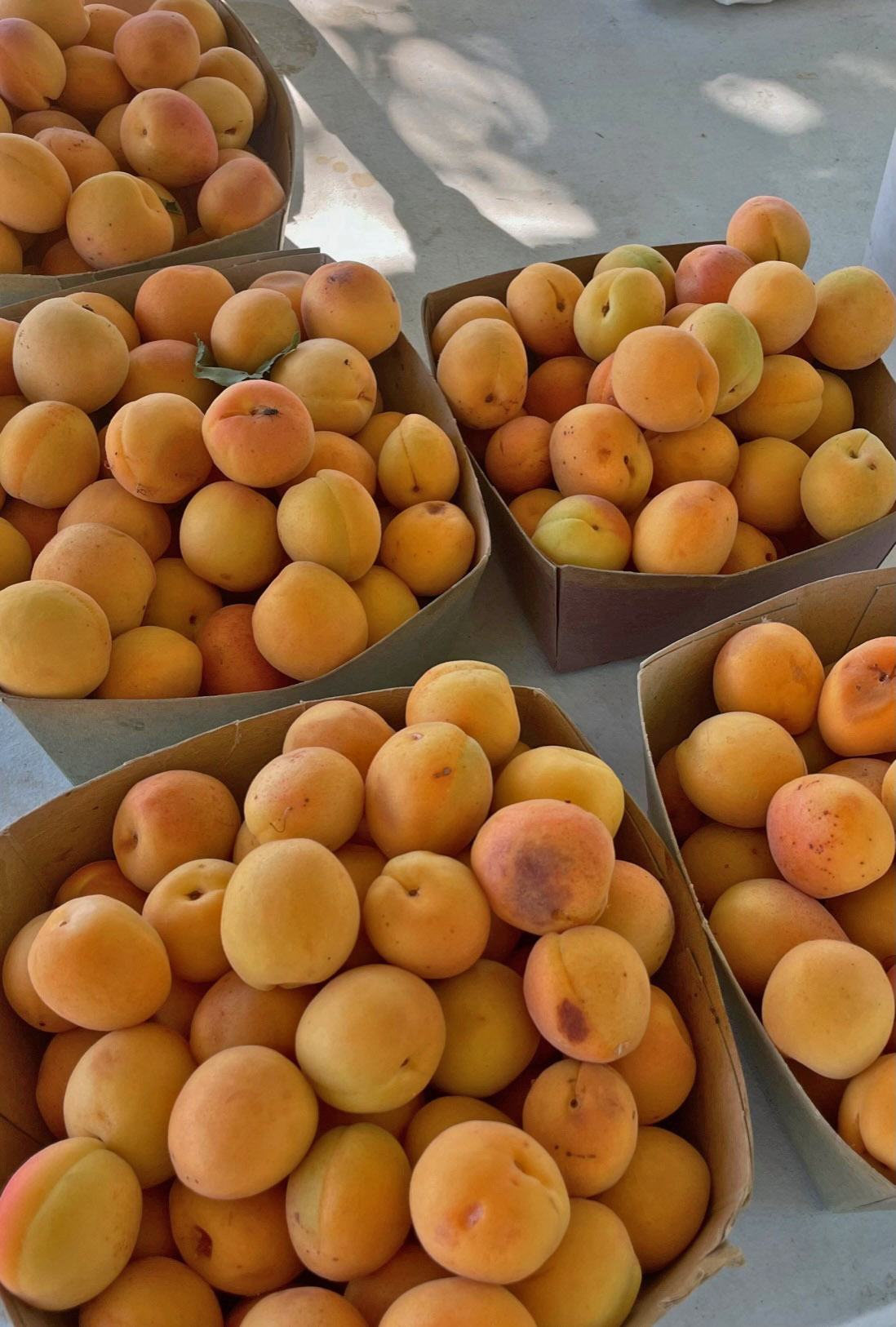
It’s high summer fruit season, and, I suspect, that if I head north on Pleasants Valley Road toward Winters, though the thermometer’s spilling over the century mark, I might find some folks sitting on the edge of their orchards with baskets of sweetness for sale.
A few miles down the road I see the hand-lettered sign—Apricots!— as I drive past, hang a U-ie to return.
I join two farm women under an oak older than all three of us put together, mother and daughter both well seasoned, red-cheeked and cheerful, selling ’cots pulled from their trees a dozen yards behind them.
I ask how long the family’s been ranching, and the farm wife chuckles. “Forever. Married in a long time ago.” She shifts on the walker that doubles as her chair and shoots a thumb over her shoulder toward her husband, a third-generation rancher standing in the orchard, looking up at his crop hanging like hundreds of miniature suns amid so much greenery.
I introduce myself, say I used to work for the paper in town long ago, name my husband who did, too. She squints and shades her eyes with a hand that, I imagine, has picked its share of fruit, not to mention capably dealt with all manner of chores.
She blinks in recognition, asks, “He a tall, dark-haired photographer?”
And when I say, yes, he was, I feel him pop in as her eyes brighten. “He took our picture, put us in the paper more than once.” She pats her daughter’s hand. “You remember him. Handsome fella. He still livin’?”
And when I say, no, her face falls. “I’m so sorry, honey,” she says, as if it happened yesterday instead of 23 years ago in the tiny town I’m soon to drive through. I thank her, ask the price of an overfull basket.
“Eight dollars,” says her daughter, offering a bag to receive the ripe fruit.
When I proffer the bills, the farm wife takes them and holds my fingers for a moment. Our eyes smile at each other as we think of husbands—mine hovering nearby, as he does, hers still hard at work well into his later years, who looks my way and raises a hand in greeting. I wave back and thank the womenfolk, already talking to new customers who’ve just pulled up, as eager as I for a sweet taste of summer.
•••
(With thanks to Jim and Deb Moehrke, Vacaville friends for more than 40 years)
You, who have been split open by love or loss or both, somehow still stand, though you have no idea why.
You wonder if this gash, reopened far too many times, can possibly heal— perhaps with divine sutures— so that one day you’ll barely perceive the trace of a scar.
It seems impossible to your hollowed-out self, but, dear one, trust us—
healing happens in the shadows where there is always a little light, even if your weary eyes can’t perceive it.
What has enriched you— and, yes, opened you in joy and grief— can one day fill you again.
In fact, it already has.
•••
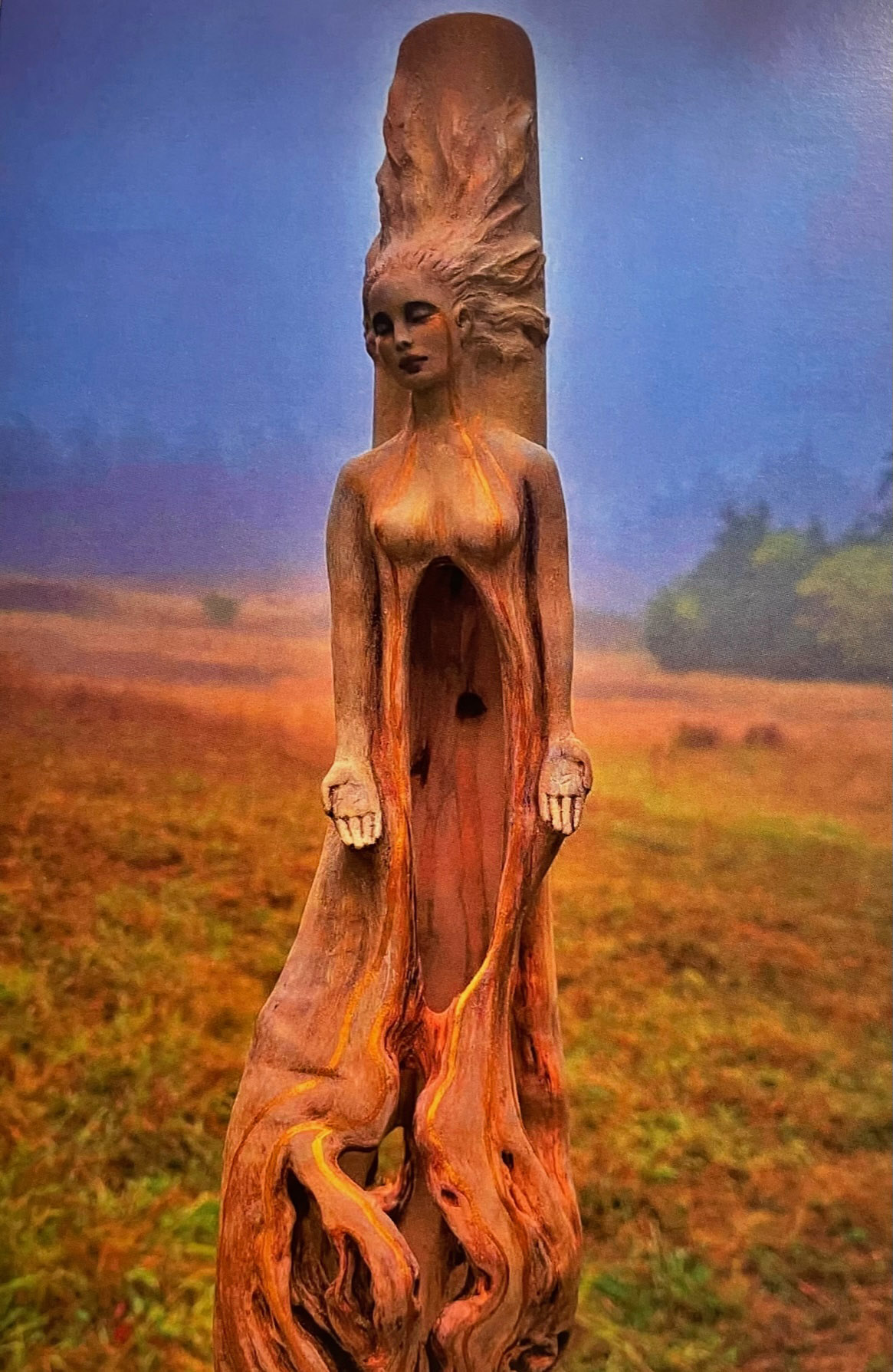
With thanks to Debra Bernier at Shaping Spirit for the inspiration! You can find Debra Bernier’s work here.
Light That Becomes Art / Sculptor: Debra Bernier, Vancouver Island, B.C.
(for Nikki and Annie, remembering their Gotcha Day, June 20, 2016)
•••
I fall into a bit of China at the dumpling place in my American city, across the street from what used to be the newspaper where my fella worked 40 years and I spent three, the brick edifice now a silent, hulking ghost, its spirit hovering on the edges of our consciousness.
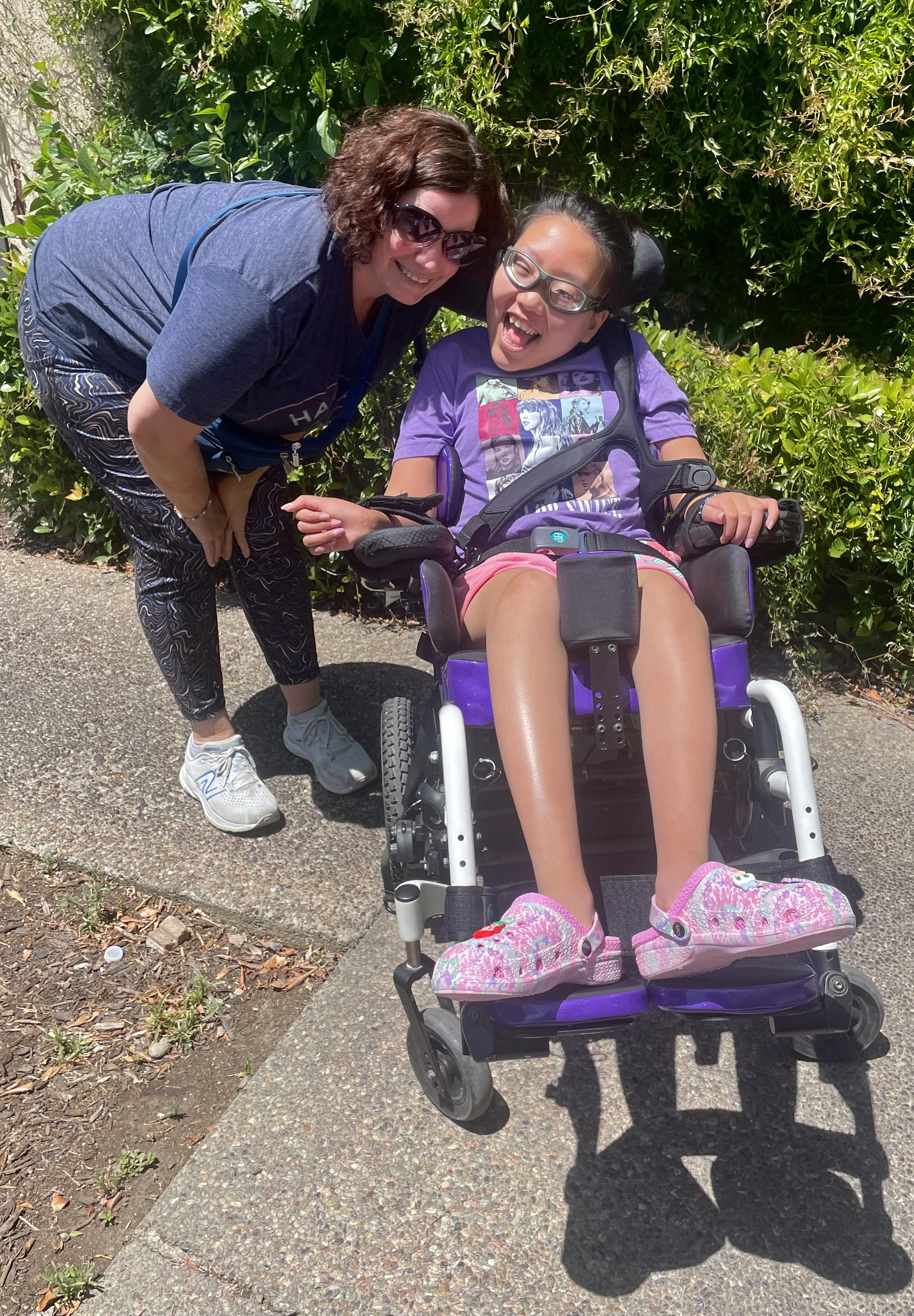
Not unlike the trip I made with Nikki to Changsha and Guangzhou to fetch a girl named Joyful Purple Dragon in her too-small wheelchair, rendering Nikki an instant new mama, who’d also toiled at the brick ghost 6,600 miles from the ancient land of ghosts.
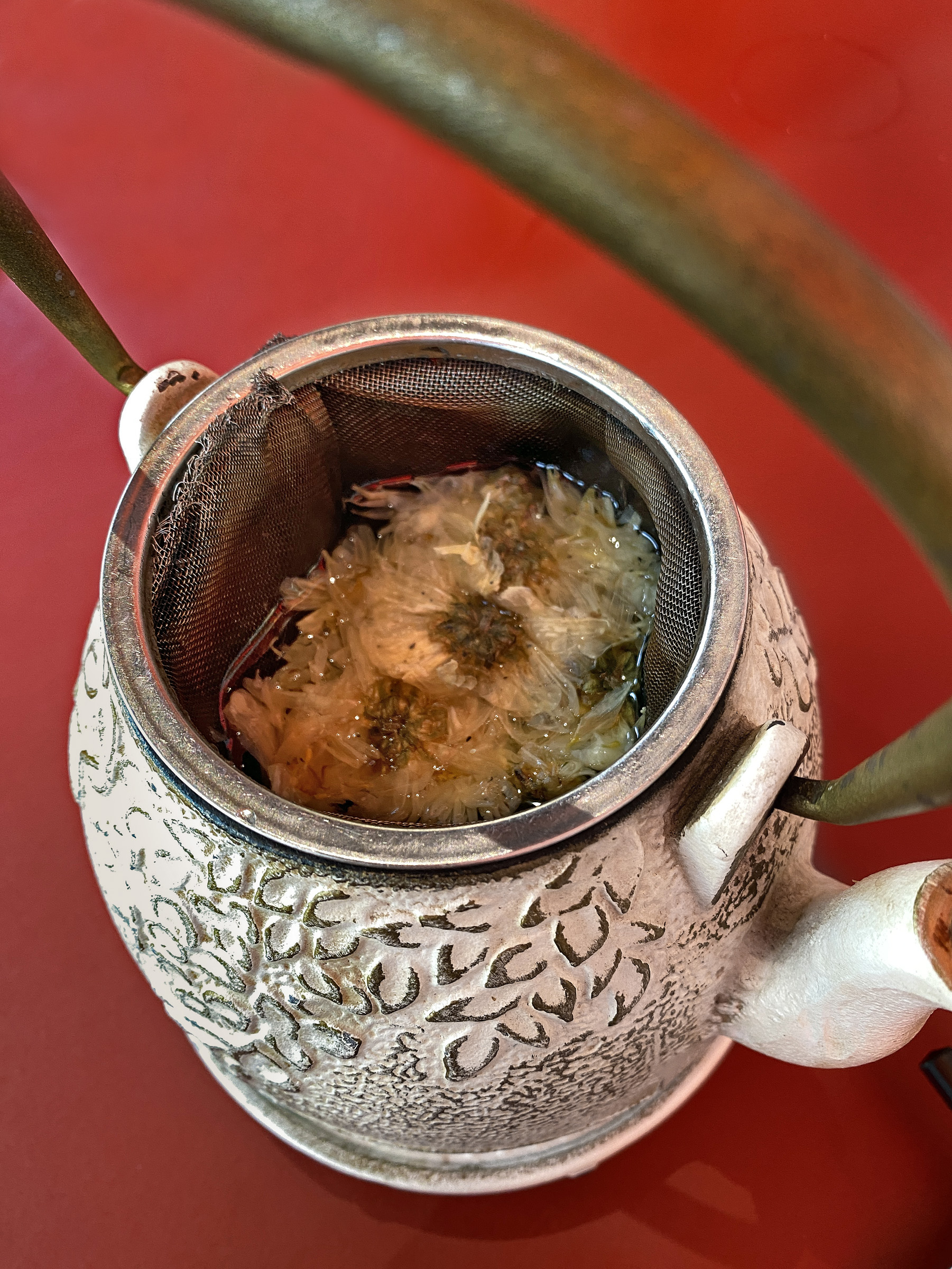
Nikki, who’d lived there for a decade, who introduced me to all things Chinese— not least to chrysanthemum tea, the pale floating flowers blooming in steaming water cradled in a small, heavy iron pot, which I’m delighted to find with dumplings in my city, exactly eight years after Nikki and Joyful Purple Dragon, became family.
This child who, even then, was also called Annie, now squired around in a snazzy purple chair, now a 15-year-old American Chinese girl who still loves to have her nails painted, who still loves pink, who, if she could speak, might tell the story of her long journey, who, if she could swallow, might sample a dumpling, sip some chrysanthemum tea as her mama and I did in her homeland,
whose ghosts surely live in her, too—only the kindest ones, I hope, her ancestors keeping watch, offering protection and love as this brilliant girl wheels through her marvelous, miraculous life.
Nikki and Annie (still Joyful Purple Dragon) Cardoza
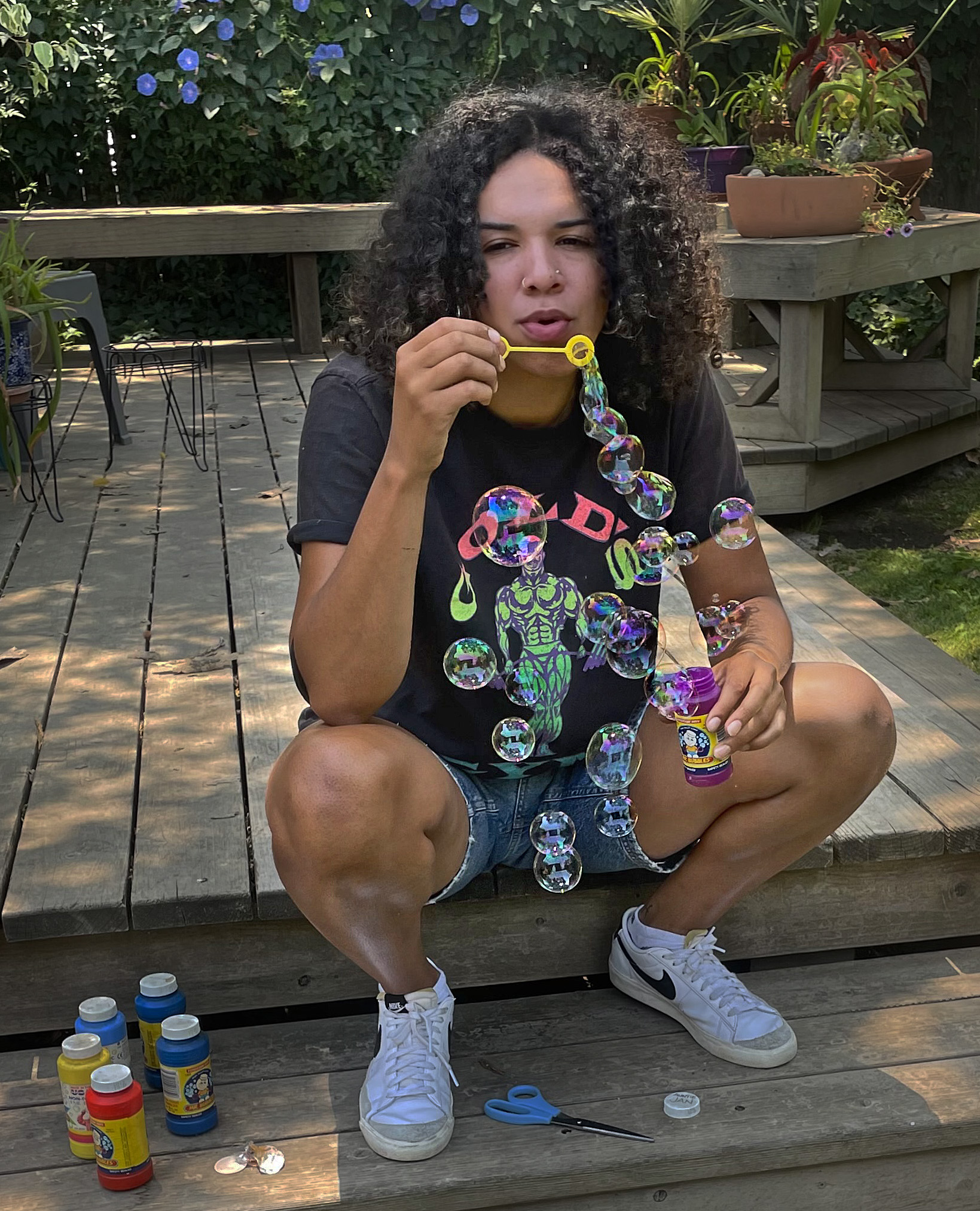
On a summer afternoon we take a break from sorting, Kelsey on the deck with eight plastic bottles of vintage bubbles that have lived in my garage for decades.
“Are they still any good?” I ask. Kelsey, much closer to her bubble-blowing youth than I, shrugs, then grins when I ask, “You wanna test ’em?”
And so this young journalist— soon to head cross country for a newspaper fellowship, a woman currently freelancing stories to a number of magazines—gathers the bottles, then sits on the edge of the backyard deck blowing bubbles with, I imagine, the enthusiasm of her much younger self.
She assesses the blowing strength of each plastic wand that comes in the bottles (bigger is better), and the bubbles themselves, to our surprise, perform admirably.
On the same afternoon, in another town, my sister and brother-in-law blow bubbles for their year-old grandson, text a photo of his delighted face, his arms reaching for the vanishing bits of soapy air.
It seems that bubbles last forever, or at least for a long time— that we are never too old to pull out a plastic soapy wand from a bottle, purse our lips and blow,
then watch the multitude of shimmery bubble sandwiches float momentarily, then silently pop, leaving traces of magic— and not a little joy—behind.
With thanks to Kelsey Brown, ace helper and bubble blower / Photo: Jan Haag




 Güd wrtr