Love, embedded

(Moss Cove, Pt. Lobos State Natural Reserve)

After decades of relishing
the feel of soft sand
caressing my toes,

pebbled shorelines
have become my favorite
beaches. I appreciate

the great work over eons
of the sea pulverizing rock
and coral into fine silica,

but how I marvel at geology
in action as I walk over
wave-tossed rocks sculpted

into an infinite number of
geometric shapes, like
the perfect egg-like specimen

today, its weight a solid
promise in my palm.
Nearby, etched in sandstone,

I see the ghost of a heart,
And, not ten steps away,
another heart locked

in solidified sand—
love, embedded
by forces of nature

so great it cannot
be moved or washed
away, even when

the tide rises, even
when we foolishly
imagine that it has

disappeared.

Moss Cove, Pt. Lobos State Natural Reserve / Photos: Jan Haag
Posted in Uncategorized | 1 Comment

Bedding down

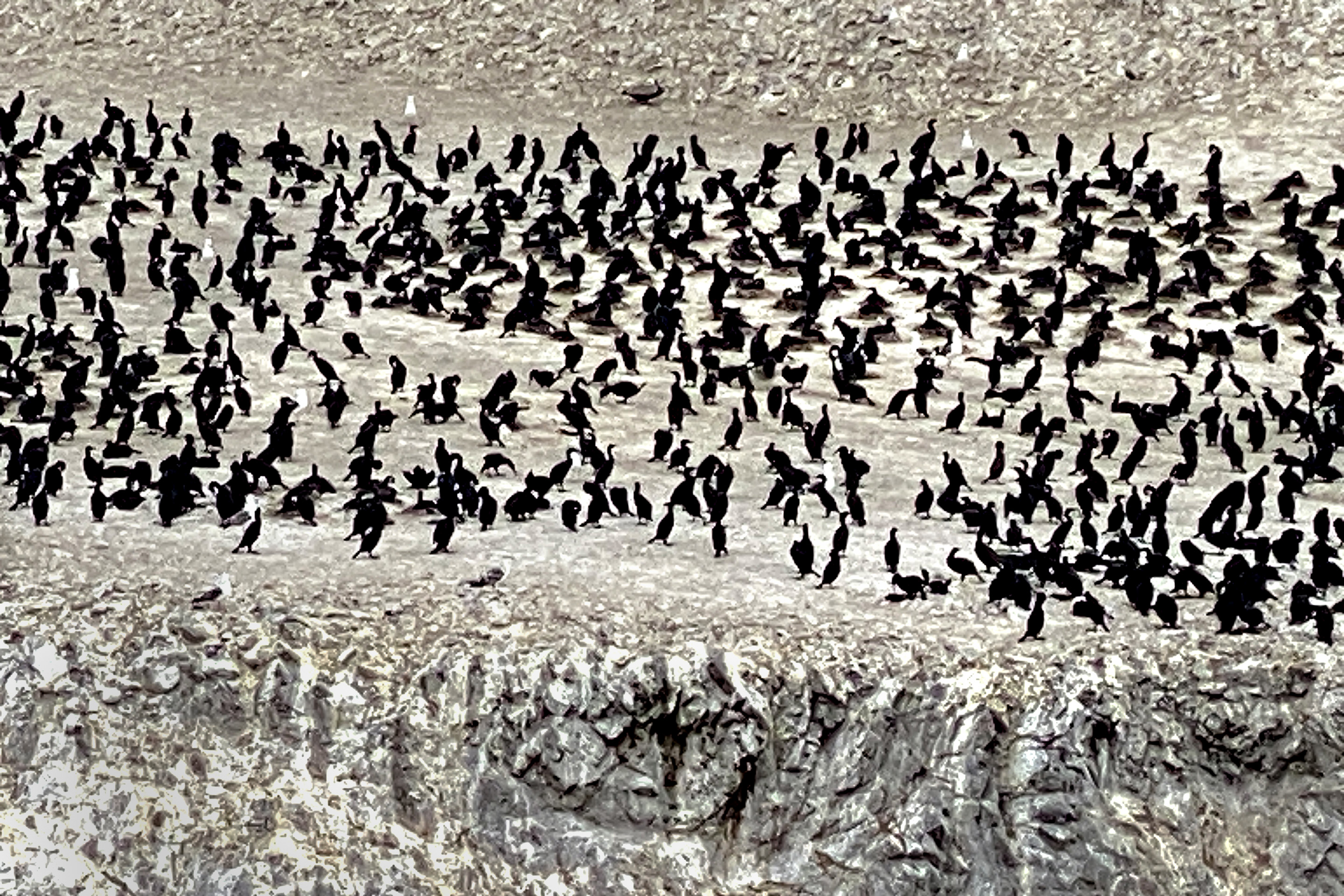
(for the Brandt’s cormorants and brown pelicans
of Bird Island, Point Lobos State Natural Reserve,
California)

•••

A convention of the slender black-cloaked,
long-necked ones gathers on the great rock,
some nesting the next generation into being,
while nearby a contingent of brown giants

somehow barnacles themselves to sharp
angles that look too small for their hulking
forms. Occasionally one great neck will
slowly elevator up, extending its full length,

its long-scissored beak digging into
a troublesome spot under a huge wing,
while some of the smaller denizens
of the rock stand tall, thrusting their

wings behind them, strutting like
sleek models on a runway. They
gather here nightly as neighbors,
the corms and pelcs, with the odd gull

here and there, seemingly in accord,
regardless of their differences—
not unlike those of us on the trail,
humans watching from afar,

we two-legged ones mutually
transfixed by the simple act of
watching wildlife bed down for
the night, smiling at strangers

united in this sweet, shared
moment before we head down
the trail to our own evening
rituals, to let sleep find

all of us miraculous,
breathing beasts.

Brandt’s cormorants (top) on Bird Island; (above) brown pelican in flight / Photos: Dick Schmidt
Posted in Uncategorized | 2 Comments

Early grazing

(at Mission Ranch, Carmel-by-the-Sea, California)

•••

Clouds meander overhead as
we graze on an open-to-the-sky
deck overlooking a vast pasture,
the cumulus rippling over
over meadow grass like waves,

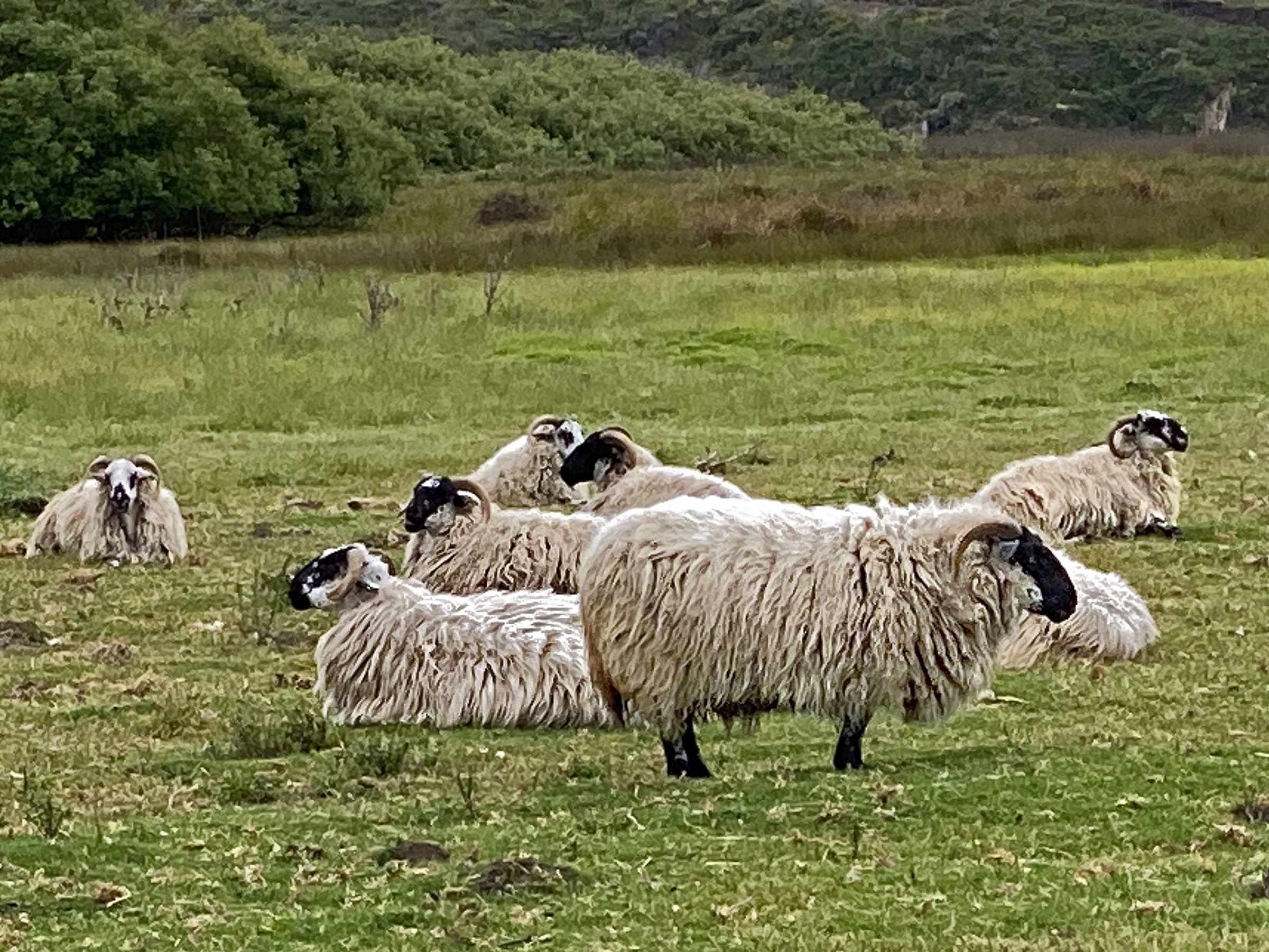
watching dreadlocked sheep
munch soft green grass, taking
turns under a favorite low-hanging
branch for back scratches, their
black snouts raised in what seems
to us ovine ecstasy.

It is as bucolic a sight as any British
pasture where the ancestors of
these curly-horned shaggy sheep
hailed from. But we find ourselves
on the central California coast,
the ocean within sight at the end
of the long field as cheeky blackbirds
parade along the top of the white
wood fence next to our table,
sentries on the lookout for a treat.

It’s a perfect Sunday combination
of good food, a comfortable place
to rest under the hide-and-seek sun,
the sheep resettling themselves
in the grassland like shaggy clouds,
well fed and nodding off—
an excellent idea, we agree,
whether you are bald-headed
or fluffy with fleece.

•••

(for Dick Schmidt)

Scottish Blackface sheep, Mission Ranch, Carmel-by-the-Sea / Photo: Dick Schmidt

Posted in Uncategorized | 1 Comment

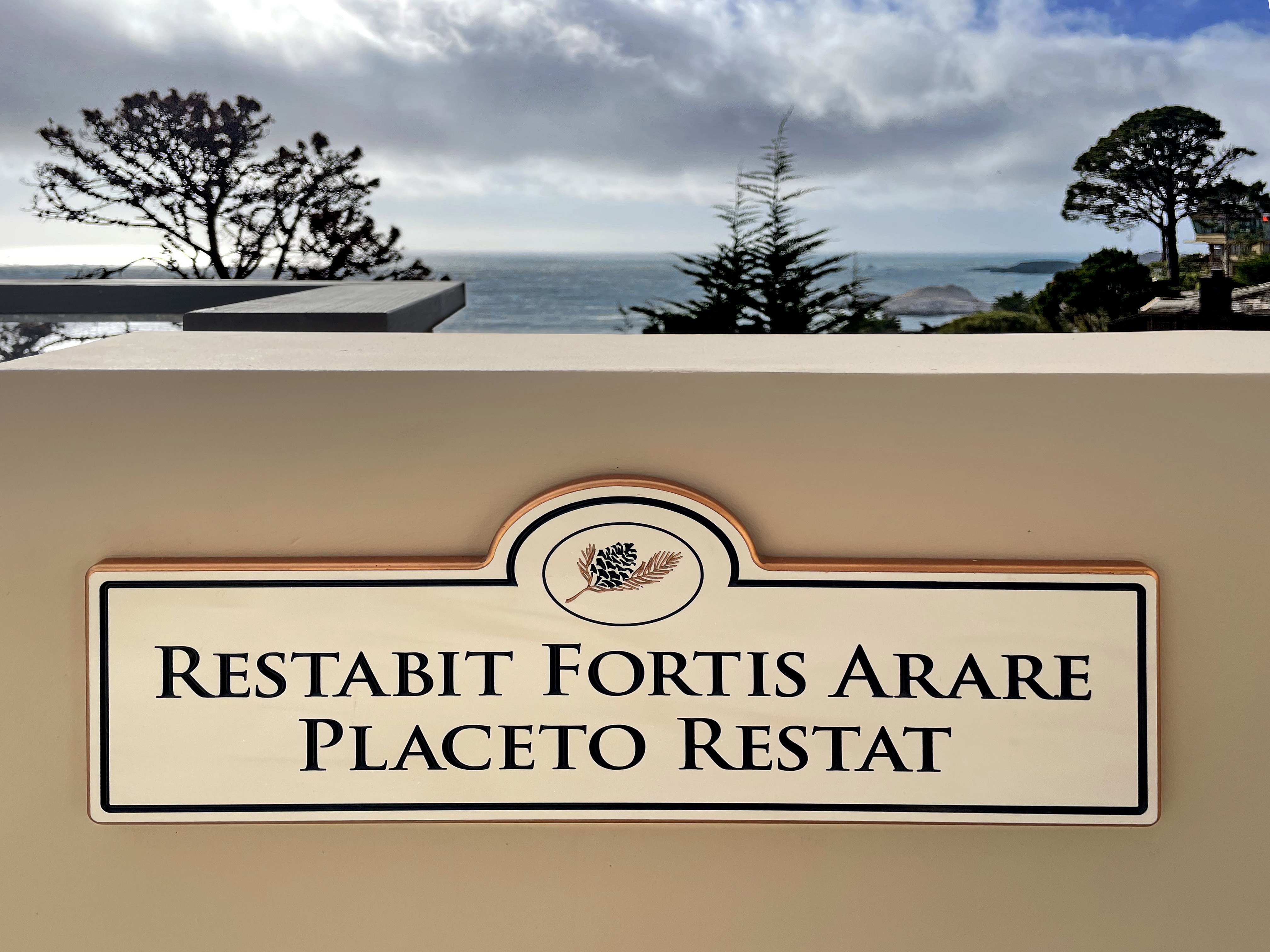
Restabit fortis arare placeto restat

(At the Tickle Pink Inn, Carmel Highlands)

I study the sign for some time,
thinking I shoulda learned some
Latin when I had the chance,

but that’s why God invented
the internet, so I look it up.
What on earth could restabit

mean? Ah, will remain. And
fortis means strong. And arare
sounds vaguely Italian, which

would make sense if the root
is Latin, the English major in me
decides. But “to plow” what?

Placeto translates to please.
Restat means remains.
The whole sentence, then:

It will remain strong to plow
if it remains. Whaaa?
I think
my mind just boggled.

But as we wander this gardeny
oasis perched in the Carmel
highlands, looking more out

to sea than inward, seeing
the inscription repeated here
and there—especially by

the new hot tub overlooking
the Pacific—the English major
clicks in, reads slowly:

Rest a bit for ’tis
a rare place to rest at.

Forget that old saw about
ending a sentence with a
preposition. I’m a sucker

for wise words even if I
have to puzzle them out.
Here we are in this rare

place, this precious moment,
resting near the end of this
first day of June, sun beaming

through ribbons of fog bank
like sparkling topaz, the gem
of good fortune and love,

we two souls happy by
the sea, together, feeling
wealthy beyond measure.

At the Tickle Pink Inn, Carmel, California / Jan Haag
Posted in Uncategorized | 2 Comments

Kalaupapa gate

Every time I walked up to the old house
where we stayed—in this place
where people were banished, sick
and dying—I went between the posts

that had once supported a latched
gate that kept out the undesirables.
This house, where the doctors of
the settlement had lived, must have
been especially vulnerable.
The physician had to be kept safe,
free from potential contagion—

unlike the Belgian priest who
begged to be sent to Kalaupapa
in its early days to tend to
the dying—the only one of many
to contract the disease and die
of it there, too.

People speculated it was because
he shared his pipe with the lepers,
his flock of beloveds. They didn’t
know then that the disease
affected only those with a
specific genetic makeup.

But Damien, the man who
willingly came to serve in love,
for years referred to the people
there as we lepers, always
one of them, before the telltale
signs appeared on his skin,
before others came and built
gates to separate the sick
from the well.

And I and others—
in this holy, beautiful place
of so much suffering, so much
heartbreak amid acts of
neighborliness and kindness—

we were there to serve in
this new century, free to walk
anywhere, to kneel on the soft grass
by their headstones, to tidy
and clip, blessedly unhampered,
whisper to no one and
everyone—

rest in peace.

•••

The former leper colony, as it was called then, on the island of Moloka’i, Hawaii, where thousands of people with leprosy, now called Hanson’s Disease, were sent to live and die in isolation beginning in 1865. Father Damien, a Belgian priest, arrived in 1873 at his request to serve the people there till his death in 1889.

Kalaupapa National Historic Park gate / Photo: Jan Haag

Posted in Uncategorized | Leave a comment

Servicing Mom’s car

Up early (for me), I drive
her Hyundai to her town,
which long ago was my town,
which is this morning my town
again, to sit in a shiny showroom
near the $40K snazzy electric car,
which I will likely never acquire in
this lifetime, though I love the idea
of a gasless car, but at this point I can
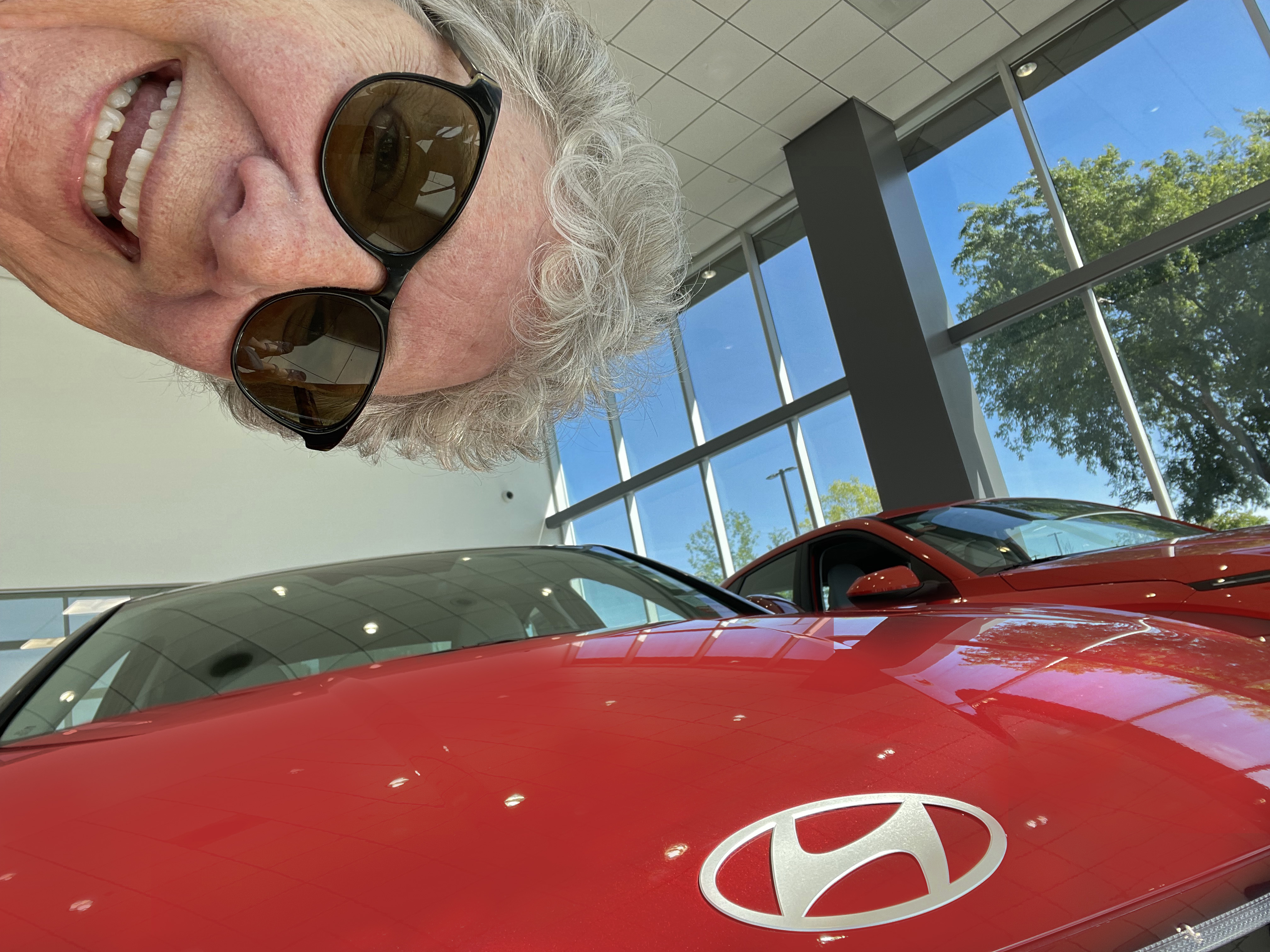
only afford to pose with an arrest-me-red
hybrid Sonata, which, it seems to me, should
come with a keyboard ready to perform, oh, say,
Beethoven’s Moonlight Sonata, which, it seems
to me, should be included in the car’s repertoire,
that solo piano piece with its somber tones, one
of the first classical pieces I recognized, with
its deceptively simple opening adagio but as
complex as that cherry of a car chock full of
ingenious engineering most of us will never
understand. But if we refocus our perspective,
we might perceive ourselves in its gleaming
surface, which, it seems to me, is not unlike
looking at the glossy lifted lid of a grand
piano, its strings and soundboard
primed for action, ready to rev
up into another brilliant
masterpiece.

•••

You can listen to Beethoven’s Moonlight Sonata (solo piano by Rousseau
with special effects) here.

Photo of Jan and the Sonata by Jan (isn’t that called a selfie, Jan?!)
Posted in Uncategorized | 2 Comments

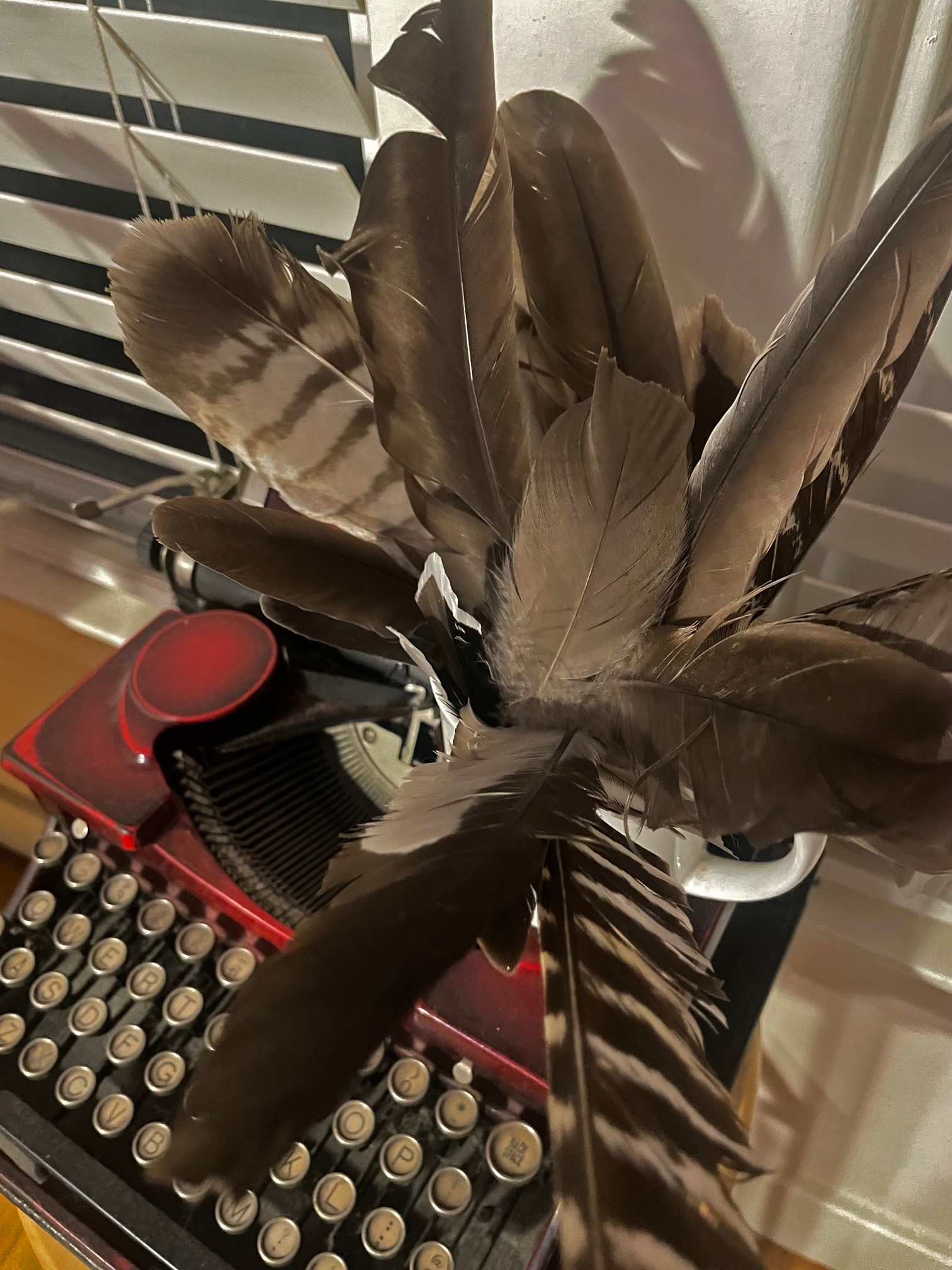
I pick up feathers as I walk

Even the most ordinary, doe-brown
versions discarded by Canada geese
as common in this park as leaves.

My walking buddy does not ask why
I bend to pluck them from the path,
nor what I will do with the feathers,

which I appreciate, because, in truth,
I don’t do much—add them to the coffee cup
that sits atop an old manual typewriter

in my dining room, morning sun
coating their glossiness. In the cup
the quills flock together, their tips,

I imagine, could perhaps be whittled
into writing instruments, dipped
into an inkwell of liquid midnight

and applied to paper—every scratchy
stroke helping the poem to fledge,
to take wing, jubilantly, and fly.

•••

For Cindy Domasky and her beloved kestrel friends in Prairie du Chien,
Wisconsin. Watch the live kestrel cam here.

Photo / Jan Haag

Posted in Uncategorized | Leave a comment

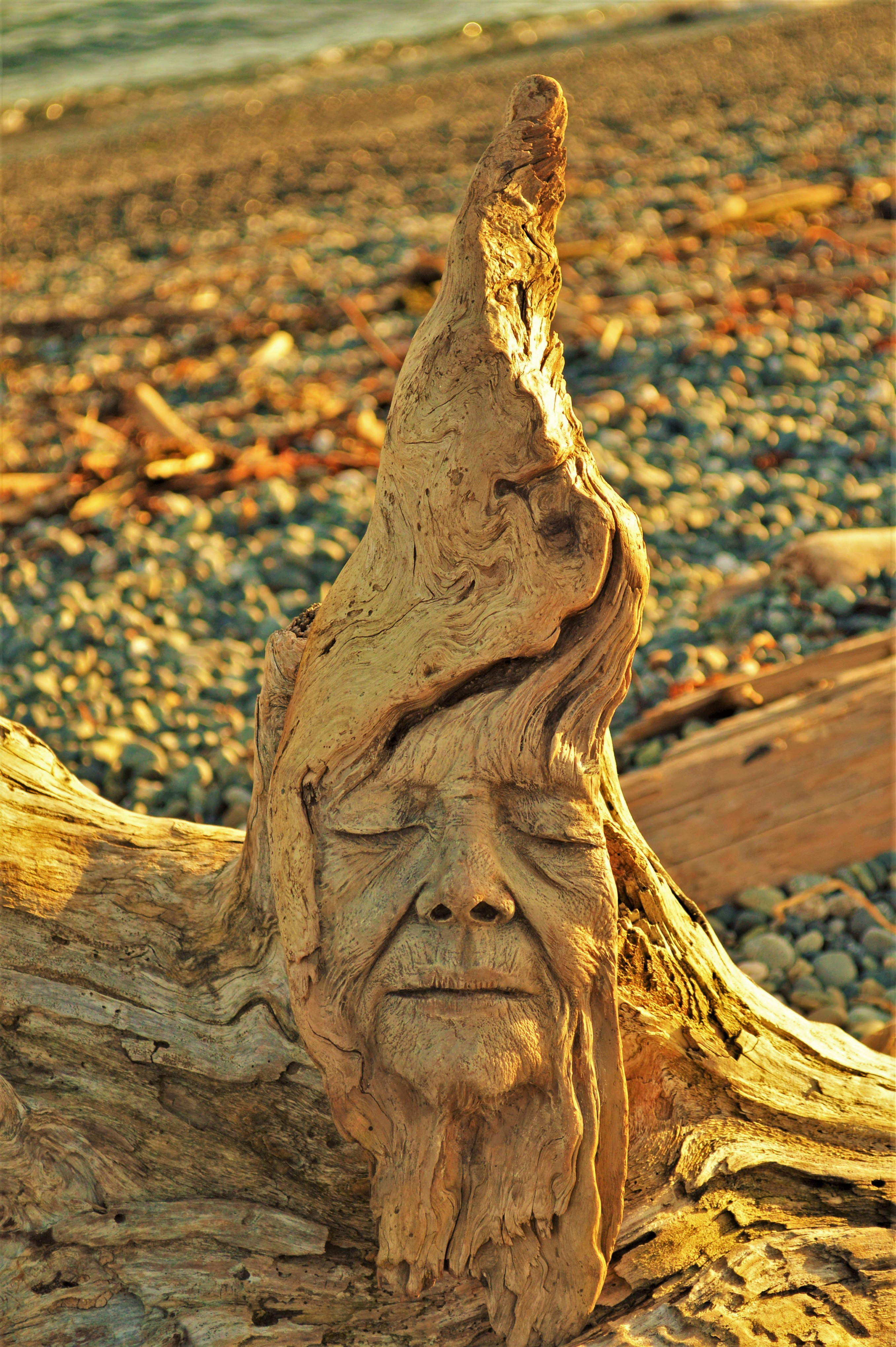
Wisdom in wood

This face has the countenance
of every crone I have known,
the one I am becoming—

not the malicious, disagreeable,
sinister old woman, but one
who embodies wisdom,

inner knowing, intuition,
as all the crones I have ever
known have done for me,

guiding my younger self
through transitions, sitting
with me, urging me to go

inward, as I did and do now.
At my dining room table,
I sit with a younger woman,

listen, offer gentle words,
say with a knowing I’ve only
recently come to know:

It’s all about the love, my
dear, not about possession
or jealousy. Just the love.

You are adored, even when
you think you are not.
You are held by hands

you cannot see. You are wise,
you are smart, and you are
strong. You will only become

wiser and stronger. I promise.
I remind my own crone self
that hag springs

from the Greek hagia
holy one—becoming an
instrument of the divine,

dancing to the reliable
drumbeat of my blown-open,
ever-healing, wise heart.

•••

With thanks to sculptor Debra Bernier for the inspiration.

Wisdom in Wood / Sculptor: Debra Bernier, Victoria, B.C.

Posted in Uncategorized | Leave a comment

Art in a Van

On Memorial Day
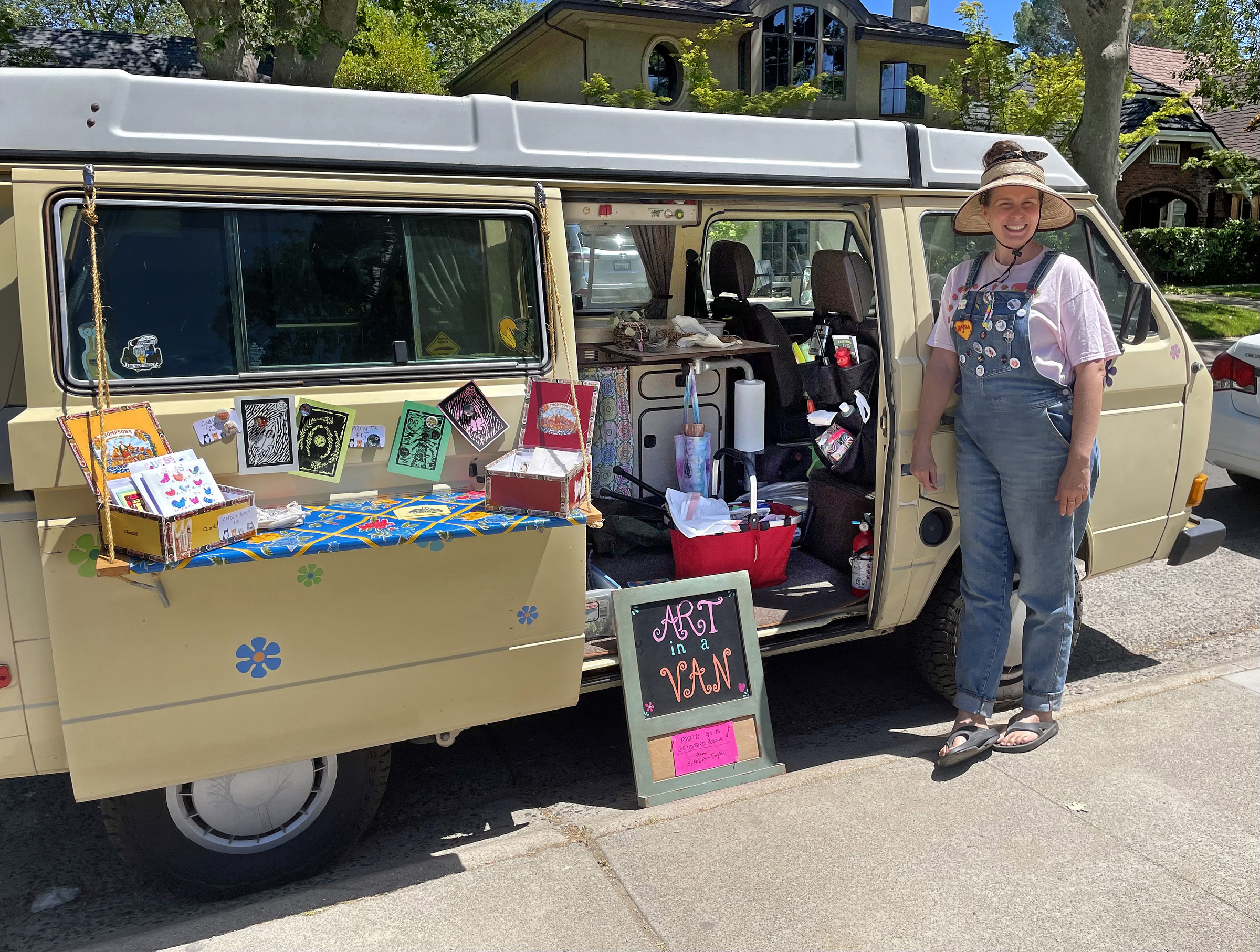
the Artist in a Van parks her VW bus
on the sidewalk by McKinley Park
between the rose garden
and the tennis courts,

she and her mama setting up camp
chairs on the shady lawn,
the daisy-stickered van with its
cargo door wide open for walkers-by
like me to gawk at.

Three times I hustle by with a new
walking buddy, intrigued by the
casual display of block-print cards
peeking from two Thompson’s
cigar boxes. But, not wanting to
interrupt our in-motion conversation,
I keep going, thinking I’ll return,
aware that my best intentions tend
to wander like cats looking for
the just-right afternoon nap spot.

Hours later, to my surprise, I find
them still there, the Artist in a Van
on the lawn with her mama, a quilter,
outdoors enjoying the holiday.

“Sure, the cards are for sale,”
the Artist says, the proceeds to bolster
a Fair Oaks friend’s efforts to rescue
and rehome abandoned chickens.

I’ve read of this Good Samaritan, and,
as part of a team that did the same for
college campus cats, I’m happy to support
the fowl. I’m delighted by the Artist
in a Van’s kind heart, to stand and chat
about art and writing under an elder
sycamore’s leafy generosity,

and, on this glorious day of memory,
kick off summer by lingering
in the park, making new friends.

•••

With thanks to Ilsa Louise Hess, the Artist in a Van, and her mother Caroline.

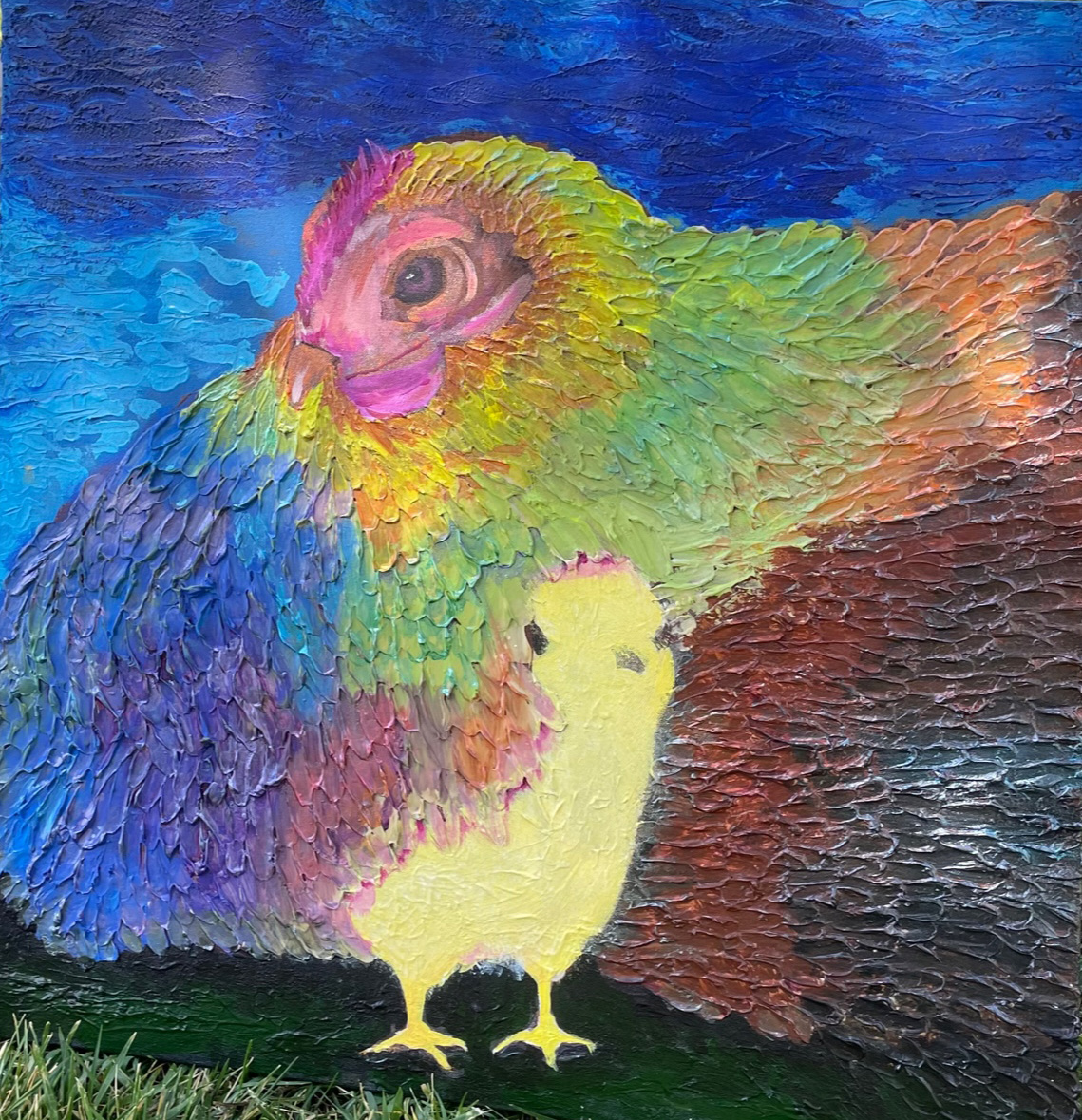
Ilsa Louise Hess, the Art in a Van artist (and, at top, one of Ilsa’s paintings) (Photos: Jan Haag)

Posted in Uncategorized | 1 Comment

Goldening

May turns the home territory yellow,
spring green grasses giving way to
drying weeds the color of straw, our
nearly perennial state in this
golden state.

By mid-month only the poppies
continue to show off their bright
faces as the first wildflowers have
sped through their swift season,
emerging, flourishing, receding.

Nearly June, we miss those early
bloomers, grateful as we walk or
drive by for the blazing orange
reminders of our goldening place
under the sun.

Photo / Joe Chan
Posted in Uncategorized | Leave a comment