Spring is the cruelest time to die, I used to think— just as winter rolls up its gray quilt and lifts off,
as the skeletons of trees hold the hope of green, some even budding into early pink laughter under warm sun.
The departed miss all this— the earth unfurling her best self just when we need to see it.
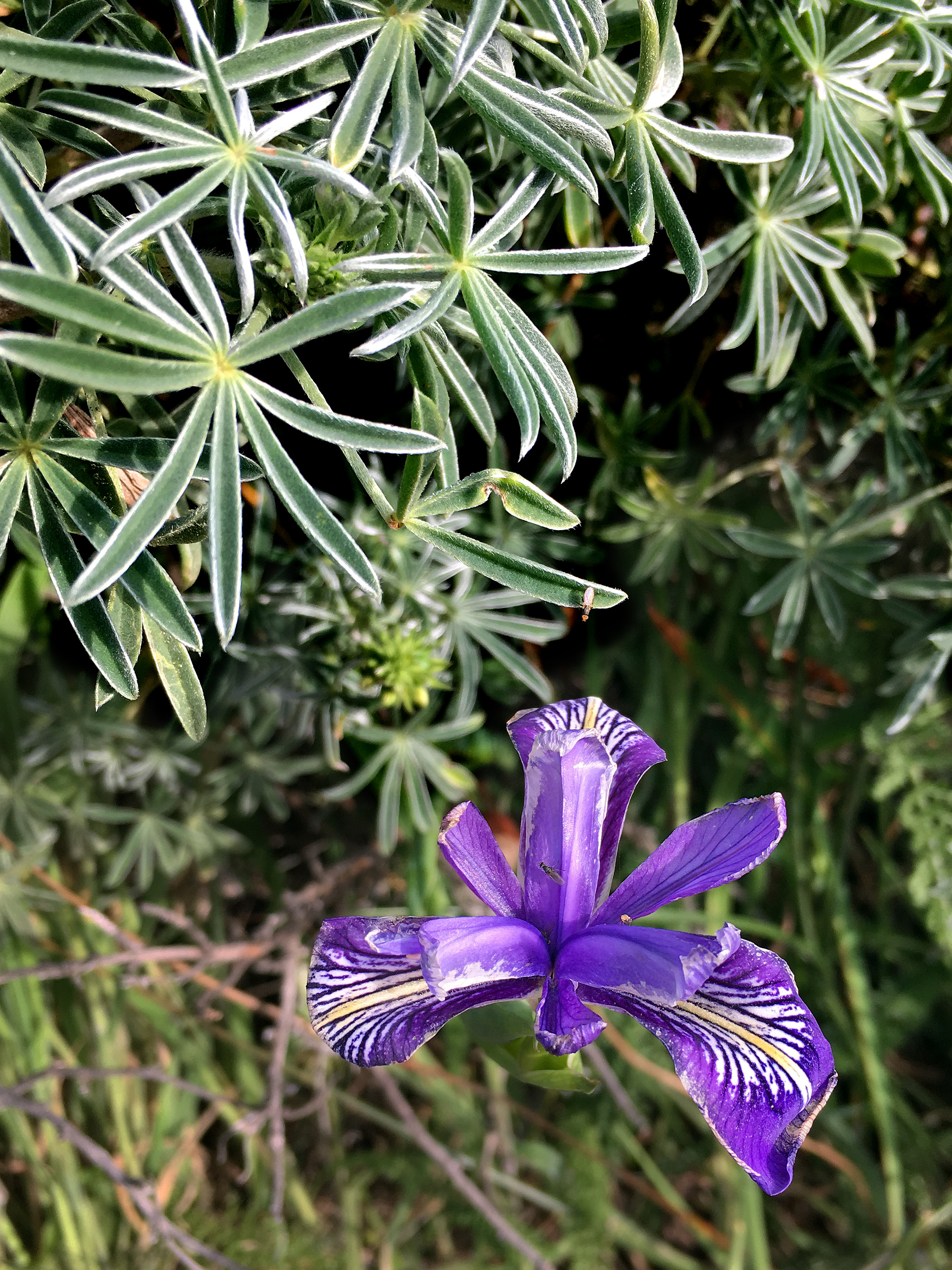
Stepping outside this morning to see over the driveway the tiniest bits of purple cascade off the trellis reminds me that spring arrives on time for those left behind,
those who look up, who notice color again where only yesterday there was none.
Oh, how they swirl on the surface of your tea, the dervishes
dancing, whirling, to the tune of your spoon swirling.
And, if you angle your head near the rim, just so,
you might hear a poem aborning in that moment
as your dervishes twirl, syllables steaming into words,
which you, soul friend, must be attuned to capture.
Listen to the beloved warming your ear:
Love pulls you like a river. There are hundreds of ways
to kneel and kiss the ground. *
•••
*lines from Jalaluddin Rumi, translated by Coleman Barks
•••
Whirling dervishes were a religious order founded by Sufi mystic poet JalaluddinRumi in the 13th century to whirl and recite devotional prayers. Rumi was said to turn as he spoke poems coming to him, which were then written down by waiting scribes. This was the basis for the Sufi tradition of the Melevi Order, or Whirling Dervishes, which continues to this day.
I was, with many others spaced apart six feet or more, standing in line outside a Trader Joe’s, waiting to go in for groceries (no toilet paper or tissue, of course), marveling at the consistency of flowers blooming their fool heads off when the world had lost its mind.
Not an hour earlier I’d been at my computer on this newfangled Zoom thing with a student, who was apologizing profusely for not turning in two assignments.
“My grandpapa died,” she said. “He was so sick, and we didn’t get him to the hospital in time.”
She paused. “He died in my bed, and I can’t sleep in there now. I’m afraid the Covid will get me.”
She did not cry, but she broke my heart nonetheless. She was not my only community college writing student who, not even a month into the pandemic, had lost a loved one to a violent fever, breath that wouldn’t come. Families terrified that they would sicken and die, too.
We kept in touch through the rest of the semester. She and others who just wanted to talk, trapped in their bedrooms at home with their parents, if they were lucky. Sleeping on sofas with friends if they were not.
“Write about it,” I said. “Put it all on the page, and send me that.”
Never mind that wasn’t remotely close to the assignments for news writing or mass media classes. I told so many students that in those days. I gave them A’s for writing about this most painful time.
As the days lengthened, I opened a Zoom room every Thursday evening for anyone who wanted to come write instead of driving to Davis to hold the “Writing as a Healing Art Class.” Dumping my class plan, I invited every student I knew. “Come write,” I said.
And they did—not in vast numbers, maybe eight to ten of them a week—but they showed up and they wrote, and they read, and they cried. So did I.
We were there for each other, not unlike the cheerful bloomers that Trader Joe’s greeted those of us in line. For some reason that made me cry—having to wait in line to get into my favorite grocery store. More than wearing masks or incessant hand washing.
I wasn’t scared for me, in my privileged, white, still-employed bubble. I was scared for them, my students of color who’d lost more than one job that barely supported them and their families.
“Someday this will end,” I told them, having no idea if that would be true. And when they asked, “When?” I’d say, “I don’t know. But it will.”
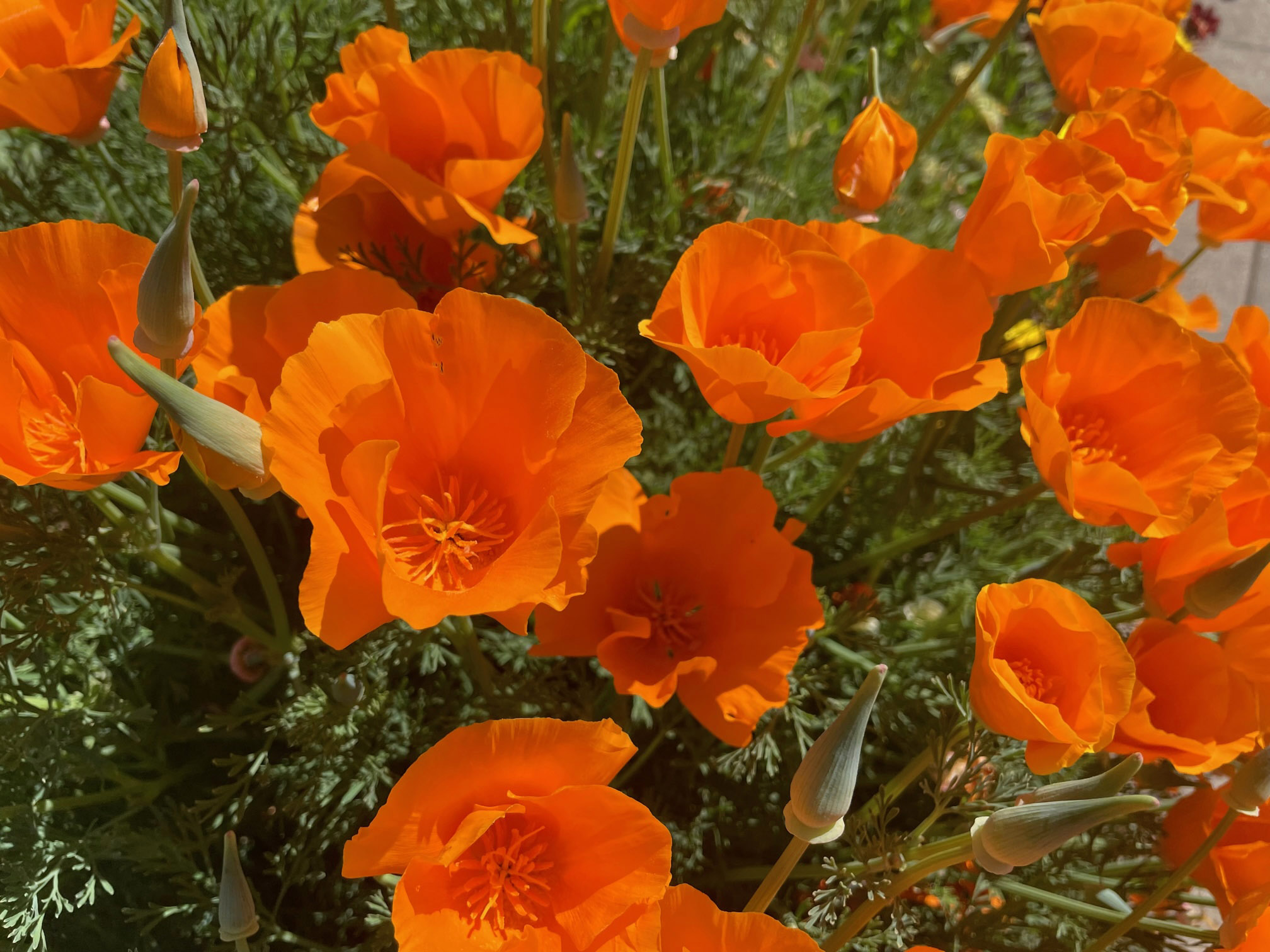
Going to the store, I’d look at the potted sprigs of hope, and yes, I brought home a small pot of something pinky-orange that day. I put it on my dining room table and later planted it in the back yard. Its resilient self fades and withers, but it still comes back every year.
We’re fellow travelers on a moonlit road through the night country, where there’s never any rush hour. —Frank Bruni, opinion writer, The New York Times
•••
The 3:45 a.m. email gets sent like a flashlight SOS in the night—
three rapid flashes, then three slow bursts, then three rapid flashes—
not so much in the hope of an immediate response,
but when one comes, we find ourselves buoyed
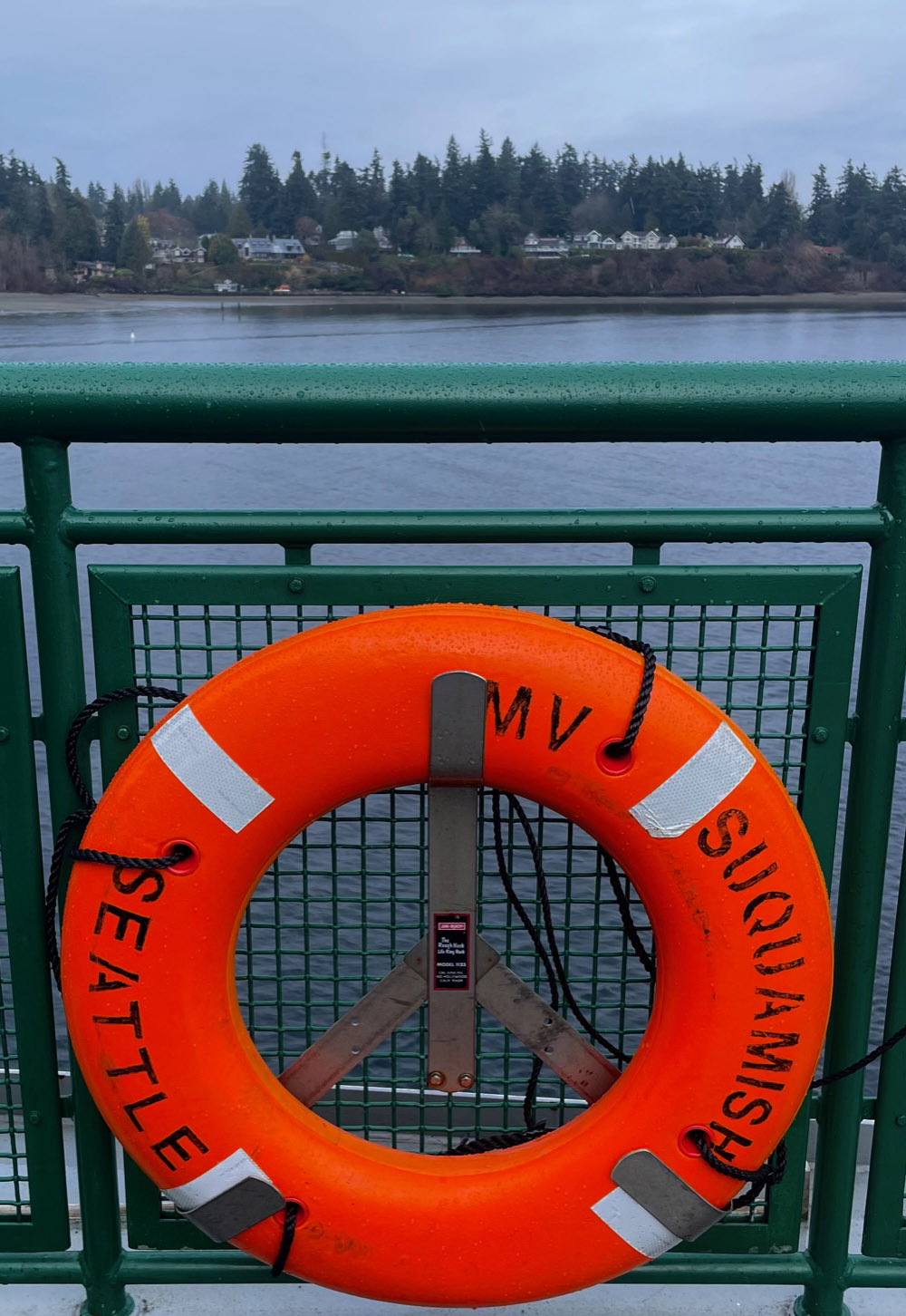
by the life ring thrown our way that can keep
us afloat if we grab it, hanging onto the
we-are-not-alone-ness of wakeful souls in the dark,
elation in receiving proof from afar:
You’re awake? I am, too.
Washington State Ferry Suquamish / Photo: Jan Haag
Who do you pray to when you don’t believe in God? she asks.
And somehow, jaw tightening, you bite down on the blurt— Whom!—the correction sliding down your throat like sweet cream,
for you are no longer in teacher mode, and your spine straightens, your wings tucking discreetly between your shoulder blades.
You want to say that belief has little to do with the existence—or lack thereof— of the divine, that a prayer doesn’t have to be uttered to anyone, anything, in any direction, to be acted upon.
It will be taken in, you want to tell her, by what can’t be seen, absorbed into air with her exhale of gratitude, transmitted through the tree in the front yard whose leaves have brittled in ungodly heat or vanished with the cold.
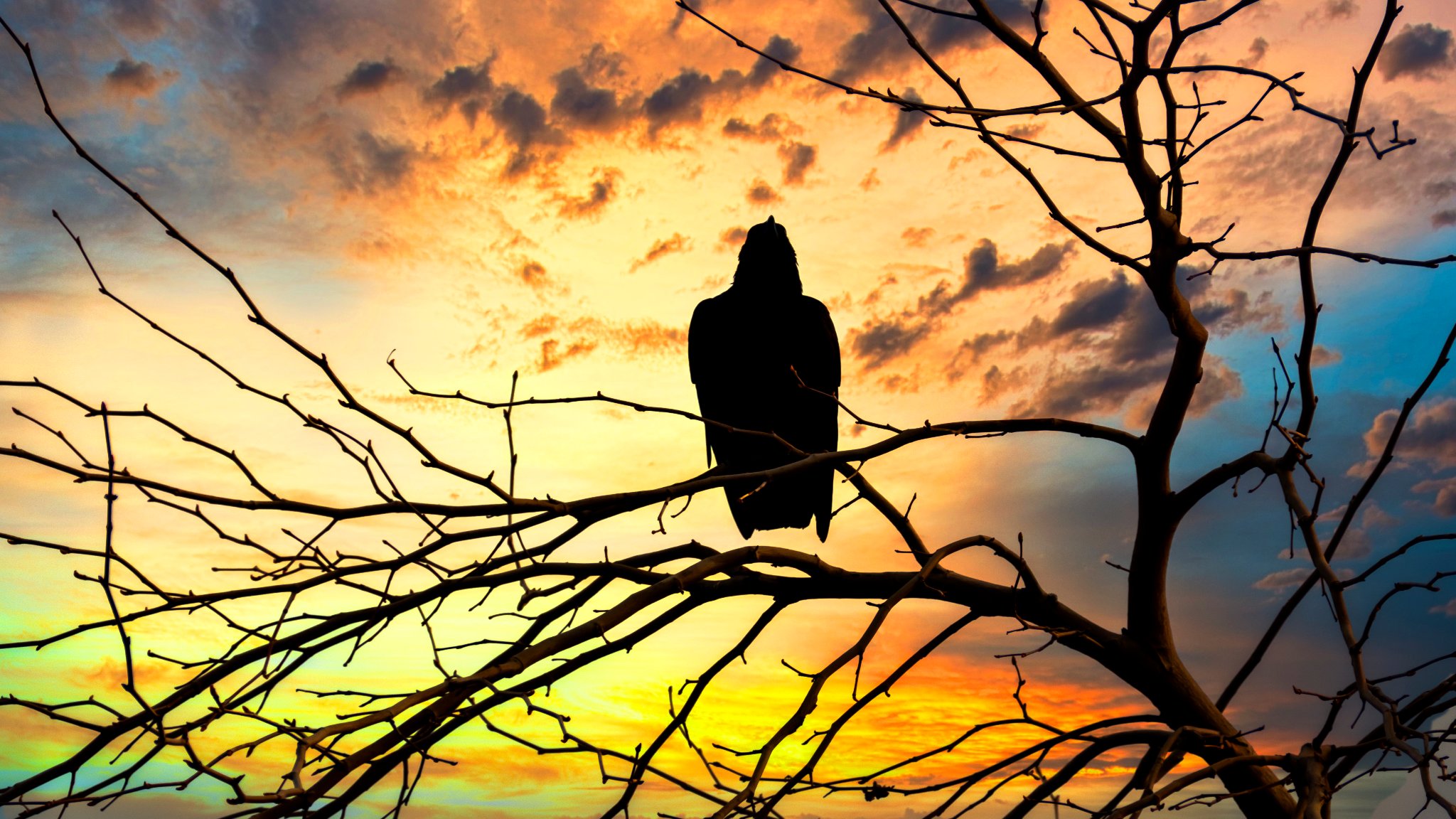
Even her unspoken help me soars up to the crow in that tree, issuing his own prayer for something tasty to appear.
The simplest plea—voiced or not— is heard and answered, you want to tell her, though you don’t because that would give away the ending.
She does not realize that she is the prayer, that she, all by herself, is the light-bringer, the breeze, the tree that only looks dead, the bird winging away.
The crow, you tell her, as if you know. You talk to the crow.
And for now, at least, she nods in— if not belief—something that rises, that, for the moment, feels like trust.
how’d you end up crawling across a dirty, cat-footed dish towel on the kitchen counter this rainy night?
As if I don’t know,
Diego having wandered in all soggy from a who-knows-where nap, undeterred by wet or mud between his toes,
to, yes, hop up on the counter and front-foot it into the sink for a drink—though, yes, he’s got a tall cup of water, just cat height on the floor. Apparently that’s for daytime drinking.
I do not want to know, little mollusc,
what part of the cat you rode in on. For now let me relocate you outside into your natural habitat, on some damp earth where you might live another day to munch your way through, say, leafy detritus or a bit of tasty hollyhock.
Go ahead, you tiny composter.
It’s spring. Plenty of volunteers to nibble out here, bobbling under nighttime drizzle, this misty gift of spring, like your slimy, sluggy self.
We’ve become hallowed vessels of mercy lined with grace after being hollowed out by the swift kick of departure,
imagining the vanished beloveds poofed into nothingness, when nothing could be less true.
It happens, they try to tell us, that they live on in particles of light, in warmth radiating from our nearest star, in the ka-thump of our cracked open hearts,
in the first blossoms making their annual debut after a long sleep, even in the desperate dark when it seems that every leaf, flower, birdsong has died.
But there they are—floppy wisteria earnestly purpling the trellis as bright green tendrils begin to decorate bare branches.
We look up at the trill of a winged visitor, then we bend to admire the sweet center of a wide-open poppy, and another, and another,
each a hallowed vessel of mercy, lined with grace, rimmed in light—whether flowering or hibernating— all that beauty ever with us, singing, truly never gone.
•••
For the Together We Heal writers, who turn grief into artful words each month in Elk Grove, California. More information available here.







 Güd wrtr