And she placed its open face down on the mustard cushion before she rose to a magnificent height that I envied as I watched her walk away.
I flirted with the Who is she? story taking shape in my head, but the more insistent question was What is she reading?
That being the fingerprint of a human who loves books, as she must, I figured, given the ease with which the spine splayed and the well-thumbed pages relaxed, awaiting her return.
If, say, she was reading Woolf, did that legendary lighthouse shine into her as it did for me? Or could she be exploring a collection of Emily’s poetic gems, finding precious nuggets that she’ll gather and carry with her all her days?
But I project too much. Honestly, I wouldn’t think less of her should she be deeply sunk into a ho-hum mystery or a sweaty bodice ripper—if they still rip bodices in romance novels.
Mostly I like her because she left her book open to mark her place—in the pages and in this space—to signify that she will reappear and sink her tall-girl self into the mustard cushion, pick up her book and disappear,
as devout readers do, into a somewhere that’s as alive in her mind as she, fictional character I’ve created, is in mine.
When I am alone on the trail above the sea, I think none of these things. But once I’m home, treading sidewalks over city streets this is what runs through the ticker tape of my brain:
My right ankle feels sore… Is that plantar fasciitis?
Oh, wait, now it’s my left knee. What’s that about?
Siren coming down J Street, cars pulling over, boxy red ambulance on its way to assisting. Sending love and kindness to helpers and those who need help.
Let’s cross 38th Street—dog walkers ahead… a small white poodle and a tall standard model, people chatting, dogs sniffing. Don’t want to trigger a bark fest, though I wouldn’t mind a doglick or two.
Around the corner: man on a ladder, electric drill in hand, affixing needed support to a fresh redwood fence.
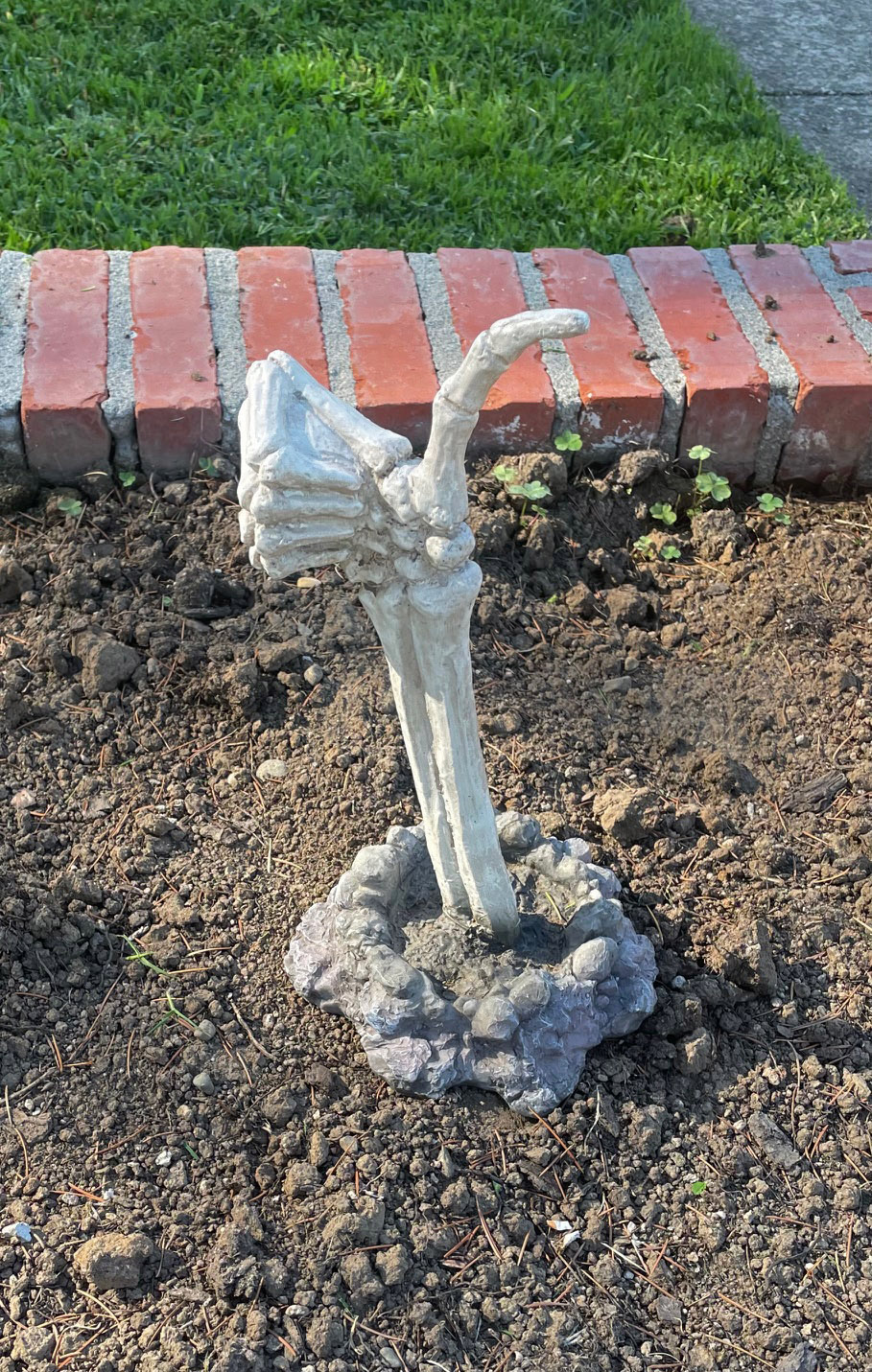
Early Halloween decorations— plastic, skeletal hands sticking out of dirt— one flashing a thumbs up, another pair forming the shape of a heart.
Dead rat on sidewalk. Ewww.
Veering onto 40th St. to wave at Chuck and Lindsay‘s house, thinking of them at my 10:30 a.m. enjoying their evening in Aberdeen.
Now the right inner knee twinging.
Yesterday, three days into fall, the thermometer topped out at 100°. This morning all of 65°. So it goes.
I do love a good poem walk, simply the observer, the reporter, dictating as I go into a tiny electronic notebook in my hand.
After years of struggle, words and phrases arrive in my head and fall out of my mouth, my monkey mind on hold for the moment— such a delight. Every time.
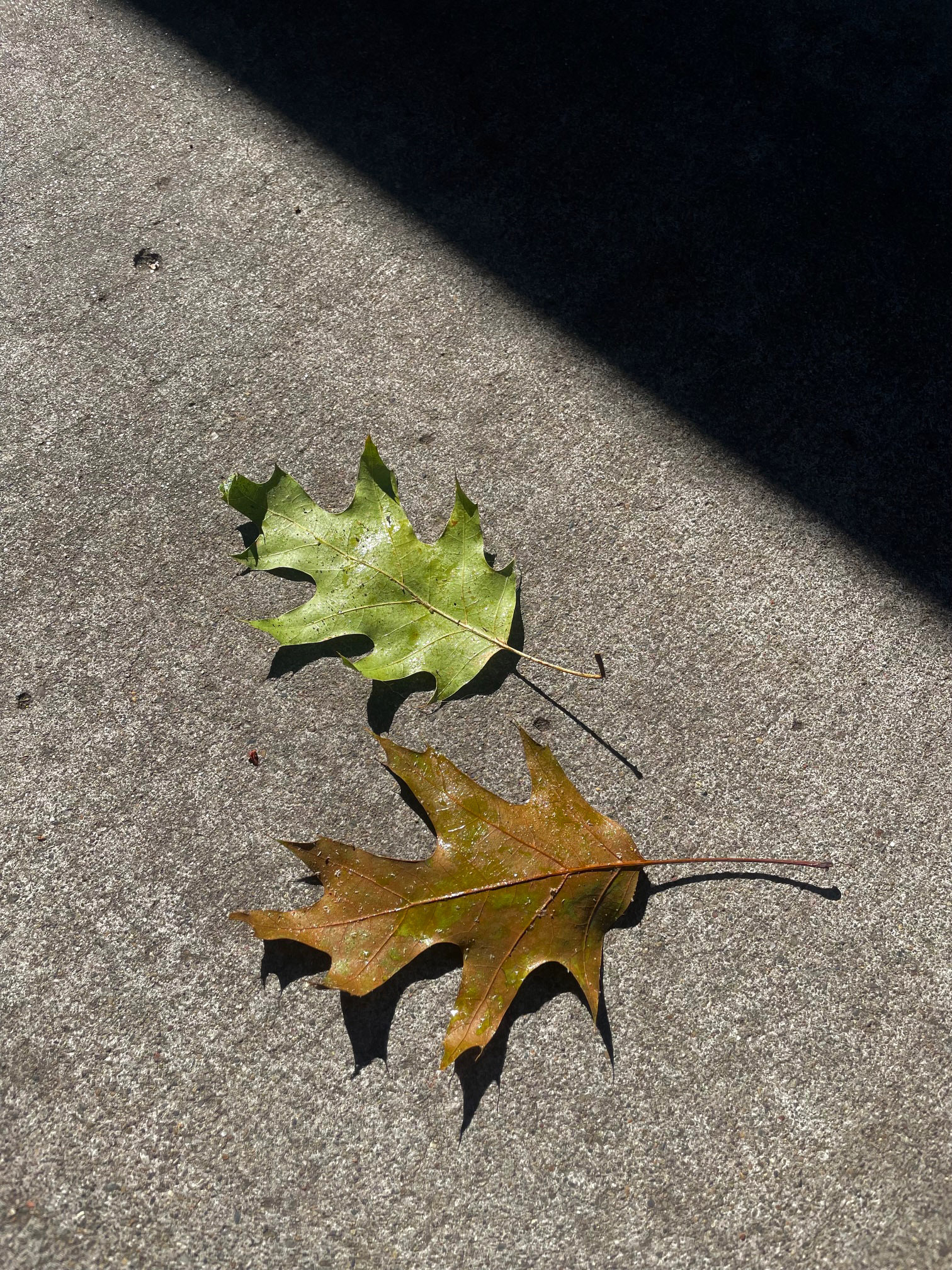
Oh, look, acorns courtesy of a neighborly live oak strewn on the sidewalk, fat ones, and nearby their haphazardly tossed caps.
On the first day of fall on the Sonoma coast we find ourselves foggy, which is not unusual for our state of mind. But this fog obliterates the horizon,
though the sun does make a cameo appearance as I roll out the yoga mat on the deck. Even then, barely a shadow. And later, on our walk
along the lichen-laced picket fence row, we notice that the waves have grown quiet, their crashing momentarily sucked into the mist.
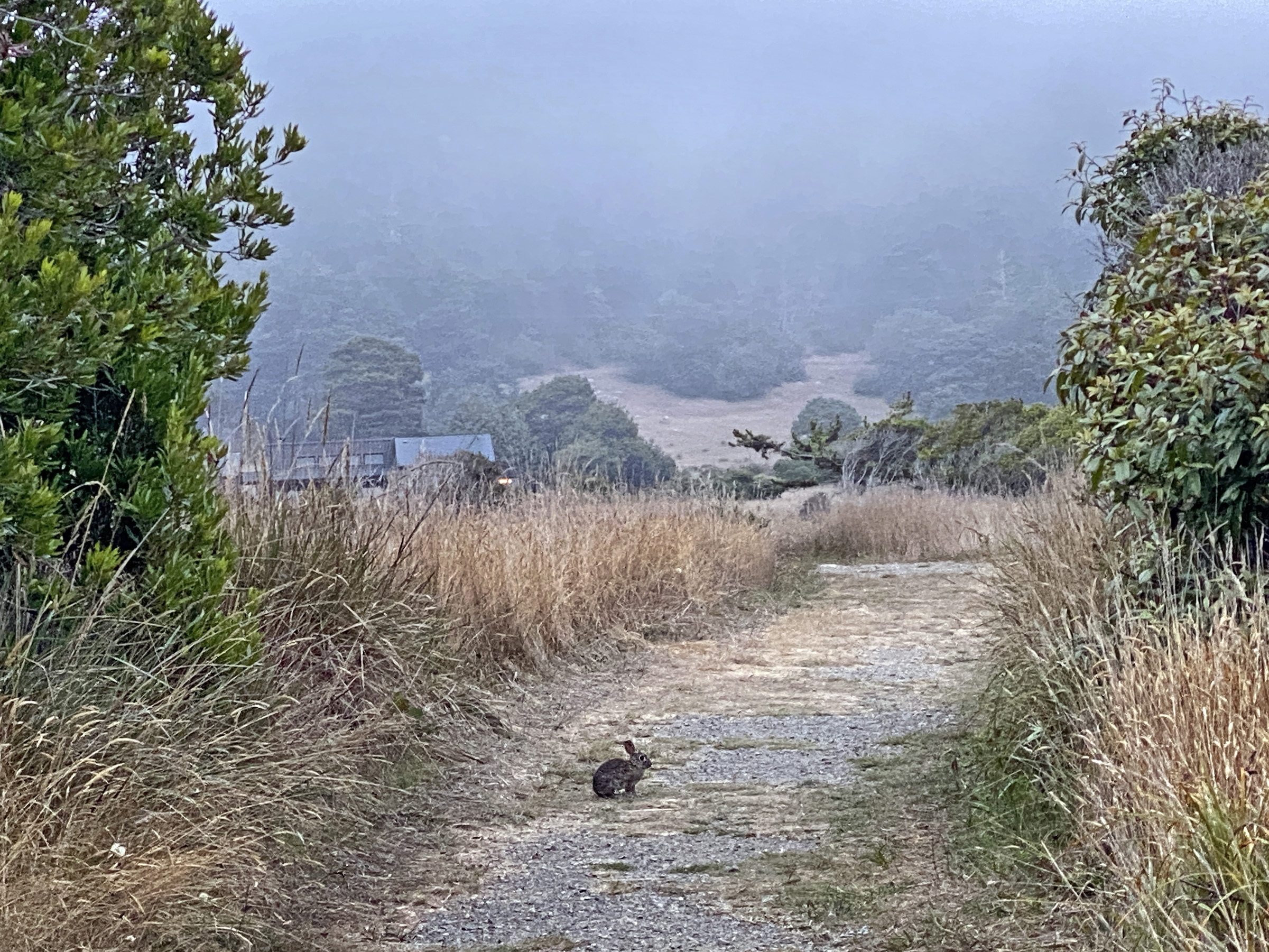
The small brown rabbit Dick has seen on the trail emerges from its same brushy spot to nibble mid-path as we stop to watch.
These are the moments when we’re lichen it, grateful for the what-is, no matter the weather. We’ll head home into a hazy
future, though the sun is predicated to blaze bright and hot. We cannot know what’s coming or when.
We must keep the good thought, pray for the highest outcome, the greatest good, over which we mere humans have far
too little control. We will bring with us from the seashore great tendrils of kelp-like love to wrap
around those deep in the struggle, lost in the fog. We will call out like beacons to pierce the mist:
We’re here for you! This way, full steam ahead— this way to home.
(Top) Lichen on fencepost (photo / Jan Haag). (Above) Rabbit on trail, The Sea Ranch, Sonoma Coast (photo / Dick Schmidt)
(for Pamela and Dave with thanks for a happy afternoon in Pt. Arena, California)
•••
Finally, the blue after days of gray, but the coast leans that way at times,
gulls and buoys together bobbing in lacy fog, or stuck in the thick blanket
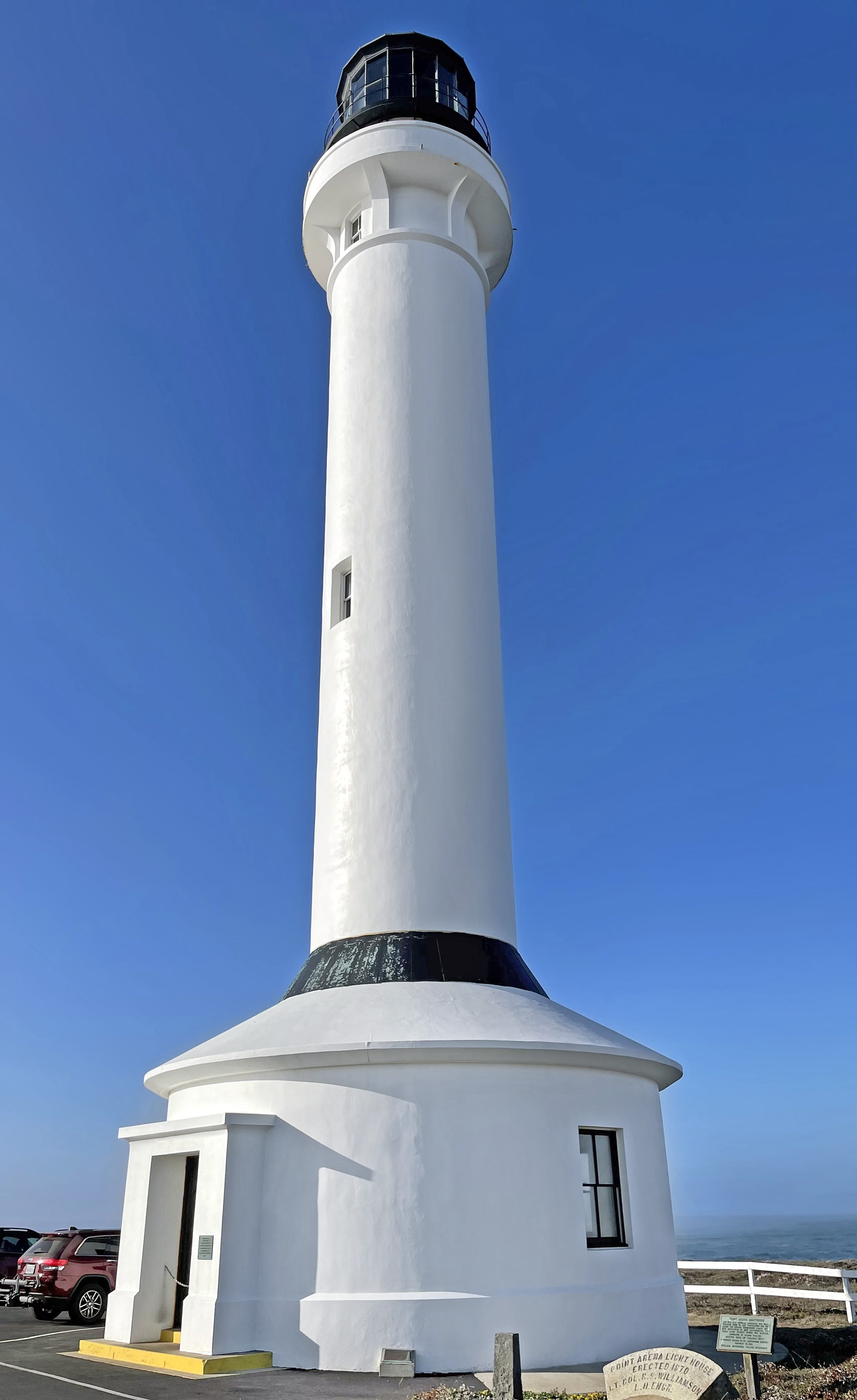
of it. But we made our way to the historic lighthouse in the gray, went inside the museum
to listen to a lecture by a longtime counter of seals and birds on that coastline,
and, walking outside afterward, there it blazed— the deep blue of sky under which some
of the gulls we’d just learned about wheeled overhead. The blue belayed the fog as we
four made our way to the pier surrounded by soaring white cliffs, a small flotilla of red
buoys arrayed like large lozenges on the deck, as a happy fisherman showed off
an enormous ling cod that took the bait. The same kind of fish we ate at the Pier Place
with good chowder, as we four chatted— while outside the fog again swallowed the sun
on the last day of summer and the blue with it. But we’d seen it, basked in it, like
the tall candlestick of a freshly whitewashed lighthouse that once upon a time shined
its multi-faceted brilliance through a giant beehive of a lens, across the night,
far out to sea.
(Top/bottom) The white cliffs of Pt. Arena on the north coast of California surround the pier and are composed of Salinian sandstone.The Pt. Arena Lighthouse (center) went into service in 1908 with a magnificent Fresnel lens that shined 21 miles out to sea and continues to serve as a beacon to mariners, though employing more modern technology. (Photos / Jan Haag)
This is where they birthed their pups. This is where they swam with them in the shallows, getting their babies used to being the half-land, half-ocean creatures they are.
This is where they spent hours atop the detritus of long-gone sealife, lolling around on shell bits and wave-tossed rocks, sunning and sleeping as the young seals grew fat, and their mamas prepared them for life in the wild.
We could not wander here then. But now, in almost autumn, the four-flippered, finished with child rearing, have gone to sea, hauling out on nearshore rocks for daily naps.
And we, the two-footed, are once again welcome on this lovely beach, allowed to roam where our hearts take us. Where the surf laps gently and the full moon will soon rise overhead, and the peace of all that we are rests here, where land meets ocean and silhouetted cormorants fly low over the wave tops,
and the sun, blesséd son, warms me as I sit on a friendly rock, and the poem arrives.
Jan on Shell Beach, The Sea Ranch, Sonoma County / Photo: Dick Schmidt