We forgave. We remembered. We made cocktails. We got tender. — Jenny Hollowell from “A History of Everything”
If we live long enough, with luck, we soften around the edges, some of us growing doughy, most of us wrinkly, even in places that surprise us—the corners of our eyes, around the ankles, like elephants, whose famed memories we wish we possessed.
If we live long enough, we will watch others leave, we imagine, before their time. Which means before we want them to. This, too, tenderizes us. We let go of old grudges; we forget long ago hurts as we realize that we are not entirely blameless.
We remember things that surprise us: the quality of light on her hair when she said, “I love you,” or the tremor in his voice when he said, “I’m proud of you.”
The way the baseball thunked into the mitt. The shock of diving into cool water. The way fall leaves annually performed perfect pirouettes to the ground. How we twisted or jived or jitterbugged away that enchanted evening we hadn’t thought of in decades.
If we’re lucky, we live long enough to let go of unpleasantries, let bygones be truly gone.
We forgive and forget because in the end, if we do this right, our hearts pump only love, churn pure gratitude through our old blue veins that river our hands, that hold each other tenderly— our last, best memory.
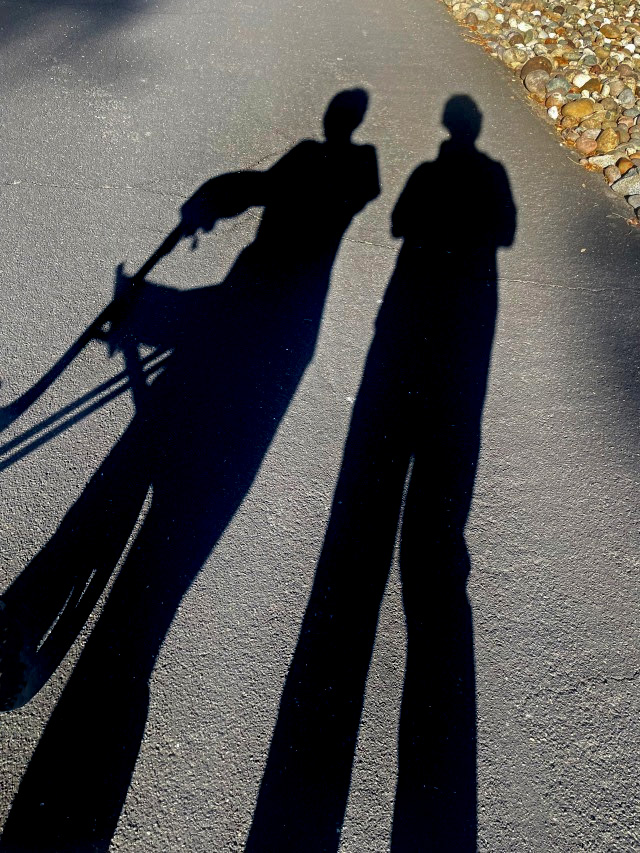
Traces of Life / photographer: Zay Yar Lin / Viewbug
Way back in the previous century, I soloed Saturdays in the office of an international wire service, posted there to cover the newfangled California lottery.
I’d have the TV on, glancing up from my huge CRT monitor at the Big Spin, a game show-style program where lucky Californians hoping for a big win got to twirl a huge roulette wheel mounted vertically for the camera— all the force of their hope thrumming through their arm.
Lucky ones went home with something, though nothing like the millions now coursing around the state as people put money down on a series of numbers that they hope will make them rich.
Now, on a Momday of driving and dropping her off at appointments, as I fuel up her car, the vertically spinning numbers stop precisely at $47. And when I go inside to claim my three dollars in change, the clerk hands it to me saying, That’s lottery ticket kinda luck.
I chuckle, head back outside to look again at the digits lined up neatly on the pump, and think, Why not?
I go back inside with my three bucks and say to the same clerk, What kind of tickets can I get for this?
She laughs, points to the $2 scratchers, then the $1 ones, or, she says, I can also have three shots at the big jackpot, hovering around $500 million at the moment, though I’d have to stand there and choose a hopeful combination of numbers.
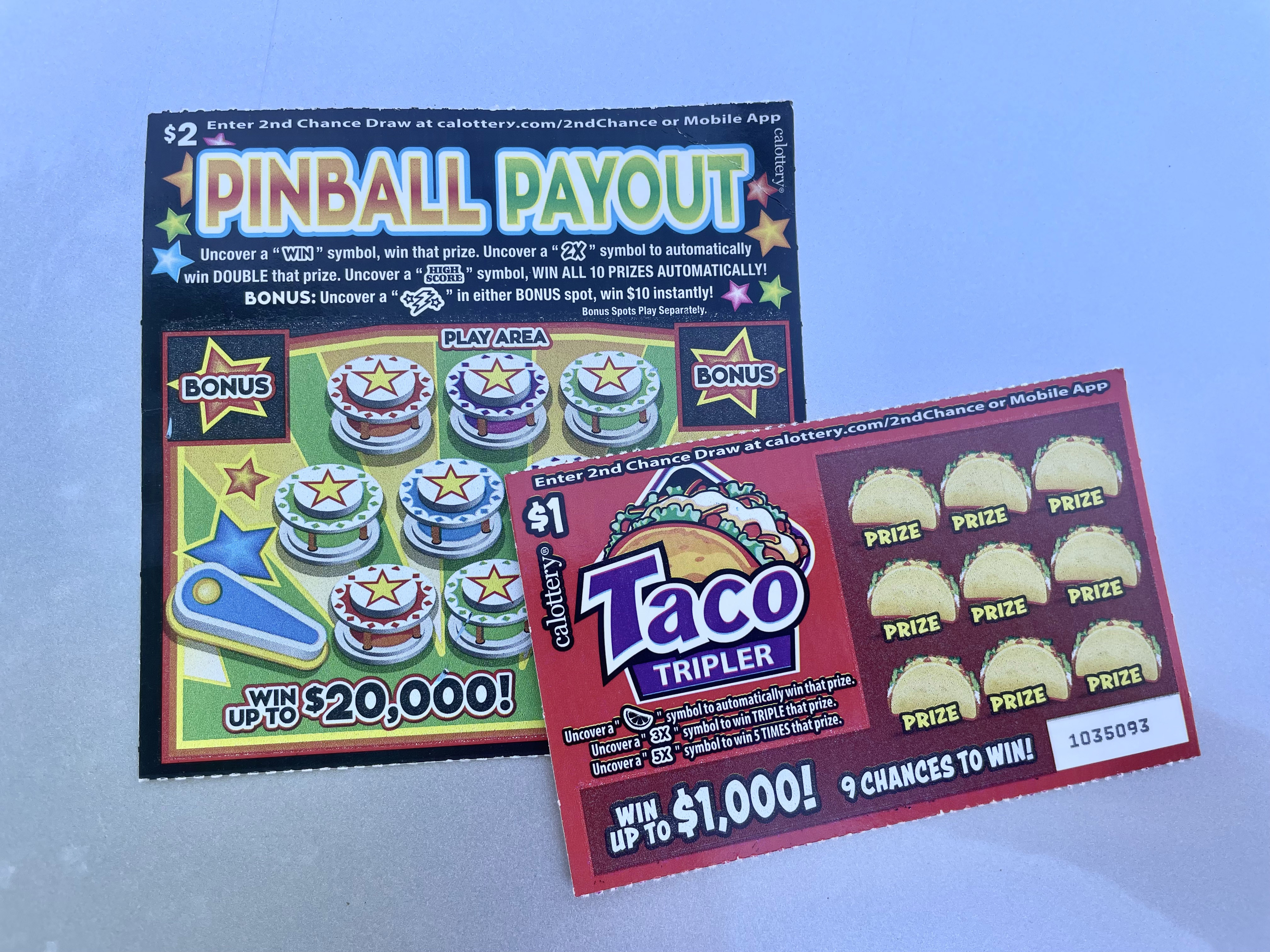
Needing to retrieve Mom, I land on the fastest option—two brightly decorated scratchers—imagining how long the odds might be to even win back my three bucks.
Good luck! grins the clerk.
And before I even get in the car, before I scratch those little cards, I behold the delighted smiles and squeals of people who once spun the big wheel on TV and went home with a little more cash in their pockets and a little more faith in their brilliantly lucky stars.
Nope, no winners on these cards… (Photo / Jan Haag)
(for the good folks at Vic’s Ice Cream in Sacramento)
The thing is that it’s real turkey, carved off the bird, all the way to the carcass, like the afters of Thanksgiving
when you hack off a piece of white meat, slap on it on some good sourdough and layer it up with, say, with your favorite (savory) greenery and maybe a tomato, not to mention the close-to- your-heart condiments.
Vic’s does this. Burr’s used to.
How we miss Jim Burr’s old spot across town, its windows long covered in paper, no sign that ice cream and sandwiches will ever emerge again from our go-to place,
where parents took kids after school, after baseball, before Halloween runs, where folks our age took their ancient parents until they faded away.
Now we’re the old ones.
And now Vic’s is for sale, and we worry that if it sells, it will get cleaned up and fancified, the turkey will morph into slimy, store-bought stuff, the ice cream no longer conceived in the back room,
the counters presided over by teenage judges wielding scoops and issuing cones with authority they won’t otherwise acquire for years.
Everything changes, of course; businesses, too, have lifespans, coming and going—the going often much sooner than we’d like.
But isn’t that life?
So we hustle ourselves over to Vic’s and snag the last booth in the snug shop to watch red-shirted baseball kids twisting on the stools at the 1940s counter, high school girls giggling loudly in the booth behind us.
And when the turkey arrives for me, and the hot dog sliced onto fresh sourdough for you, we sigh after our first bites, aware of this precious moment, wanting to somehow store more than sandwiches and ice cream into our cellular memory.
We leave a big tip for the tall boy with the fabulous ’fro who flashes two thumbs up when we tell him how great everything is.
“See you next time,” he says when we pay at the tablet on the counter where the cash register used to be.
We catch that hope like a gently lobbed ball, and return it. “Yes,” we say. “Till next time.”
Jan with turkey sandwich and fudge ribbon frost at Vic’s Ice Cream / Photo: Dick Schmidt
I wonder sometimes if I am writing the same poem over and over. If I’ve lived in the rooms of the lines so long, I’ve left crease marks on the furniture.
—Maya Stein
•••
Perhaps this is why I don’t invite many people in for a visit. Not just because of
the too-much-stuff issue, or because someone might step into a bit of hairball
one of the four-leggeds left on the floor, and I missed, but because a sharp-eyed
guest might notice the pile of “lovely”s in the corner—one of my overused words—
not to mention my tendency toward three-line stanzas, linguistic tripods
holding up the coffee table. And oh, dear, though I sweep regularly,
I’ll never clear out all the love poems to a dead husband, or the ones to
the gloriously resurrected partner, or, for that matter, the gratitude
oozing from every houseplant that has seeped into me and onto
the page for so long, you could say that we are more than a bit
overwatered. But I like it this way, up to my knees in metaphor,
redolent with repetition, not to mention giddy with alliteration.
I wouldn’t trade it for a squeaky clean, spotless life, free of cliché
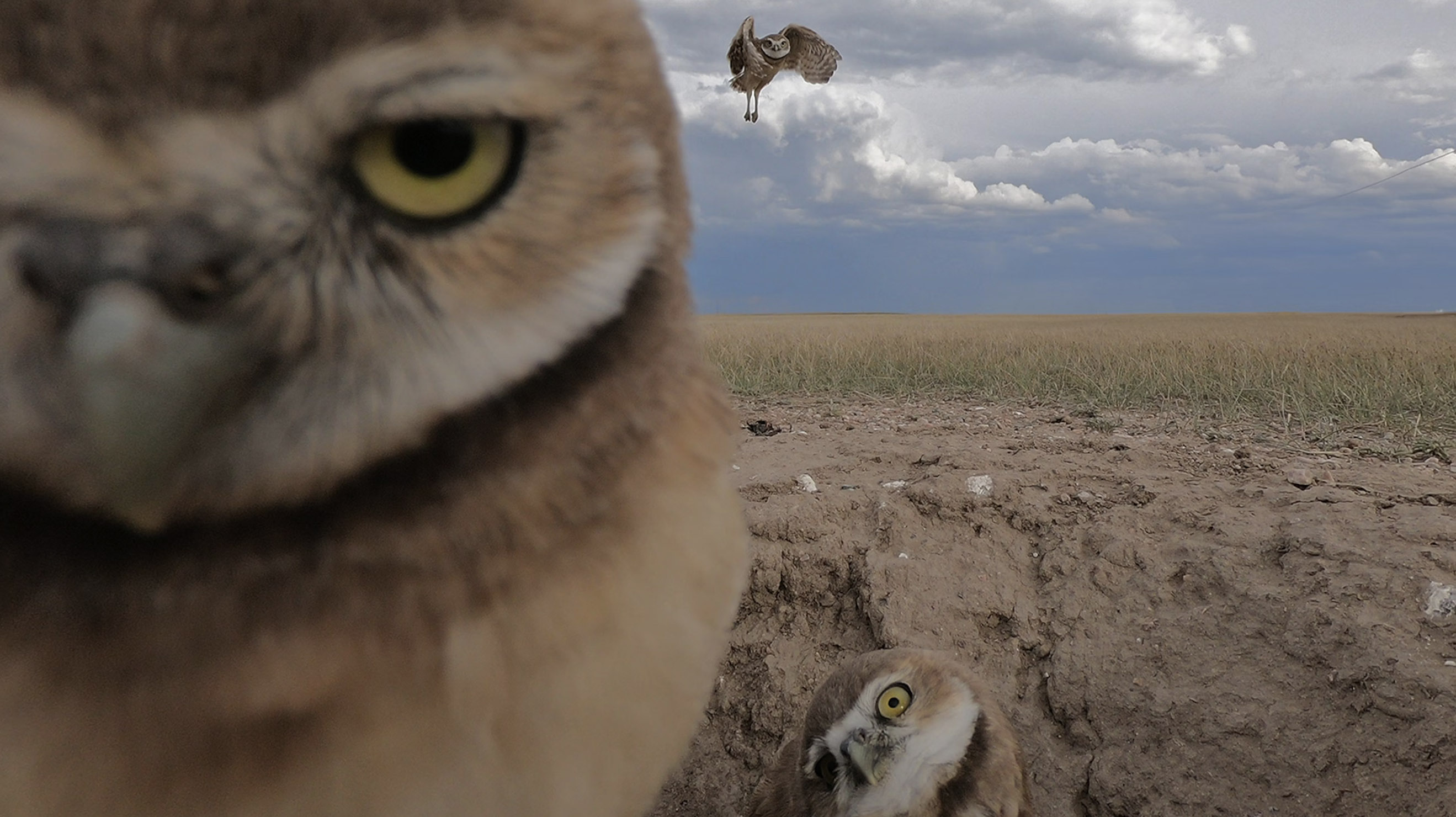
Don’t like it. Gonna stare it down. Make it leave. It’s not leavin’. Why’s it not leavin’?
Wha’cha doin’, you guys? Tryna chase this thing away. Give it the hard stare. It’s not leavin’. I know. Why’s it not leavin’? Dunno.
Maybe it can’t fly. It got here somehow. Just gonna sit here till it goes. ‘K.
How long we gonna sit here? As long as it takes. How long’s that? It takes as long as it takes. ‘K.
•••
Small, sandy-colored burrowing owls live underground in burrows they’ve dug themselves in grasslands, deserts and other open habitats where they primarily hunt insects and rodents. Wyoming photographer Pete Arnold set up a GoPro camera to shoot at regular intervals on the edge of a nest of burrowing owls near Cheyenne, and, among thousands of images, a trio recorded this memorable selfie on June 28, 2024.
Burrowing owls outside Cheyenne, Wyoming / Photo: Peter G. Arnold
(Richmond, BC, near Vancouver International Airport)
Clearly in the YVR flightpath, walking around the lovely pond, I cannot miss the great jets thundering overhead on their way into the sky.
Why, there goes one now, winking and gleaming against the soft blue and puffy white.
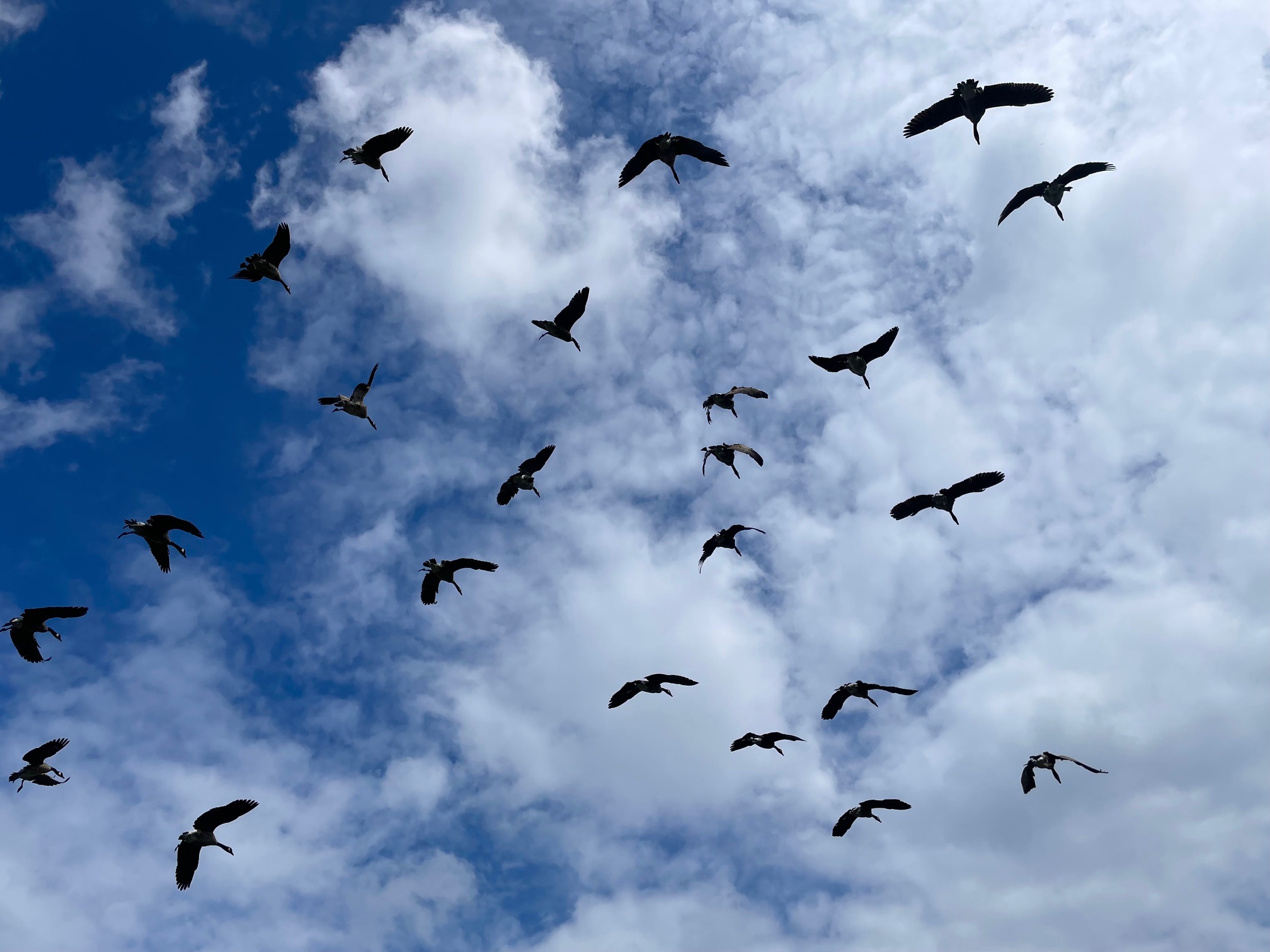
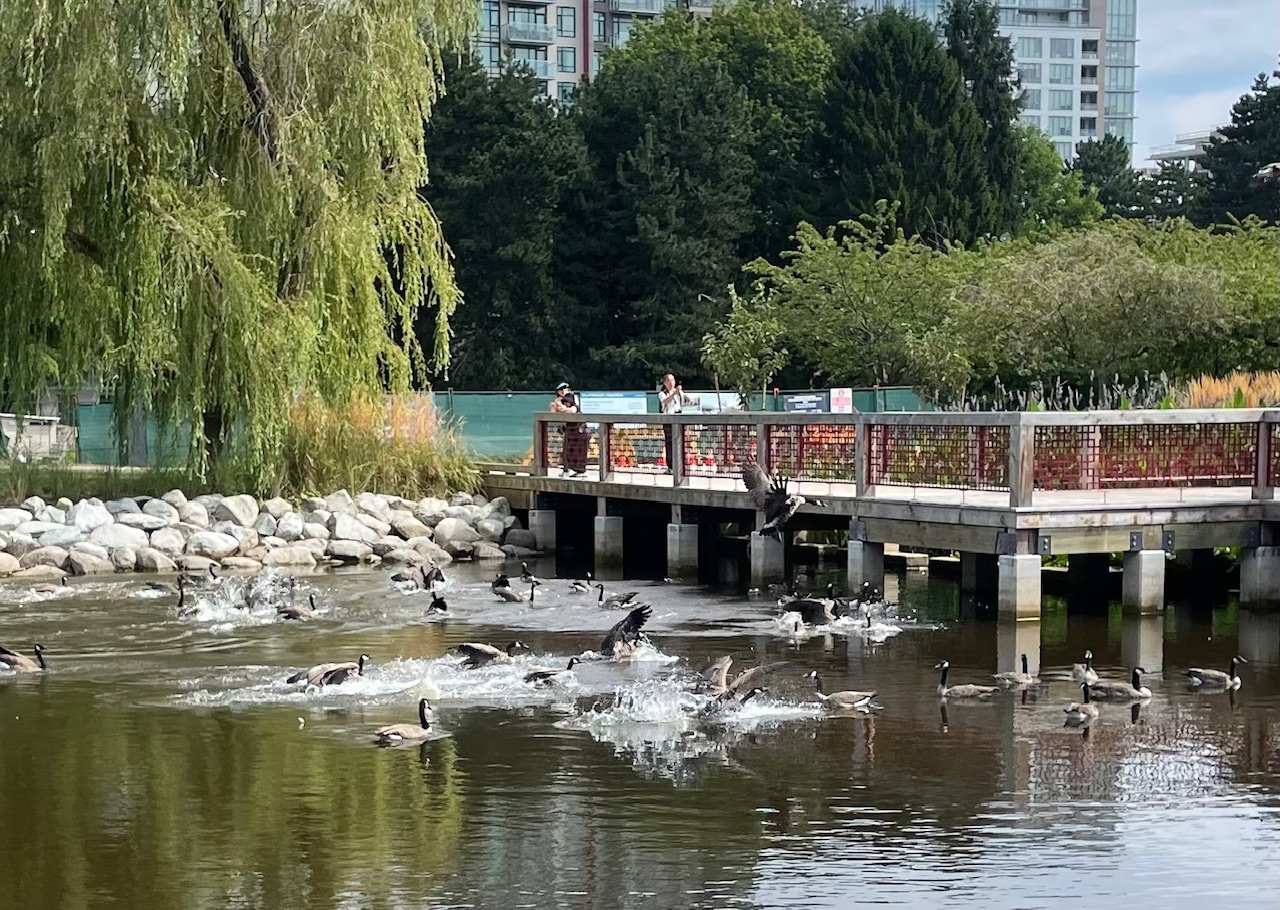
The wedge of Canada geese on the pond seems oblivious, though when a constellation of their brethren circles overhead eyeballing a potential landing spot, a flurry of feathered activity ensues,
the birds in flight angling in for a water landing with effusive squawks and splashes, far from graceful, but effective,
which is what I imagine human pilots must think on occasion when their touchdowns check in a bit bumpy.
But there they are, a poem descending with so much grace, safe landing on the planet that all of us in-flight souls call home.
(Top) Canada geese coming in for a landing at Minoru Park lake, Richmond, BC., and (above) making a splash landing. Photos / Jan Haag