5 things you could see— • The letter summoning you • The doctor’s large finger in the cold exam room • The big yellow bus that was not taking you to school • Your first barracks • The freshly shaved heads of your fellow soldiers
4 things you could hear— • Ten-hut! • All right, maggots—drop and give me 20. • the rat-a-tat of assault rifles • the chatter of your heart
3 things you could feel— • The cold submachine gun in your sweaty hands • The clammy neck of a downed soldier; praying for a pulse • Your aching, blistered, rotting feet
2 things you could smell— • Blood, sometimes your own • Death, not your own—yet
1 thing you could taste— • Coming home, never the same, but home, Hallelujah. You lucky bastard.
•••
In memory of my father, Roger E. Haag, infantryman in the Korean War, with gratitude.
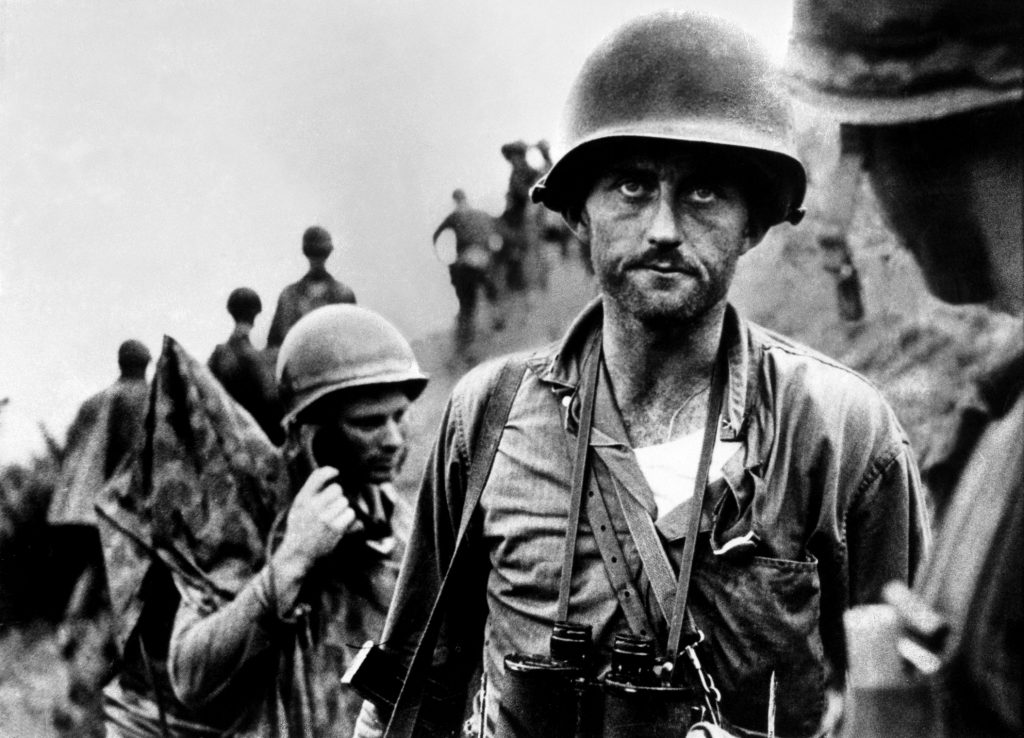
United States Marine Captain Francis “Ike” Fenton in despair as he is told that his company is almost out of ammunition while trying to hold off a heavy counter-attack by North Korean forces. (Photo by David Douglas Duncan /The LIFE Images Collection)
On our morning walk along the river path, Deb and I stop several times to watch the progress of a…
Is that a sea lion? In the American River?!
…flopping acrobatically, swimming fast, popping up, then diving into concentric circles of expanding water, a long way from home.
Some of us are like that— natural explorers setting out into uncharted waters, eager to see what can be seen, and when we spot this adventurer’s dog-like head zigging and zagging downstream, we landlubbers cheer.
“They follow the fish,” Deb says, of the lithe, ear-flapped pinniped likely hot on the trail of salmon making their way back upstream after their long journey to the sea.
This splashing gymnast is not the only one of his kind, adds Deb, who knows this path well. “Sometimes we see two of them.” The big guy and his mate are no strangers to fresh water, have likely flippered their way up a river or two before.
But to us, it’s like watching a visitor explore new territory: We wonder what he sees under the surface, imagine a murky underwater world with waving grasses and swimming critters.
We stand and look and watch for him until his slick head disappears, silently wish him safe passage, happy hunting, bon voyage.
Deborah Meltvedt looking for the sea lion in the American River / Photo: Jan Haag
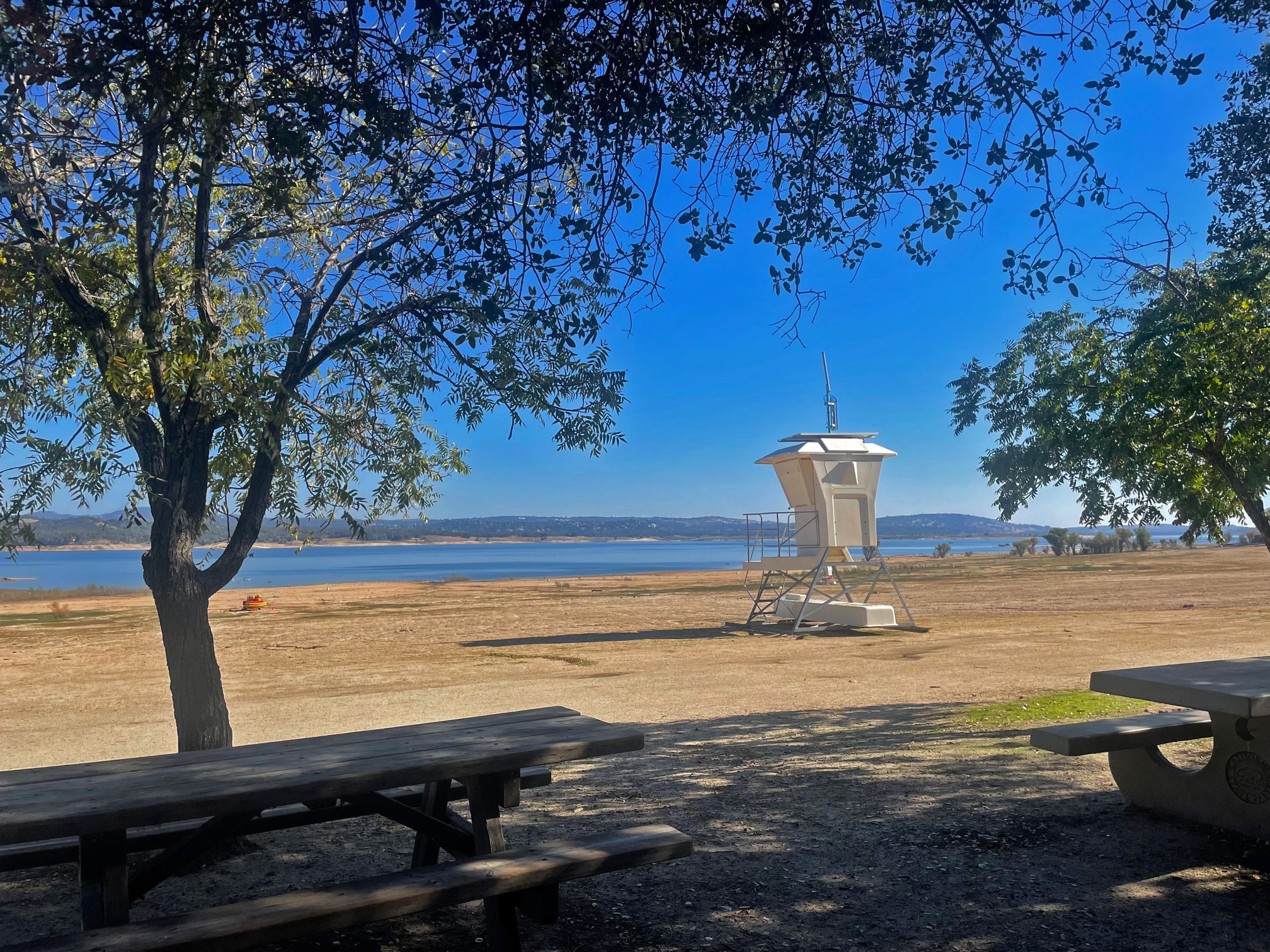
In the opposite season I make my way up the hill that careens down to the lake, lessened by summer, that body that sends water down long river arms to my city, many miles away.
Months ago I sat here when grass flourished freshly green, when oaks budded with new leaves, and the world felt clean and bright. In the opposite season the world has darkened again, and pain knowingly inflicted rises like dust from rubble.
In the opposite season, I stand amid crackling grasses that winter rains will, we hope, soften to allow them to rise next year, remade. I carry despair in my pocket, wanting the forever spring, the fullness of lake, the abundance of what we believe was promised:




 Güd wrtr