
For a week now, I have risen
as the sky begins to pinken,
to gently pull aside the windowshade
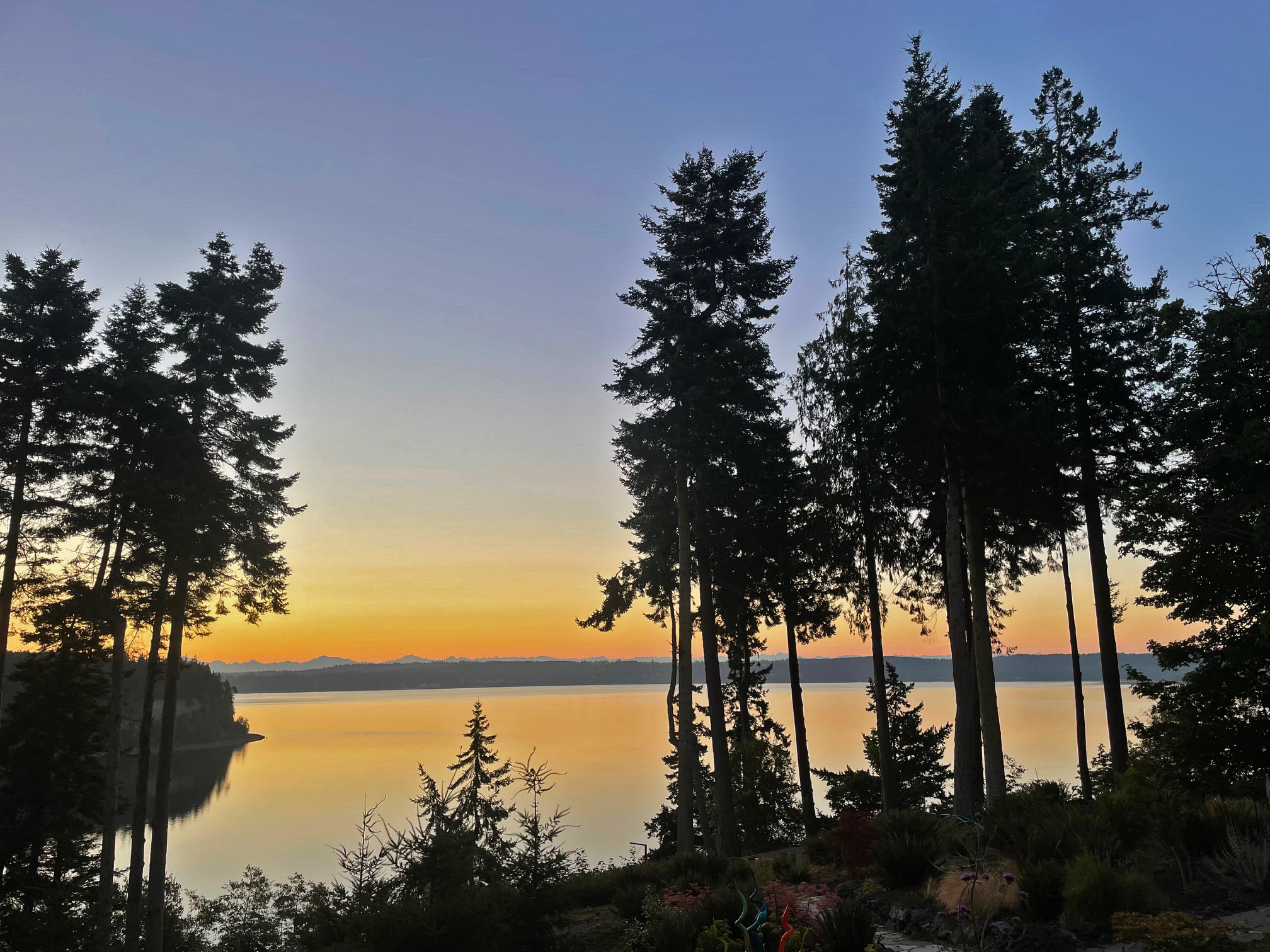
and see the collective of thirteen
soaring pines downslope
standing at attention over
the Hood Canal. I look at
the half-finished upper deck
that Al is building beneath
the Council of Trees, just above
his Sub Deck, where I love to sit
and look at the trees and water
and sky, along with the occasional
submarine silently subbing its way
up the canal—ocean-bound, tower
exposed, accompanied by smaller
boats wielding wicked firepower
for protection, if necessary. Later,
sitting on the Sub Deck, I look up
and count the council members—
yes, thirteen, an excellent number.
In the event of a tie vote, one of
the council could break it, until I
remember that trees, even ones
of different species, are forever
linked underground, their rooty
fingers holding tight to each other
in a perennial pinky swear.
Which means, I suppose, that
there are no ties. That everything
between them is unanimous,
that they come to agreement
without weapons or argument
as a single body—without words,
angry or otherwise—which seems
something of a miracle,
an excellent way to operate between
conscious, caring souls, everyone
looking out for—imagine it—
everyone else.
•••
(for Al and Terri Wolf with love and thanks
for their week of hospitality in Port Ludlow, Washington)


 Güd wrtr
I love your Council of Trees and have spent many days at Port Ludlow, Port Gamble, and Port Townsend (where An Officer and a Gentleman was filmed).
One tiny correction: the trees in both today’s and yesterday’s blog aren’t pines (genus Pinus). They are Douglas fir (Pseudotsuga menziesii), a unique species that is more closely related to hemlock than to true firs, and, in fact, were originally called “false hemlock” by early taxonomists. They are mighty giants at maturity that can live over 1,000 years. My grandparents planted two of them seven and a half decades ago in the yard of their home in Goldendale, Washington, where I now live. They rise today over 100 feet into the sky and run to 80 inches in circumference at the bases of their trunks.
P.S.: Happy birthday!