
(Passiflora incarnata)
Listen: All the flowers
you’d hoped to see on your
favorite tropical island
have likely been blown
to smithereens by a hurricane,
and now is not the time
to make a nuisance of
yourself as a visitor.
But honey, take a gander
at the passion flowers
blooming their fool heads
off on the Garden Goddess’s
trellis on the corner, their
purple blooms unfolded like
an open palm, beckoning,
a mini helicopter pad
in the center, tiny yellow
pollen sacs hovering over.
And, as you stand there,
admiring, sure enough, a
small butterfly flits in
for a landing. Just a touch
and go on this blossom
that lasts maybe a day.
Yes, beauty is, indeed,
fleeting, but look at that
wavy fringe over those
lavender petals. Right
here on your block, honey—
so much loveliness,
like a gift you forgot
to open, presenting itself
when you need it most.
•••
(With appreciation for Garden Goddess Katie O’Rourke)
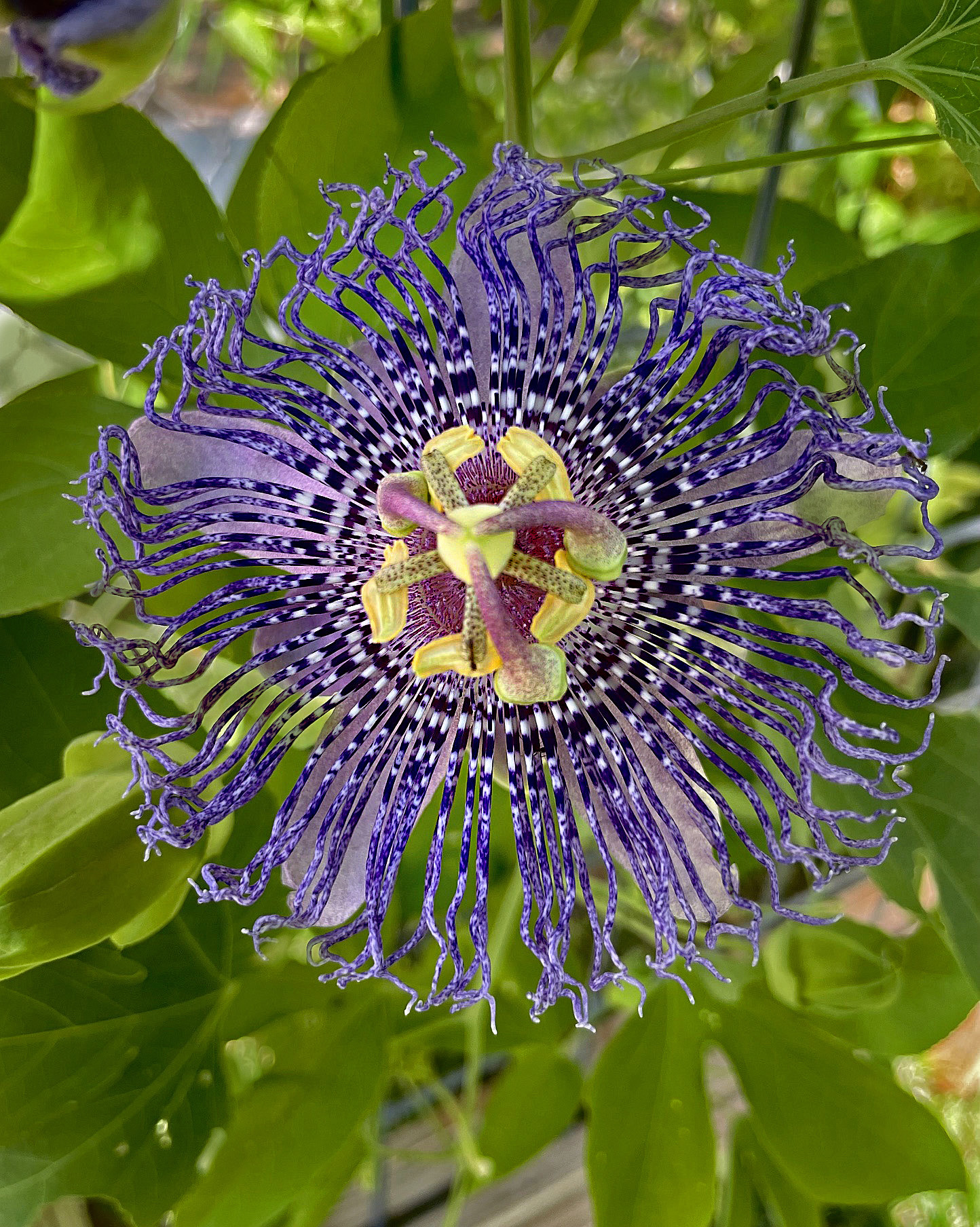


P. incarnata is native to the eastern and southeastern U.S. Its rapidly-growing blossom-strewn vines appear all over open spaces in Alabama, where our other home is located. Its golf-ball-sized, smooth yellowish fruits, known in the Deep South as “Maypops”, are edible and sweet, but they aren’t the traditional passion fruit occasionally found in stores, which come from a number of different cultivars. The colloquial name derives from the Algonquian word for the plant, mahcawq, though the flowers do actually first emerge in May and the fruits make a loud pop if stepped upon!
This delicate-looking plant is tough. It will stand up to temperatures down to zero Fahrenheit, even though it is considered sub-tropical, and thus can be found as far north as the southern Great Lakes, where I’ve seen its distinctive blossoms thriving while dusted with snow.