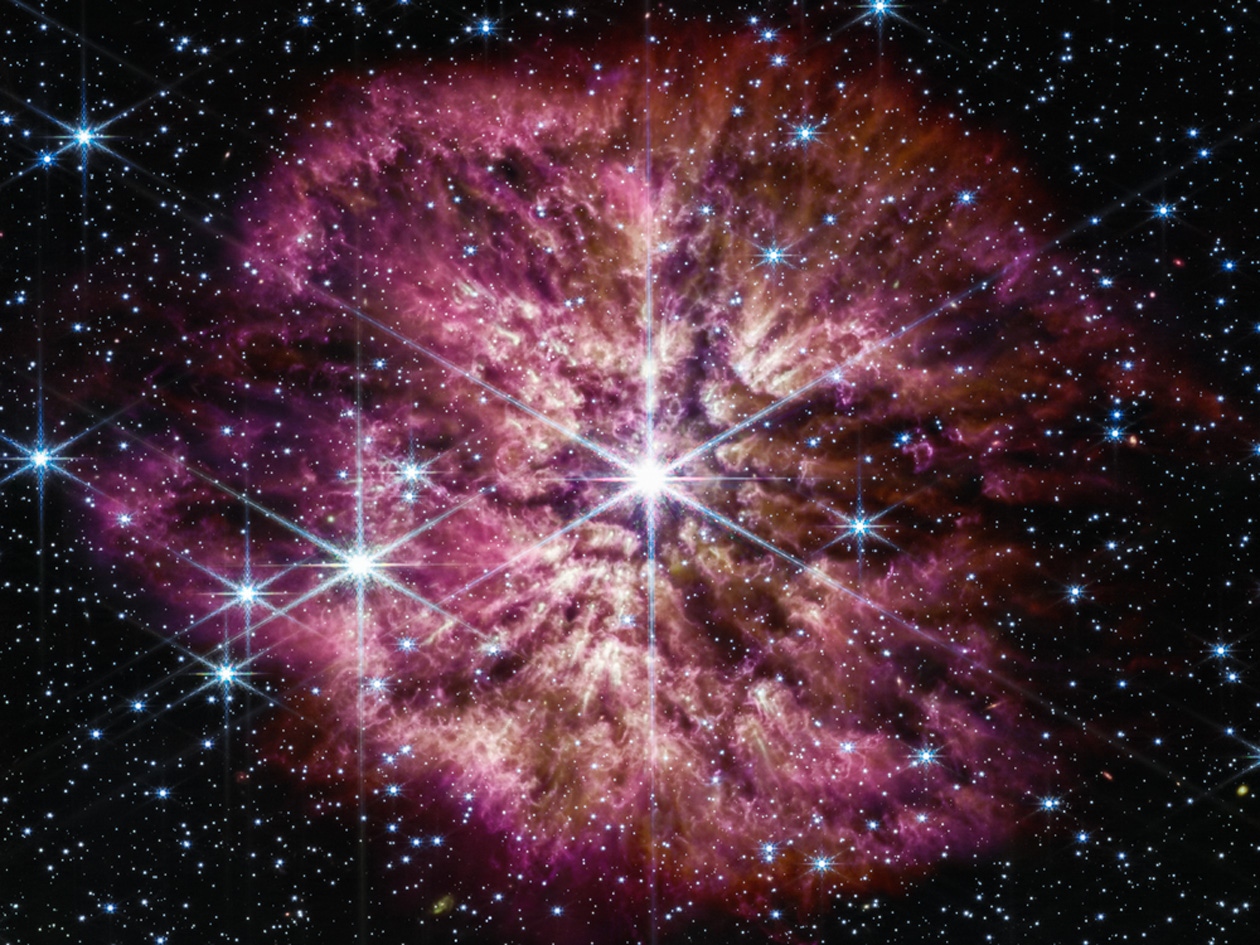
But how pretty, like a peony blasted open with a starry center, WR124 surrounded by watercolor
gases that signify its approaching end, before it undergoes a turbulent transformation, before it supernovas
into glowing cosmic dust. It’s shedding its outer layers now, a molting star, petals loosening at the edges as we
do when the end is near, letting go of what’s not needed—in this case, 10 suns’ worth of universal material.
It’s hard to look away from the bright core, even though we know its days are numbered, even though we
remember it as a brilliant fireball of orange, red, yellow dazzling energy. It’s a mystery, what happens at the end,
especially if we’re not there to see it. But all that starstuff it flings into the universe makes us us—we who are
forged in iron and calcium from ancestors that exploded billions of years ago, as this one will one day,
spreading shimmer and dazzle through the cosmos, baby planets born in star nurseries, creating all that is, bringing
me to you and you to me in this twinkling moment we share, exquisite, yes, radiant,
and oh, so finite.
This composite image of the WR 124 star combines observations from Webb’s Near-Infrared Camera (NIRCam) and Mid-Infrared Instrument (MIRI). Photo / NASA, ESA, CSA, STScI, Webb ERO Production Team
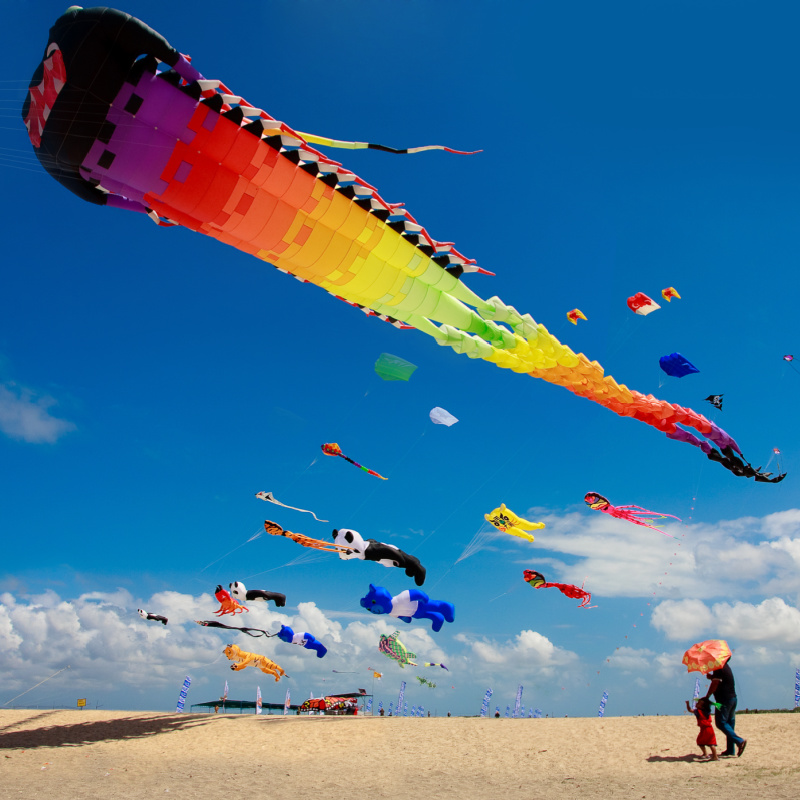
Look at them: all that rainbow-y nylon dripping like bridal veils—one whose face wears a happy rainbow over white clouds and half a circle of sun, the other with a prancing unicorn under the little purple and green tissue paper diamond, dented and torn, two big spools of thread and one little one.
Our kites still live in the big striped cloth bag you sewed for them almost four decades ago— kites we flew over coastal beaches, sea spray dotting our cheeks, watching the broad faces of their light bodies get smaller and smaller as the spools unfurled into the sky.
We flew them from the bluffs of Mendocino and on the sand below the Cliff House in San Francisco, where, years later, I buried some of what was left of you after you soared and tangled and dove to an early end.
I don’t remember when I put them away, how long it’s been since they tasted wind, even at the end of a thin leash. But I imagine they can still fly.
I bet they can propel themselves upupup, a shimmering palette against a March sky—their red and orange, blue and green and purple tails whipping the spring wind, dancing up there, aloft for as long as we liked.
For Clifford Ernest Polland May 21, 1952–March 18, 2001
On this day of green, of imminent spring, of green beer and drunken celebration, I think of you on that terribly ordinary day, setting off to eat corned beef and cabbage with your siblings, me planning to see you the next day, none of us having any idea what was soon to happen.
As it should be.
We should all live fully to the end, death sneaking up on us like a little one we love tapping us on the shoulder, smiling, gently saying, Come with me.
And we do.
We should drink that last green beer not knowing. We should hug those we love and say goodbye as though we mean it.
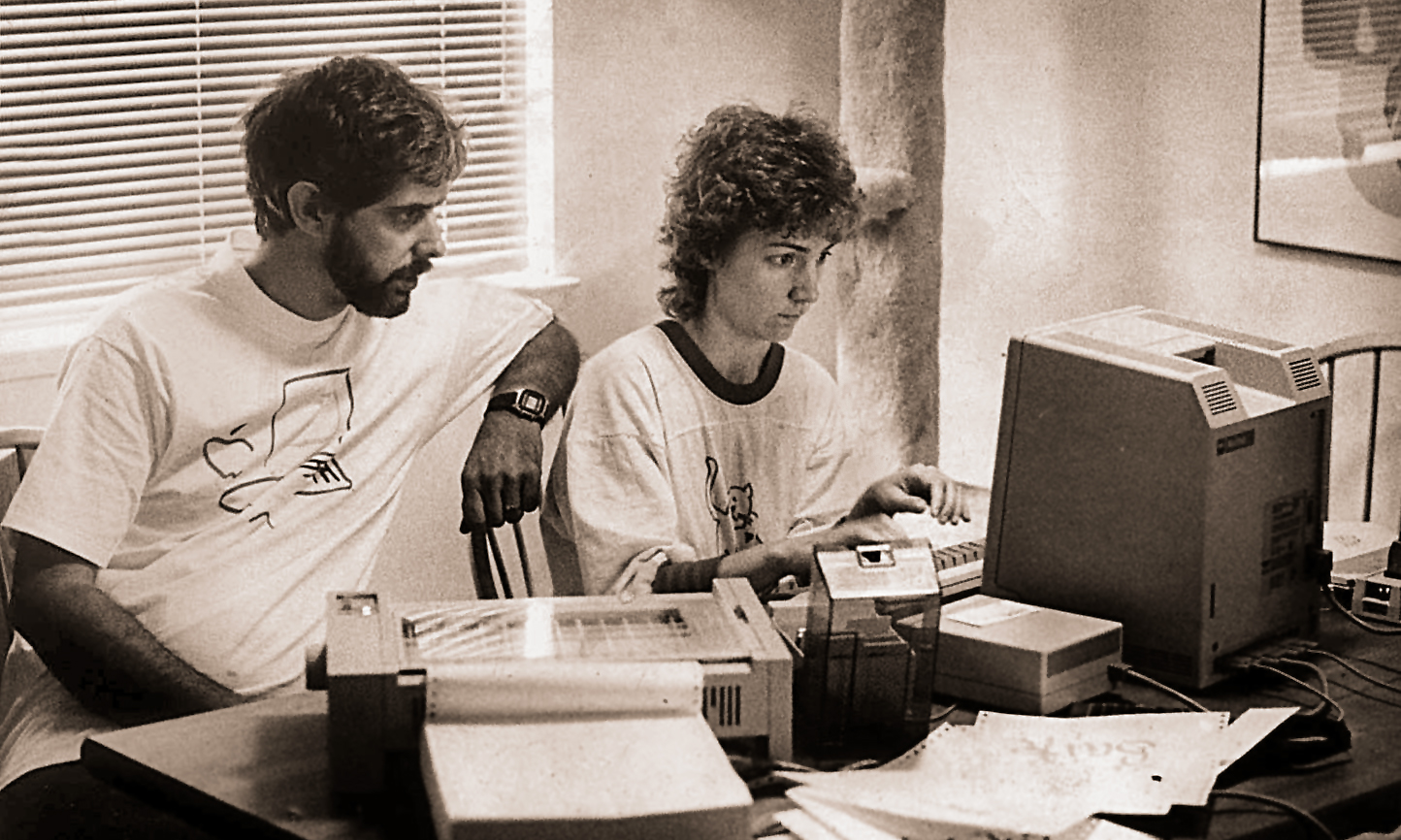
Cliff and Jan at home in Davis with their first Macintosh computer, 1984
Three years ago at this time we could not see what was coming at us, could not imagine the unseen that would lock us inside, afraid of the very breath of others.
We learned too well about isolation, about grief and pain, gripping hope to our chests like a soft pillow, not entirely able to absorb its comfort.
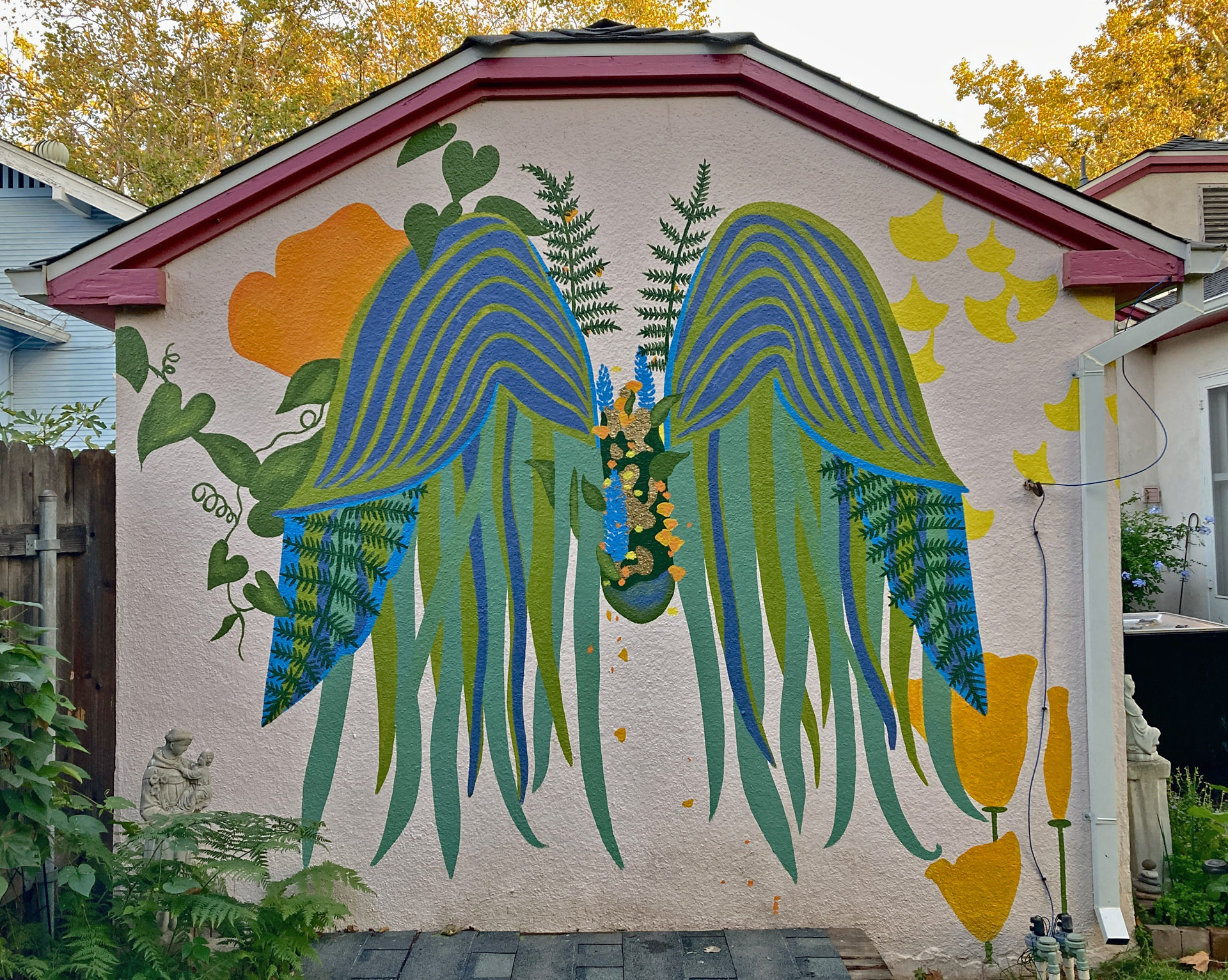
Two years ago at this time a young muralist wielded her imagination and brushes to flower my century-old garage with poetry and poppies.
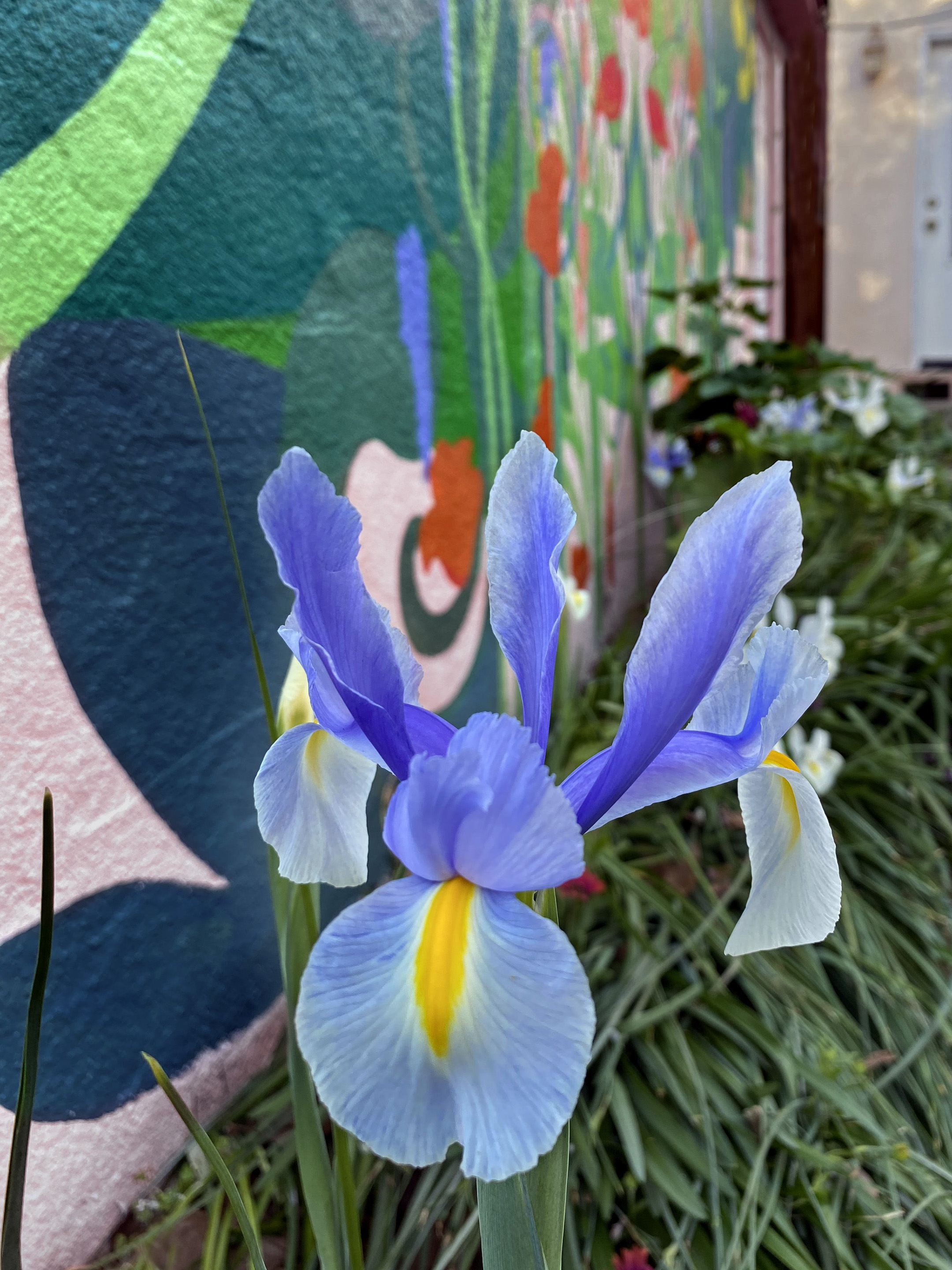
We were not entirely out of the woods, but hope slowly made itself known, unfurling like the iris bulbs I’d forgotten lying in the back yard bed.
Last year at this time we felt hope rising along with the iris’ purple tongue, with new buds on the Japanese maple and ginkgo in the front yard,
and the muralist returned to paint giant wings on the back of the garage, flowering, thriving.
And this year, drenched, finding relief in the sunny moments between storms, we pay attention to the tiny pink flowers springing from wispy branches, as living things seasonally do, filling us with breath, light strength of spirit to take a small step forward, and another— onward.
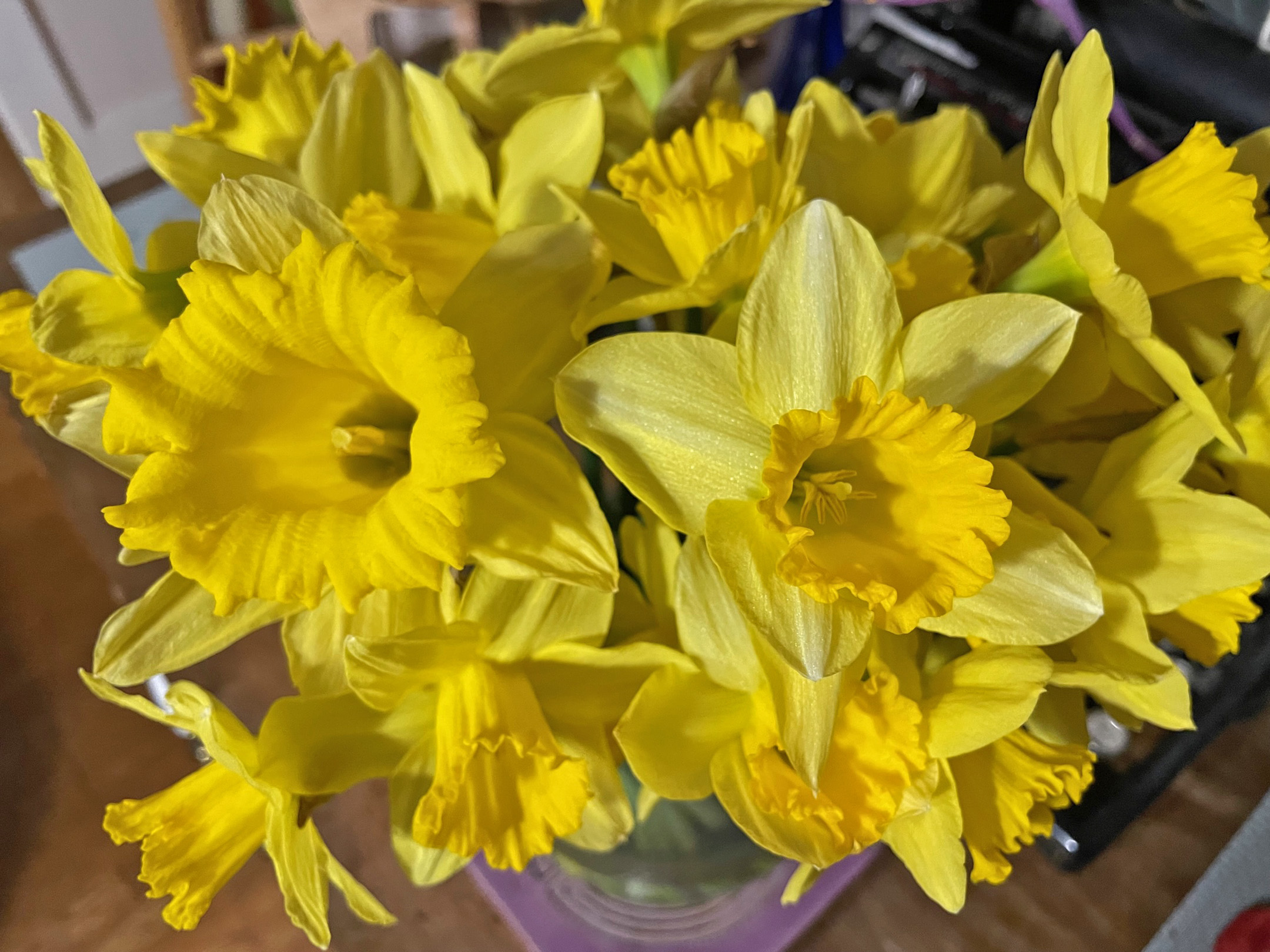
Last night I stared hard at the clear vase holding two dozen pointy green stalks like paintbrushes tipped the color of canaries, willing them to open.
If I ignored them, I thought, one might shyly loosen a lemony petal, let it begin to fall like a satin camisole strap, or another might open enough to reveal a bit of sunny petticoat.
This morning, when I turned on the light, all 24 girls stood tall, unfurled, twirling their parasols, beaming with the brightness that can only mean spring.


 Güd wrtr