I let my poet off her leash, and, unclipped, she turned her furry head and shot me a question—
Really?
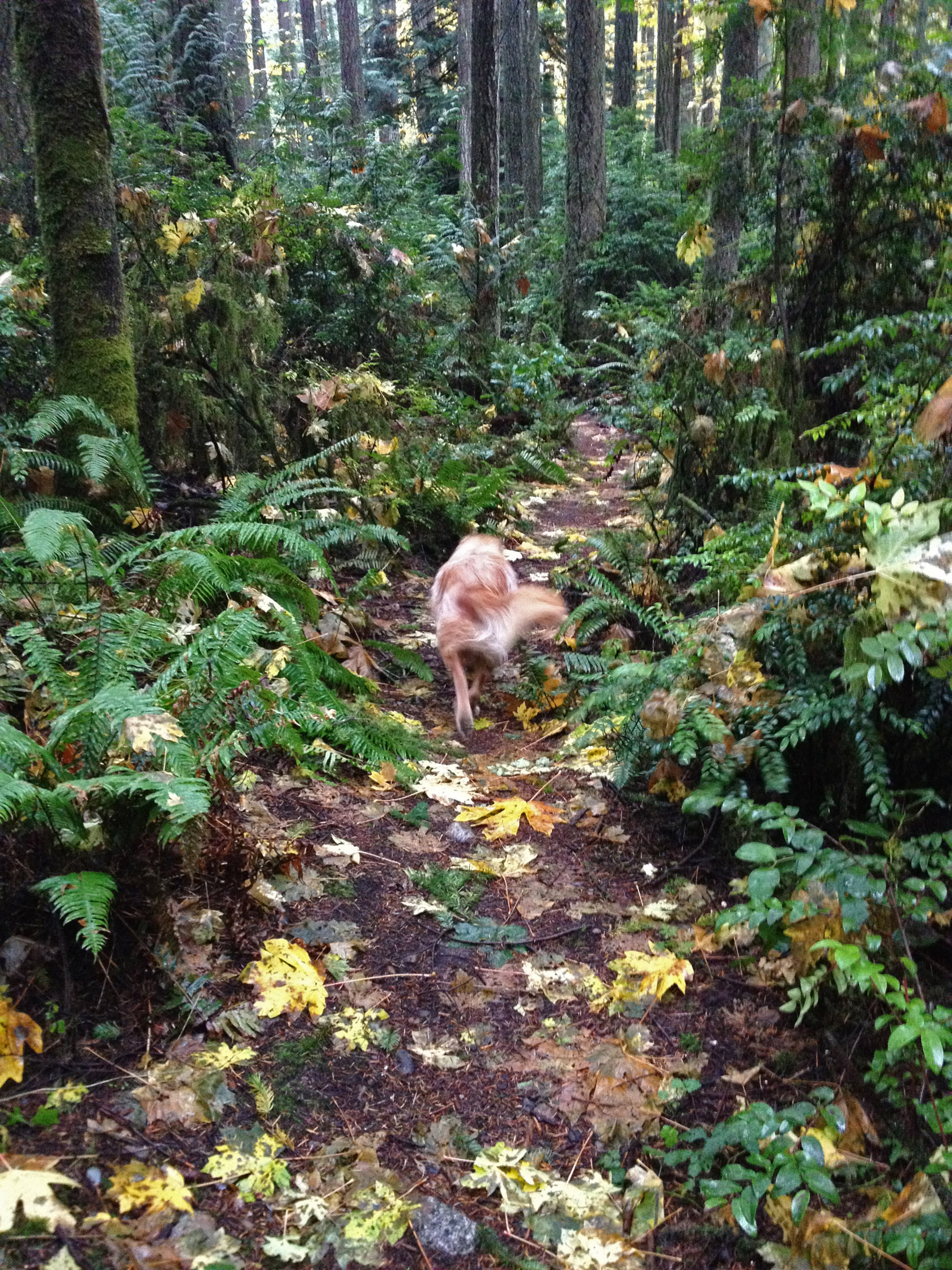
Yes, I said. Go ahead. Run wherever your heart directs you. Sniff what catches your fancy. Gobble up luscious lines. Lie in greening couplets and rest when you like. Chase what verbs need chasing.
Nose twitching, she licked possibility, tasting syllables, inhaling stanzas, and, in a blur of metaphor, I threw the leash away,
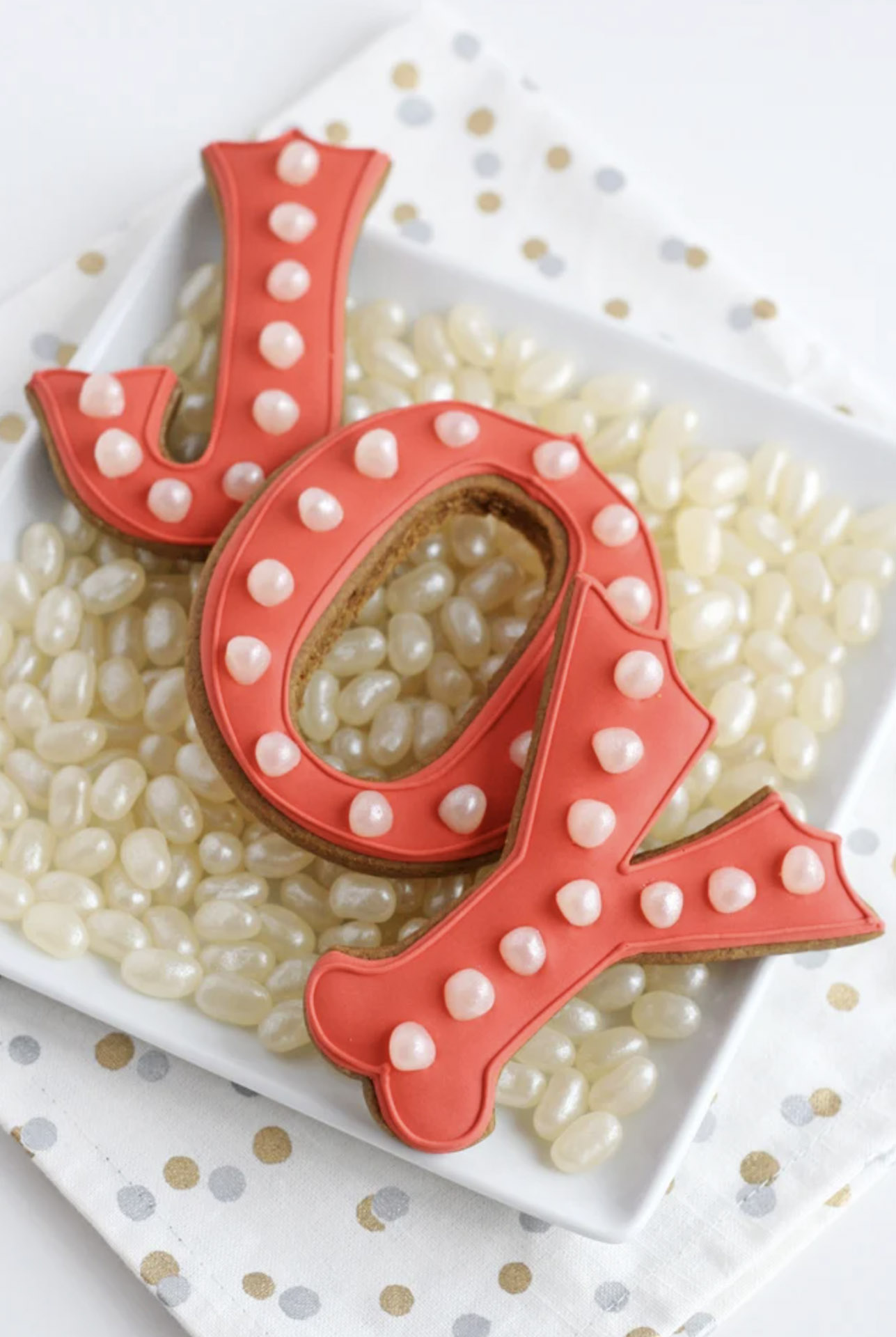
Joy is the whole cookie, fat with chocolate chips or smooth as shortbread. In fact, the more crumbs you mash onto a finger and apply to your tongue, the sweeter the joy.
No one tells you this; it’s something you must learn yourself. But this is why we fall into doughy goodness, mad for the cookies that call to us:
snickerdoodles, gingersnaps, biscotti and peanut butter, oatmeal (with or without raisins), those with gluten or without, macadamia nut, molasses, macaroon, the thumbprints with their divine jelly wells, holiday spritz, the snowball, lebkuchen, the gingerbread—
all cookies cut out or dropped, made of thousands of crumbs of delight mixed with love, baked into pure bliss.
Gleefully gobble those morsels—don’t miss a one. Let all that joy dribble onto your grinning face.
The universe keeps dying and being reborn, physicists say. It doesn’t stay the same; it’s ever expanding, as Einstein theorized— exponential expansion, which means that as much as we want things to remain the same, a rock solid cosmological constant, they just aren’t.
In the universe of your heart, the seemingly dead was jumpstarted back to life. Weighted with such inexplicable mass, I had to sit and breathe for a bit, as did you, recovering.
Now, four years later, I remind myself that we are continually reborn, the cosmos within each of us exponentially expanding at times, contracting at others. Our meager concept of time turns out to be a mere eyeblink—
proving again that love is the true cosmological constant, like atoms ping-ponging across the cosmos, traveling through space to lodge squarely in our fragile, starstruck hearts.
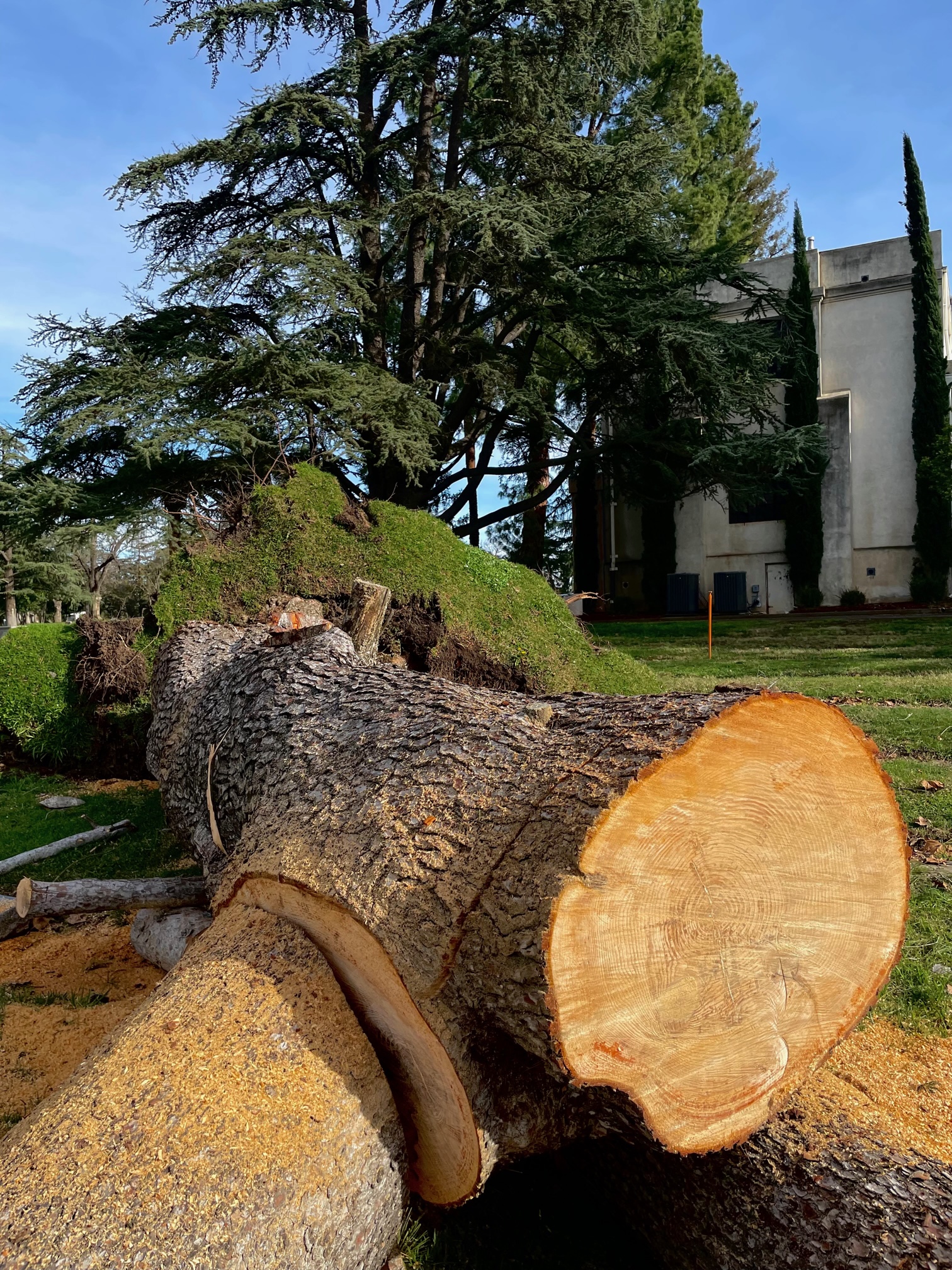
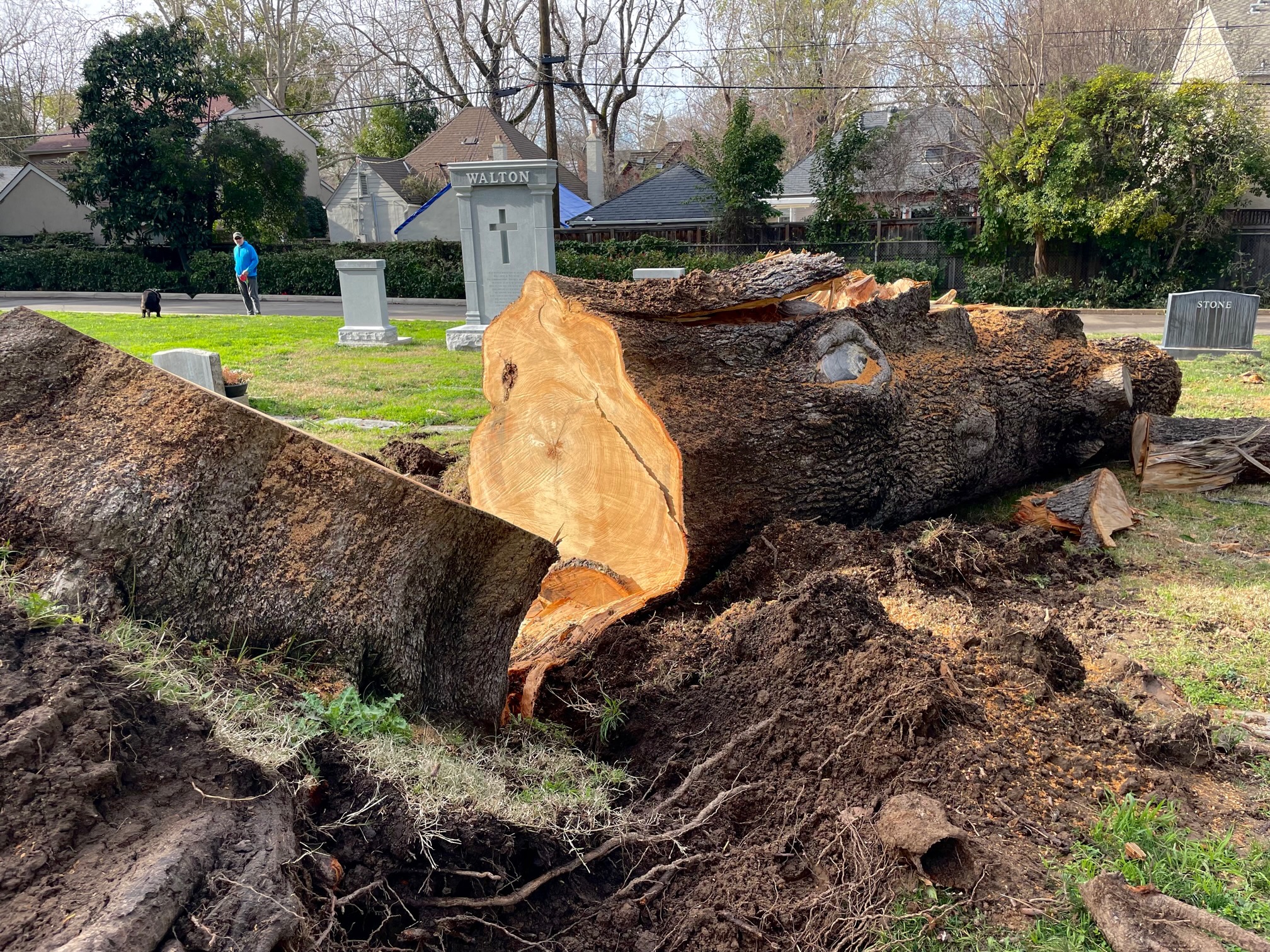
In between storms I take my walk to find, not far inside the open iron gate, the first uprooted tree, its underside typically hidden underground, the lacy petticoat and fine bones unearthed, nakedly exposed under a hazy blue sky
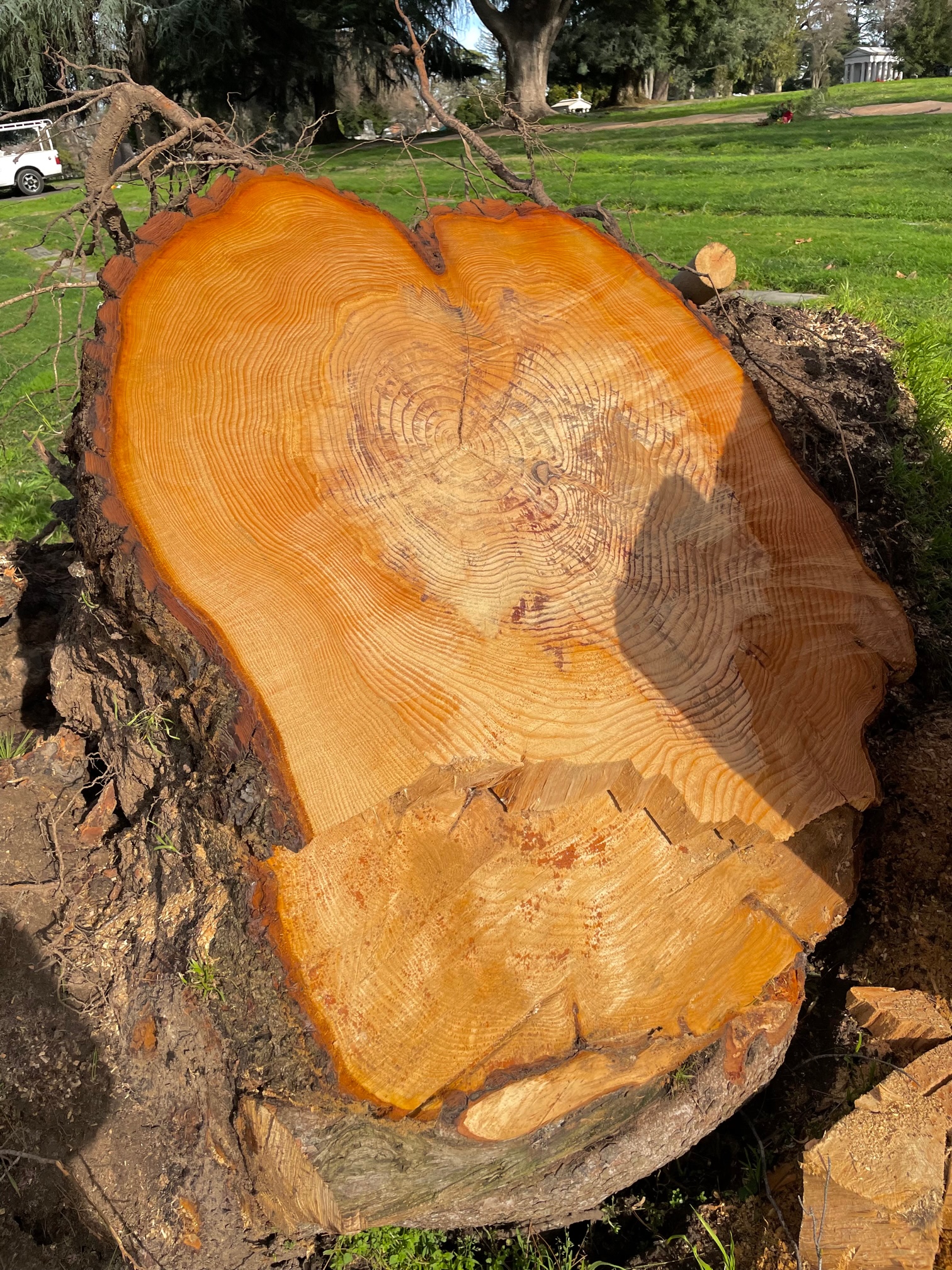
Another of the fallen, its green apron of grass still attached, has been sheared open, exposing its heart to the sun, surrounded by rings I’m tempted to count, wondering how long it stood here. A thousand lost, say the estimates, in this city known for its trees.
And with them here lie the markers of those gone long before these giants fell on this memorial field, their limbs strewn on muddy grass, the normally tidy in disarray,
the new dead upended with the old dead, some with their stones dislodged—
Justine L. Coffey, waiting for the Lord, next to Charles E. Coffey, WWI Aero Squadron, Julius Nyberg, beloved husband, Angeline Marie Glans, in loving memory—
side by side as it has always been, as we among the living walk through and remember.
You never Zoomed a poetry reading, I’m sure, certainly not of the journal you founded forty years before anyone imagined speaking at a computer screen. You held proper readings at the Jones Library or the Munson, requiring in-person attendance of readers and listeners.
They were Events, painstakingly planned, with a typed Reading Order and Refreshments that you provided, likely a Podium and Microphone. You—MC, introducer, cheerleader, hugger—as each reader came up, often nervous, with you there afterward, whispering, “Wonderful!”
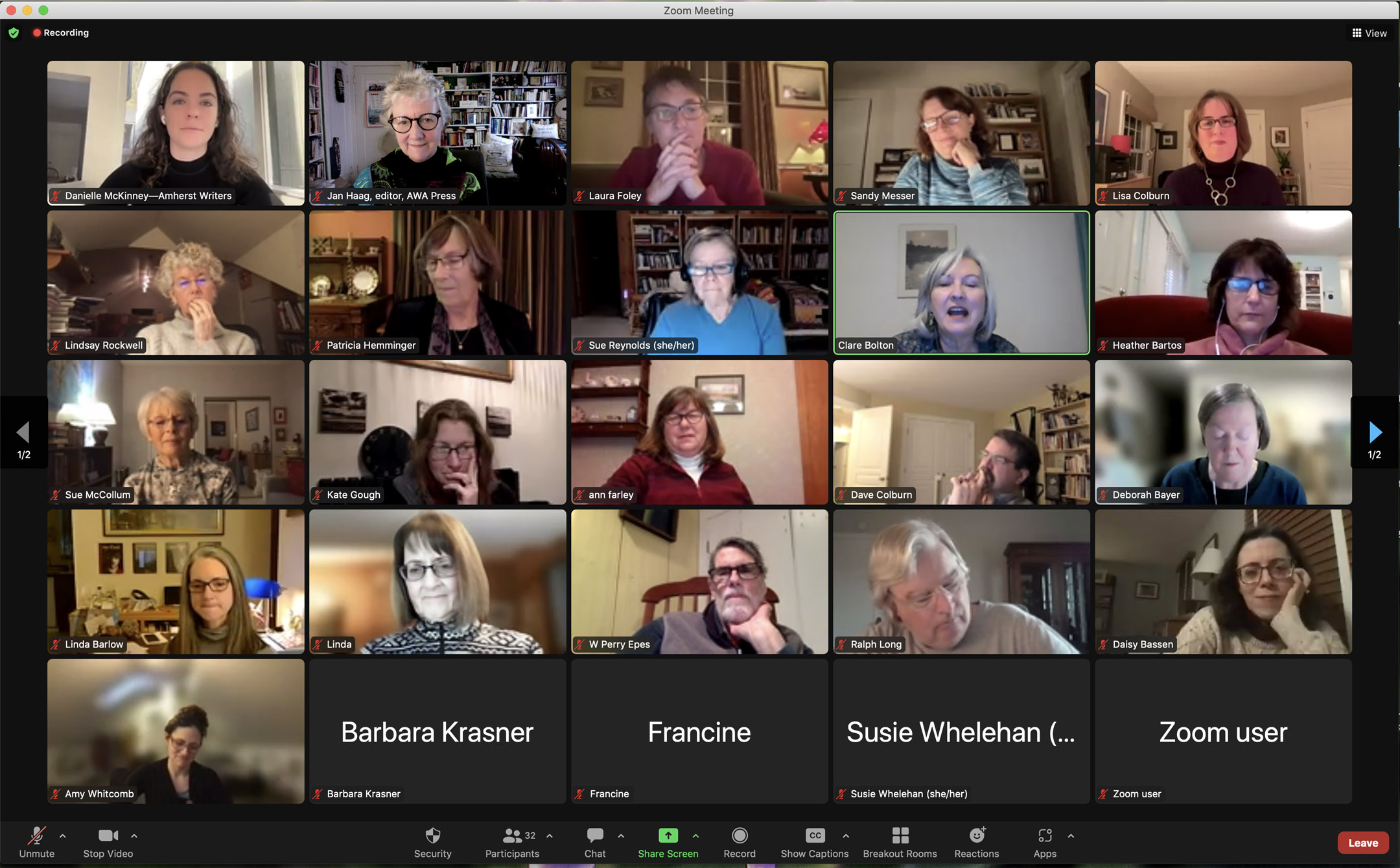
Tonight we held our second virtual reading for the 36th edition of Peregrine, Zooming with a terrific batch of onscreen readers from all over—among them Kate in Wales, Bonnie in Portland, and Ralph whose poem reflected his childhood in Brooklyn—along with a generous audience of listeners.
I imagined you among them, too, though your face did not appear in a box on my screen, though you vanished into mystery more than two years ago.
I cannot say your name as I sing your praises during the introduction— as I did each time you came to speak and lead workshops in my town— without sensing your steady presence as I metaphorically step to the virtual microphone, read what I have written, only to step away and hear you in my ear:
“Wonderful, honey. Nicely done.”
(Special thanks to all the folks published in Peregrine, the Amherst Writers & Artists journal, especially those who read at our two virtual readings, to Danielle McKinney, our MC, and to Sue Reynolds, whose fine leadership and sweet praise will stay with me. And, of course, to AWA founder Pat Schneider, whose work we carry on with great love and much enthusiasm.)
And now let us believe in a long year that is given to us, new, untouched, full of things that have never been. —Rainer Maria Rilke
Things that have never been:
This new year stretching long before us, bright and unshadowed. This breath, and the next and the next. This awaited, hoped-for blessing that will come with a great cry, a new being entering the world.
This celebration, that death, this laugh, that heartfelt tear, a thousand untouched moments we cannot anticipate and don’t want to,
even as we walk the same path to the river or the blocks to the cemetery, dogs tugging on leashes, the errands that seem the same, the hellos and goodbyes to our familiars—
we are given the new every day if we put on spectacles of surprise, tuck wonder into our heart pockets, allow awe to explode far more often than anger.
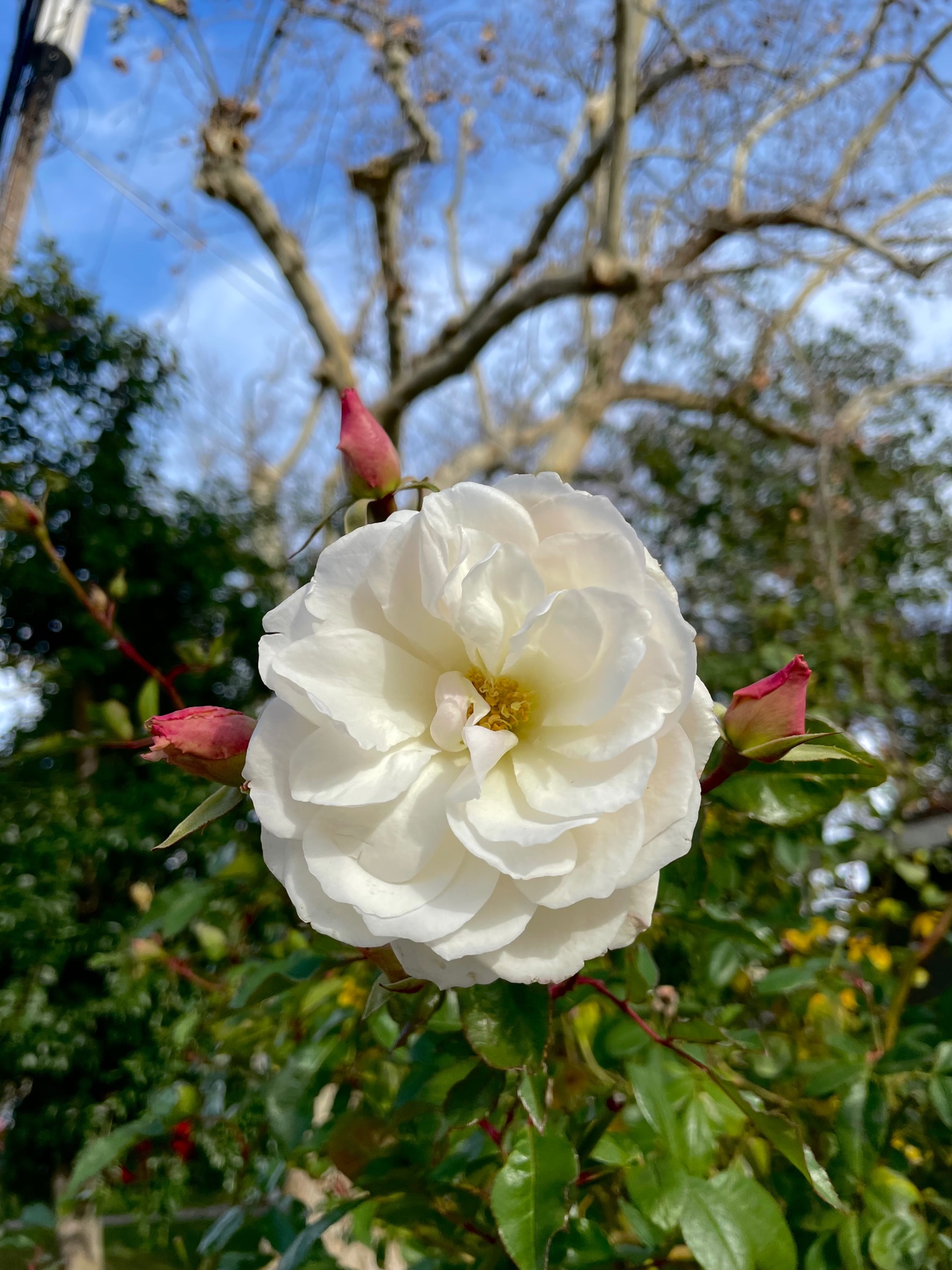
We believe in this time given us, no guarantee of how much or how little, every fresh flash, each day’s awakening, the surprise of walking by a creamy winter rose—
this twinkling second, so precious, this thankful breath, refreshed by another and another, this opportunity to sing the tune not again but, with feeling, anew.
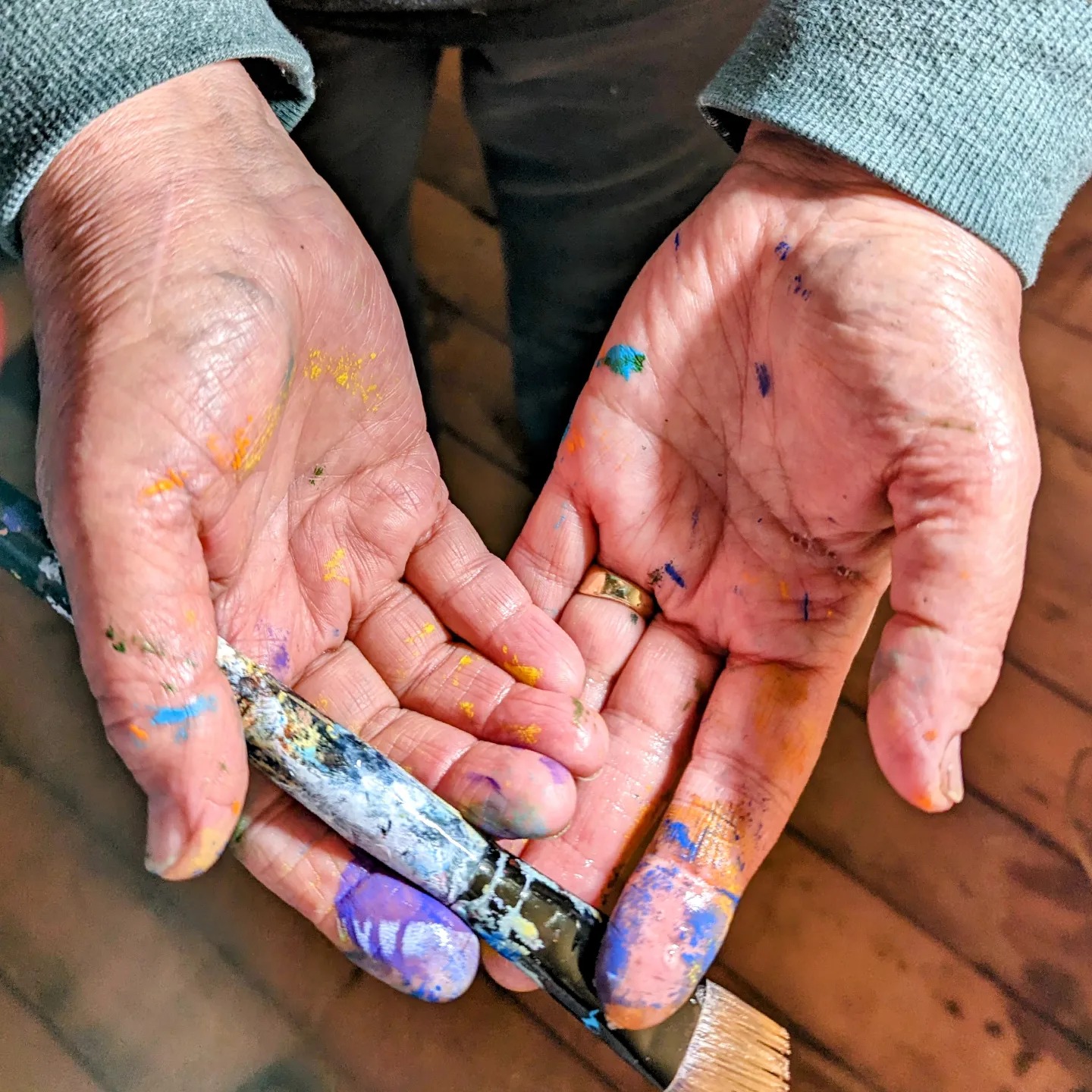
The artist posts a photo of her paint-speckled hands after reloading her acrylic paint palette,
and I enlarge it to look at the colors, which I cannot accurately name— periwinkle, bright blue, mustard that looks as if it could be rising on dancing stems a winter field,
and, of course, the brush, which must have hundreds of colors embedded in its handle. But I focus on Helen’s speckled palms, evidence of a painter’s craft, every dash and dot testament to pigments coming up on canvas or paper,
perhaps like words show up for me— only with more color in the impressions rising from formerly mute paper, feathery brushstrokes that our minds imagine into images
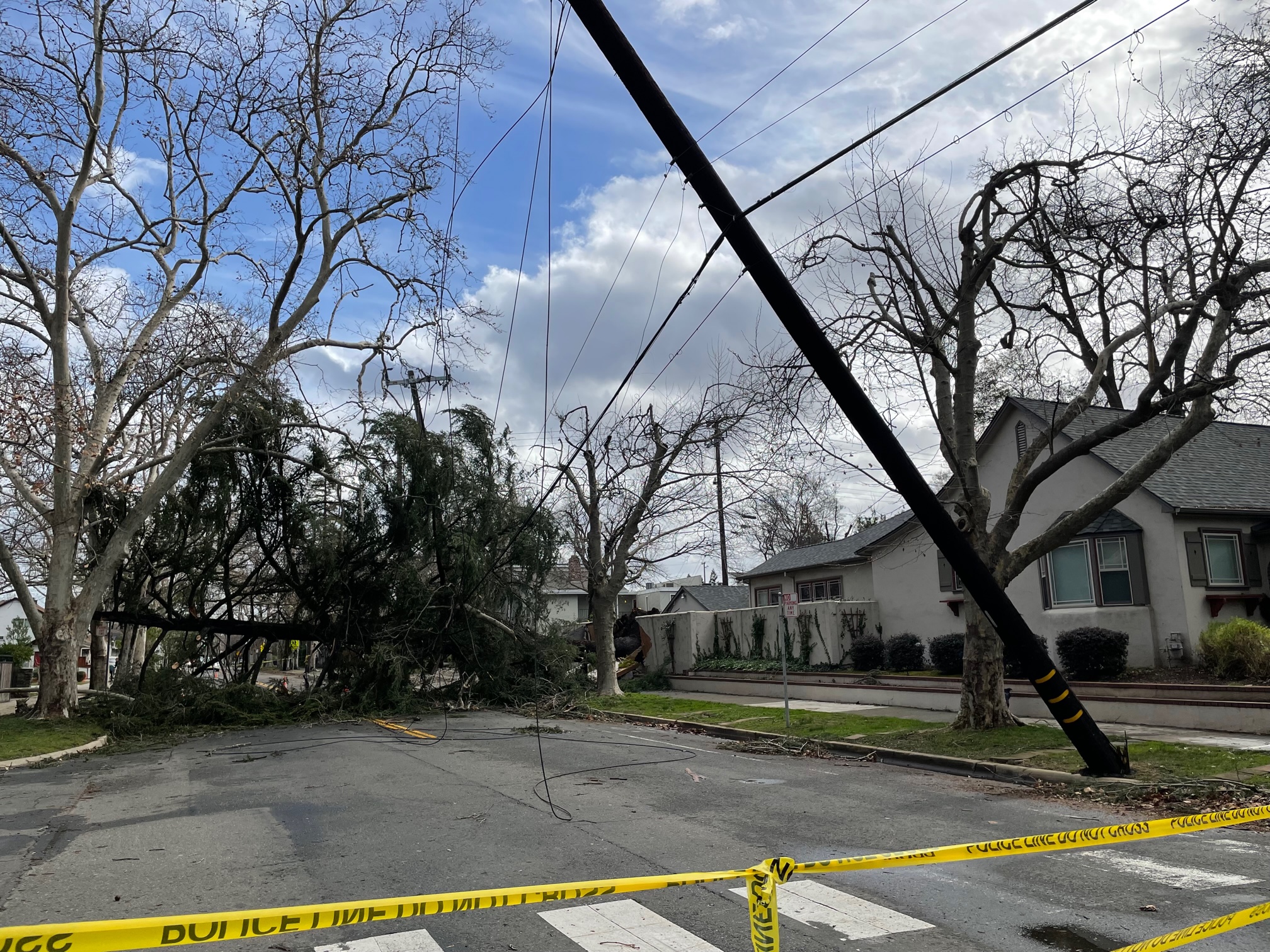
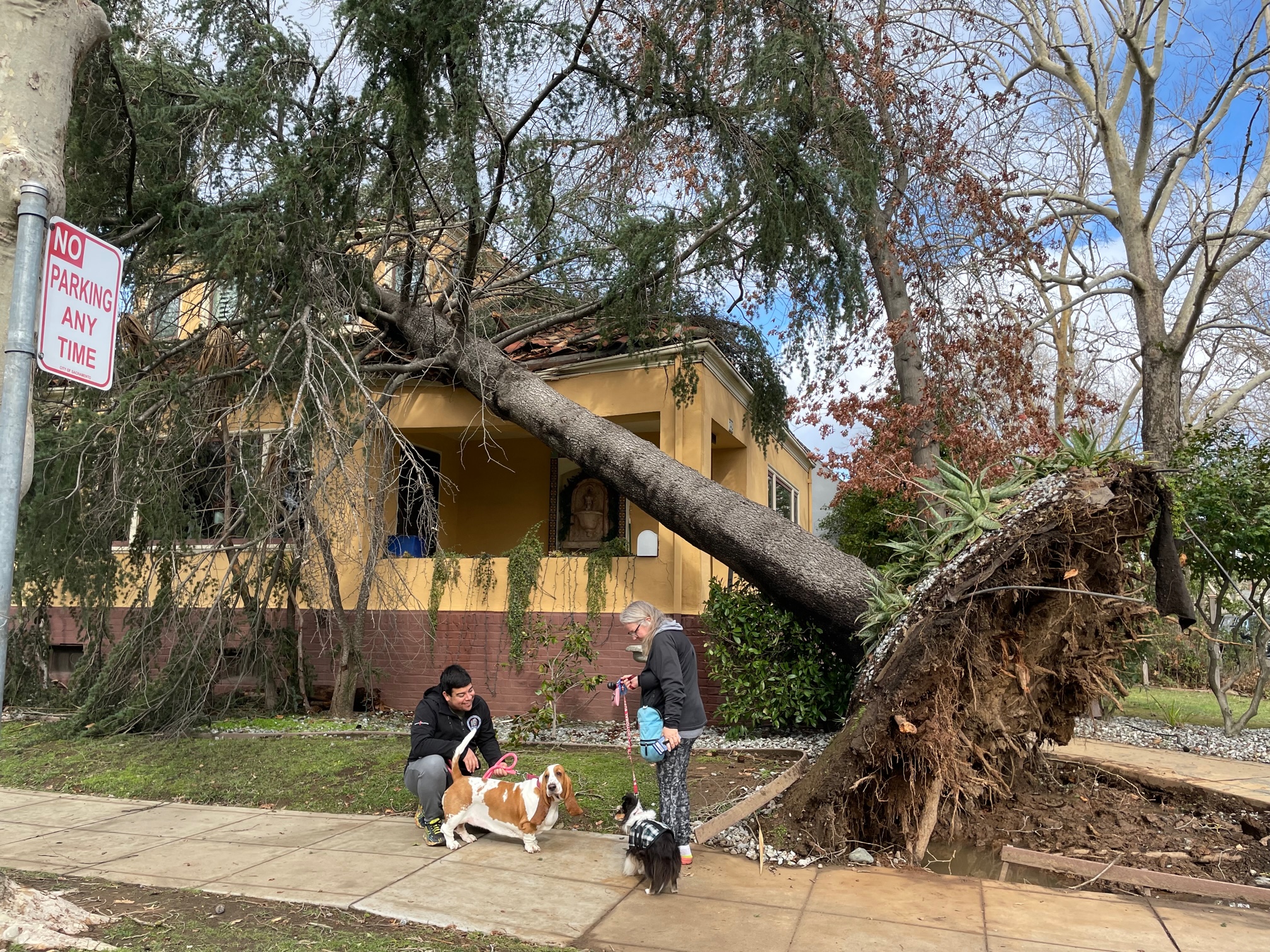
After the big bad bug got us on vacation, after a canceled flight home and a long drive up the center line of our state, in this season of rain and wind, watching the widening pond consume the backyard, after electricity vanished days ago thanks to a downed tree and uprooted power pole down the street—
we realize that we are struck by inconvenience, not crisis, finding heat in flannel sheets and soft blankets topped by cats, making tea and plugging in devices at the homes of those who invite us in.
Pummeled by weather, not bombs or invading forces, we are assured that our power will return at some point, and we fortunate souls on standby trust that it will be so.
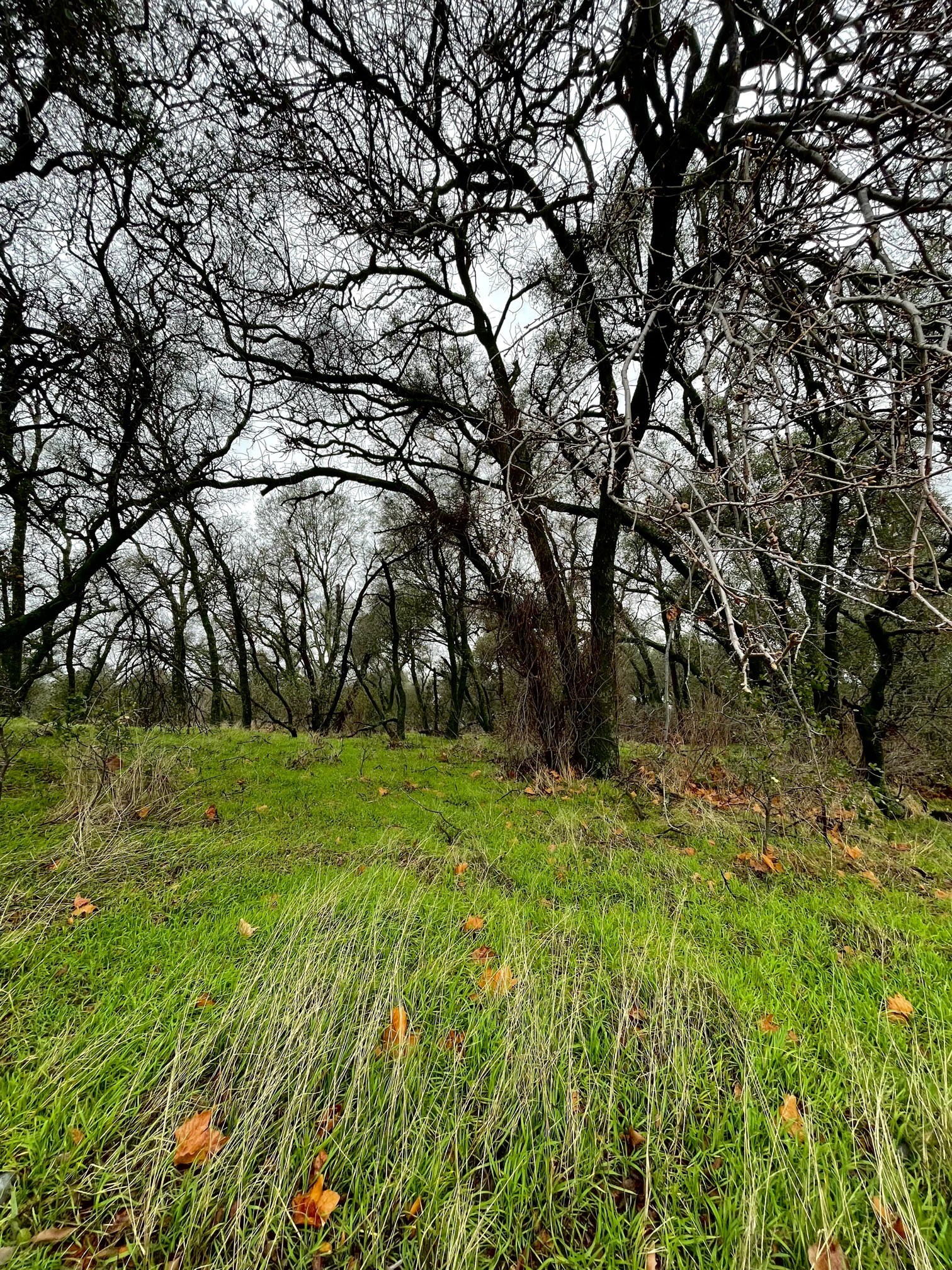
On my way this morning to drive Mom to appointments and errands, I admire the greening of the rural roadside that only that only weeks ago wore an untidy mop of parched weeds. And look— the leafless oaks, some up to their knees in rainwater, tiny buds already dotting their stems, they wait, too.
Oaks, Granite Bay State Recreation Area / photo by Jan Haag
It’s one of the great benefits of living within shouting distance of three hospitals—no matter the storm, power’s never out for long.
But last night, shortly before a new day, as the winds tore through our bare trees like a raging bully, as I sat at the computer ready to post a poem, I heard a great pop! and then darkness, and I sat quiet for a minute, absorbing, alone.
Each storm is unique, of course, and we sitting ducks weather them as they come, these atmospheric rivers, one after another, washing over us, filling our thirsty rivers, making the near-empty reservoirs rise muddy and choppy.
When just enough becomes too much, we fret. We must clean up after each storm while preparing for the next. Down H Street in daylight, I see the tree that crashed through its fence, blocking the road, taking out power lines and pole 12 hours earlier.
You’re not without power, Janis, says the one to whom I migrate, electronic devices in hand, all of us in need of recharging.
You’re without electricity, he reminds me. You have the power.
And so I do, taking to the page, to write it all down so as not to forget the gift. Again.
36th and H streets, Sacramento, Jan. 8, 2023 / Photo by Jan HaagPoor tree and house, 36th and H streets, Sacramento, Jan. 8, 2023 / Photo by Jan Haag