for Georgann, on the first anniversary of her death
While I wait for you to die, I putter next door in the old house rendered new after its occupants passed years ago, the neighbors having rehabbed it into a quaint guesthouse. I cannot help make comparisons between the creaky floors on which I pad and you, brittle and sweaty in your bed, as the temperature soars inside and out.
Every morning I head for your house, pick up the leash off the hook by the door to the garage, find the old dog sprawled on the dining room floor. You used to have to step over him to put food-laden bowls and platters on the table. Now he is the only one who occupies that relatively cool space.
He, too, is literally on his last legs—arthritic and prone to falling. I follow his slow progress outside to the little house next door where I alight for now. He prefers the freshly mown grass there to the patch in front of his own house. “It’s good to get out,” you observe in a rare moment of wakening. It takes me a second to realize you’re talking about the dog. “He likes to read the news left by other dogs.” I chuckle, good audience that I am.
Your husband lingers at the doorway of the small room where you are enthroned. “Don’t forget the blackberries,” he says, the one in charge now, who looks after you, a daughter and two granddaughters—cook, chauffeur, pain meds dispenser, cat and dog caretaker. “Oh, yes,” you chime in. “They should be getting ripe now.”
I’ve been reluctant to take up a bowl and plunge into the blackberries wrangled into rows by the neighbors, though I’ve been invited to since I got here. It is early for blackberries; I can see the ruby jewels from my bedroom window. They need more time on the vine, and I’m not certain I’m ready to bear the inevitable scratches that come from pursuing such sweetness.
“Would you like some blackberries?” I ask, you who are eating so little, whose guts release so quickly what you ingest. You extract the little opioid sucker from your mouth, hold it up: “This makes everything taste bad.” It has long been so, the cocktail of pain meds that has taken your teeth, your appetite and not a little of your mind. Wanting as much time as you can get through this rocky passage, you’ve paid for it with every lost pound, shred of memory, bit of balance.
“Still,” you say, popping the sucker back in, “a blackberry or two might be nice.”
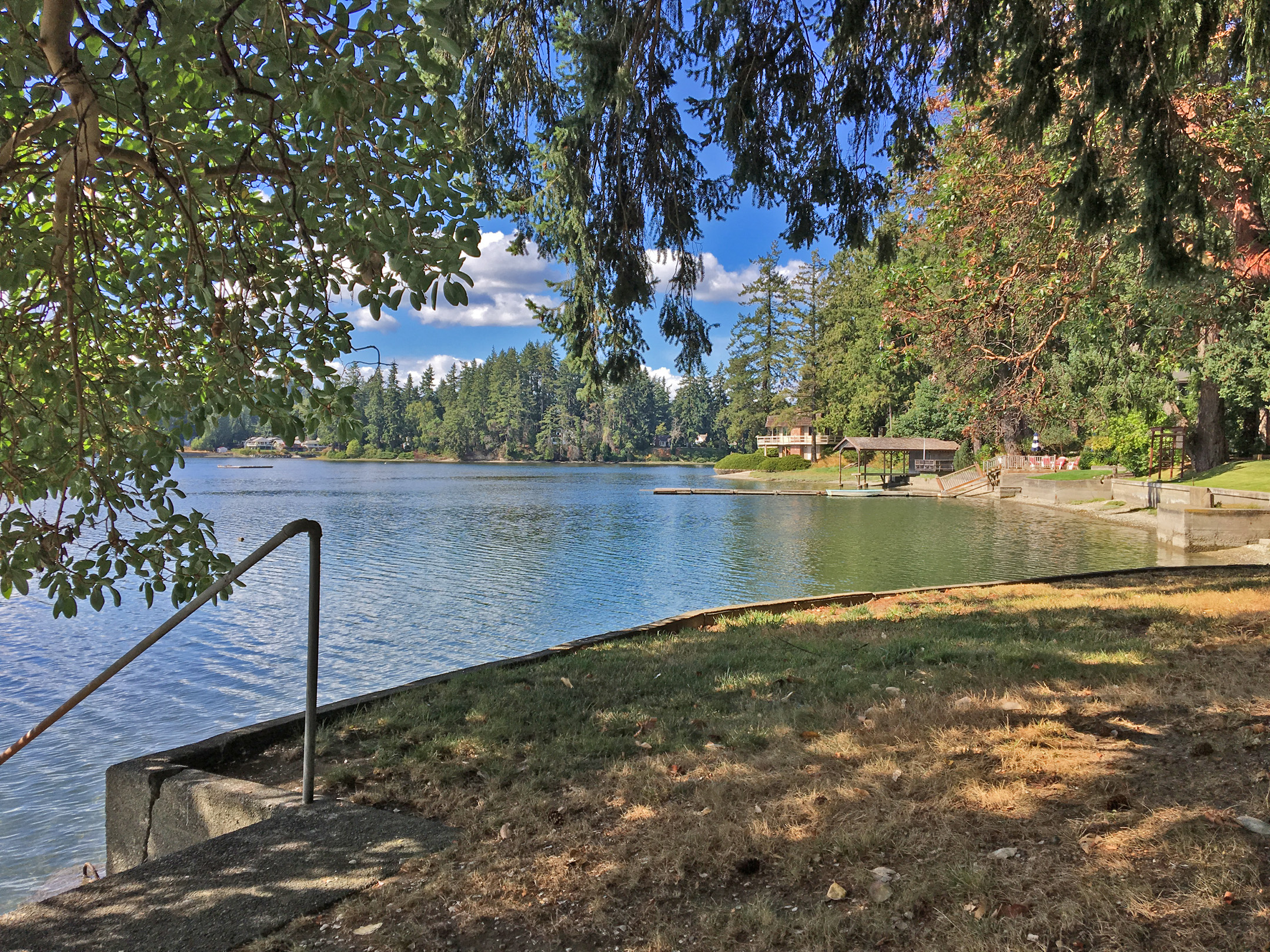
And that sends me into the vines, willing to bear the tiny wounds, searching for the purplest ones, settling for slightly violet-red. If you could make it outside to stand nearby with your own bowl, you’d hand me a fat berry to sample. I let kindness melt on my tongue, lingering in the midst of an overheated day, the tall pines stilled, no wispy bay breath drifting by.
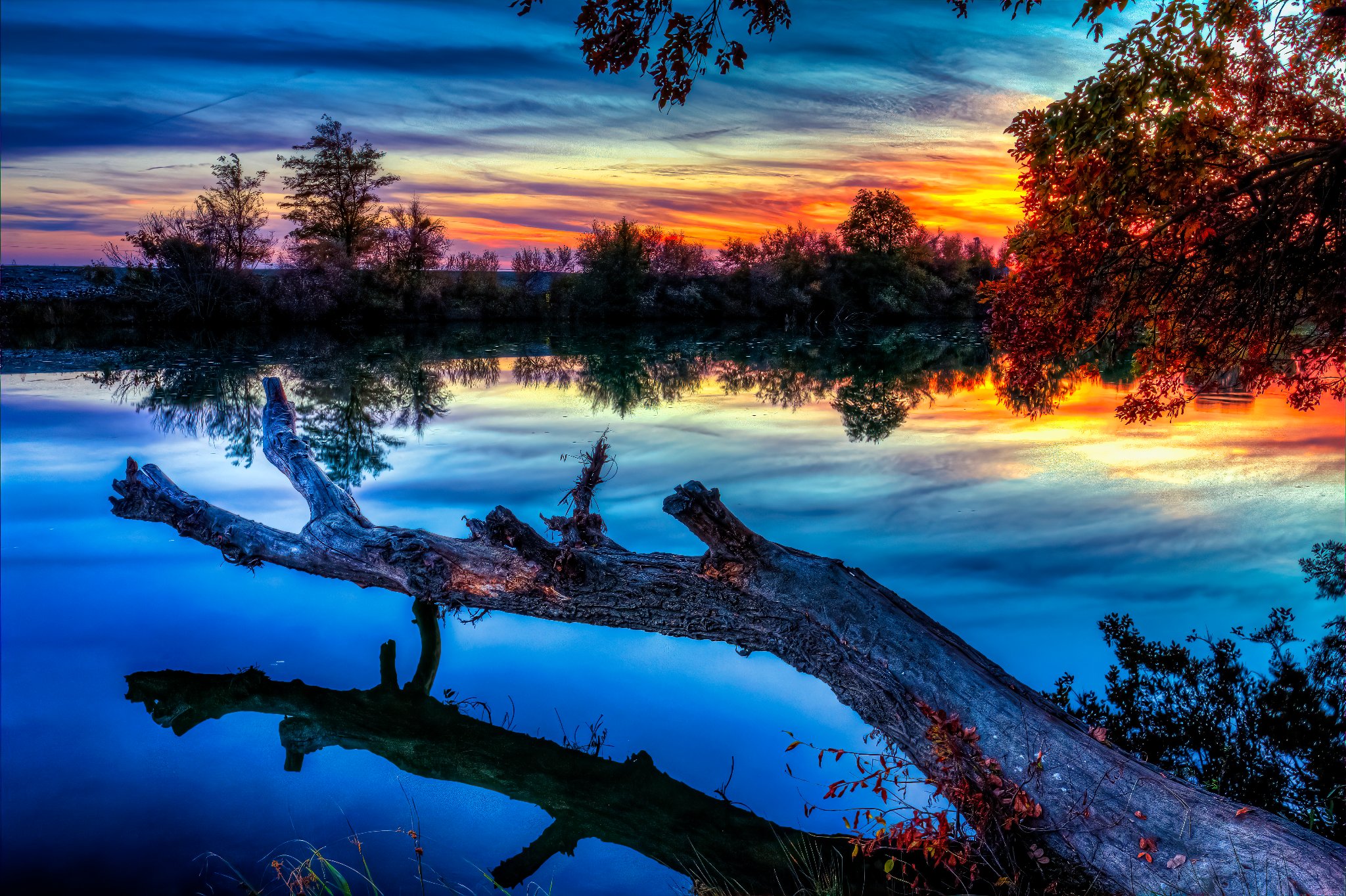
Without thinking, I steer toward it, needing to see that swath of strength making its way through the artery of Delta to the sea.
I always find you there.
Under a blue-sky June dome I travel back decades to a time capsule once anchored hard by this river where you waited for me.
When the car dead ends into the levee road, faith stretches a long lazy arm before me, cobalt calm on the surface, turbulence churning below. I pause, knowing that to turn left and follow the road south, crossing one bridge, then another, I could reach that sweet spot where we found communion far from the world.
You are not there, but I carry us always.
So I turn right, tuck you back into my heartspace, trusting the undulation of asphalt before me, of young peaches ripening at the bottom of the levee on my right and the perpetual river on my left to carry me home.
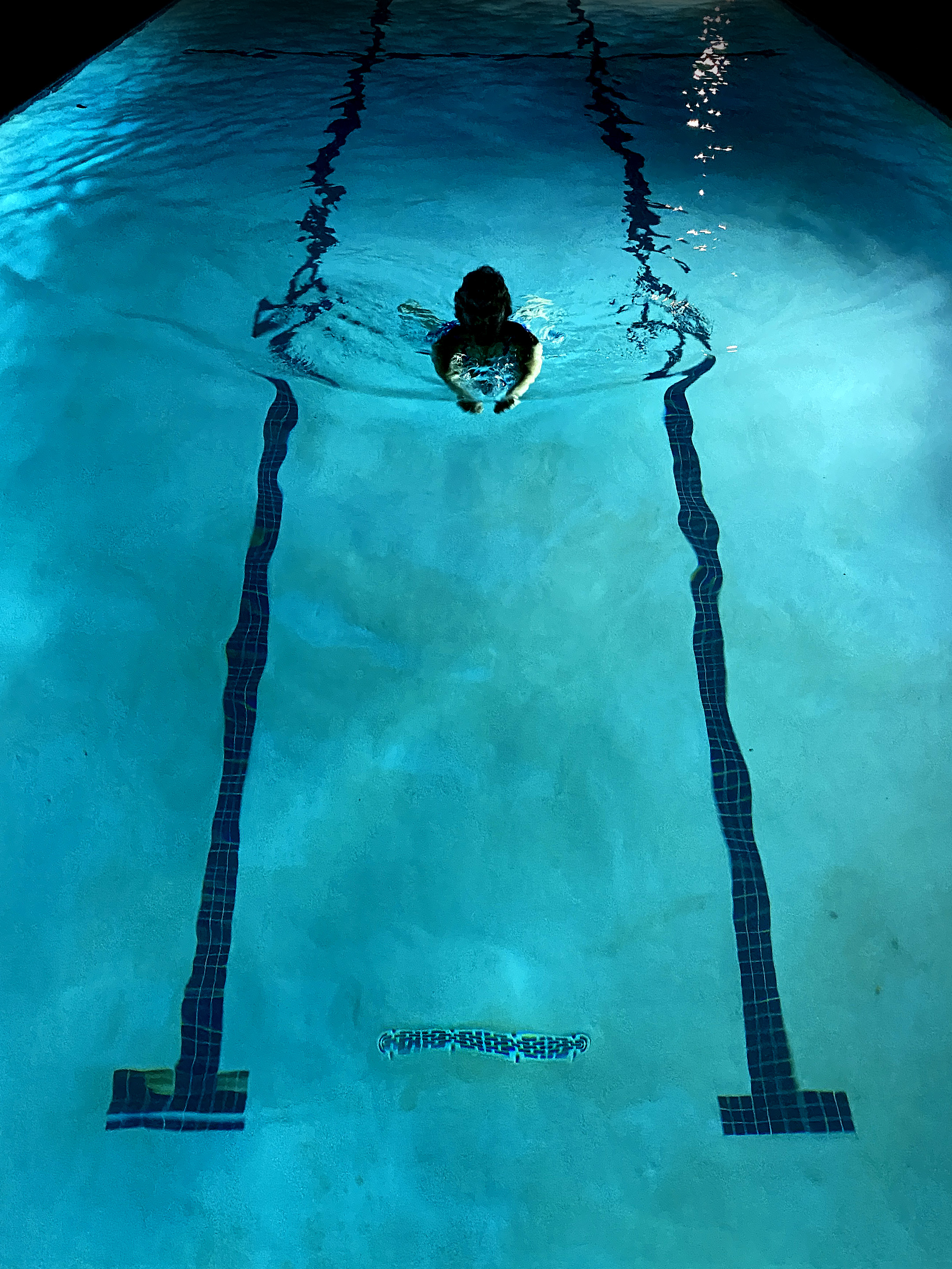
Always after dark when the pool floods with underwater light, the very definition of aquamarine, so that it feels like stroking through turquoise.
Alone, there’s no need to stay in one lane, which is fortunate since every summer I must relearn how to pull and scull evenly, especially on my back, so as not to torpedo off at such an angle or bash into a wall, a step, a railing arcing silver into the water. Even in the pool my perennial klutziness manifests.
But after the annual reorientation of a land mammal returning to a liquid state, my laps straighten themselves out, body memory taking over what the mind cannot direct. From water we long ago emerged and to water we return, especially at the end of superheated summer days, to cool ourselves, to switch off thinking, to float—blessedly float—
and find ourselves supported by something greater, something simpler, always held.
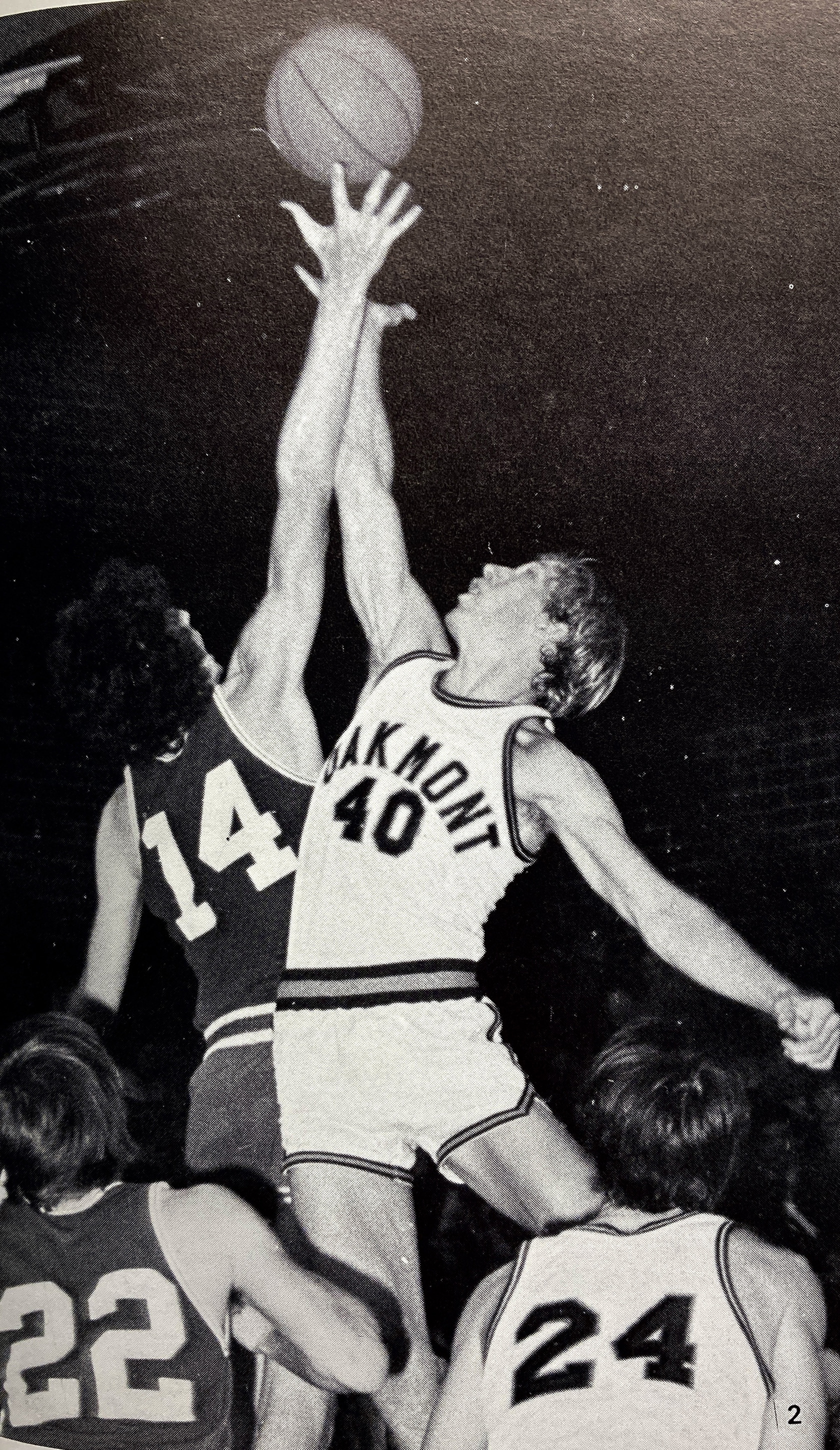
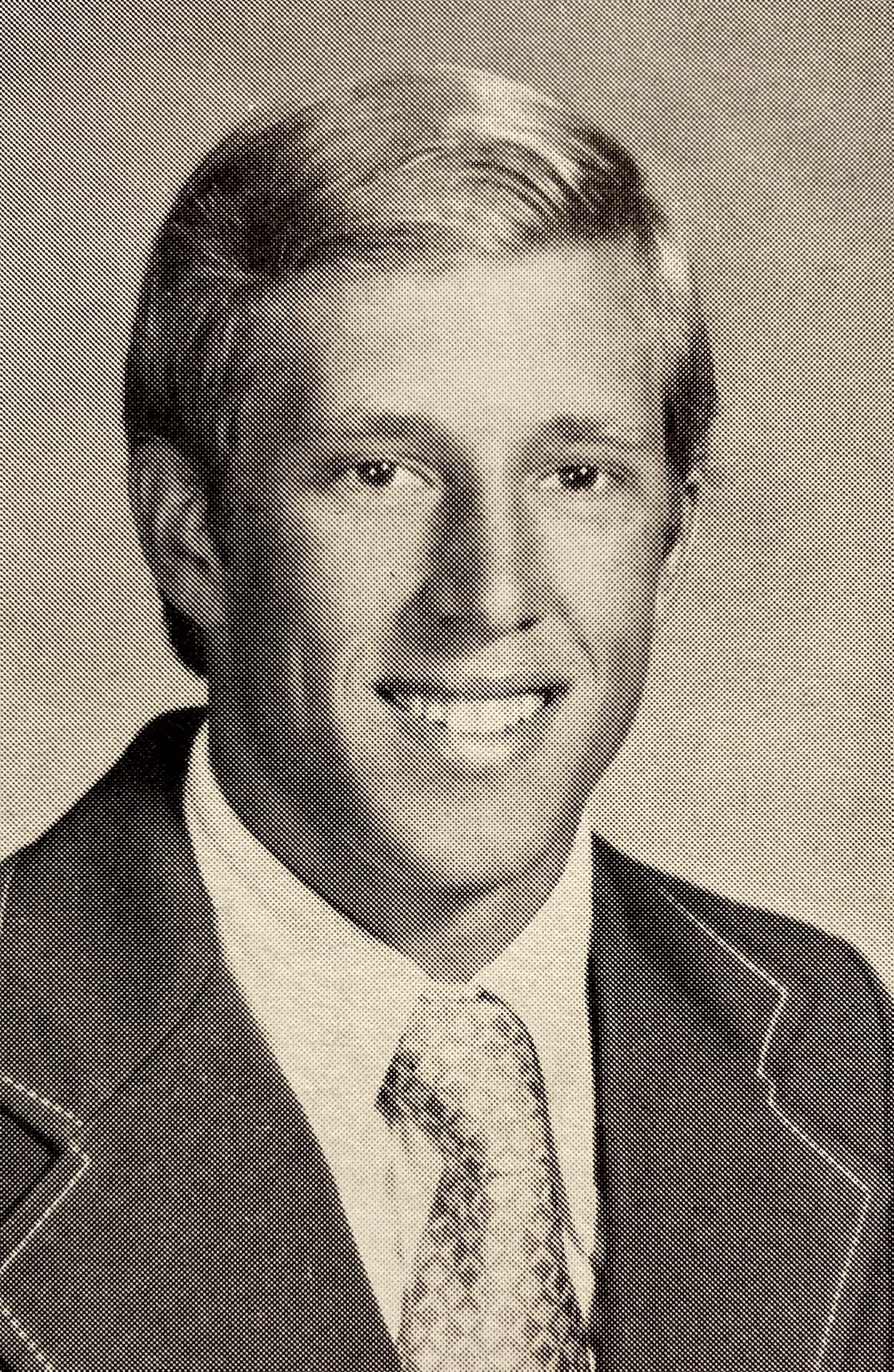
Don DeVorss, Oakmont High School varsity basketball team, 1976
As best I can tell, the last time Don DeVorss and I saw each other was probably at our high school graduation—Oakmont High School, June 1976, in Roseville, California. We’d gone through elementary school as well as high school together—living within a mile or so of each other, riding the same buses, sharing friends in common—but never in each other’s immediate orbits. I remember Don in high school as a tall, gifted athlete playing basketball and running track. I was the girl drummer in the marching band, directing the pep band at home basketball games, working on the school newspaper.
Don DeVorss, Oakmont High yearbook, 1976
After high school we veered into our grownup lives—Don becoming an architectural and landscape designer with his own business, marrying a lovely woman named Julie with whom he has three grown children, and living on the other side of Folsom Lake from where we grew up. Me writing my way into journalism, marrying Cliff, living and working in Sacramento, losing Cliff when he was 48 years old, then partnering with Dick.
What Don and Cliff and Dick have in common, though, are tricky hearts that needed some work. Cliff with his nifty clicking artificial aortic valve installed 17 years before he died. Dick collapsing in cardiac arrest in 2019 and being brought back to life thanks to an airport defibrillator, then having a triple bypass in Honolulu. And Don, whose heart began to fail because of a virus he acquired in Mexico, felling him with a heart attack and leaving him close to death—until, years later, someone else’s heart gave Don a second chance at life.
And, coincidentally, Dick and Don both had their chests opened by heart surgeons—one in Honolulu, one at Stanford—in January 2019.
Dick and Don and I met for lunch this week in Folsom so we could hear the amazing story of Don’s transplant, his bout early in the pandemic with Covid, and how he and Julie have started a wonderful nonprofit called Donor Gratitude. It’s all about, as it says on the website, “People saving people.”
Many transplant recipients never meet their donors (there are, in some cases, living donors) or their donor families, but, Don says, “I hope and pray that someday I do.” Don and Julie wanted to provide a way for organ recipients “to thank all of those who make the ‘Gift of Life’ possible,” according to the website.
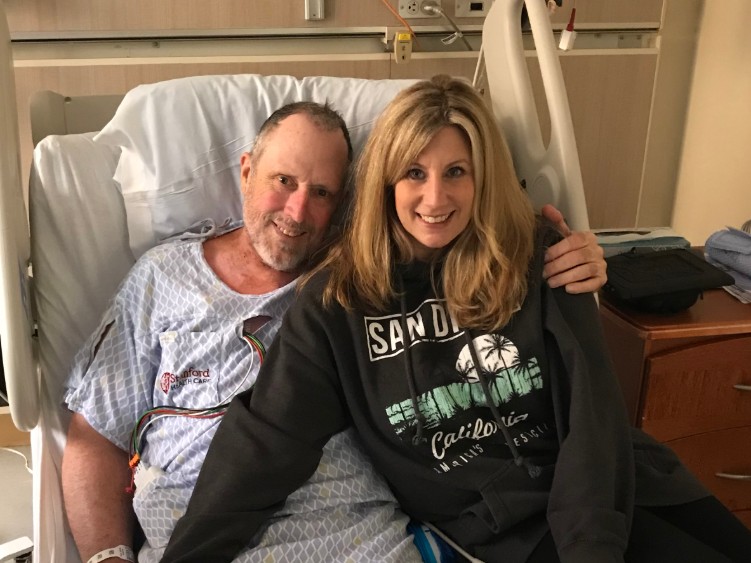
The Donor Gratitude website is a place where people can share their stories about organ transplant and to help donor families heal from the loss of a loved one. Don’s heart came from a 32-year-old man (the same age as Don and Julie’s oldest son at the time) during a 13-hour surgery that put his donor’s healthy heart into Don’s then 62-year-old body at Stanford Medical Center.
It was a long journey back to health for Don, as well as for Julie, his primary caretaker, who works in Blue Shield’s Human Resources Department. He got Covid-19 two weeks into the shelter-in-place order in March 2020, but because of the immunosuppressants to prevent rejection of his donor heart, they helped control the cytokine storm that kills many Covid patients. “So it’s probably because of my transplant that I didn’t die of Covid,” Don told a writer for Blue Shield.
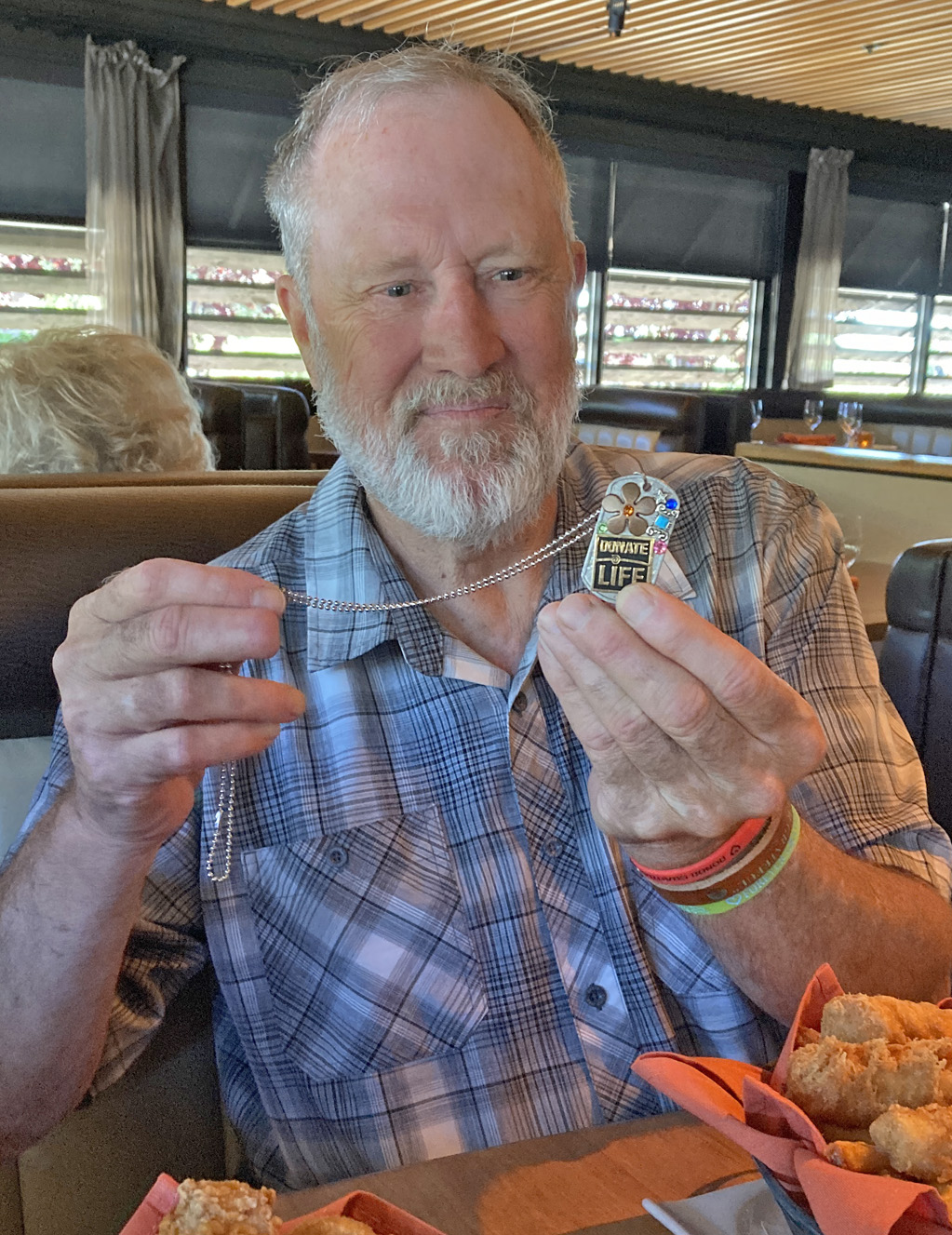
Don with his Donate Life medal.
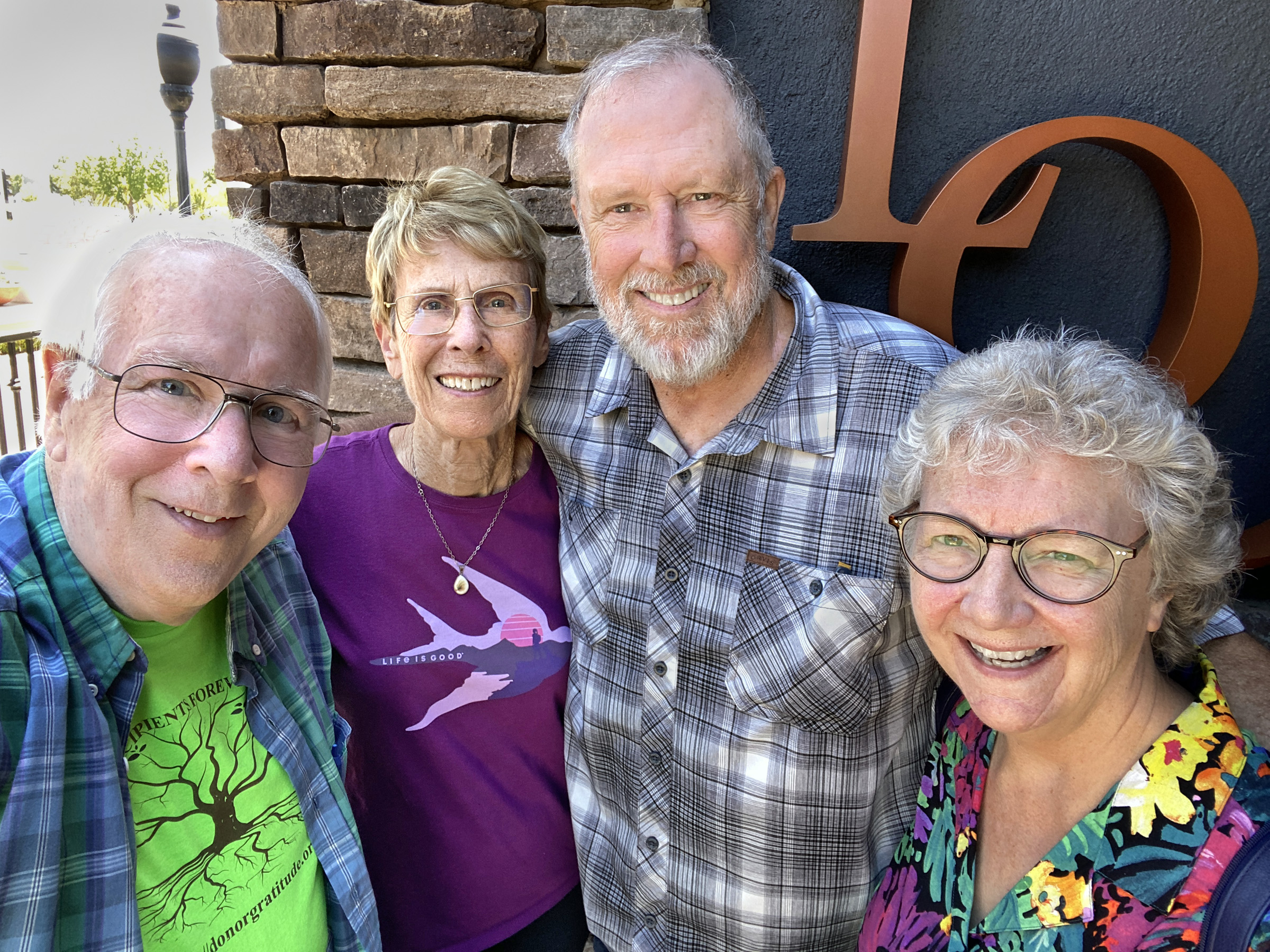
So Dick and I—as well as our dear friend Cora Johnson—met Don for lunch in Folsom and talked hearts. Dick and Cora have been friend since their college years, and Cora was one of two dear friends (with her best friend Connie Raub) who flew to Hawaii to care for Dick after his heart surgery in January 2019.
To put it mildly, Cora Johnson’s got a lotta heart. For more than one reason.
Cora’s late husband, Bob Johnson, had a heart transplant in 2001, and both Johnsons became very active in organizations such as Donate Life and Mended Hearts. They donated literally thousands of hours and dollars to both groups, also getting to know Bob’s donor family and participating in fundraisers for years to raise scholarship money for the high school that Bob’s donor, Tim Baptista, attended in San Francisco.
Don and Cora had a lot to talk about. She drove down from her home in Minden, Nevada, for the day to meet Don and present him with a Donate Life medal in honor of his new heart. He gave us Donor Gratitude T-shirts and bracelets, as well as lots of smiles and hugs all around.
Dick Schmidt, Cora Johnson, Don DeVorss and Jan Haag—friends in hearts.
We’re eager to help Don and Julie as they create more awareness about organ transplantation. These two, who have built more than one business together, are now building what they call the Bridge of Life through Donor Gratitude to connect those who make organ donation and transplant possible.
There’s a place on Donor Gratitude’s home page where people can share their stories—anonymously, if they prefer—and the DeVorsses encourage anyone involved in organ donation to do so.
I’m only telling a small part of Don’s story. He tells it even better on the Donor Gratitude website. It’s one miracle after another, as Cora and Bob’s journey was, and as Dick’s and mine was. Angels come from everywhere to conspire on your behalf, I tell people, and Don’s story is full of those folks, too.
Don and Julie after Don’s heart transplant, Stanford Medical Center, 2019
This month I’ll be 64, and I often look around, thankful about how fortunate I’ve been in my life. I’ve walked through my life on the shoulders of so many good people, from my grandparents and parents who literally made me to dear family and friends. But all of us are also surrounded by folks who are seemingly strangers who show up at just the right time and place to help, influence and sometimes literally save our lives.
Don and Julie have a lot of those people, too, and Donor Gratitude is just one way they’re thanking them and providing a forum for others to do the same. If you know folks who have been organ donors or recipients, or families of either, you might suggest that they look at Donor Gratitude. The DeVorsses’ generous hearts are all over the site, and, indeed, are all about spreading thankfulness.
I’m so glad to be in the orbit again of this childhood friend, and to be able to hear Don’s story and become enthusiastic fans of the DeVorsses and Donor Gratitude. We ❤️ you!
May you hear in your own stories the moan of wind around the corners of half-forgotten houses and the silence in rooms you remember.
May you hear in your own poems the rhythms of the cosmos, the sun, the moon and the stars rising out of the sea and returning to it.
May you, too, pull darkness out of light and light out of darkness. May you hear in your own voice the laughter of water falling over stones.
May you hear in your own writing the strangeness, the surprise of mystery, the presence of ancestors, spirits, voices buried in the cells of your body.
May you have the courage to honor your own first language, the music of those whose lives inhabit your own. May you tell the truth and do no harm.
May you dare in your own words to touch the broken heart of the world. May your passion for peace and justice be wise: Remember—no one can argue with story.
May you study your craft as you would study a new friend or a long-time, much-loved lover. And all the while, lost though you may be in the forest, drop your own words on the path like pebbles
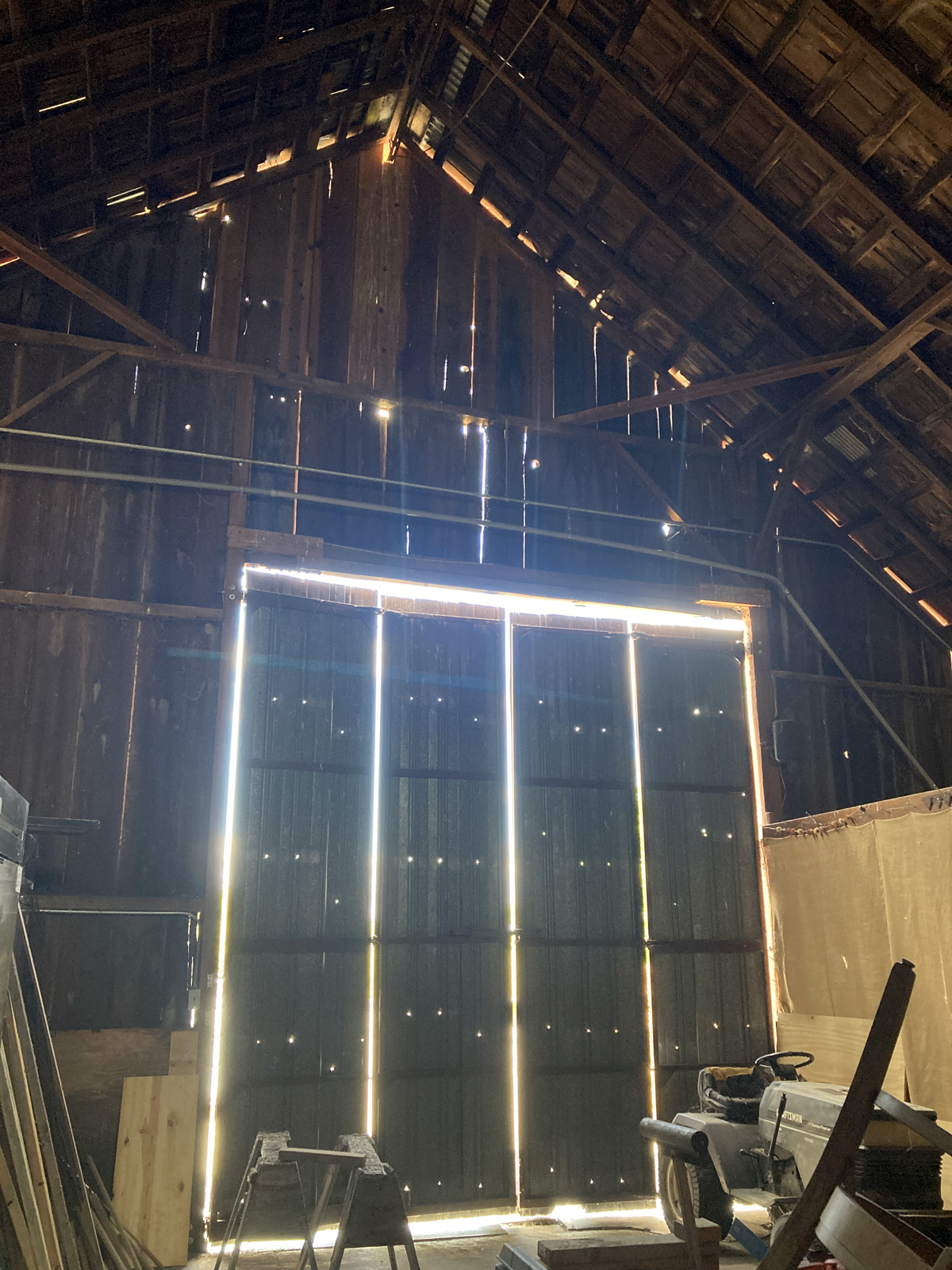
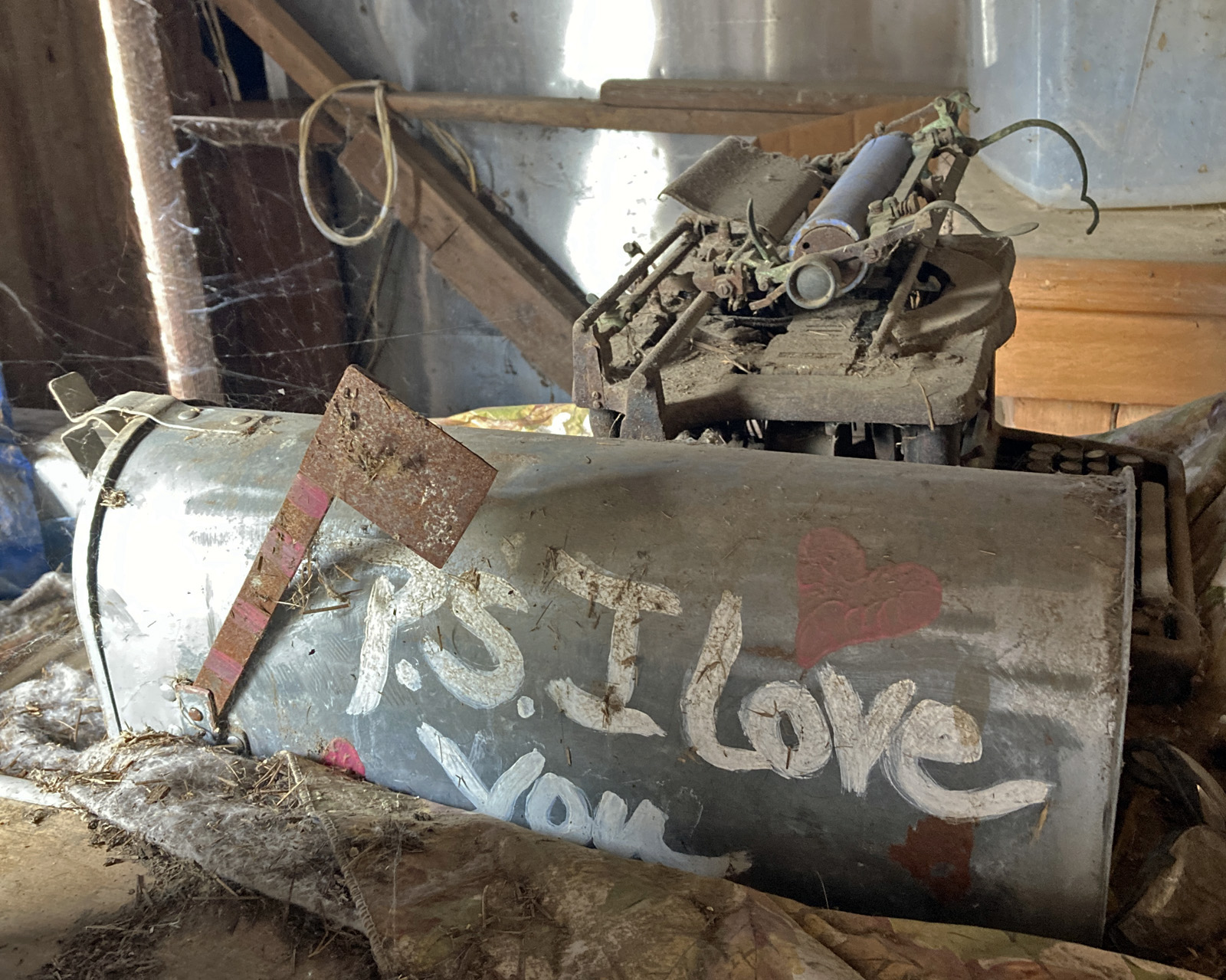
The mailbox stashed in the century-old red barn with its sharply angled roof catches the light from a tall open door. Next to it sits an anchor-heavy Remington typewriter, its keys long rusted in place, its frame decorated by the fine lace of this season’s spiders.
A burnished red mailbox flag angles frozen over painted white words— P.S. I love you—a perfect postscript for the typed letters that must have been popped into its galvanized steel mouth.
It’s what I tell you, my Cliff, when sometimes I step across the threshold of our house to smell wood shavings, dog,
you, gone these 21 years, son of ranchers in a place called Rescue, whose slender barns stretched long arms around chickens and turkeys raised inside.
Today another Cliff, not much older than you’d be now, works within sight of his barn this blue-sky June afternoon, weeding a row of something getting ready to grow in soil once tilled by his father and grandfather, while hens scratch for worms and a rooster chortles insistently:
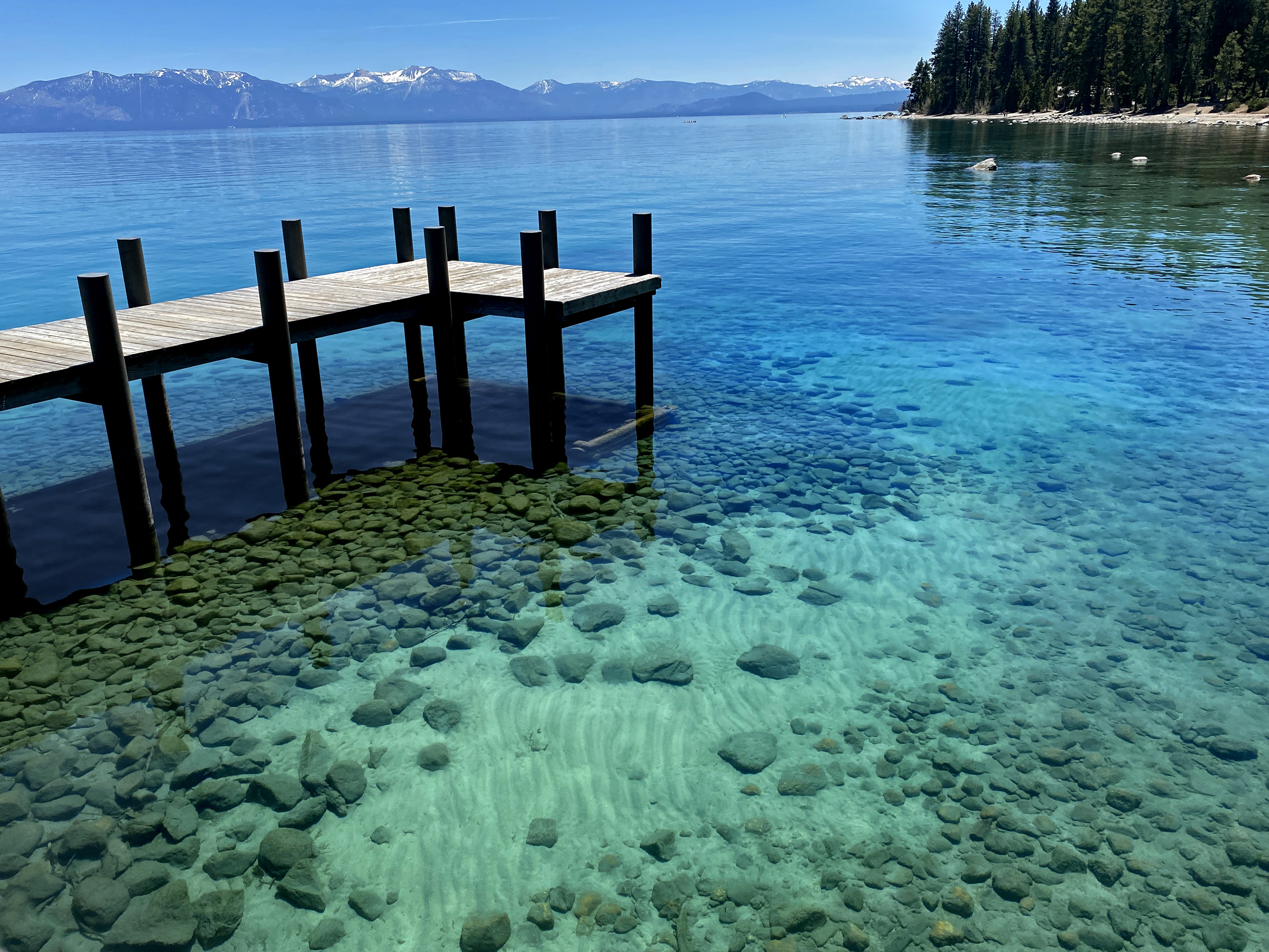
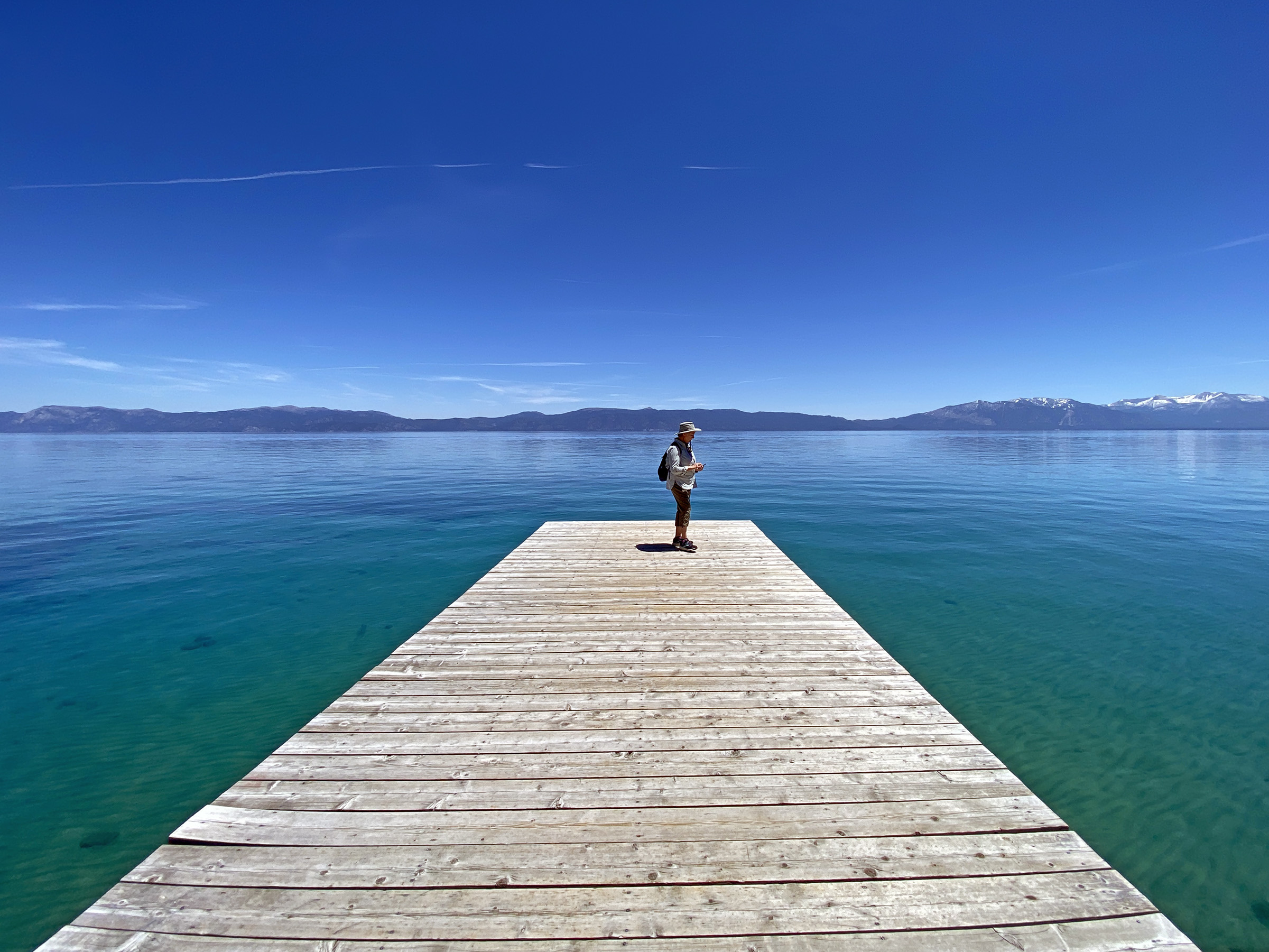
The pier at Sugar Pine Point State Park over astonishingly blue water. (Photo / Dick Schmidt)
It’s been two years since we traveled the couple of hours to the north shore of Lake Tahoe, which seems ridiculous since it’s one of our favorite places on earth—until you realize that we were stopped twice during that time by a pandemic shutdown and a major fire bearing down on the area.
So we finally took advantage this week of a two-year-old reservation at the Cottage Inn just south of Tahoe City as the whole area takes its final, mostly tourist-free breaths and prepares for the onslaught of summer visitors. They’ll flock here in droves over Memorial Day weekend, but in the quiet of the week before, we got to see the lake at its loveliest.
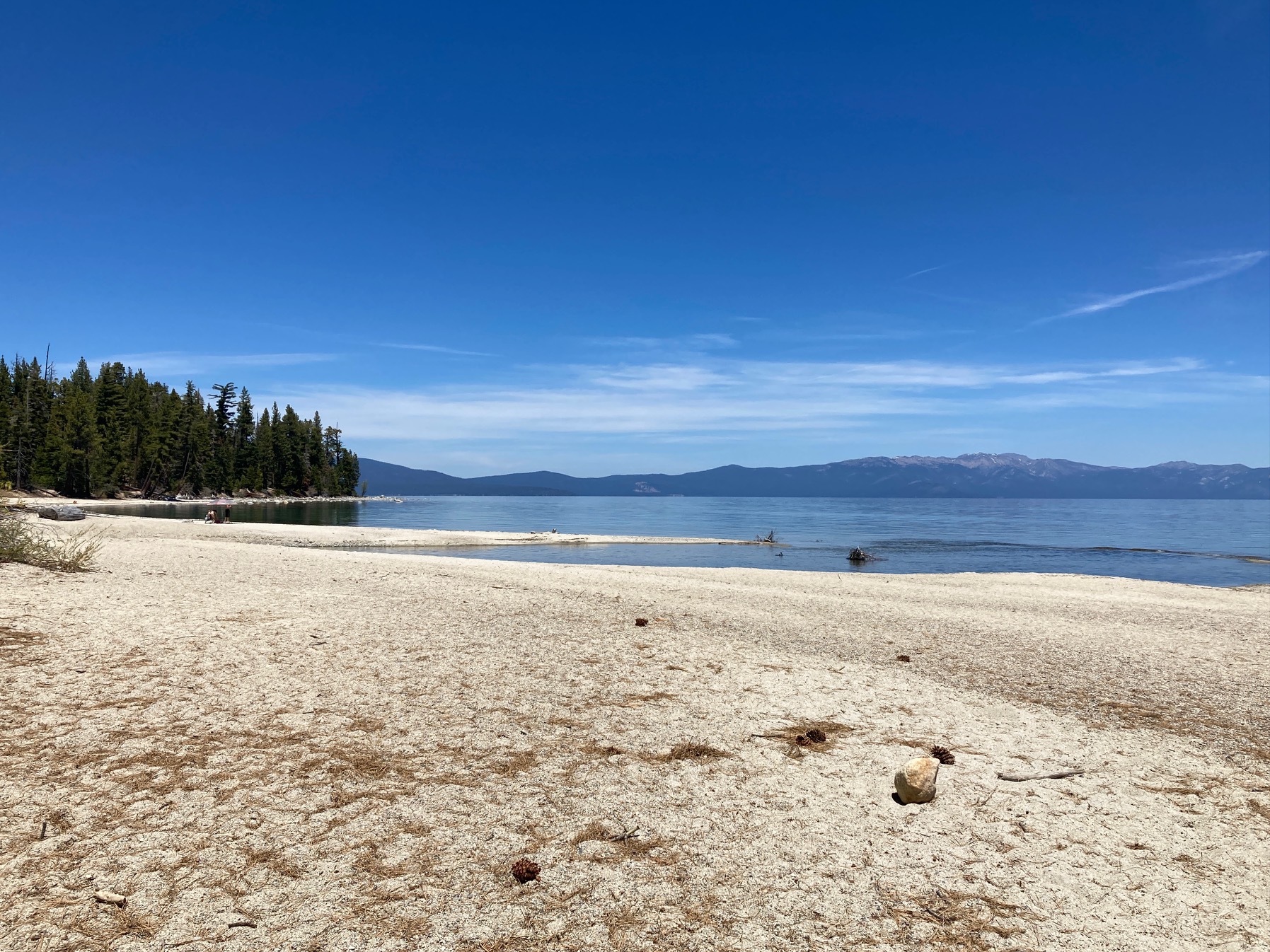
All this beach is typically under water at Sugar Pine Point State Park. (Photo / Jan Haag)
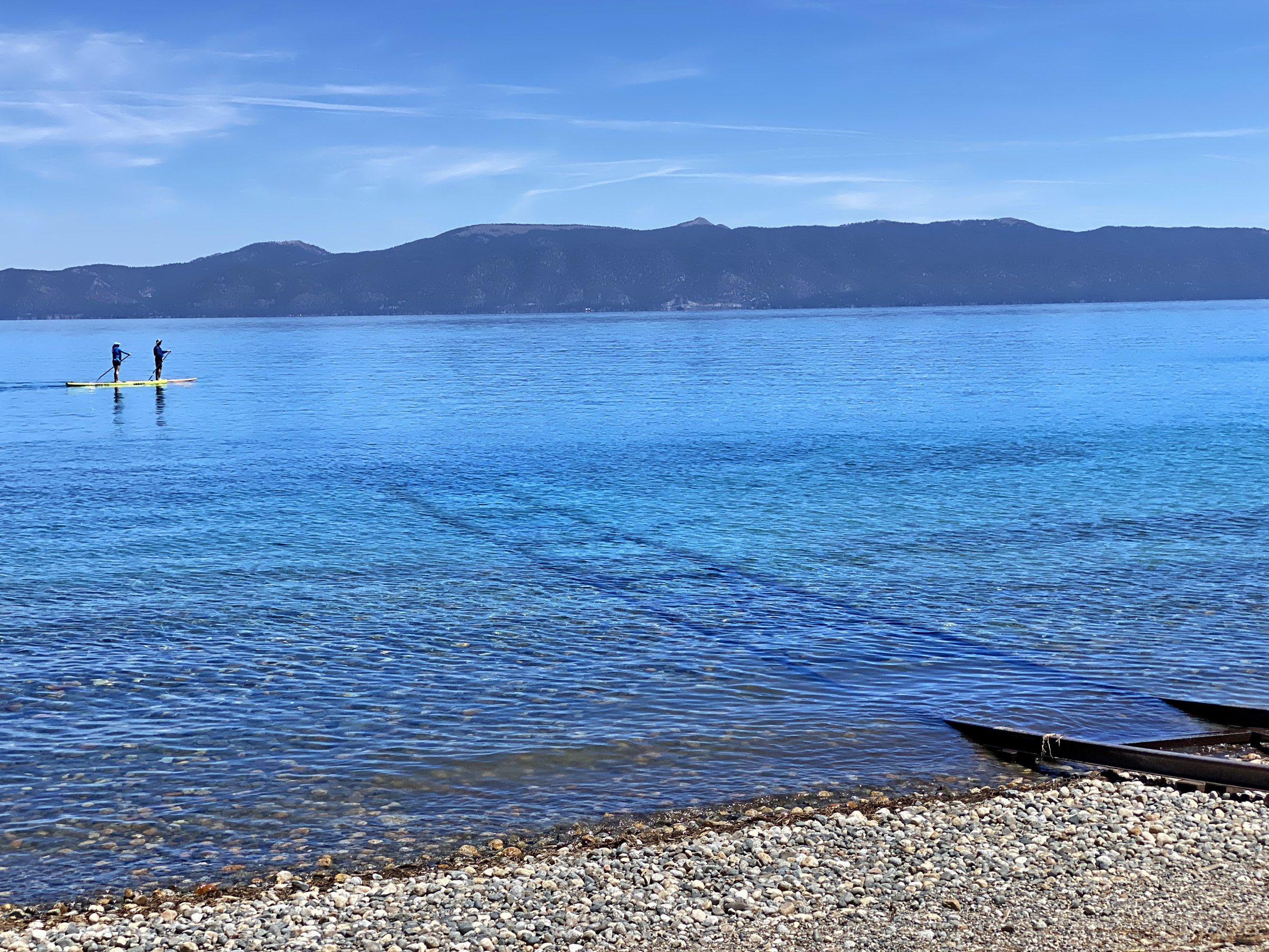
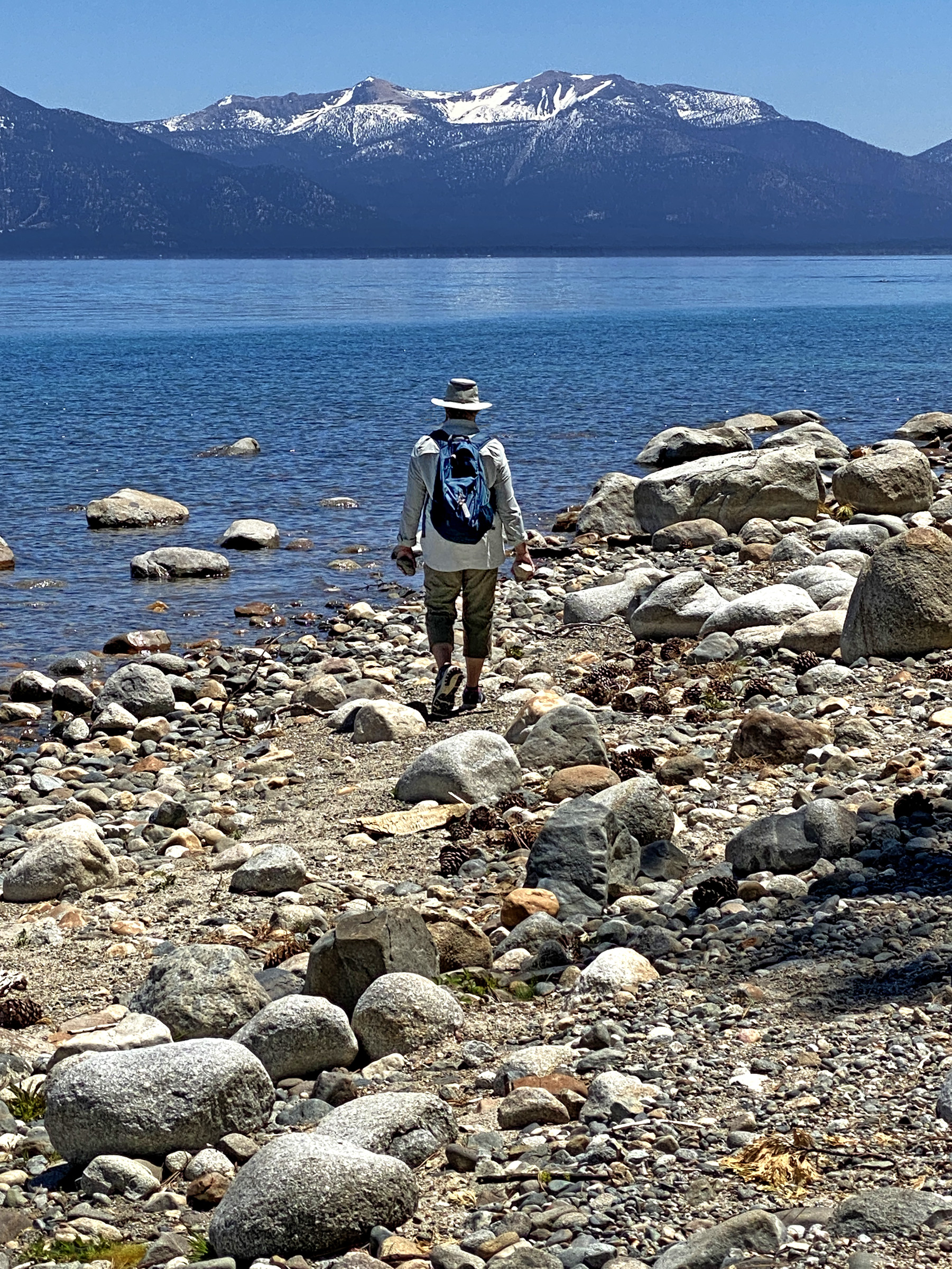
It’s also at one of its lowest points. While winter snows brought the lake level up from its historic lows last fall, it’s still not where it should be in May. This year is California’s driest on record. We could see that as we walked the shoreline at Sugar Pine Point State Park today, literally tracing a path along the rocky shore that’s typically underwater.
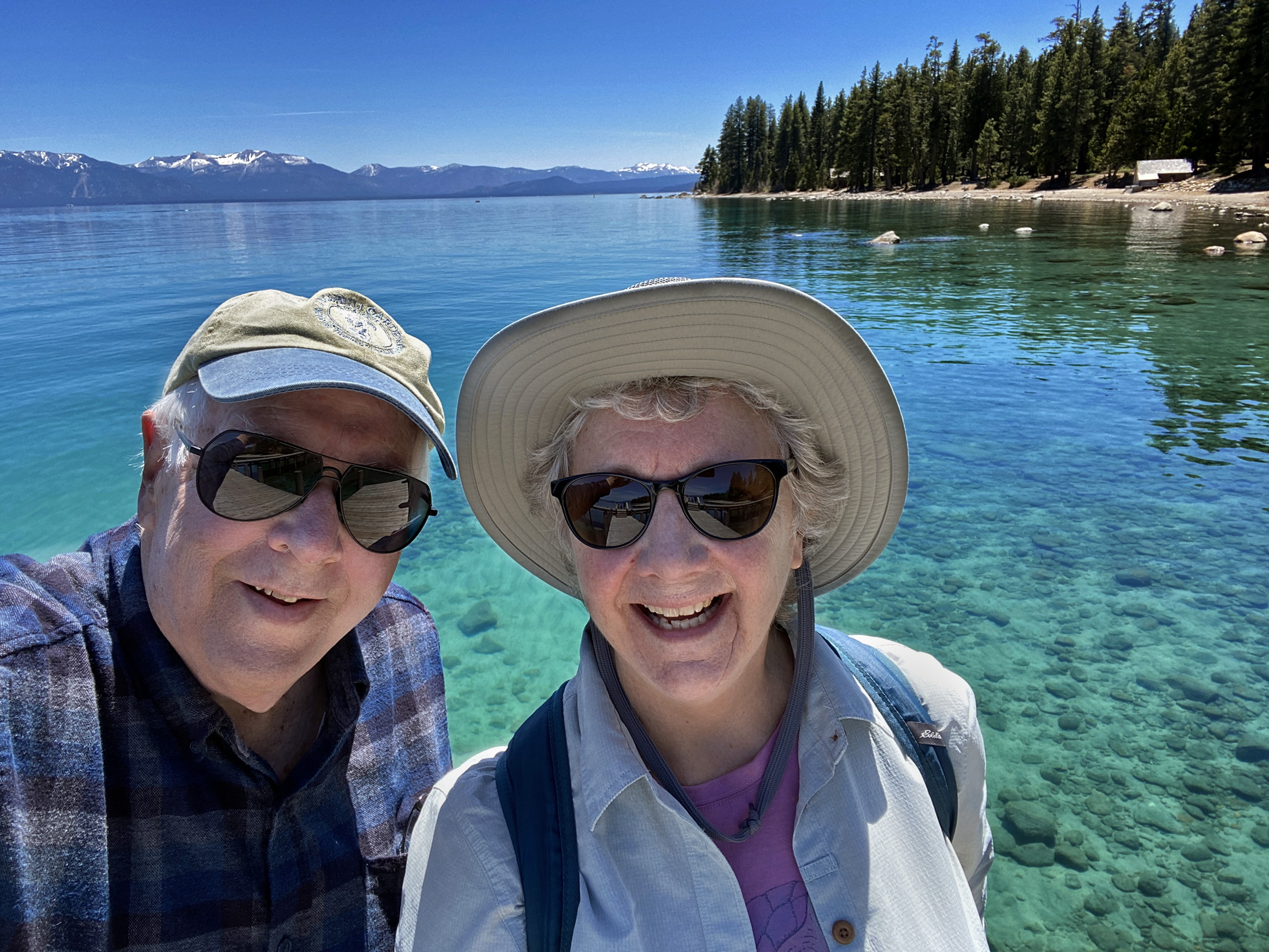
A byproduct of this, however, seems to be outstanding water clarity. Never have we seen Tahoe so clear, turquoise waters gleaming 100 yards from shore. You can count every rock on the shallow bottom—part of the result of the lake’s low water level. But with only a slight breeze, Tahoe’s surface was so still, marred only by the occasional passing motorboat, that we could imagine the lake as Samuel Clemens saw it and his alter ego Mark Twain wrote about it:
“As it lay there with the shadows of the mountains brilliantly photographed upon its still surface, I thought it must surely be the fairest picture the whole earth affords.”
Paddleboarders cruise by the old boat rails from the Ehrman mansion boathouse into the lake. (Photo / Dick Schmidt)
We thought so, too, today on the opposite side of the lake from where Clemens first saw it, and we soaked up the peace of the place before the summer season begins.
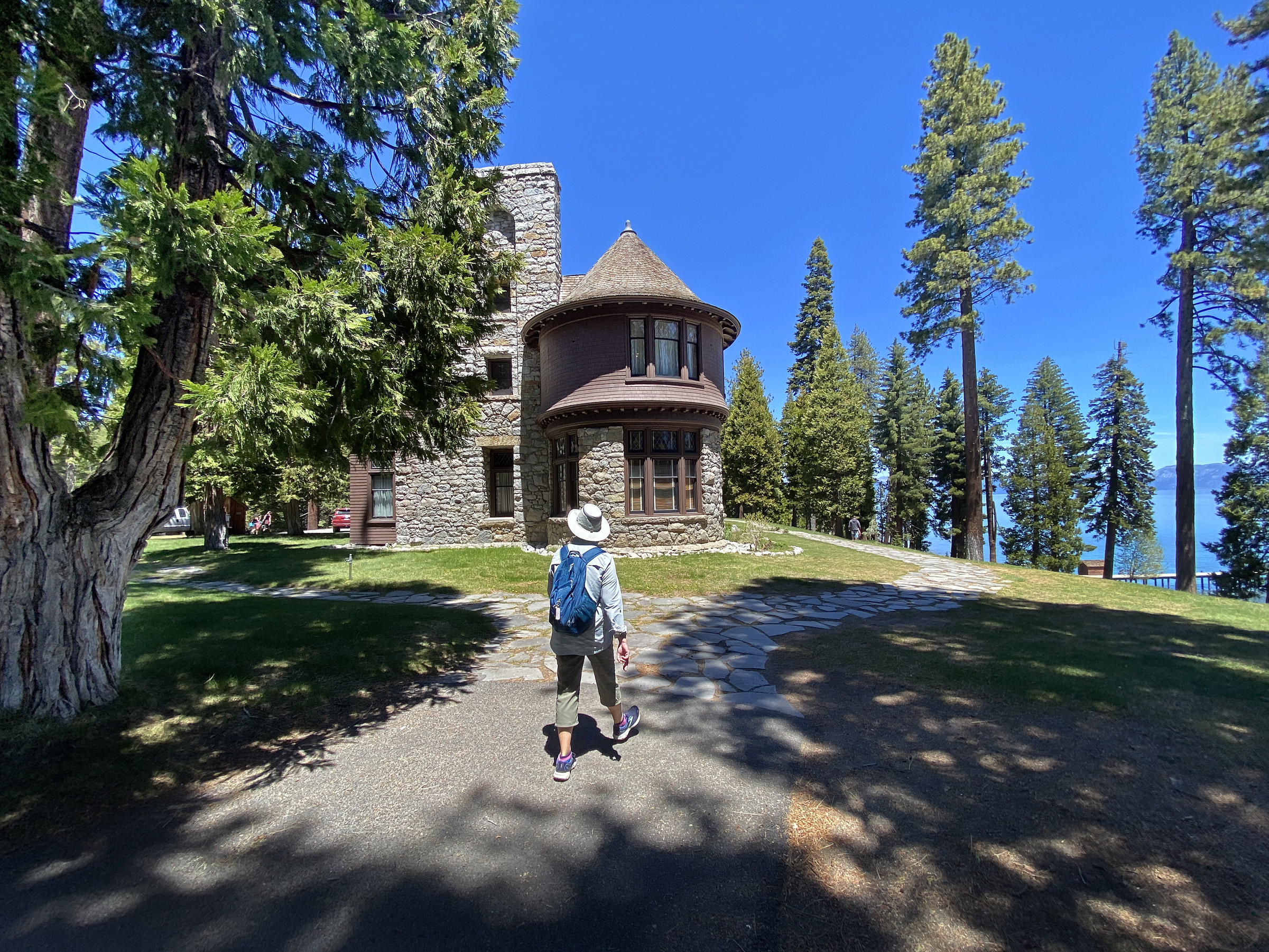
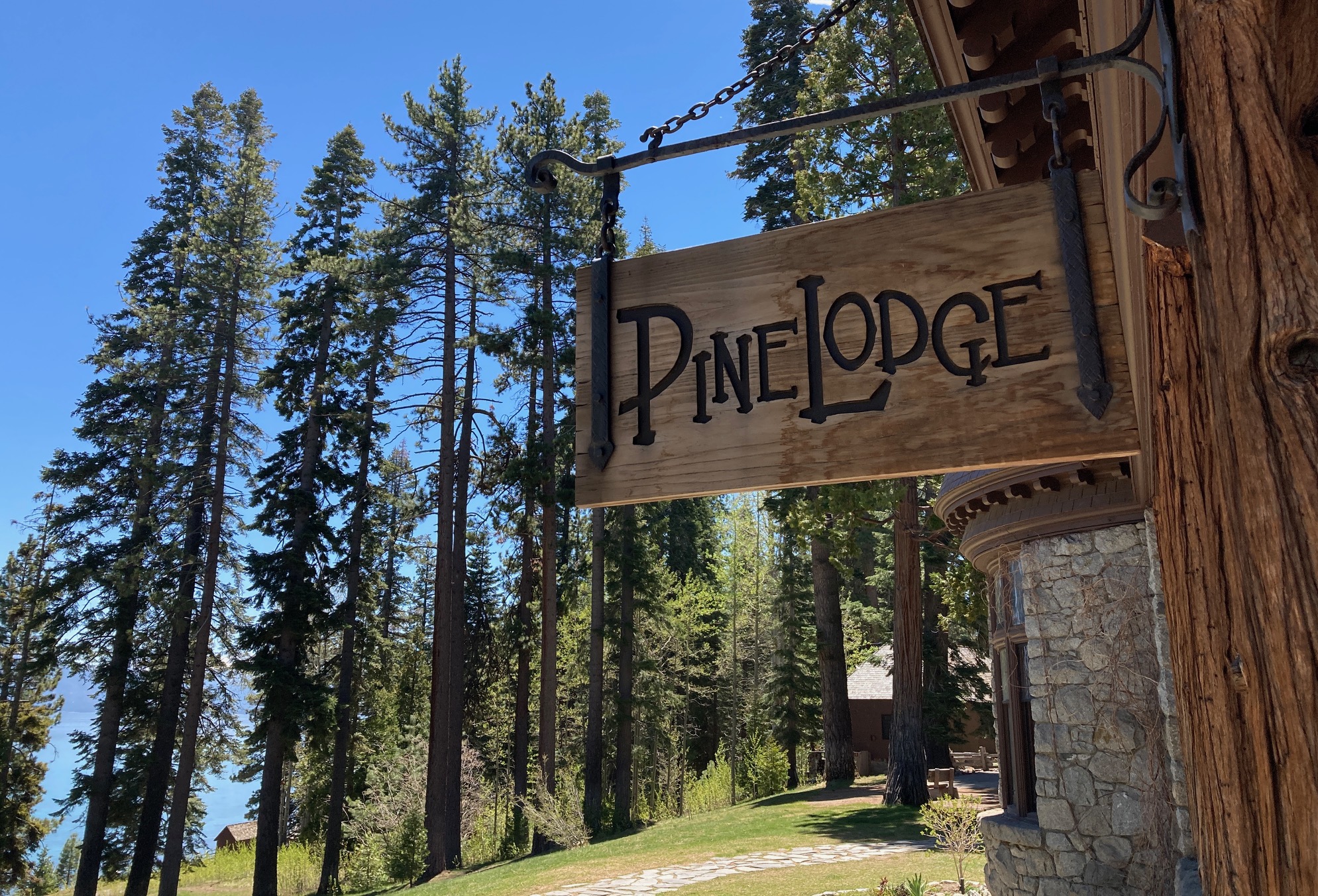
All that’ll change by this weekend, of course, which is one reason we like to spend time at the lake in May. This is the time to drive into Sugar Pine Point State Park and stroll by the Hellman-Ehrman mansion (aka Pine Lodge, such a modest name for the the 1903 mansion left to Florence Hellman Ehrman).
In the summer of 1980, when I worked for the Tahoe Daily Tribune, I did a story about the Ehrman mansion, which had been sold to the state in 1965. But in 1980 it sat unfurnished and empty, though still glorious in its design by Walter Bliss. Now it’s been furnished as it was in the 1930s, and in the coming summer months the Sierra State Parks Foundation offers excellent tours.
I walk by the Ehrman Mansion at Sugar Pine Point State Park. (Photo / Dick Schmidt)
Such a modest name for a gorgeous mansion. (Photo / Jan Haag)
It’s one of our favorite walks along the lakeshore, 2 miles long when the water is at its usual level—longer now. You can walk even farther thanks to the much-widened beach, an odd benefit to the drought. General Creek flows into Lake Tahoe, and because the water is so shallow now, it’s easy to wade across the sandbar and continue walking north.
Before it was Sugar Pine Point State Park, this area was the historic summer home of the Washoe Indians who came to the lake to hunt and fish. Some of their grinding rocks are now visible on the shoreline.
We went to the pier, which extends a good 150 feet from shore, riveted by the clear blue, the rocks placed seemingly by an artist’s hand. It was well known that the lake’s clarity had drastically declined in the 20th century. In 1968, when UC Davis researchers began measuring the lake’s clarity, they could see the circular white Secchi disc resembling a dinner plate submerged to 100 feet. In 1997 the marker could be seen only 67 feet down. Fine sediment and free-floating algae reduce water clarity, and as agencies have worked together to reduce pollutants from water runoff, the lake gets more clear every year.
This year when the UCD team lowered the Secchi disc into the lake, it was visible 138 feet down, the second deepest measurement since 1968. So it’s not our imagination: Tahoe is still the clearest lake in the United States, though efforts continue to increase its clarity.
The peace of the pier. (Photo / Dick Schmidt)
As we walked the long shoreline, admiring rocks that are typically underwater, we took in the quiet lapping of tiny waves into the shore, and, of course, stopped to take photos and breathe in the blue.
Twain called Lake Tahoe “a noble sheet of blue water” in 1871:
“As it lay there with the shadows of the mountains brilliantly photographed upon its still surface, I thought it must surely be the fairest picture the whole earth affords.”
So much of my life has come to this: sharing with others the power of writing to help heal the most difficult things thrown at us. Deaths of loved ones. Illness and pain. Loss of every kind. Grief of every kind. I’ve said for years that every writing group turns into a grief and loss session for at least one writer. We have a lot that needs healing. And one of my great joys in life is running writing groups that allow people to write what needs to be written, and, in tiny increments, not only begin to heal what’s troubling them but also to begin to turn it into art.
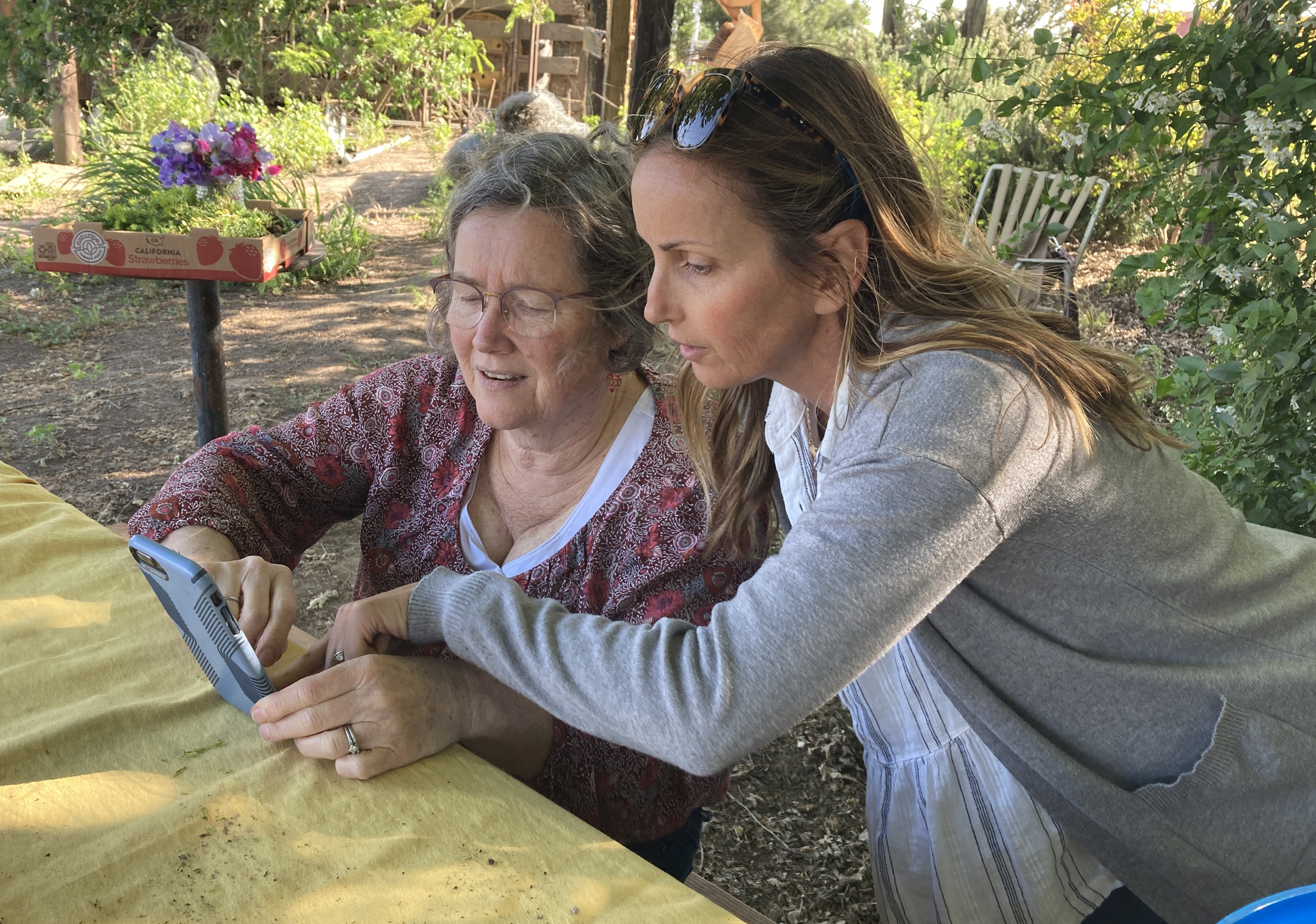
Jill Batiansila (right) gives advice about how to photograph the succulents in a newly planted teacup.
I recently began offering a monthly writing group in Elk Grove, California, for a nonprofit called Together We Heal, which an amazing woman named Jill Batiansila set up to help people in grief. She considers herself a “professional griever,” having lost her biological father when she was 16 months old. Together We Heal is Jill’s way of “creat[ing] space for people struggling with loss in its many forms and equip them with tools to build a life filled with joy,” as it says on the website.
They offer a grief support group, yoga, a walking wellness class, an art class and my writing group, among others—all for free.
Jill and I were introduced last year through a mutual friend, Margo Fowkes, who runs a website called “Salt Water,” for “those who have lost someone they can’t live without.” Margo, too, is a professional griever, having lost her 21-year-old son Jimmy to brain cancer in 2014. Margo thought that Jill and I needed to know each other, and she was right.
“Let’s host some writing groups,” Jill proposed, and I liked that idea.
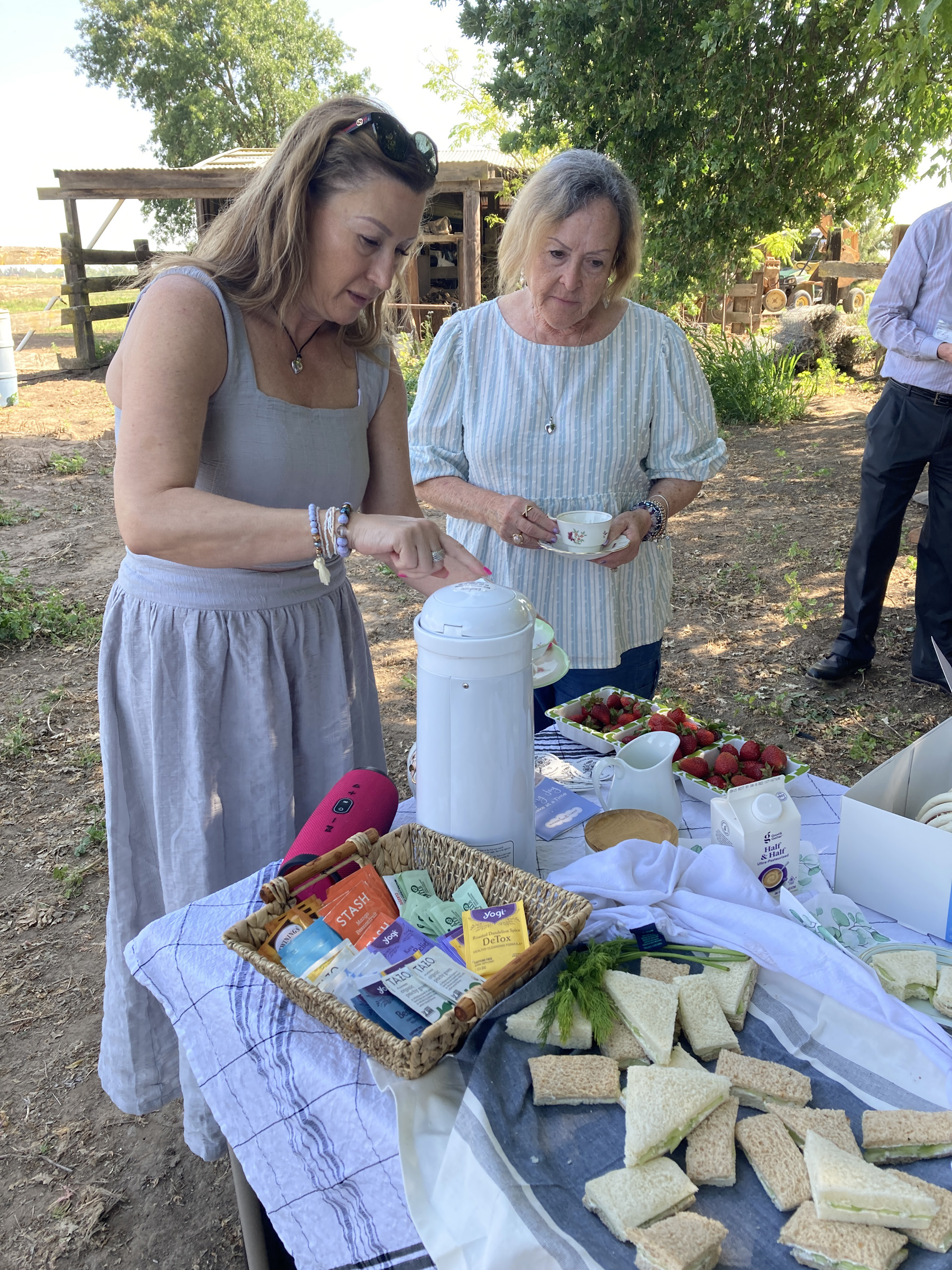
Getting tea and cucumber sandwiches
Honestly, the writing groups got off to a slow start, not helped by a waning pandemic. But this week seven people showed up at a church in Elk Grove to write with Jill and me, which was glorious. Several of them were new to writing in a group, a little nervous, which is not unusual. My job is to put people at ease so they can write what needs to be written, and, if they’re comfortable, read it. All we tell them is what we like, what stays with us and what is strong about the writing, as prescribed by the AWA method I’ve used for years. Everything is kept confidential, we don’t ask questions, and we treat everything as fiction—even if we hear the first person “I” in someone’s writing.
Though newcomers don’t feel very confident, there’s always some fine lines and phrases that pop out that I’ll ask to be read again, as do other listeners. Almost no one likes what they’ve just written, I tell people. But other people hear our words differently, and they do hear the good stuff that we can’t yet discern. When they tell us what they honestly like and what’s strong, we can decide later what, if anything, we want to do with that writing. So much of what I do stays in my journal or on the laptop where I write. And that’s just fine.
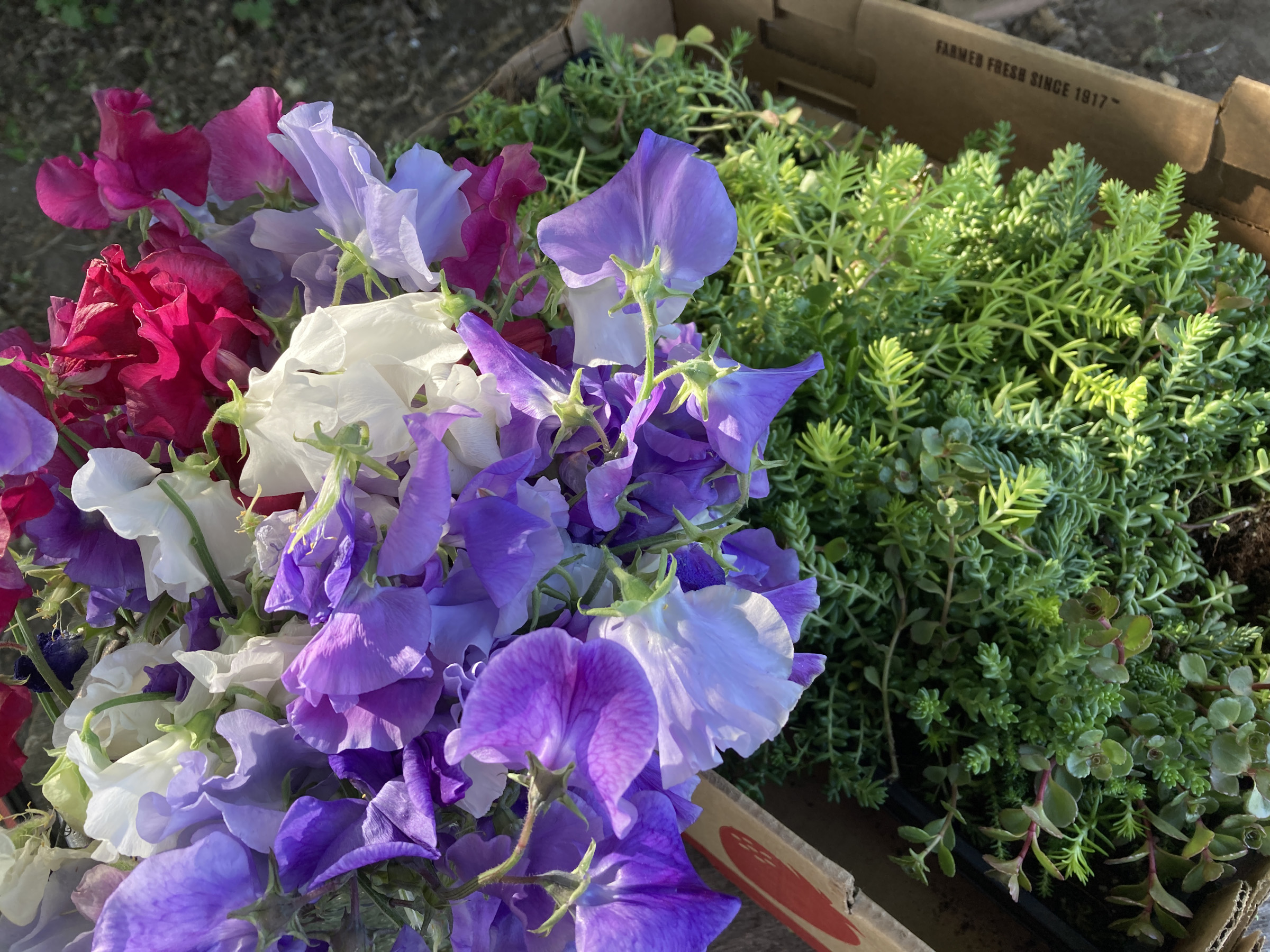
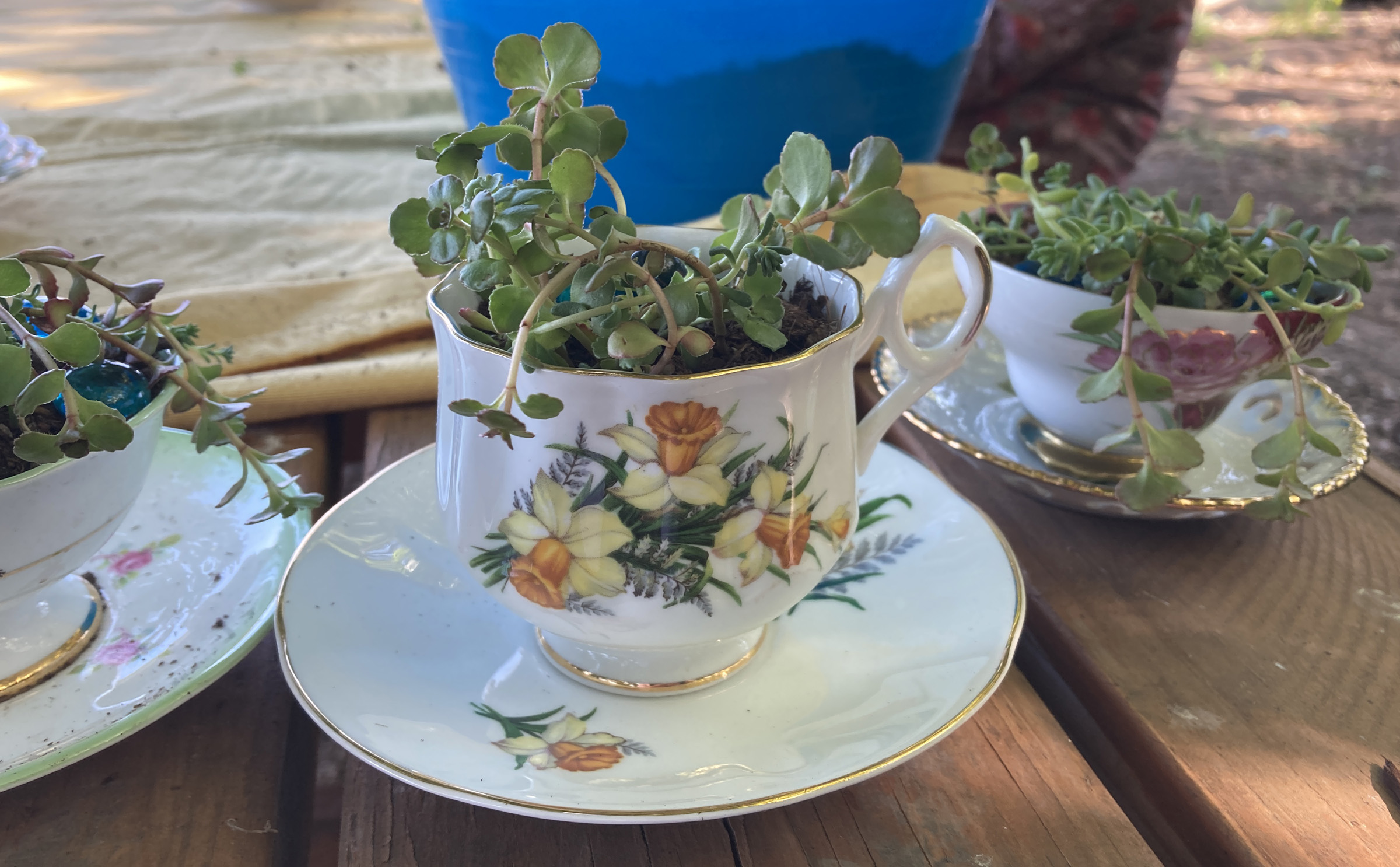
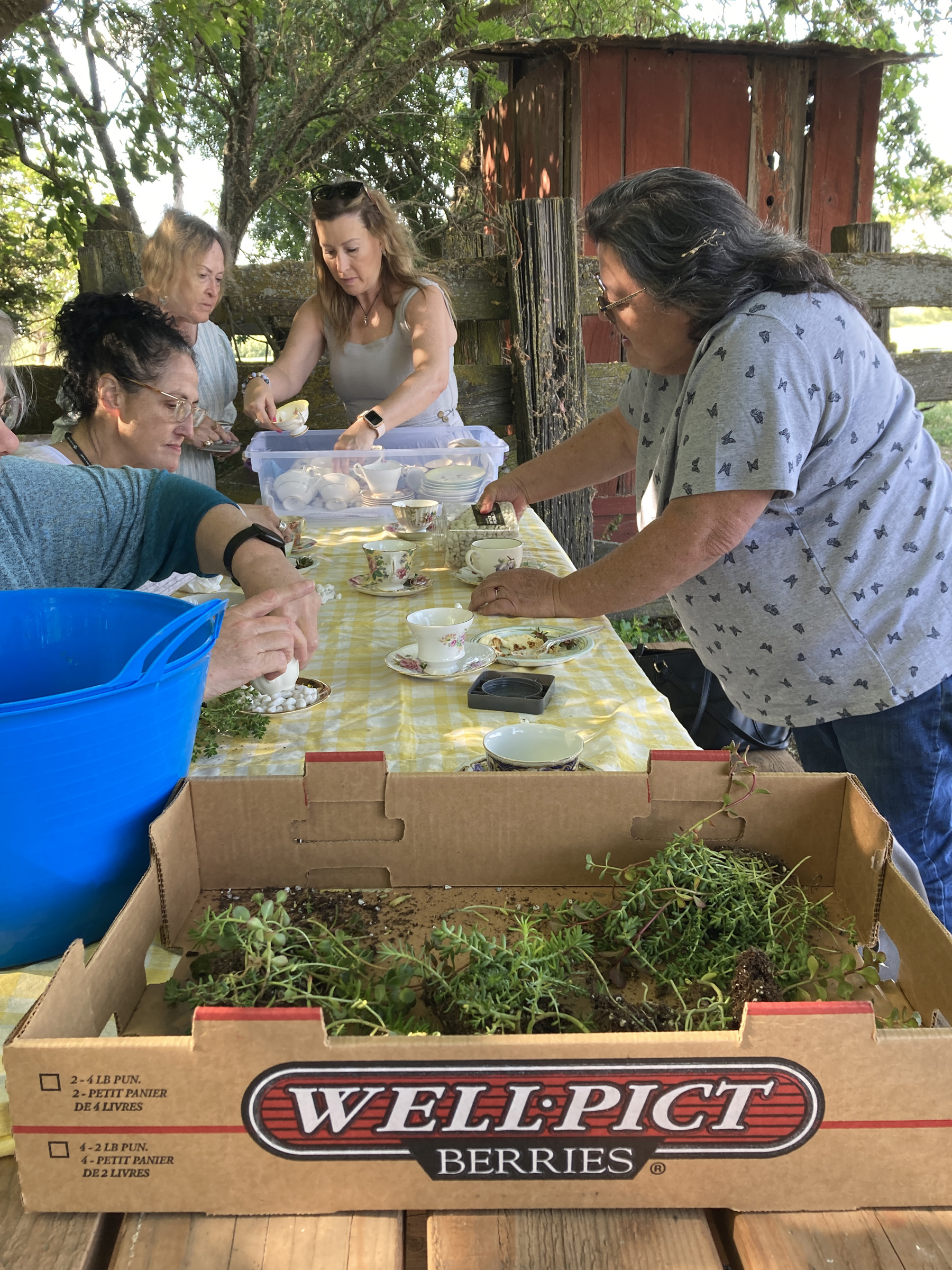
The day after the writing group, Jill hosted the first Honorary Mother’s Day Tea to honor departed mothers, grandmothers and other important women. Jill served tea, her homemade cucumber sandwiches and yummy cake. But she also brought small succulents to be planted in donated teacups. Jill and her stepfather had drilled each teacup with a small drainage hole, and each woman filled at least one cup with dirt (as well as drinking tea from one of Jill’s collection of cups) and succulents that spilled over the edges like lacy green tendrils.
Planted teacups
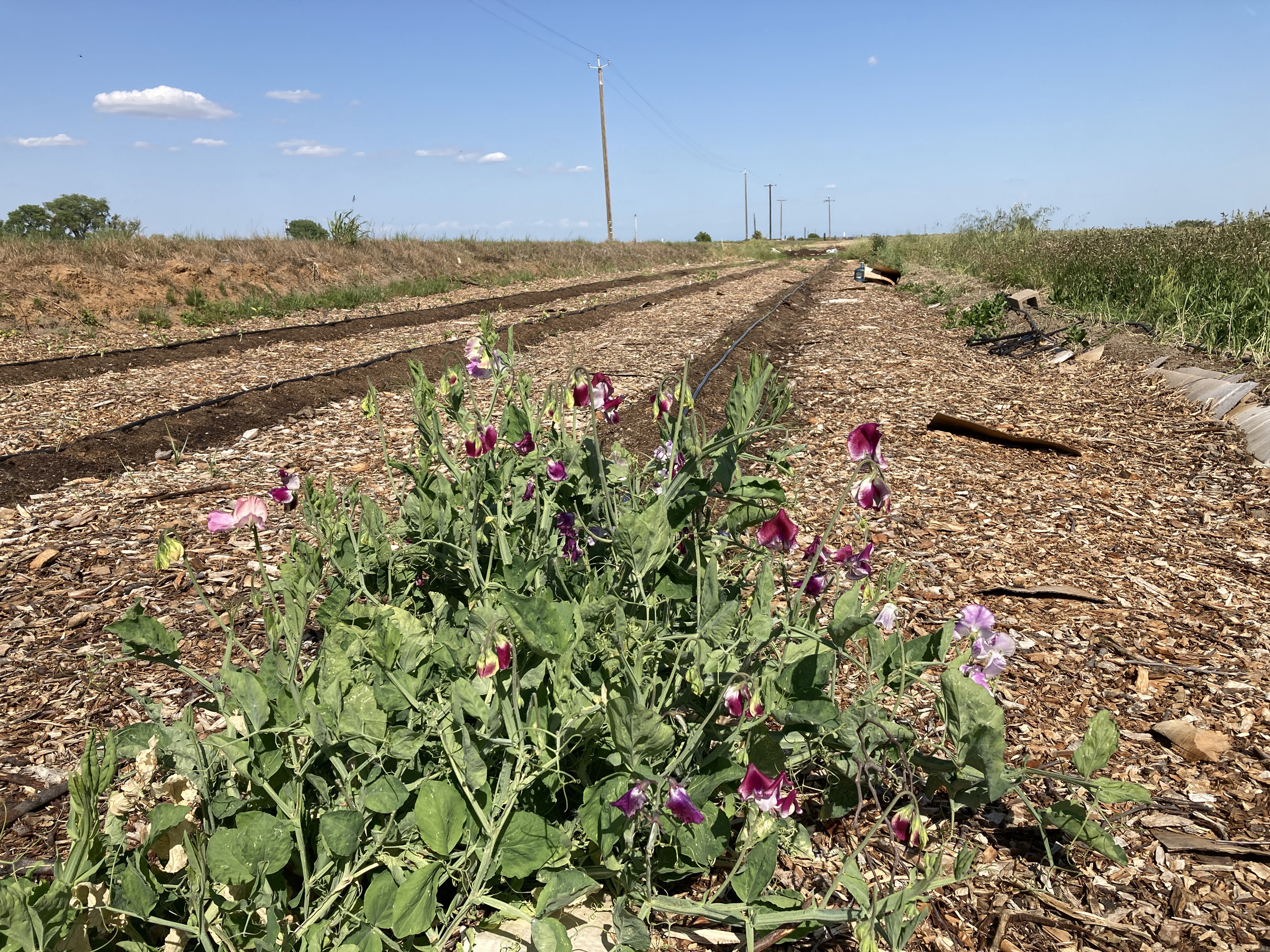
The women—one of whom who had recently lost her husband—seemed happy to chat quietly and plant and drink tea, and I watched no small amount of healing taking place at Stone Lake Farms outside Elk Grove where Jill and a team of volunteers raise flowers to give away to people in grief. They will toil on Wednesdays (and welcome new volunteers, too) through early fall to grow flowers from seeds in three long rows, coming several times a week to tend and harvest what blossoms. The rows are bare now, but it won’t be long before they’ll be overflowing with flowers of all kinds.
If this isn’t important life work, I don’t know what is.
The rows on the farm that will soon blossom with blossoms.
The breeze picked up and turned the afternoon cool. Still, you could see the delight in the women’s faces and feel the lightening of their spirits as they tamped down the soil and decorated the soil in the cups with blue glass pieces. (Thanks to bereavement expert David Howell for reading poems and providing those bits of glass and rocks.) It was such a pleasant place to be, and everyone left with a teacup succulent to share or to keep.
“They do well with a little neglect,” Jill said about the succulents. “They don’t need much water. Just a little now and then and a little sunlight.”
Water and sunlight and the kindness of others—not neglect at all, but a recipe for caring, which Jill and the Together We Heal folks do so very well.
Planting teacups with succulents at the Together We Heal Mother’s Day tea.


 Güd wrtr