I pull on my comfy fleece, encase my feet in tennies, even if I’ll be inside all day, because leading a writing facilitators’ training amounts to a five-day marathon spread over two weekends, and no matter how many times I’ve done this, it takes every brain cell to keep track of so many moving parts.
Yet I do it with great joy, with the help of fine colleagues who believe, like the method’s founder, that a writer is someone who writes, that everyone has a voice worthy of the page, that these new facilitators will encourage others to push newborn words from memory or imagination out of sticky minds, let them breathe fresh air, squall a bit, look around and begin to live.
It’s intense, rewarding work, encouraging others to write their art out, to have faith that the words are always there if you just loosen the lasso, let letters and syllables spiral down the arm to fingers poised over keys or page, take a deep breath, and let those youngsters run free.
(*from Pat Schneider, Writing Alone and With Others, Oxford University Press, from the five essential affirmations of the Amherst Writers & Artists method)
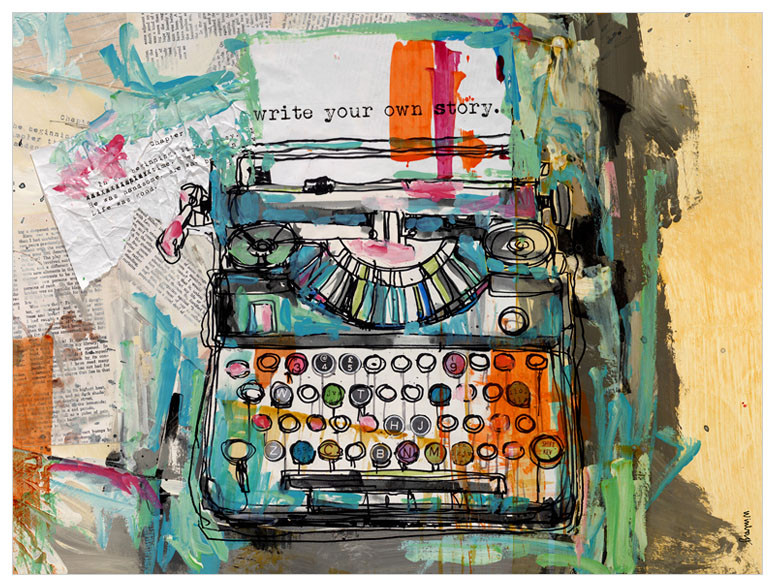
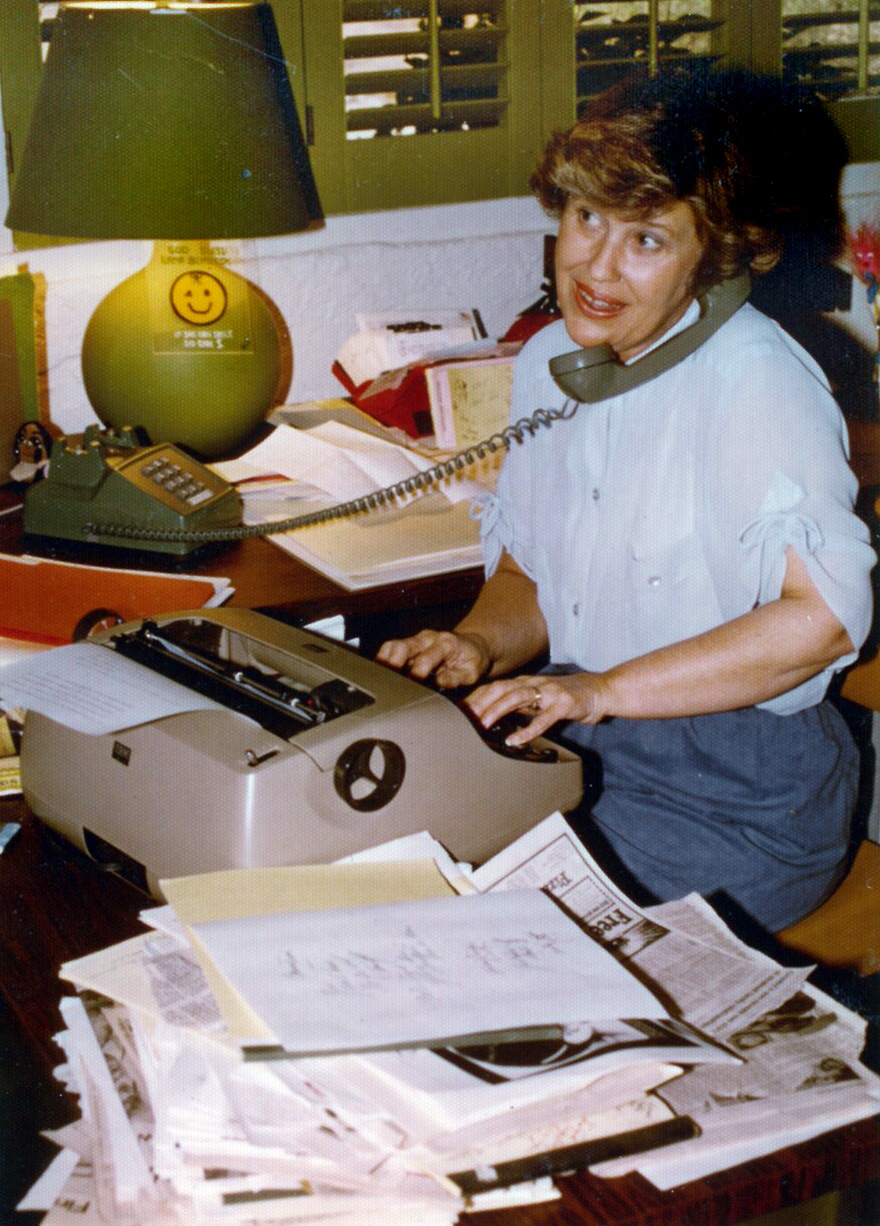
And today I’m thinking of Erma, the humor columnist from Dayton who, typing from her kitchen starting in the 1950s, elevated the role of the humble housewife, who composed, she said, on a typewriter that wrote funny, and who, on her funny typewriter, wrote back to me— a journalism major in the late ’70s.
And though she must have been swamped with column and books, fan mail and family, she answered my questions for a class assignment, her humor bouncing off the IBM Selectric’d pages about her first big story for the Dayton Herald— interviewing Shirley Temple in 1944.
And when I asked for advice, she urged me to get used to rejection and failure and even getting fired because how you handle the rough stuff is what determines your success as a writer.
And meet every deadline, she wrote, even if you have to stay up all night. And always write to fit the space you’re given so some harried editor doesn’t trim your best stuff.
And keep writing, even if you think you don’t have to, she said, even someday when you have to clean your own toilets. I promise it’s worth it.
Thanks so much, Margo Fowkes, for asking if I’d ever written an essay about writing as healing. (I’d written bits and pieces here and there, but not an extensive piece.) I offered to write one for you, and you—creator of the marvelous Salt Water website for those in grief—have published it.
I’m deeply grateful for that, and for Salt Water, where anyone who wants to write about loss and grief can submit work. You’ve done exactly what I talk about here—turning grief into art—beautifully and with great compassion for yourself and others. What a gift!
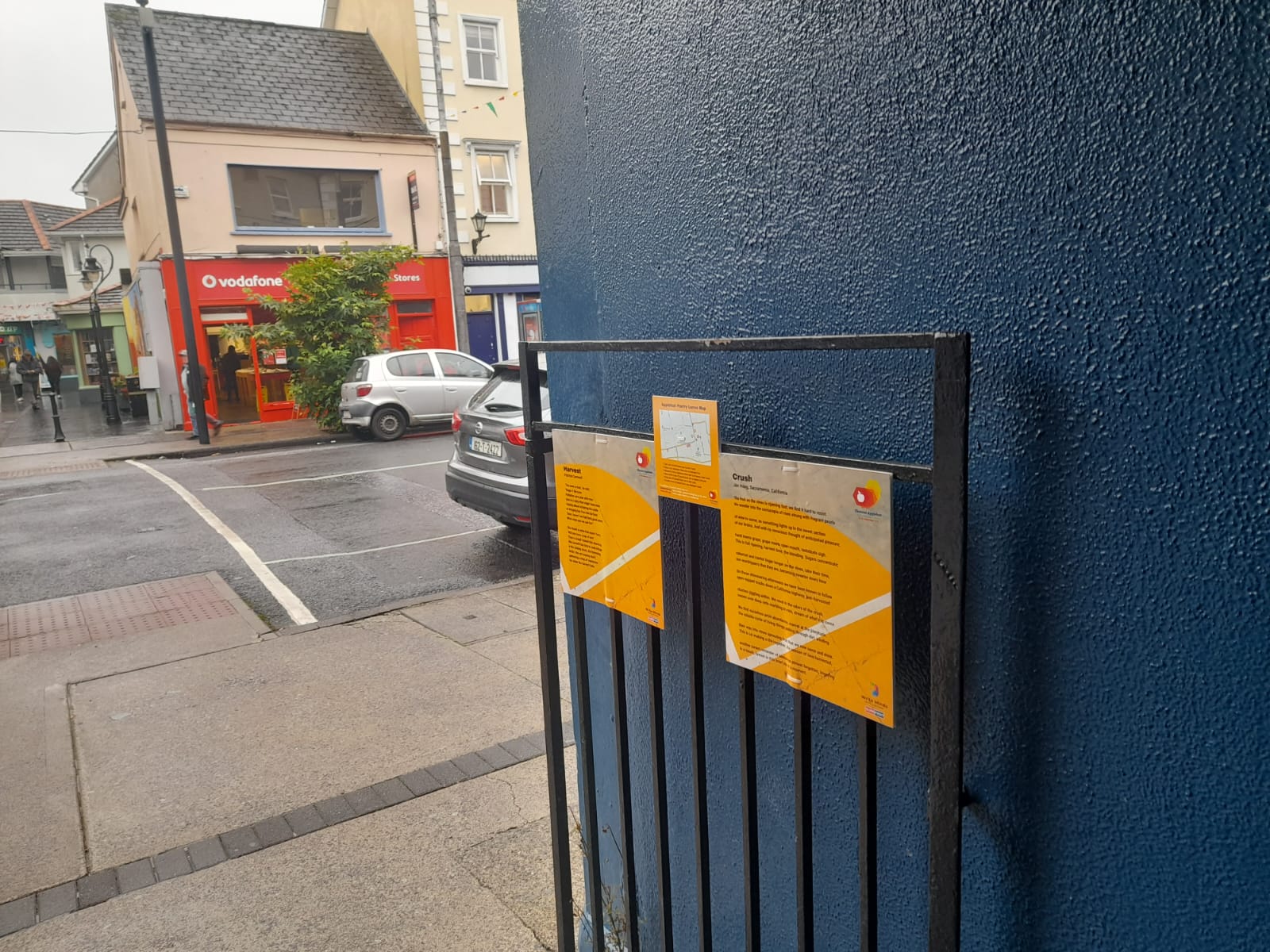
My poem, one of 39, posted as part of the fourth annual Applefest Poetry Trail in Clonmel, Ireland.
I’m fortunate to have poems and stories periodically published, but I like to remind people in my writing world that I generally get at least four or five rejections for every piece that’s accepted. Not a bad rate, but I target things carefully to journals/anthologies that seem particularly well suited to pieces I’ve written… or pieces I write to try to suit them. Still, editors get a LOT of submissions (I know… I edit a literary journal, too), so there’s a lot of luck involved in gaining an acceptance.
Every so often, though, someone invites me to submit a piece to something they’re working on, and though publication is not guaranteed, these feel like better possibilities. Such was the case when Jennifer Cox invited me to submit a poem on a harvest theme to the Clonmel Applefest in Clonmel, Ireland, where Jenny lives and works as a poet and writer. For four years she and her friend Eileen Acheson have asked poets to submit their work to be printed on plaques and posted on the outdoor Poetry Trail among the lanes of Clonmel.
I submitted a poem and didn’t hear anything for a bit. Then I got a group email about where the poems would be on display. I had to ask Jenny if my poem had been selected, and she said, of course, which both surprised and pleased me. I’ve had poems published internationally, but this is a first: to have a poem (one of 39 poems) posted on an Irish lane in Tipperary County. (You can click on the photos to enlarge them.) My Irish ancestors would be proud!
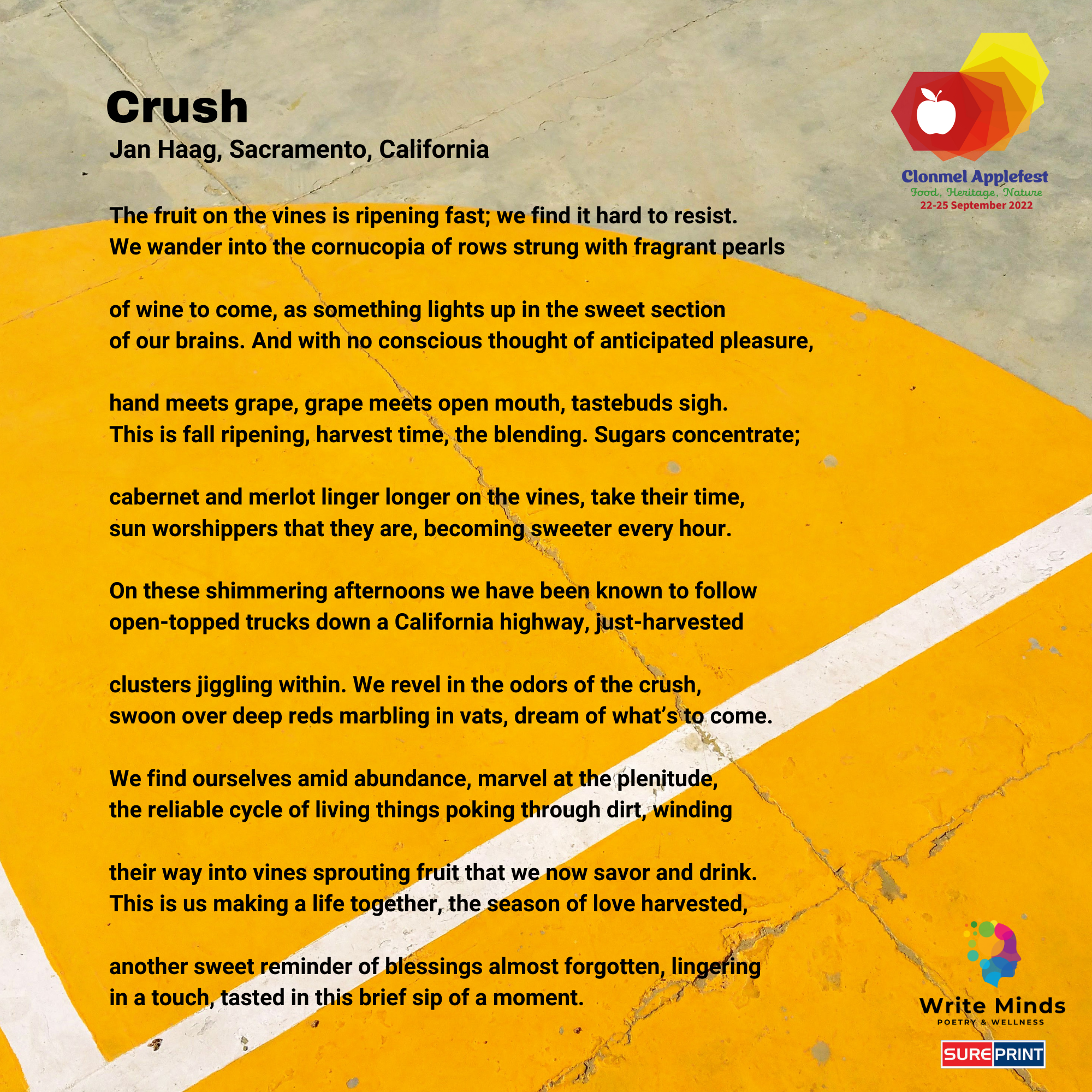
I’m honoured (proper Irish spelling) that Eileen and Jenny accepted my poem, “Crush,” which is a version of a poem I wrote as a wedding gift. Tomorrow (Sunday) Jenny will read “Crush” along with other local poets at a spoken word event. Thank you so much!
(You can listen to me read the poem here. Even better, here’s Jenny reading the poem Sunday, Sept. 25, at the Clonmel Applefest poetry reading.)
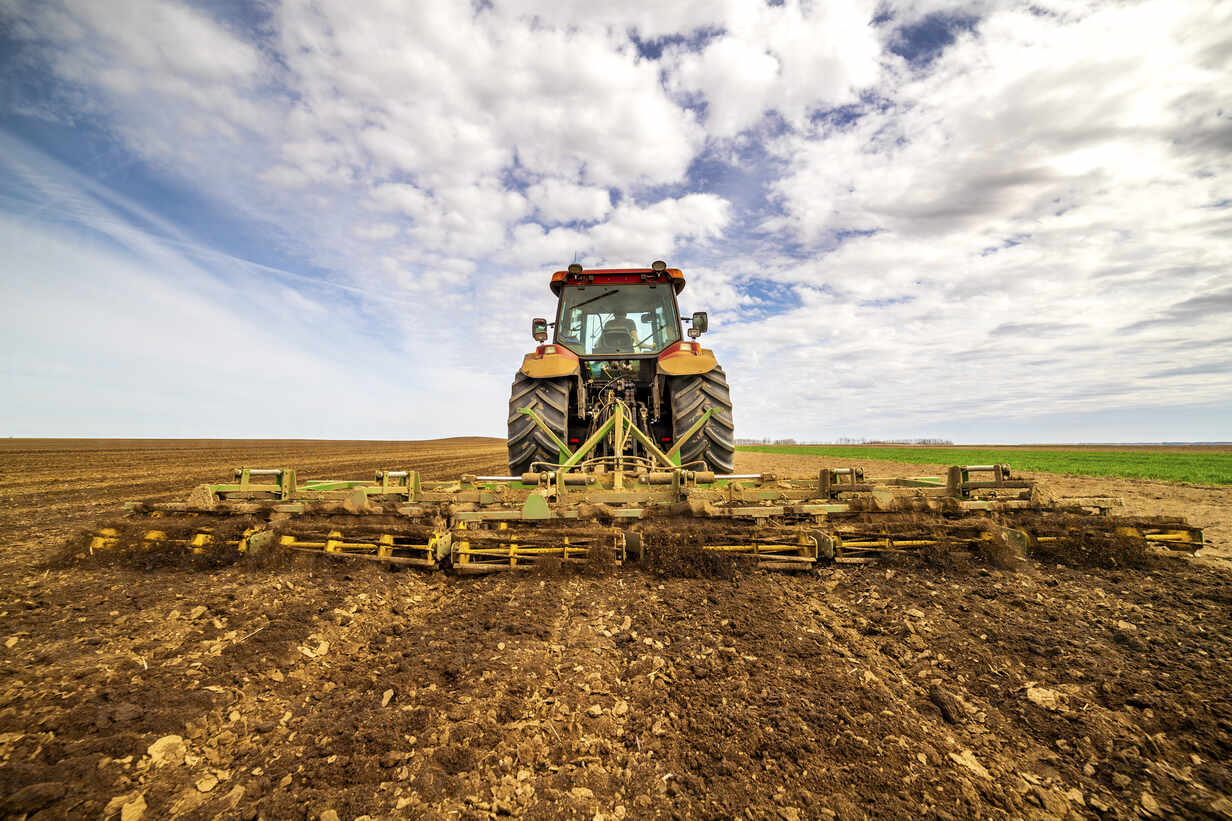
I picked my way across virgin furrows, hundreds of unplanted rows somewhere outside Winters on a breezy June day under insistent sun, teetering on unsuitable footwear toward a lean man whose name I cannot recall, nor the story that sent me there.
A rookie journalist in a neighboring rural county, I took tea at noon in my pink skirt and low white heels with service-minded Soroptimists nibbling triangle finger sandwiches, afterward driving 20 miles to take an unsteady walk toward a farmer perched on his high-rise tractor “way out there,” his wife said, pointing.
What I remember is the farmer’s face astride a giant beast, snorting through billowing dust to a gradual halt, as if bridling a stallion that, given its head, could rear up and buck him off. The man climbed down from his mechanical steed, wiped his sweaty brow with a red bandana, tugged up his work pants, smiled kindly.
“What can I do for you, young lady?” he asked, as if 20-something girl reporters regularly found him plowing the rich earth of his family land that would, with luck, yield a worthy crop in a matter of months.
We must have talked; I would have taken notes in my slender reporter’s notebook. And, when we finished, he offered me a ride back to my car atop all that horsepower. Knowing he wasn’t done with that day’s work—he’d said he had many more rows to furrow—and not wanting to delay him, I declined with thanks.
He climbed back up on his stallion trembling with barely reined-in power, ready to paw long, shallow trenches into soil. I wobbled my way back across the field, half wishing I’d accepted his offer, turning to wave, gratified to see the callused hand and extended salute of that gentle bronc rider silhouetted against a bleached summer sky.
I am grateful to YoloArts and their 15th annual Art Farm exhibition of art inspired by the farmlands of Yolo County, California, for hosting the first Art & Ag Poetry Contest, judged by Julia B. Levine, poet laureate of Davis, California. This poem won third place in that contest, and I read the poem at the event’s opening reception. Thanks to Julia B. Levine for selecting the poem and to Janice Purnell, creative director of Yolo Arts, and her team for their work on the exhibit.
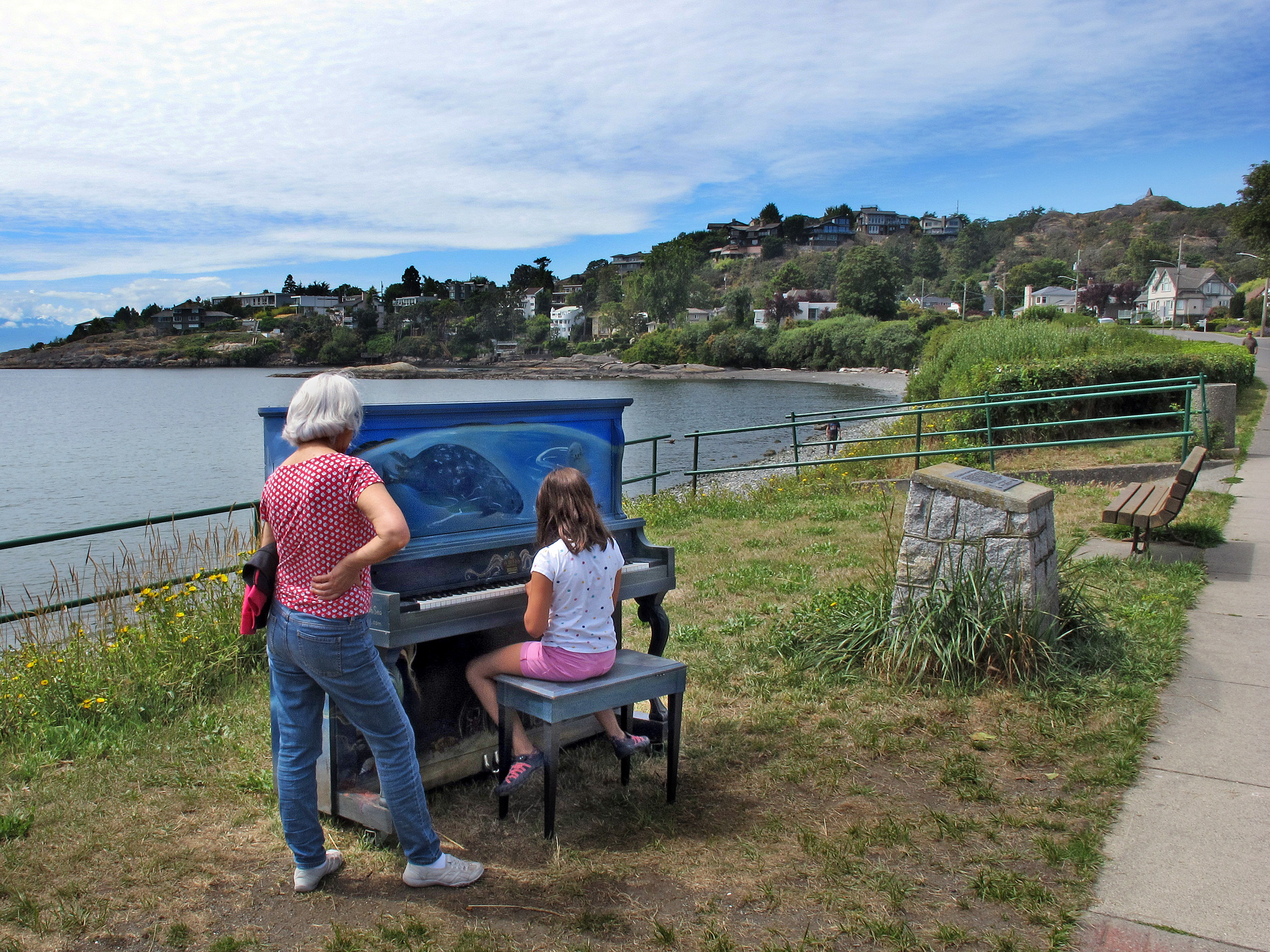
The seaside piano at Beach and Oliver streets, Oak Bay, Victoria, B.C. / July 2019 / Photos by Dick Schmidt
The last time we were in Victoria, B.C., three summers ago—before, as they sing in “Hamilton,” “the world turned upside down”—it was July 2019, and Dick and I were marveling over our good fortune.
Six months earlier in January, Dick had collapsed in cardiac arrest as we were about to board a plane in Honolulu to return home after a two-week vacation. As I’ve written about elsewhere (you can look at the whole series, Dick’s Great Heart Adventure), Dick’s heart stopped and was restarted after a few minutes thanks to a team of strangers who came to the rescue and the swift application of an AED (automated external defibrillator) that brought him back to life with one massive shock.
That began a series of miracles and lifesavers who put Dick back together again, resulting in a triple bypass at Kaiser Moanalua Medical Center in Honolulu and two of his oldest and dearest friends who came to Oahu to care for him when I had to return home.
So coming back to Victoria—a place we love and have spent parts of summers since 1999—in July 2019 felt a bit miraculous, too. I remember walking around thinking, “It might have been otherwise,” which is the repeated line in a lovely poem by the late Jane Kenyon.
Nothing like a crisis to remind you of how lucky you are. And boy, did we know it.
Driving around the south shore of Vancouver Island is one of our favorite things to do. It’s a relatively small peninsula with an oceanside road that winds through the neighborhoods of James Bay and Oak Bay, and we took the drive—stopping here and there to take photos and soak up the glorious weather. You never know what you’re going to see, I often say as we park someplace to get out and look. Some surprising thing will happen that you would’ve missed if you’d just driven on by.
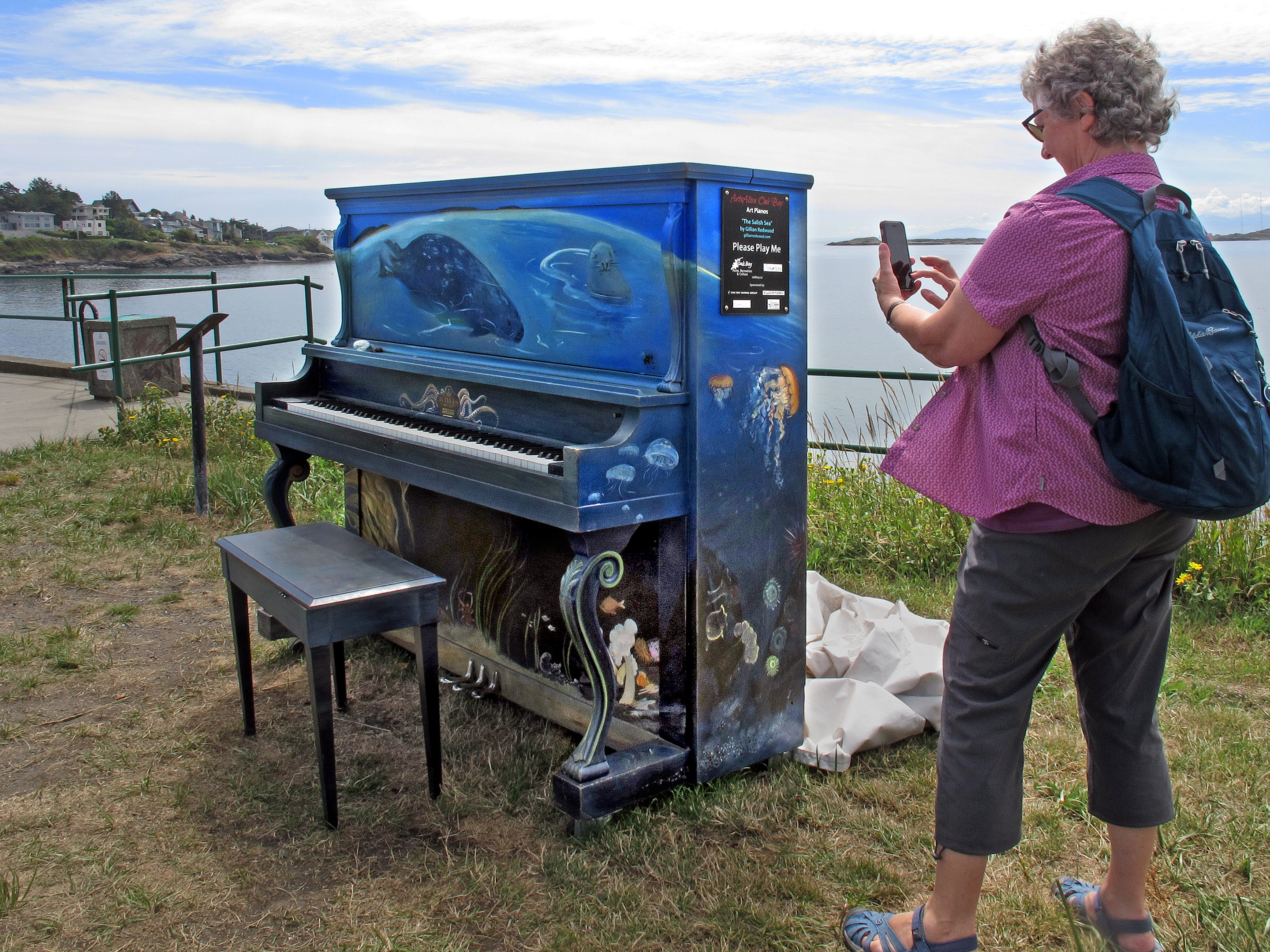
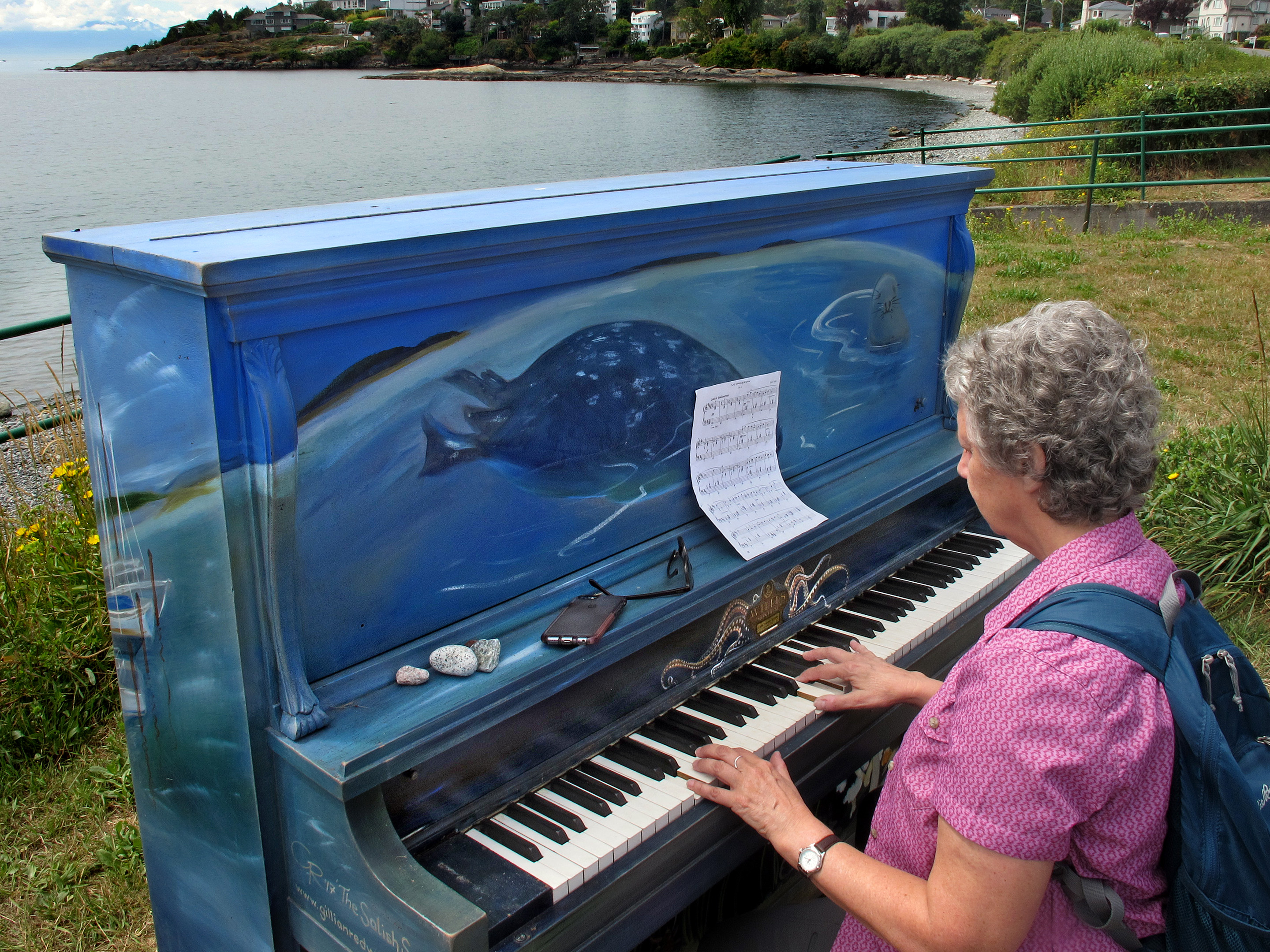
Victoria artist Gillian Redwood’s painted seaside piano, “The Salish Sea”
So when we passed an old upright piano painted with seagoing creatures sitting oceanside at the corner of Beach and Oliver streets, I hollered, as I’m wont to do, “Ooo! Pull over, Dickie!”
He is used to this, so with a bit of protest—“Janis!”—he did so, as I babbled about a painted piano on the side of the road. I got out of the car and walked back to see if it was a real, playable piano. It was.
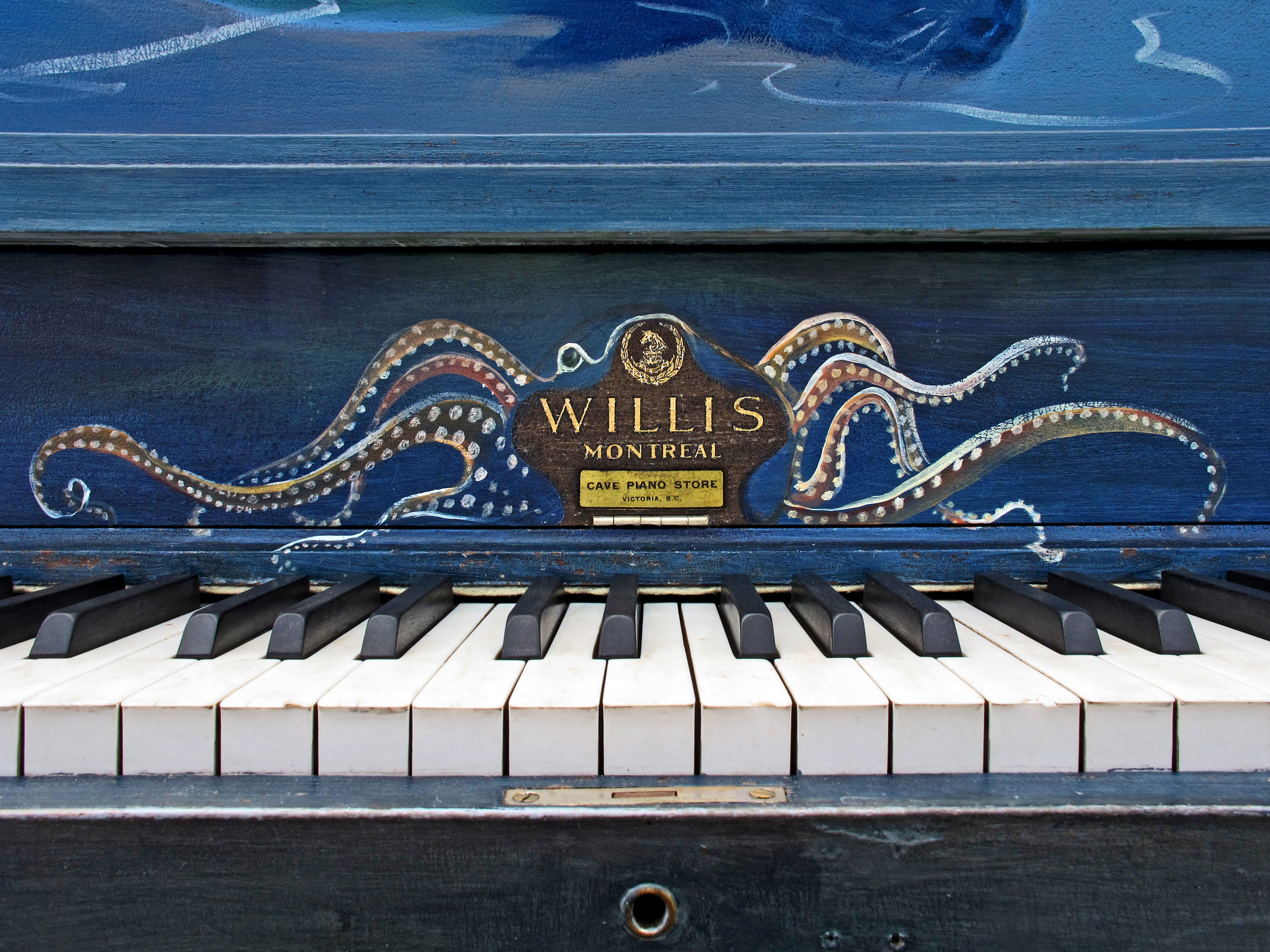
The piano was angled so that the left side of the pianist faced McNeill Bay. It had a retractable cover over the keyboard (called a “fall”) that immediately drew my fingers. I lifted it and pushed it back into its little garage, letting all 88 keys gleam in the sun. Just for kicks, I played a few chords. It sounded a little like the rinky-tink piano in the pizza joint my parents, sister and I patronized in the early 1970s.
The piano and others painted by local artists were deployed around Oak Bay as part of the Arts Alive program. This one at McNeill Bay was painted by Gillian Redwood, and she calls it “The Salish Sea.”
What charmed me was its funky, imperfect sound… not that it wasn’t in tune… but I felt that as if I lifted the top of the piano and peered in, I’d see its insides heaving with sound, its old hammers compressed and grooved from hitting the strings millions of times, the strings themselves fatigued with age, the tuning pins loosening. Pianos have something like 10,000 parts with mysterious names—unless you’re a piano tuner: flanged shanks, whippins, damper works, a soundboard with a crown.
Like many kids, I took piano lessons, and I was not a successful student. Trying to get ten fingers and a foot pedal going was tremendously hard for me. My little sister was the far better pianist, and her daughter is quite good, too. But I love pianos—their sounds and their feel, the magic that emanates from them by superb players.
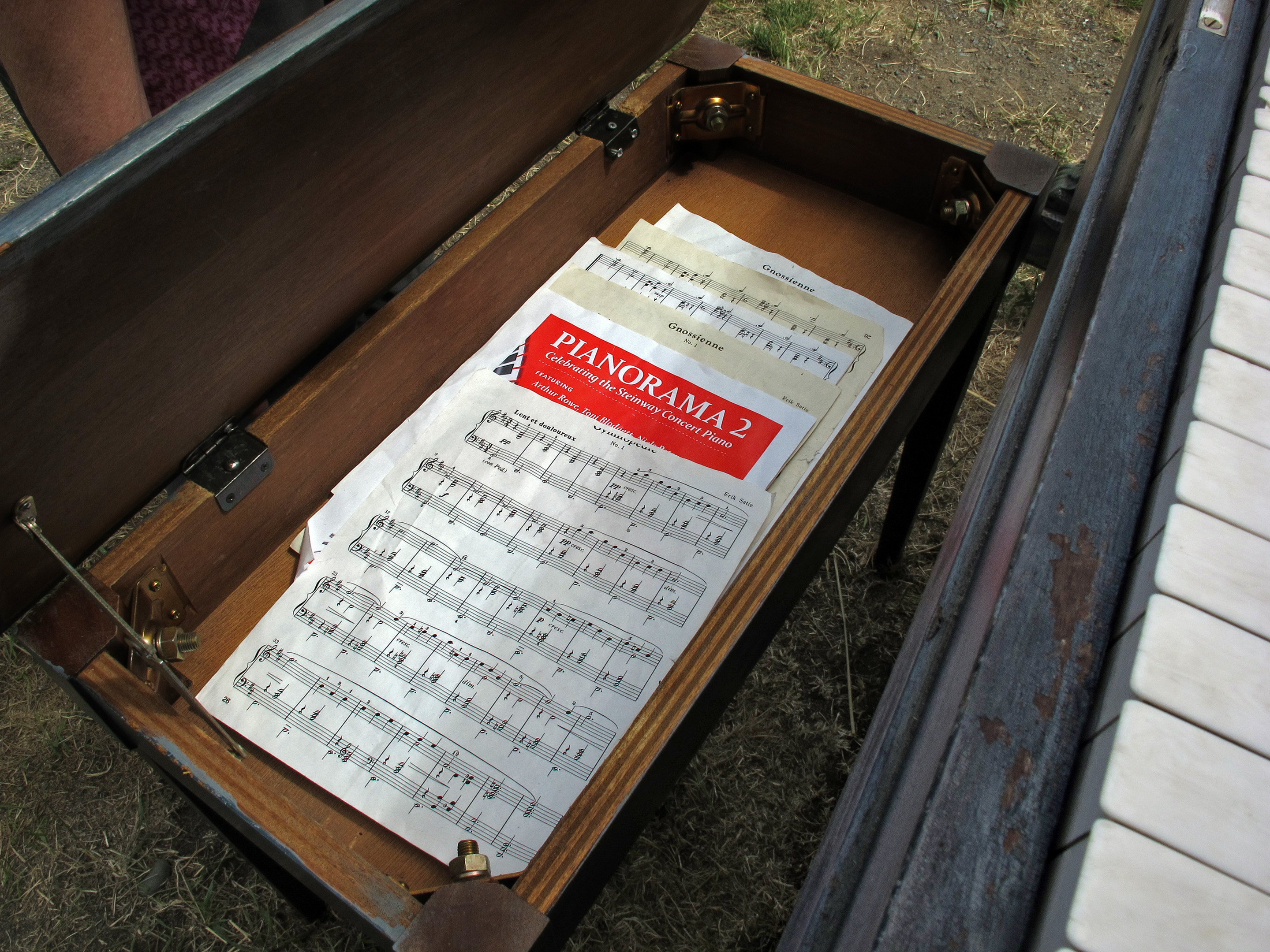
And this one, the Salish Sea, had a piano bench with a lid that lifted. Of course, I lifted it. Inside were several pieces of sheet music. I chose one I had at one time played: Gymnopédie No. I by Eric Satie. It’s the first of three related pieces—all in 3/4 time, deliberately slow and deceptively simple… if you remember how to read music. I had to think about it and figure out some of the notes.
Sheet music to play!
But I sat at the keyboard six months after Dick had been brought back to life and figured out, slowly, painfully, how to play a bit of Gymnopédie No. I at McNeill Bay, grateful for the chance to do so with him there taking photos.
During the pandemic, on some of the darkest, locked-down days, I sat at my computer at home and emailed and Zoomed and talked on the phone with my students. So many of them were upset, depressed, scared—as we all were. The world—the whole world, all at once—was undergoing a tremendous shift, a gigantic ending to life as we knew it. And the new life had not yet been born. It was a time of mourning and sadness, and I kept saying to students who bemoaned the shifting tide, “It won’t always be like this.”
More than one student wailed, “How do you know that?”
And I fell back on the Buddhist teachings of impermanence—nothing ever stays the same; change is constant. We don’t always like it, but it’s going to happen, I told them. Everything vanishes. The pandemic reminded us of that in a huge way. The Buddhists say that we should learn not to cling to “the way things are.” It’s not the fact that everything is born and lives and dies that causes suffering; it’s our reaction to it. The idea is that loss can be a catalyst for a profound shift in perception and a transformation of our sense of self. Being willing to let go, to release our attachments (whether to people or animals we love, to jobs or where we live), and hold on loosely helps us be less anxious about impermanence.
Working my way through Gymnopédie No. I.
But that doesn’t mean it’s fun to live through or that we don’t grieve what we’ve lost. We do; we should. We must endure the hard stuff that knocks the wind out of us, over and over in our lives. “It might have been otherwise” reminds me to say thank you, out loud, again and again for the experiences we’re given, no matter how difficult, how joyful, how fleeting. I often think of my friend Antsy McClain’s sweet song “Scrapbook,” in which he sings: “I won’t cry because it’s over. I’ll smile because it was.”
Today—after a three-year absence during which we so longed to return here—we drove the ocean road and there, at the corner of Beach and Oliver streets, sat the piano. It was covered with a custom, piano-shaped tarp. We drove by and noticed it, then a little ways down the road, I asked Dick to turn around and go back to the piano. I wanted to see it again.
So we did. We gently pulled up the tarp to reveal Gillian Redwood’s sea creatures across the front of the upper panel. To our surprise, the piano had a lock on the fall. The keys were not accessible. It appeared to have been locked for the season. Ah, well.
I later looked online about Oak Bay’s pop-up painted pianos. They’re out in summer through early September, the site said, and well, it is early September.
So I couldn’t play the piano this time, but we admired it and patted it a bit, then carefully replaced the tarp. Releasing the attachment to playing it, I was able to leave only a tiny bit disappointed. The music is still there in the piano. And it’s in me.
And I resolved, as I did three years ago, when I get home, to dig out my copy of Gymnopédie No. I, find a piano (or on the marimba in my living room) and relearn that song—a reminder of gratitude for life’s unexpected delights scattered between the difficult and sometimes downright awful, life-changing moments… like finding a piano by the sea, waiting.
“The Salish Sea” piano sitting at McNeill Bay, Oak Bay, Victoria, B.C.
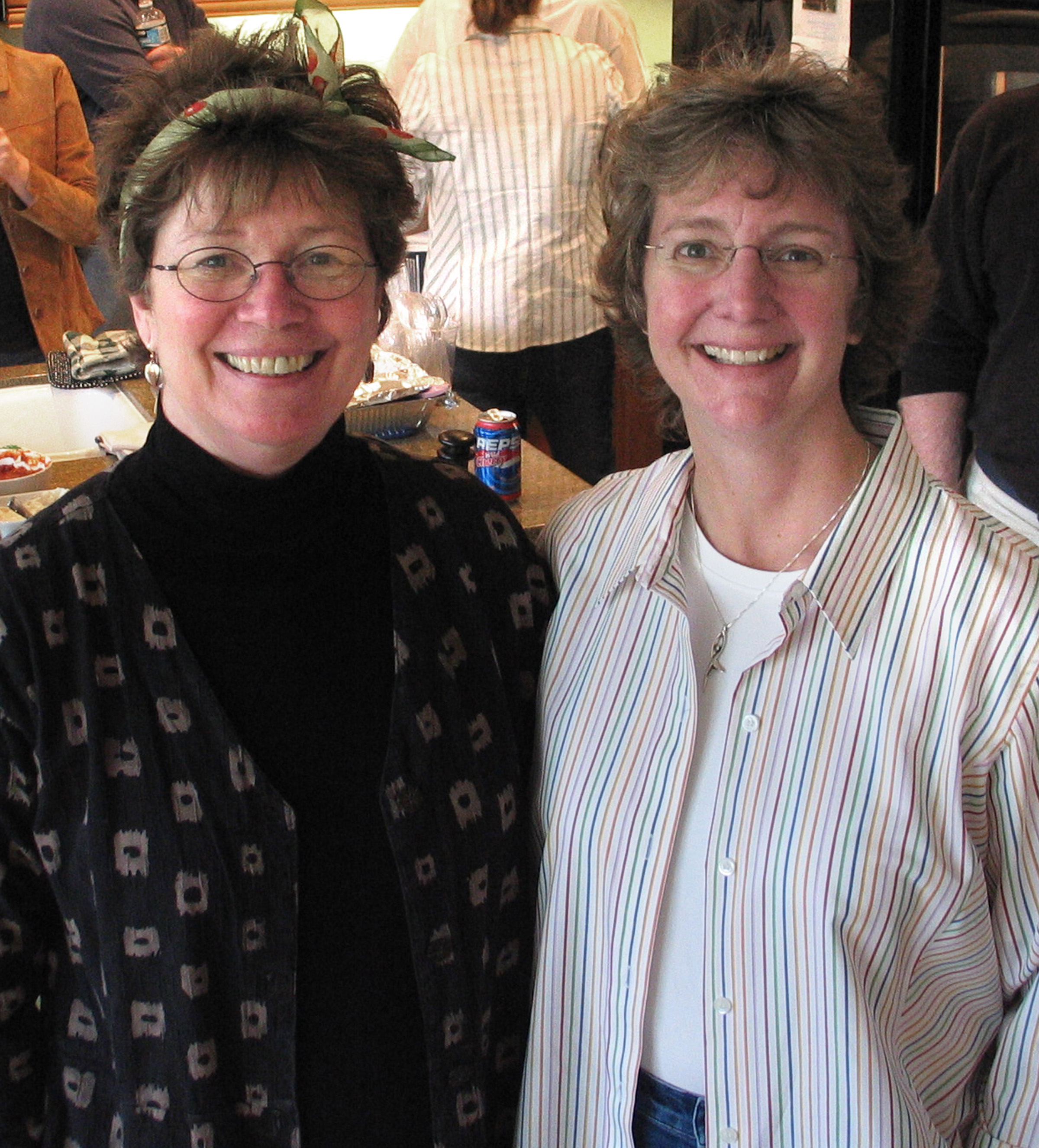
Georgann Turner’s version of meeting Jan (written in 2012):
Twenty-four years ago I was getting ready to go do a “junior year” abroad. I was no spring chicken. I was thirty-six years old, a divorced mother of an eleven-year-old and a thirteen-year-old, and a bit of a late bloomer.
I LOVED school. I had just won a journalism scholarship and received it at a meeting held at a journalism teacher’s house. Her name was Jan Haag. And she was younger than me. We liked each other, so she kept inviting me to her classes even though I wasn’t enrolled in any of them. She knew everyone. She was also the editor of a magazine and her guest speakers were amazing—Pulitzer Prize winners, famous photographers, name brand journalists. So we got to know each other a bit.
And one day I said to her, “I’m going to Wales. If you write to me, I’ll be your best friend.” And I think she thought I meant it.
As it turned out, she had a trip planned to Wales around the same time that I was planning to arrive there. I’d only been there less than a week when she popped in for a visit. After that, we started writing to each other. And the first letter I got from Jan was an epiphany—I heard her voice. I understood what writing was—it was putting your voice on the page. So when I wrote to her, I put my voice on the page. And it was easy. I just talked to her.
•••
Jan’s memory of this:
The way I recall it, Georgann suggested that we write to each other when I was visiting her in Swansea, Wales. She and Jena had just arrived and were living a two-story flat where, to get heat, they had to insert coins in a device on the wall like the kind you might find on washers and dryers in laundromats. I was traveling through the UK by train in the fall of 1988 with my best childhood buddy, Sue Lester, when Georgann said (in Sue’s presence), “If you write to me, I’ll be your best friend.”
I may have this wrong about when and where she delivered that memorable line. But we both remembered her saying it because it was typically Georgann funny, and it made us both laugh.
Sue didn’t take offense, as I recall, and, because I liked Georgann, too, I came home and went to the post office to buy single sheets of thin blue paper called Aerogrammes. I think they cost about 50 cents, which was pricy postage at the time. You wrote on one side of it, then folded it into a rectangle, licked and sealed the gummed sides, and addressed it to your friend overseas.
We sent our Aerogrammes back and forth across the pond for the two years that Georgann was in Swansea finishing her bachelor’s degree in politics. I still have her letters—her voice bounding off the page, a fine writer, though she didn’t know that yet—great treasures that they are. They chart the beginnings of our friendship that neither of us imagined would last for the rest of her life—as she adopted three children, first as a single parent and later with her second husband, Ron—more than 30 years of love.



 Güd wrtr