
Every single one of us makes a difference every day —
it is up to us as to the kind of difference we make.
—Dr. Jane Goodall, scientist, conservationist, humanitarian
(April 3, 1934–Oct. 1, 2025)
•••
Listen: Fungus gets a bad rap.
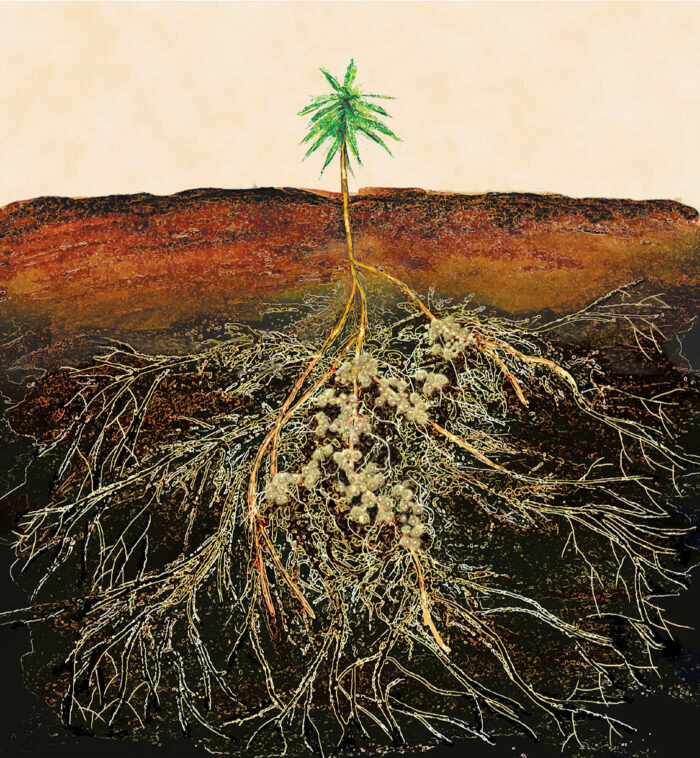
But the intricate microscopic web
of lacy white filaments
that make up mycorrhizal fungi—
in existence for 400 million
years—have learned to live
in symbiosis with 90% of all
species on the planet. You can
sometimes spot them branching
atop soil, their delicate strands
entwined like fingers. But they
typically connect plants via
underground fungal highways—
the wood wide web, scientists joke—
sharing nutrients and sending
warning signals about drought
or pest attacks. Literally feeding
each other, these invisible helpers
bolster the resilience of every
living thing around them as they
sink carbon into soil, fostering growth,
as they’ve done since the planet
was young. We topside beings
might take a lesson from such
supportive soil engineers that work
in harmony, in the dark, in silence,
forming mutually beneficial relationships
with species quite unlike themselves—
earthworms, fruit trees, tomatoes,
peppers, squash, flowers, grasses—
unseen threads that weave communities
together, never asking anything
of those they so peacefully serve.
•••
I learned about mycorrhizal (migh-koh-RIGH-zuhl) fungi decades ago from Dr. Jane Goodall when I heard her speak in San Francisco at the California Academy of Sciences where the Jane Goodall Institute was located. The notion that unseen networks can feed living things, in this case by a particular kind of fungi, was one of her metaphors for cooperation so desperately needed by humans. From chimpanzees to fungi and so much more, Dr. Goodall’s vast knowledge and gentle wisdom changed the world for the better in so many ways.




 Güd wrtr