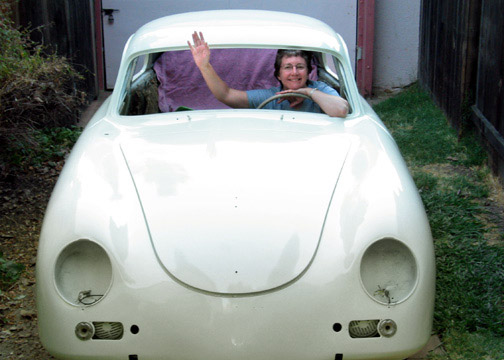
Because you asked me to post this photo of the two of us all mortarboard-ed up like so many of the students we nurtured to graduations,
many of whom didn’t think they’d make it—some of whom we didn’t think would make it—
I’m reminded of your 19-year-old grin, one of my first community college journalism students who set the standard for so many to come.
Eager and talented, great-hearted, hard working and funny, you were someone whose progress I wanted to follow, and who, for reasons I’ve never quite understood but so appreciate,
has wanted to hang out with me all these years— watching you flourish as a teacher, loving that same grin as you talk with such joy about your students, past and present,
as I still talk about mine.
•••
(for Neil Reilly, with love and thanks for nearly 40 years of friendship)
Where it has been doing its California imitation for months, pretending that this green place, too, is the land of little rain.
Where the unirrigated roadside has gone golden, like much of my home state.
Where the climate flip-flops like a just-landed salmon, the migrating ones heading upstream that bears snag like candy out of rivers from here to Alaska.
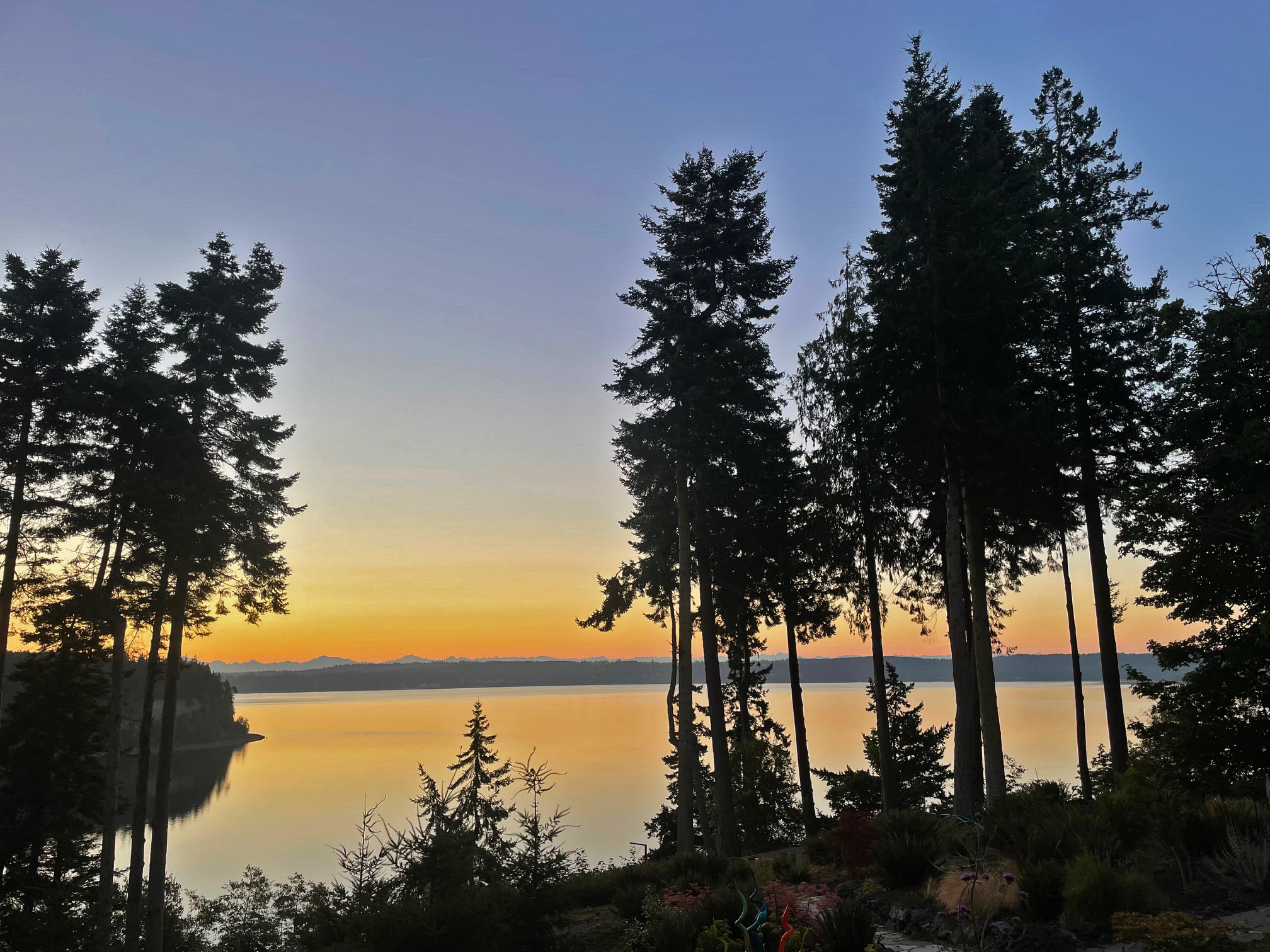
Where I awoke, looking out the window to a gray veil swaddling the canal in—can that be?—actual rain.
All morning I watched the curtain slowly rise to the arrowed tops of the pines, then higher.
Where the gray lightened into a question of sun, though, of course, it was up there, making its daily arc across the sky, the one we humans think of as ours,
as if we’re the fixed ones being revolved around, as if we have the answers.
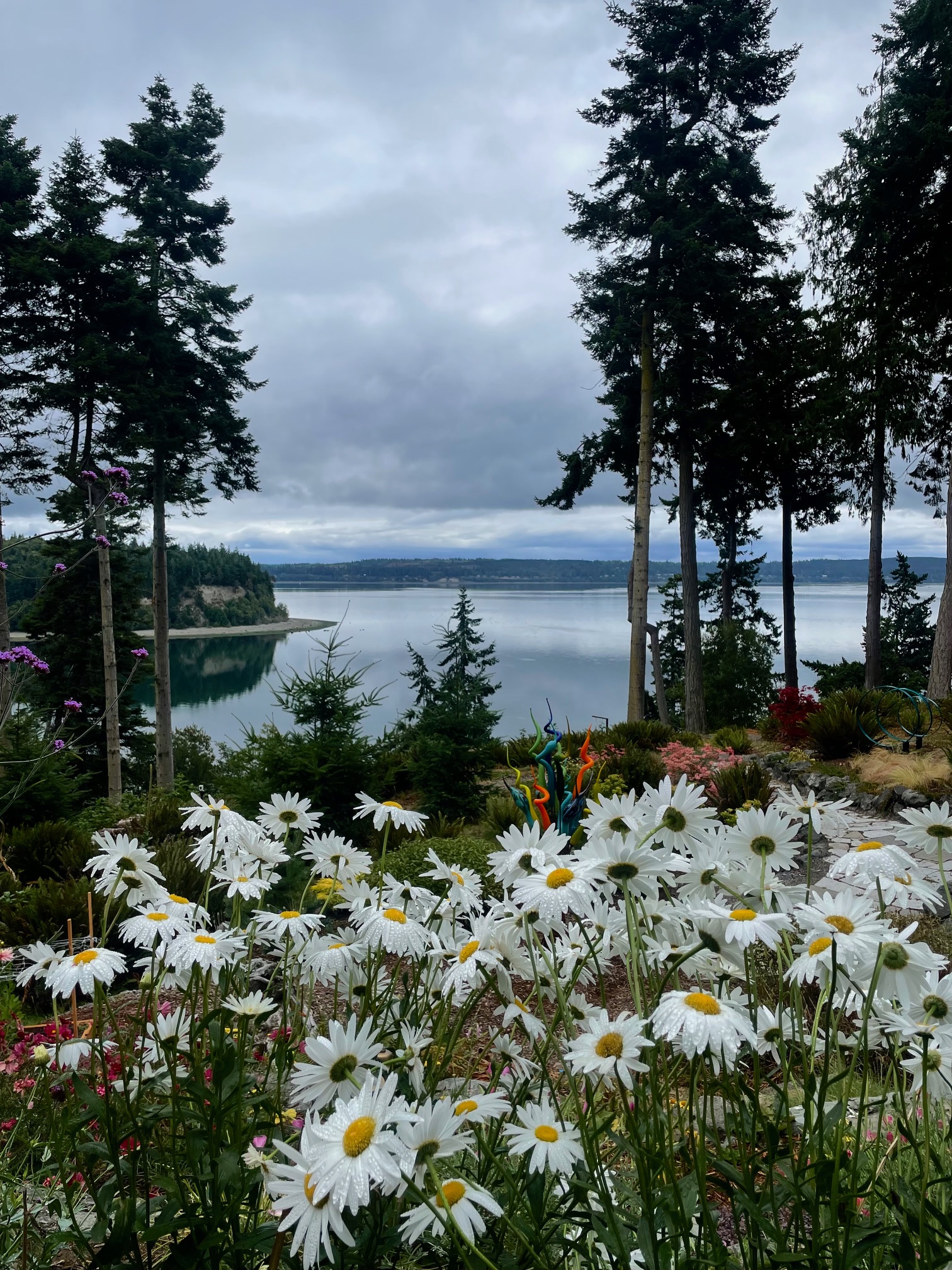
Daisies under cloudy skies looking toward the Hood Canal, Port Ludlow, Washington / Photo: Jan Haag
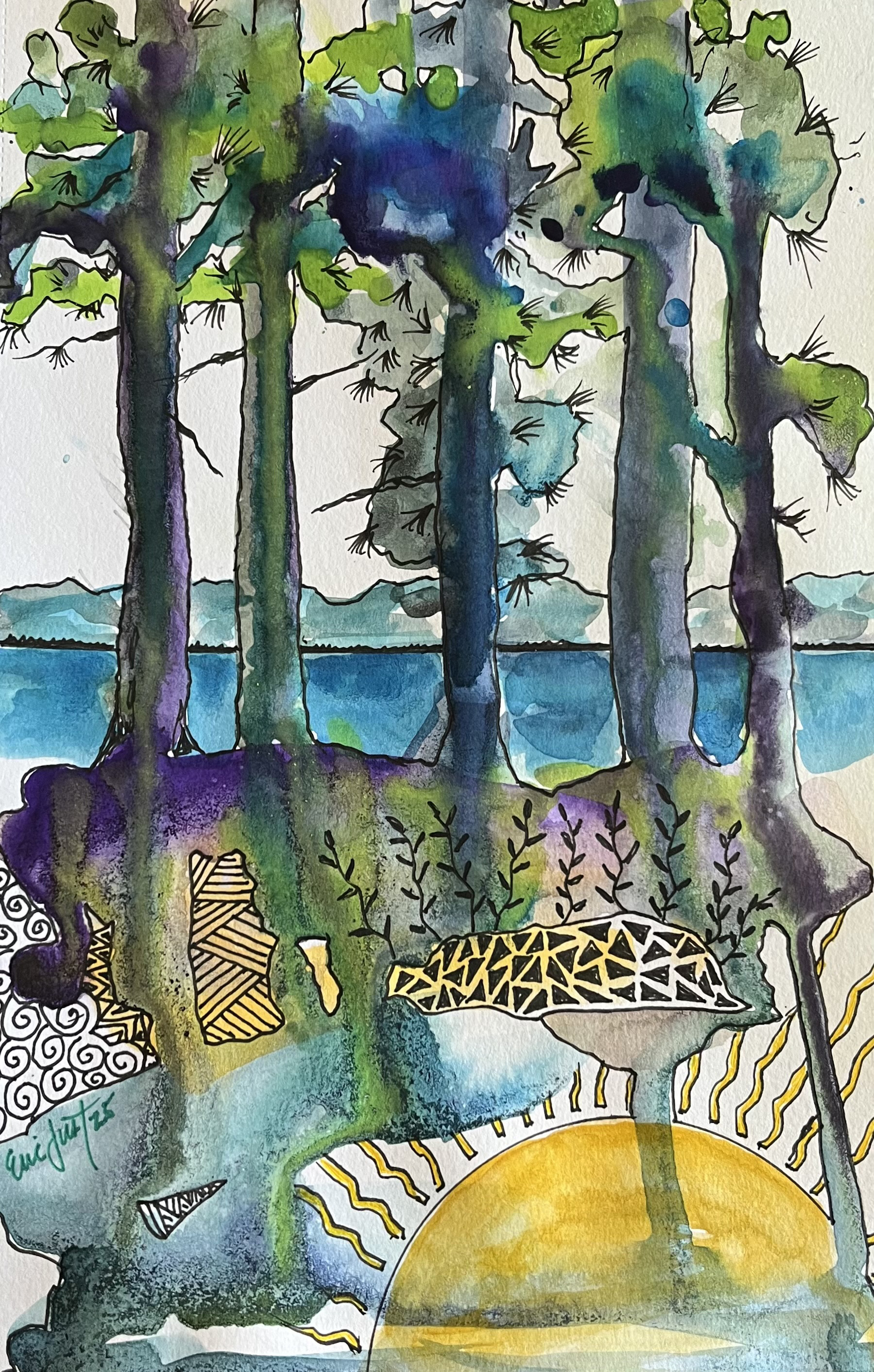
The tree is saying things, in words before words. It says: Sun and water are questions endlessly worth answering. It says: A good answer must be reinvented many times, from scratch. It says: There are more ways to branch than any cedar pencil will ever find. It says: Listen. There’s something you need to hear.
(for the crew of Southwest flight 3361, Sacramento to Seattle, July 24, 2025)
We rise in this soaring silver bird, aiming upupup, to a height humans cannot achieve unless encased in such a magnificent beast.
And I think of the early years of air travel, when attendants were young nurses, Julie told me, she who flew for American in 1940, employed to serve drinks, offer a pillow and care for those woozy from flying so high.
All of 10,000 feet in those days, she said, maybe 14, cabins not yet pressurized, all souls aboard feeling the weight of their lungs struggling for air, cruising at altitudes higher than terrestrial bodies were designed for.
Still, in these times of even higher flight that make it easier on passengers and crew, the gyroscope in my brain always tilts on takeoff, liquid sloshing from hemisphere to hemisphere, until the trap door at the top of my skull opens, and I rise,
I rise with the lift of weightless feathers burnished bronze, as I imagine I will one day when I no longer need this body and these great silver wings to fly.







 Güd wrtr