My sister and I had an antique inherited from who knows where— a heavy metal, fat rubber-tired model that our father refurbished, a slowpoke model that made it harder for me, the klutzy one, to fall off, but a form of transport that neither of us clamored to ride.
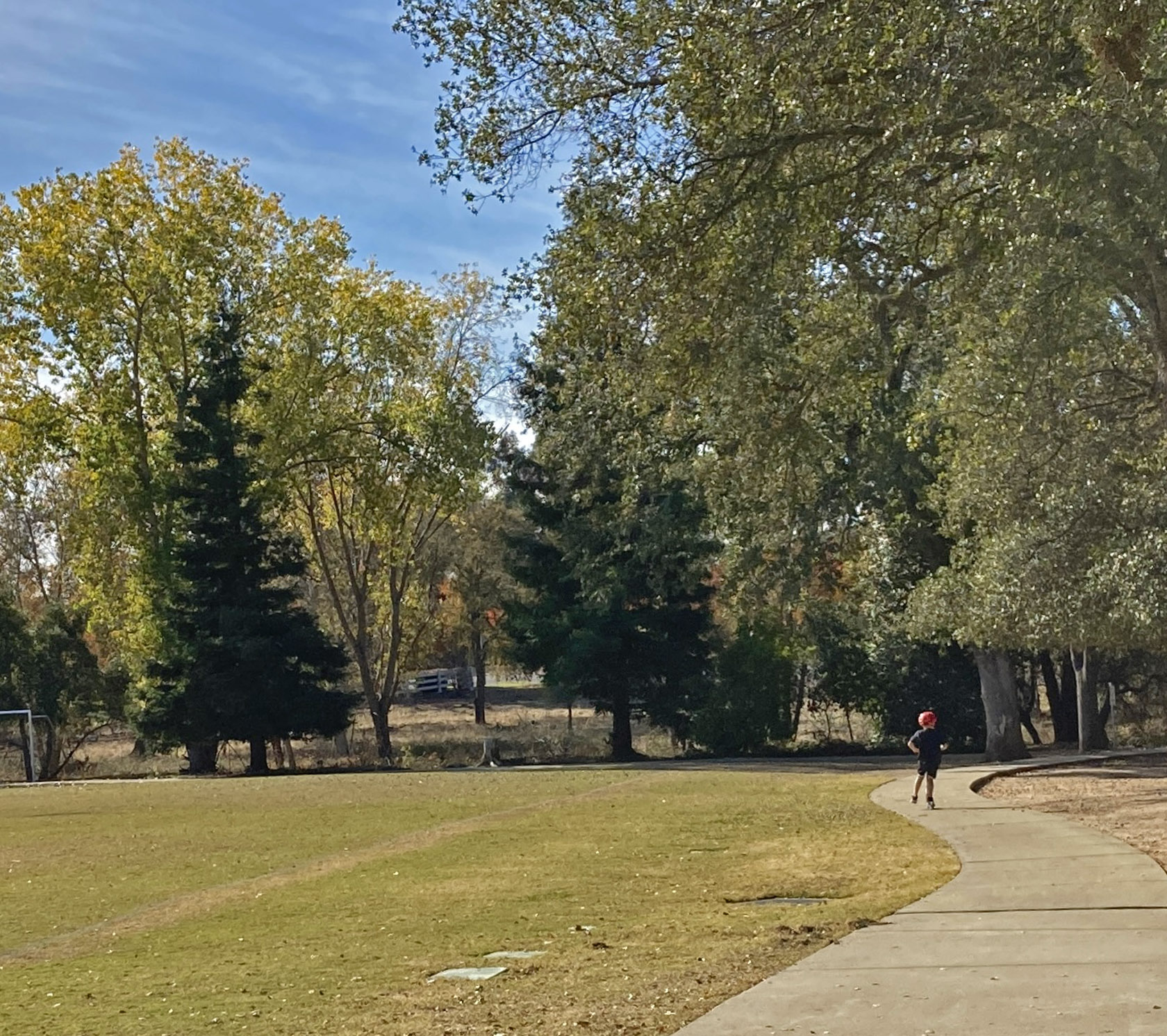
Today, an ample half century after we looked for wheels to carry us around our rural neighborhood, I walked a sidewalk that circled two playing fields a couple miles away, hearing a rhythmic clack-clack-clack behind me, something coming lickety-split, (clearly not another sneaker’d senior walker), so I pulled right and paused to see what could possibly—
and there, in red helmet and on a sharp silver scooter rocketed my nephew— or a kid who looked just like him when he was about ten—rolling over sidewalk sections and laying down a percussive beat I could’ve marched to.
The kid zoomed by, saying nothing, focused on what lay ahead, and I could not stop the word or the laugh that burst from me—Kevin!—because it went by that fast for me, his childhood and his sister’s, both of them now grownup teachers, one of them still scootering, both soaring into their futures, always looking forward, wind in their faces, advancing onward, Aunt Jan happily applauding from behind.
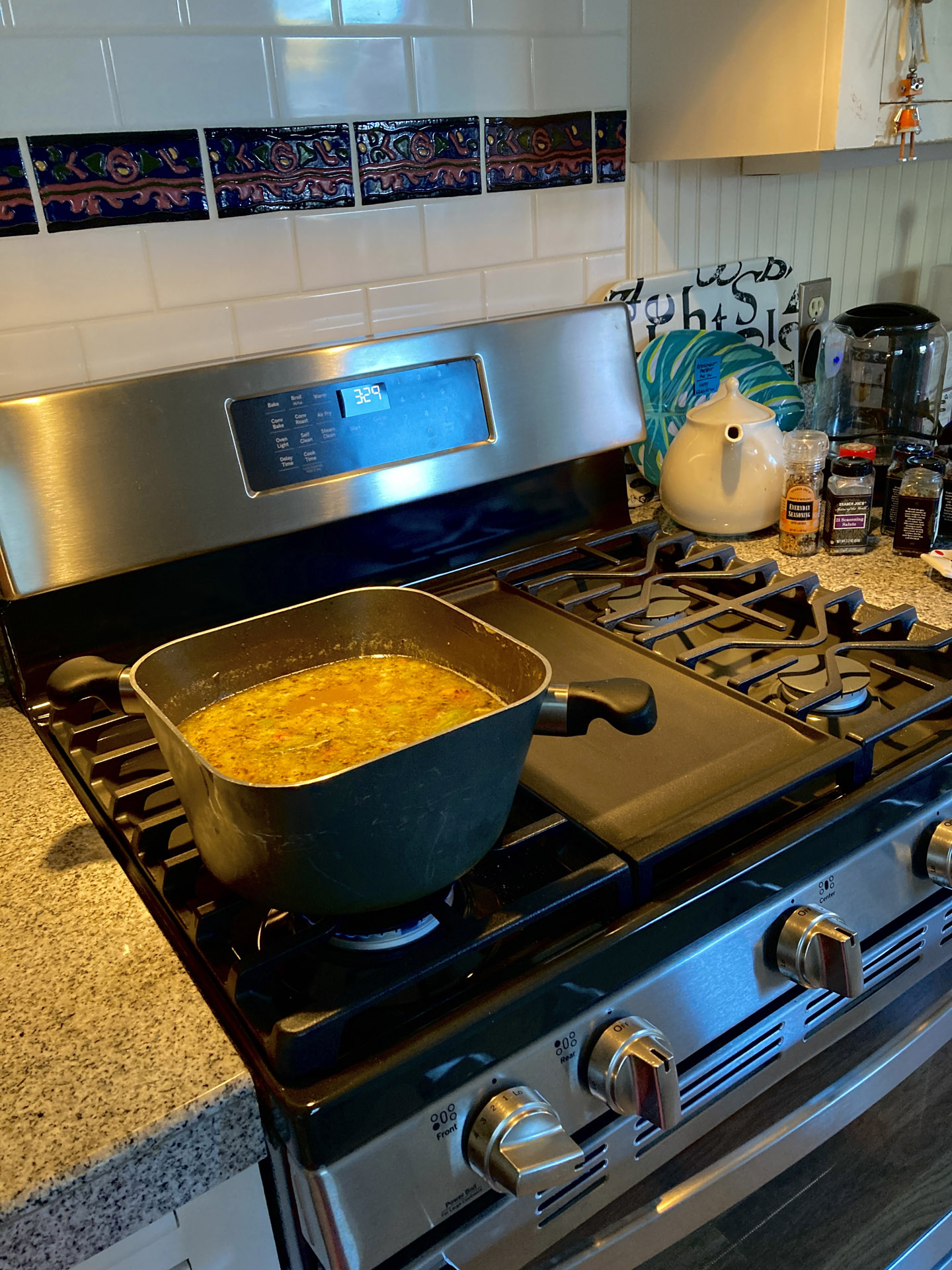
the brand new stove— first thing I’ve cooked on it— the gas burner igniting, all systems go, like the rocket called Artemis, this week heading for the moon,
she the goddess of the hunt, of wild animals, of vegetation like the peas I add to the holy trinity of soup—onions, carrots and celery—along with chicken
stock and smashed garlic and ham chunks, bringing it to a boil, the flame cradling the craft entering the lunar sphere of influence, beaming back a photo of us on
our tiny blue marble suspended in the blackness of space, a view not seen from a human-rated spacecraft for a half century on Apollo’s final mission.
Now as his twin sister nears the moon, 239,000 miles from the place we call home, I lower the flame to simmer, to settle into humble soup.
As a kid, reading about writers starving in a garret, I never thought I’d have one—not starving… I could not write without snacks at hand—hummus and veggies, peanut butter cups, sunflower cookies—but a garret.
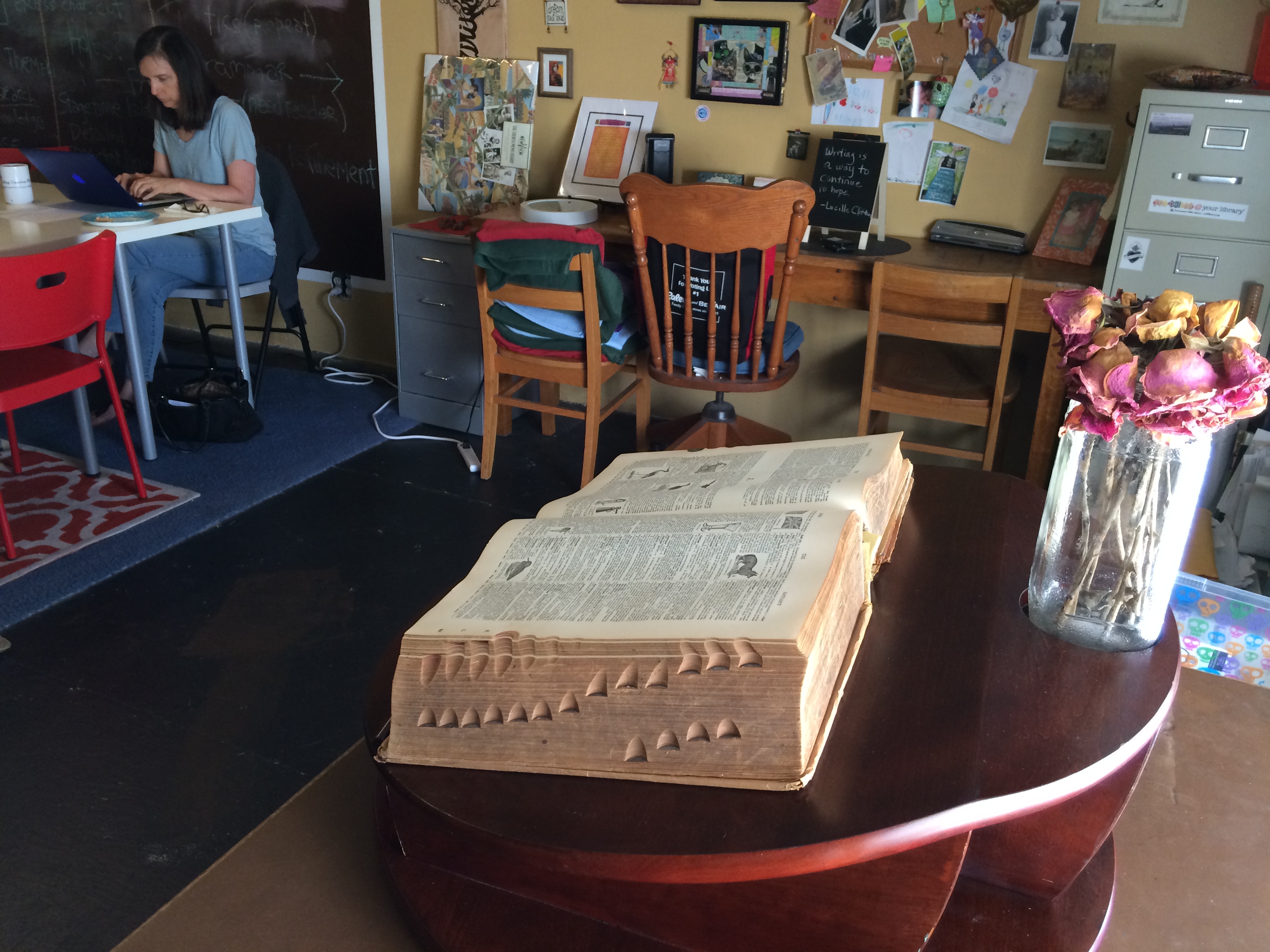
Now here I am with three others writing up a storm on a sunny day in a chilly attic room up too many stairs with the two space heaters going. I’d plug in the third, but then we’d risk blowing a fuse, as my father used to say, though I’m pretty sure we’re long past fuses in this place—
a long-ago auto body shop converted into an arts complex for theater and poetry and my little upstairs-no-elevator-space— where writers gather to chat and eat (we all write better fed, I’ve learned) and yes, write their art out.
I used to call it the garret, but the friend who lured me here, having set it up for writers and later turned it over to me— she called it the loft, which sounds cozier.
But on a November morning the week before Thanksgiving, it feels garret-like after I climb the stairs, unlock the door, turn on the light and pull open the drapes. I hurry to plug in the space heaters, set the kettle to boiling for tea, arrange snacks,
a bit giddy, always, expectant, ready for people to arrive, to write what needs to be written, and be delighted, when we read aloud, by the warm gift of unexpected magic.
The loft with Krista Minard writing and our late friend Heide Juchnik’s circa 1899 dictionary standing by.
As in leasing again? As in letting go? All of that as I pull clothes out of drawers, off hangers, wearables I should have donated years ago when they were semi-fashionable, when someone might have happily picked up the midi dress that now looks so hippie-ish… though everything does come round again in fashion, in politics.
But I won’t go there. The only blues and reds I want now are the ones in my hands, each garment a time-and-place memory of where it was purchased or worn—the favorite pants with the just-right pockets that accompanied me to a hundred college classes, held my office keys and a pen or two; the silky blouse I wore the night I read my first poetry book to generous listeners.
But I cannot yet bear to give up the fleecy robe long past its prime, no longer worn but tucked away—one of his last gifts to me—nor a couple of his aloha shirts, and oh, the gray sport coat he wore when we married in a friend’s living room 39 years ago next month.
It has been more than two decades now of the gradual letting go—releasing his long black denim duster and grownup cowboy boots, echoes of his ranching childhood, packing up his mother’s sturdy stoneware with galloping horses and bronc riders for his nephew.
Just a week ago I gave away his last anchor of a toolbox to my nephew-in-law, a fellow my fellow would have liked who teaches others about engines and cars like the old body of the 1958 Porsche, my husband’s final project, at last relinquished to a friend who will one day complete its restoration.
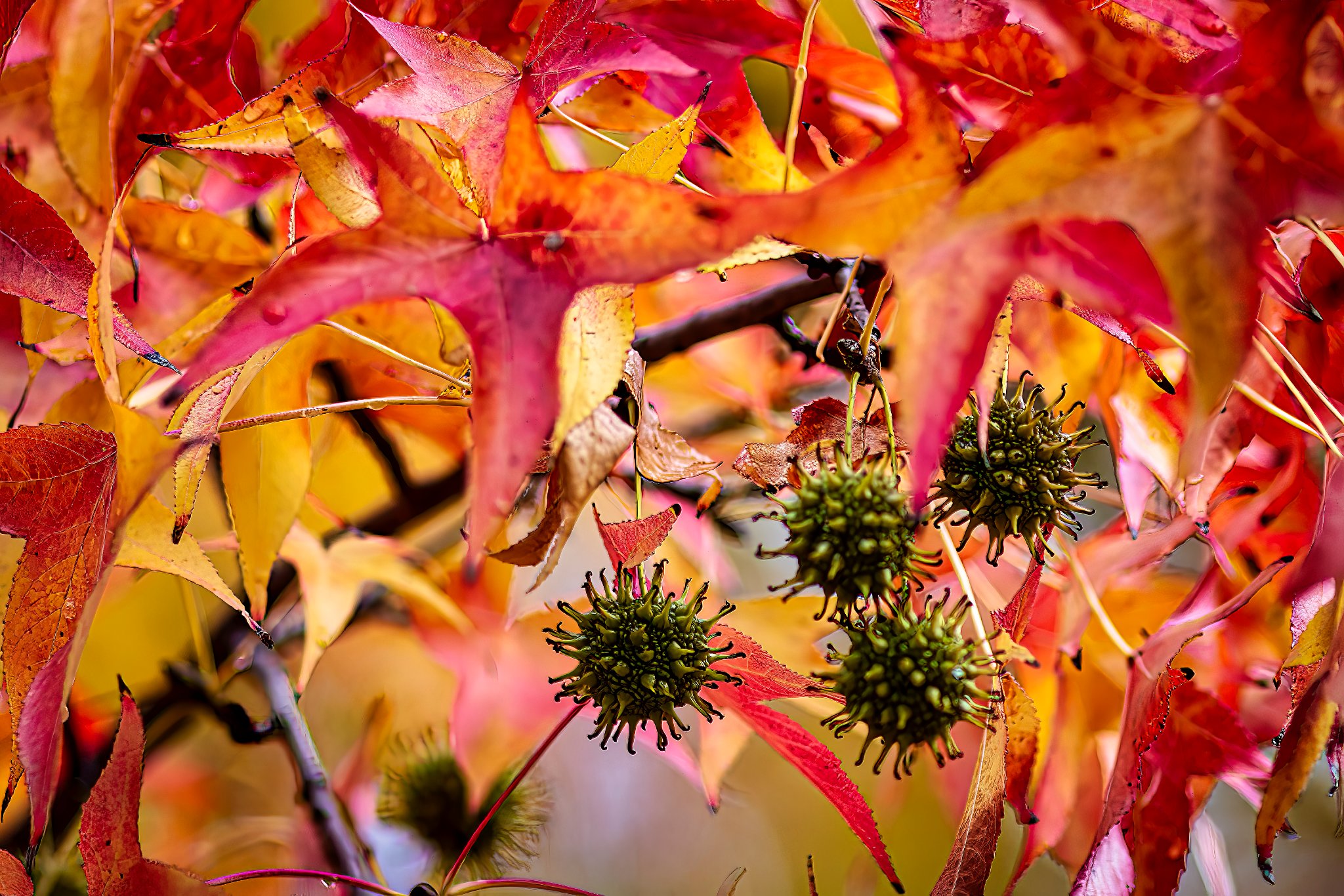
Release comes as hands fold fabric into bags bound for the thrift store, in looking outside to note the trees shedding their summer clothes, too, though I have never known if it’s the tree that lets go of the leaves or the leaves that allow themselves to release and flutter softly, having no idea where they’ll land, and finding, once they’re there, that in the end it doesn’t matter.
I suppose I should thank the dirty rats who decided to nest behind the fancy range that came to live with me 18 years ago when I had the kitchen remodeled,
and I definitely need to thank Leaman the handyman, who has pulled out more than one appliance as, over too many years, we’ve tried to flush the rats that didn’t succumb to traps,
because last week he and I found the fetid mess behind the fancy range and called it a total loss, the rats having eating so much casing off the wiring and making a cozy nest that it was, Leaman said, a potential electrical fire in the making.
And thanks to all this I have learned that you can order a new stove/oven online and have the glistening appliance speedily delivered to a house with at least one rat who refuses to leave.
I saw her about a week ago—the one I imagine is a her—when I turned on the kitchen light in the middle of the night, her ample brown body scurrying off the counter by the back door where the little violets and heart-shaped cacti live. And though I’ve set traps, made sure the house is locked up tight, hired two different pest companies to get her (I pray it’s just one her) without success, she has eluded us all.
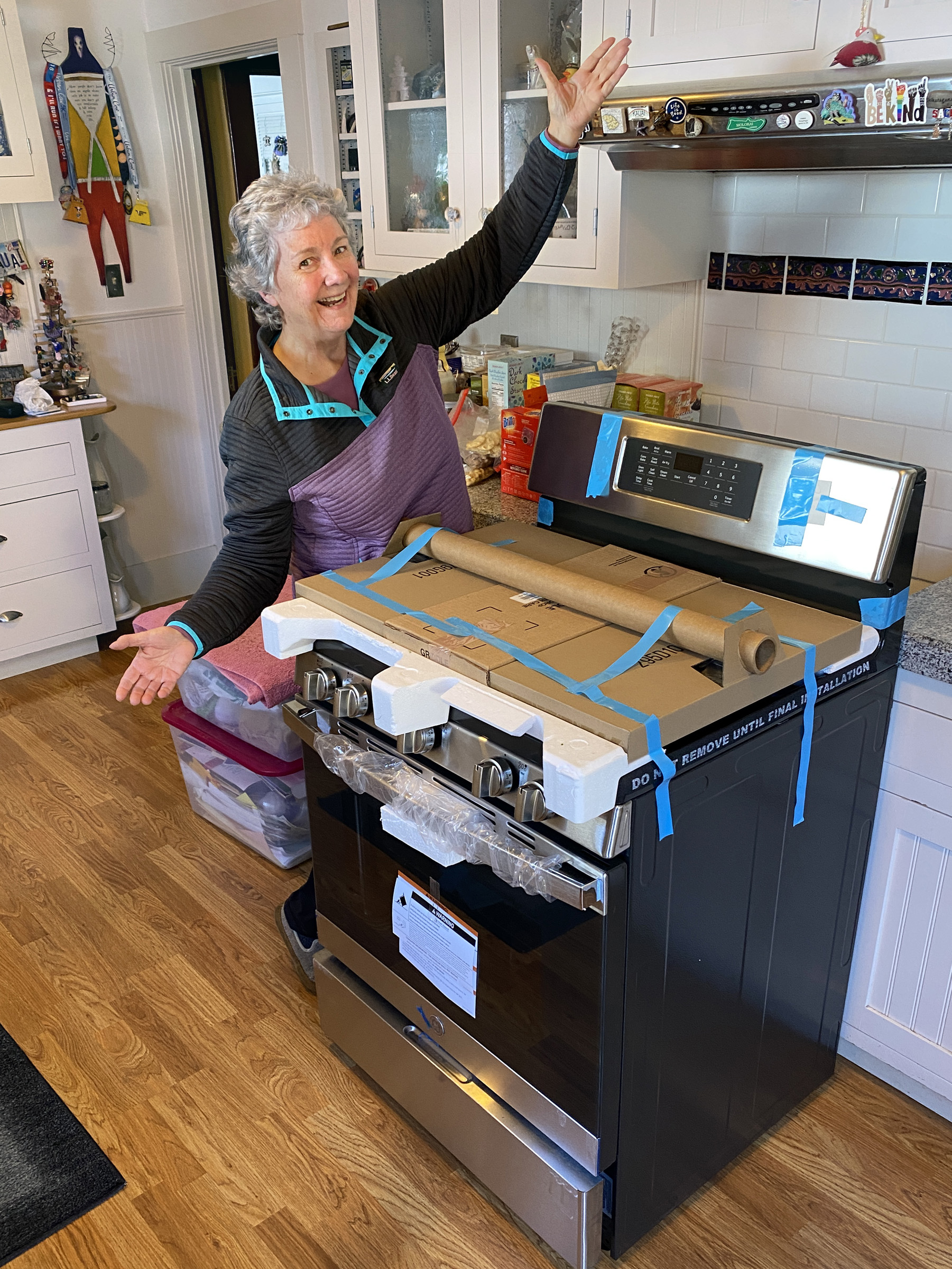
Yesterday a new range arrived, and Leaman returned to install it, gleaming and gorgeous, an hour after Jason the pest guy came with additional traps—one of which now hides under the new stove.
I wonder where she and (God help me) others like her might still hide in this old house, sneaky rodentia stealthily avoiding two cats and me.
If she’d only learn to use a litterbox, I’ve said for far too long, and quit destroying appliances, I might not mind her snacking on cat food bits I try to sweep up daily. I might even consider her a pet, think about giving her a name.
Me and the new GE / Photo by Dick Schmidt (of course)
I loved you the first time I saw you And I always will love you, Marie —Randy Newman, “Marie”
(for Rose)
I can feel the slide into the booth in a restaurant in a building no longer there where my poet friend Marie and I would sit and eat and talk,
the time she said, a bit shyly, “I’m in love,” and my eyebrows lifted, and before I could ask, she said, “You may know her,” and my poet friend blushed, closer than anyone knew to the end,
but she and her Rose loved with such fierce sweetness in the time that was left that every time she talked about her Rose, I saw her thinning, brittle self soften.
And not many years later when I came to the house to deliver the first copy of her book of poems, the two of them sat together on the sofa, holding the slender volume with such reverence,
Marie, who could barely see, much less read, by then, Rose and I blinking hard, before we two realized that Marie’s final gift to each of us before she vanished was us.
And now Rose and I meet for dinners, friends who talk and laugh and, without fail, speak of her at least once—
we always will love you, Marie—
and when we hug goodbye in the parking lot, we’re hugging her, too, grateful for her, thanking her for the gift.
Chris Thile sings “Marie,” one of my favorite renditions: