Departures and arrivals

SM SacMag cover+Krista

I am pleased to say that a story I wrote about Dick’s heart adventure has been published in the June issue of Sacramento Magazine. (You can read the whole story below, if you like.)

It’s an odd enough sensation to be sitting in a hospital in Honolulu, watching your beloved sleep most of the time following the cardiac arrest that felled him and his literal jolt back to life. It gets a bit more odd when, after posting about said event on social media, you get an email from a longtime friend/magazine editrix. “Can you write a version of this story for me?” asked Krista Minard. Some people might be annoyed by such a request at a time like that. But give me a good writing assignment, one with a powerful narrative and interesting details (which this one certainly was), and I’m on it.

Not only did working on the bare bones of what became “Departures and Arrivals” occupy me in the freezing hospital as we waited to learn about further tests and eventual surgery for Dick, it also reminded me (former journalist that I am) that there’s nothing as good as taking notes as things happen… as opposed to trying to remember details later. So, with Dick’s permission to tell the story as it unfolded, I did.
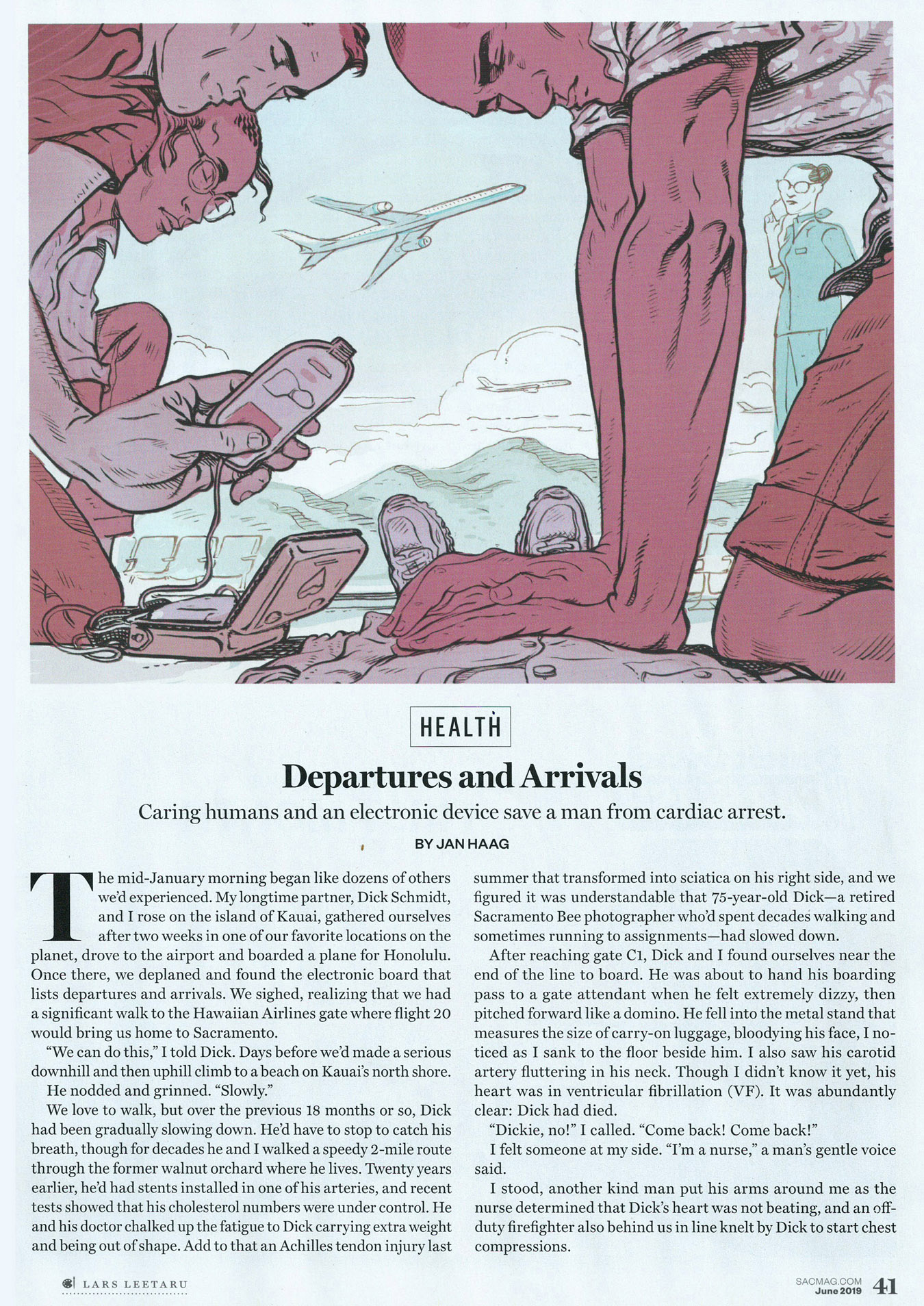
SM SacMag page1

The illustration for the story by artist Lars Leetaru is impressively close to the actual scene.

I don’t know if Krista knew how much she was saving me at the time, giving me something else to occupy my mind, but that assignment focused me and produced posts for this website (click on “Dick’s Great Heart Adventure” on the home page, if you haven’t read those posts and would like to). It was a win-win for us both.

I love to tell the story about how I was the editor of Sacramento Magazine in the early 1990s (the last century!) when Krista Hendricks, as she was then, was hired as our receptionist—a job she didn’t particularly want and, she’ll tell you, she wasn’t particularly good at. She wanted to be a writer for the magazine, but we weren’t hiring writers and she was, frankly, at that point not ready for such a job. But she let me know she wanted to write, and offered to type up copy for me (in those days we took stories written on paper and typed them into our little Macintosh computers). On her own time she also typed  transcripts of interviews I did with journalists for my master’s thesis. And she proved to be a fine feature writer. I gave her as many assignments as she wanted, and Krista became a huge asset to Sac Mag, as we call it.

She left us to work for the Neighbors section of The Sacramento Bee for a time, but came back to do freelance writing for us at the magazine, and eventually she was hired as a writer/editor. And after I left the magazine—and another editor was named and she left the magazine—they wisely made Krista the editor, a job she’s held for more than 25 years.

Every now and then she asks me to write something for her, or I volunteer an essay, which has been a lovely thing for us and the magazine, too. The travel pieces I’ve done about Hawaii have included Dick’s photos, too. Krista’s a terrific copy editor, and I rely on her to edit some of my longer projects, including all three books published by River Rock Books, the tiny press I run with my good friend and colleague Katie McCleary. In fact, here’s Krista and her daughter Anna at our most recent River Rock Books debut of Ed Cole’s novel, “The Love Story of Pinky Wollerman.” (You can get an electronic version of the book here. There should be printed copies available soon on Amazon, too.)

Thanks, Krista, for once again putting Dick and me in print… and online!
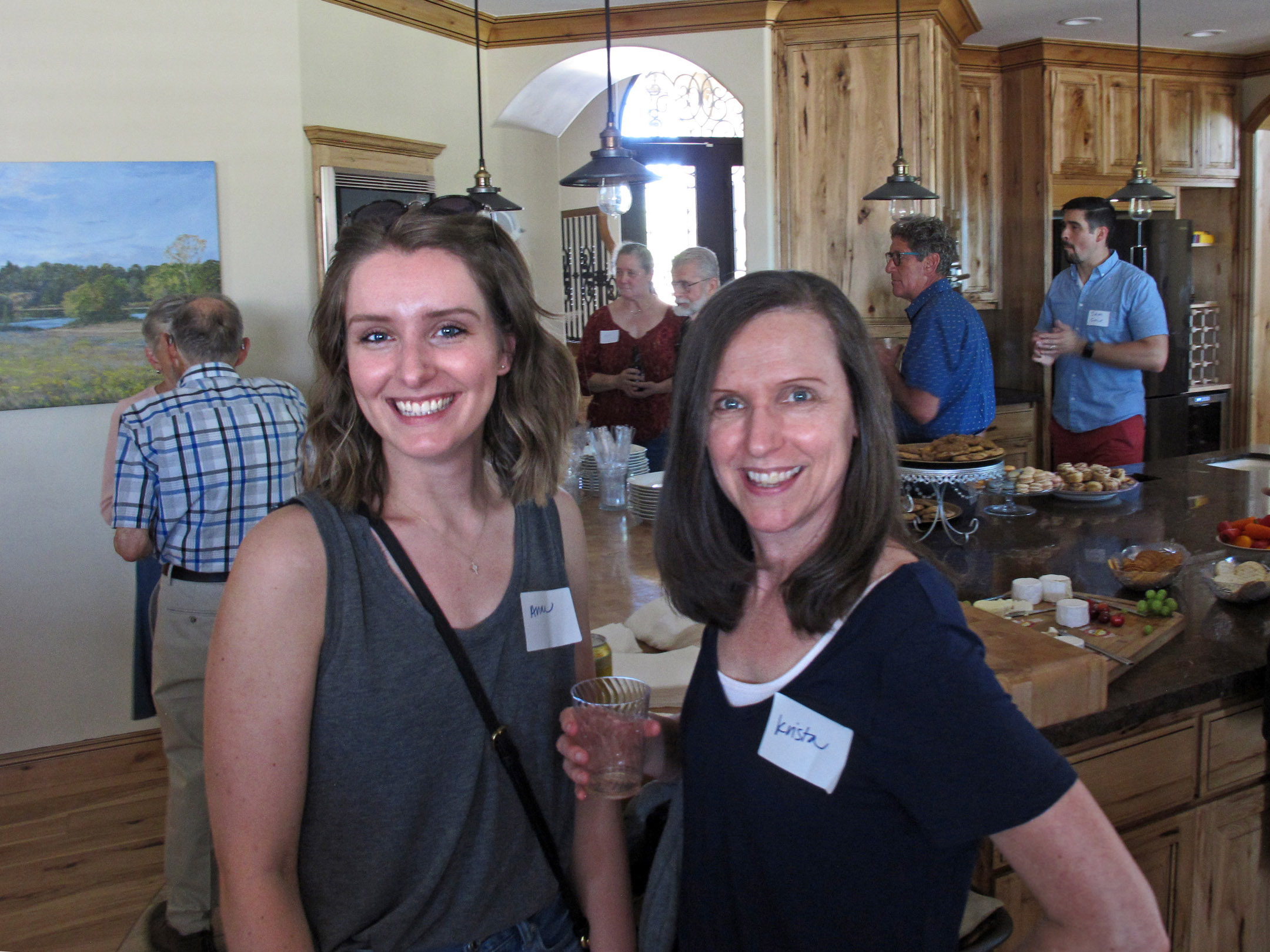
•es7499-Anna Krista Minard

(from left) Anna and Krista Minard

Departures and Arrivals:
Caring humans and an electronic device save a man from cardiac arrest

Jan Haag

The mid-January morning began like dozens of others we’d experienced. My longtime partner Dick Schmidt and I rose on the island of Kauai, gathered ourselves after two weeks in one of our favorite locations on the planet, drove to the airport and boarded a plane for Honolulu. Once there, we deplaned and found the electronic board that lists departures and arrivals. We sighed, realizing that we had a significant walk to the Hawaiian Airlines gate where flight 20 would bring us home to Sacramento.

“We can do this,” I told Dick. Days before we’d made a serious downhill and then uphill climb to a beach on Kauai’s north shore.

He nodded and grinned. “Slowly.”

We love to walk, but over the previous 18 months or so, Dick had been gradually slowing down. He’d have to stop to catch his breath, though for decades he and I walked a speedy two-mile route through the former walnut orchard where he lives. Twenty years earlier he’d had stents installed in one of his arteries, and recent tests showed that his cholesterol numbers were under control. He and his doctor chalked up the fatigue to Dick carrying extra weight and being out of shape. Add to that an Achilles tendon injury last summer that transformed into sciatica on his right side, and we figured it was understandable that 75-year-old Dick—a retired Sacramento Bee photographer who’d spent decades walking and sometimes running to assignments—had slowed down.

After reaching gate C1, Dick and I found ourselves near the end of the line to board. He was about to hand his boarding pass to a gate attendant when he felt extremely dizzy, then pitched forward like a domino. He fell into the metal stand that measures the size of carry-on luggage, bloodying his face, I noticed as I sank to the floor beside him. I also saw his carotid artery fluttering in his neck. Though I didn’t know it yet, his heart was in ventricular fibrillation (VF). It was abundantly clear: Dick had died.

“Dickie, no!” I called. “Come back! Come back!”

I felt someone at my side. “I’m a nurse,” a man’s gentle voice said.

I stood, another kind man put his arms around me as the nurse determined that Dick’s heart was not beating, and an off-duty firefighter also behind us in line knelt by Dick to start chest compressions.

Those people, we learned much later, turned out to be Claudio Alvarado, a UC Davis Medical Center pediatrics emergency nurse, and Salesi Maumau, a Honolulu firefighter who grew up in Elk Grove. Unbeknownst to me, a Hawaiian Airlines employee called 911 and another, Chris Ohta, ran for an AED, an automated external defibrillator, which are placed 90 seconds apart in Hawaiian airports, close enough to run to them. When Chris returned, Claudio and Salesi applied the AED pads, Chris called “clear!” and the machine delivered a massive shock into Dick’s chest.

It turns out that AEDs don’t restart hearts; in fact, they stop VF so the heart can have a chance to restart itself. When the AED is on and attached to someone, it analyzes the heart every two minutes and will only deliver another shock if it detects VF or certain types of ventricular tachycardia (VT). In Dick’s case, one shock brought him back among the living.

All this took about three minutes.

By then EMS personnel were with us, and our two angels whose names we didn’t yet know boarded the plane, having saved the life of a stranger. Within minutes Dick was loaded onto a gurney, having no idea what happened to him. Once in the ambulance, on our way to the hospital, as I sat shaking in the front seat, I could hear him talking to the EMT in back, giving correct answers to questions.

I knew then that our lives had changed forever, thanks to the kindness and skills of strangers. What neither of us knew, however, was how many angels would emerge in the days and weeks to come to put our Humpty Dumpty back together again, how much aloha would be extended to us at every turn, how many times we would look at each other and say, “Wow.”

•••

More “wows” came that day and the ones that followed. After being transported to Kaiser Moanalua Medical Center—which happens to not only be the closest hospital to the airport but also our health care provider—Dick was tended to by a host of tender folks in the emergency department, all of whom wanted to hear the story. We told it again and again, scarcely believing it ourselves. No, Dick said, he didn’t see a white light or a tunnel. He felt dizzy and then felt nothing. He thought he’d merely fallen when he woke up and saw people around him.

Dick’s split lip was sutured by the first of many medical people, all of whom appeared like white-coated angels. He was moved into a single-bed room, and nurses found me a pull-out chair/bed. We settled in as best we could with what we had in our backpacks because our luggage had flown home without us. The room was cold, but everyone who walked in—including those with warm blankets—brought a generous, concerned heart.

The day after Dick’s comeback, a miracle arrived in the form of two women, Pamela Foster, RN, and Jenna Tanigawa, from the AED Institute in Honolulu. The Institute places AEDs all over Hawaii and offers free training to people of all ages about how to use the devices. Pamela, a former ER nurse, came to Hawaii after being invited by Chief Martinez Jacobs, the state Department of Transportation airport fire chief, to create an AED program in Hawaiian airports. They told us that AEDs have been used on 69 people at 13 airports in Hawaii since August 2006. Fifty of those people arrived at hospitals with their hearts beating.

Dick is the 50th survivor, Pamela told us. That’s a significant number for him. Last year was the 50th anniversary of Dick’s first trip to Hawaii, which is, of course, the 50th state.

Another wow.

I sat in the hospital for days, watching Dick sleep a lot, as he gradually grew stronger. Tests revealed that his heart was repairable—not with more stents, as we had hoped, but with a coronary artery bypass graft (CABG). The doctors wanted him to recover for at least a week before surgery. I missed the first two weeks of a new semester, but my colleagues at Sacramento City College pitched in to find subs to cover my classes. Friends on island brought and sent us things to keep us warm and comfortable in the hospital.

My little chair/bed was parked by a big window in Dick’s room out of which I could see the Moanalua valley for which the hospital is named. Big eucalyptus trees with their peeling bark revealed striking greens and luscious browns. Every time I’d turn my eyes away from the window to see Dick propped up in bed, sleeping, I’d think, “He’s here. He’s here.”

•••

On the sixth day after Dick’s cardiac arrest, 5 a.m., Blood Guy knocks softly on the door. He’s the third person who’s walked in our room in the last half hour, which they don’t do in the better hotels, and this is one expensive place to stay. The first two took Dick’s vitals, weighed him, pulling off all the blankets in this too-chilly room, removing the pillows, one of them holding the heavy heart monitor. They call out a number in kilos, which means nothing to us, then replace his pillows and blankets, which I will have to get up to adjust because I’ve learned how he likes them.

When Blood Guy knocks and enters with his kit with small vials wearing different colored plastic caps and his rubber band tourniquet and, of course, his stabber, like everyone else who shows up in room 329, he’s curious about our story.

Barely awake, Dick gives him the 30-second version.

“Sorry your vacation ended this way,” says Blood Guy, then adds, as most people do, “but it’s good, I guess, that you didn’t get on the plane or that you weren’t in flight. I’m sure you want to get home, though.”

“Glad to be here,” Dick says, and he means it.

And even at this early hour, my eyes and brain fuzzy, I detect the sincerity, the layers of meaning in those four words. And so softly that Blood Guy—as he prepares to turn off the light and let us try to sleep—can’t hear, I say, “Me, too. Me, too.”

•••

One day I got a text from Pamela Foster saying that Camron Calloway wanted to visit. Camron, it turned out, was the man who put his arms around me in the airport as his partner Claudio Alvarado, the UC Davis nurse behind us in line, worked on Dick. Camron is a courier for the Air Force who flies in and out of Honolulu regularly, and he appeared in his light-colored camos to tell us their story.

Camron likes to board planes early, which he’s entitled to do as an active-duty military man, but Claudio was lagging behind that day. Camron was annoyed at his partner, and by the time he and Claudio made it to gate C1, they found themselves near the end of the boarding line. Behind us.

“They shouldn’t have even been there,” Foster told us the day after Dick’s cardiac arrest. “They should have already been on the plane.”

But two weeks later there was Camron in Dick’s hospital room, pulling out his smart phone and getting Claudio via Facetime so the four of us could laugh and wipe our eyes as we got to meet two of our on-the-spot angels.

There was the wow of Dr. Nicholas Dang, the cardio-thoracic surgeon who, because Dick asked, ungloved during surgery to shoot video on his iPhone of Dick’s unrepaired, beating heart. He did the triple bypass and then shot Dick’s repaired, “snappy” heart, as Dr. Dang called it. Two days after surgery Dr. Dang and I stood at Dick’s ICU bedside, all of us watching the videos, marveling at the difference: How many of us get to see our own hearts in action?

So many angels appeared. One of our favorite doctors, Diana Kim, who followed Dick from beginning to end, stopped by almost daily. Erin and Jamie, two visiting nurses, followed us from the regular floor to the ICU after Dick’s surgery. Erin, we joked, literally gave Dick time when she found a clock for his ICU room that didn’t have one. That clock turned out to be a metaphor for our experience: From the moment of his cardiac arrest, everyone we came in contact with gave Dick more time on the planet.

There was the wow of two of Dick’s longtime friends, Cora Johnson and Connie Raub, flying from their homes in Nevada and Colorado, respectively, to spend another two weeks caring for Dick after I needed to return home to teach. We rented online a house in Pearl City from someone we didn’t know who turned out to be a retired Kaiser psychiatrist and her husband. We later learned that they took that house, which was for sale, off the market to rent to us.

Two days before I flew home, Jenna Tanigawa arrived at our rental house to not only train Cora, Connie and me in CPR and use of the AED but also to give us our own AED to take home. We hope never to have to use it on anyone, but, as Pamela Foster suggested, we will carry it in the car in case we see someone collapse as Dick did.

A couple of weeks later, after celebrating his 76th birthday, Dick, Cora and Connie flew back to Sacramento. Dozens of people gathered at the airport in Honolulu where all this began exactly one month earlier—fire and rescue personnel, including Fire Chief Jacobs, Pamela and Jenna, Salesi and his wife Eryn—for a Celebration of Life with speakers and leis and much aloha.

Salesi acknowledged Claudio’s role and downplayed his own, saying, “He took the lead. I just did compressions.”

Then Pamela stepped to the mic and said, “That’s what it’s all about.”

Indeed it is. Without someone performing CPR and someone else finding an AED to apply the shock if it is needed, statistically people who collapse in VF or VT have a low chance of survival. We learned that AEDs don’t hurt the victim; in fact, AEDs are the best and often only chance to bring someone back to life.

Dick continues to recover well, walking daily and increasing his mileage, not having to stop and catch his breath, regaining strength, self confidence and momentum. Everywhere we go, we look for AEDs. We think often of the instant and permanent community we became part of in Honolulu, people who live the definition of aloha, whom we can’t thank enough. They are our ohana now, as we are theirs—family bonded in the sweetest way by their kindness and care for a traveler in need—who, thanks to them, continues to move forward in the rest of his lifetime journey.
Posted in Uncategorized | 5 Comments

Stopped II

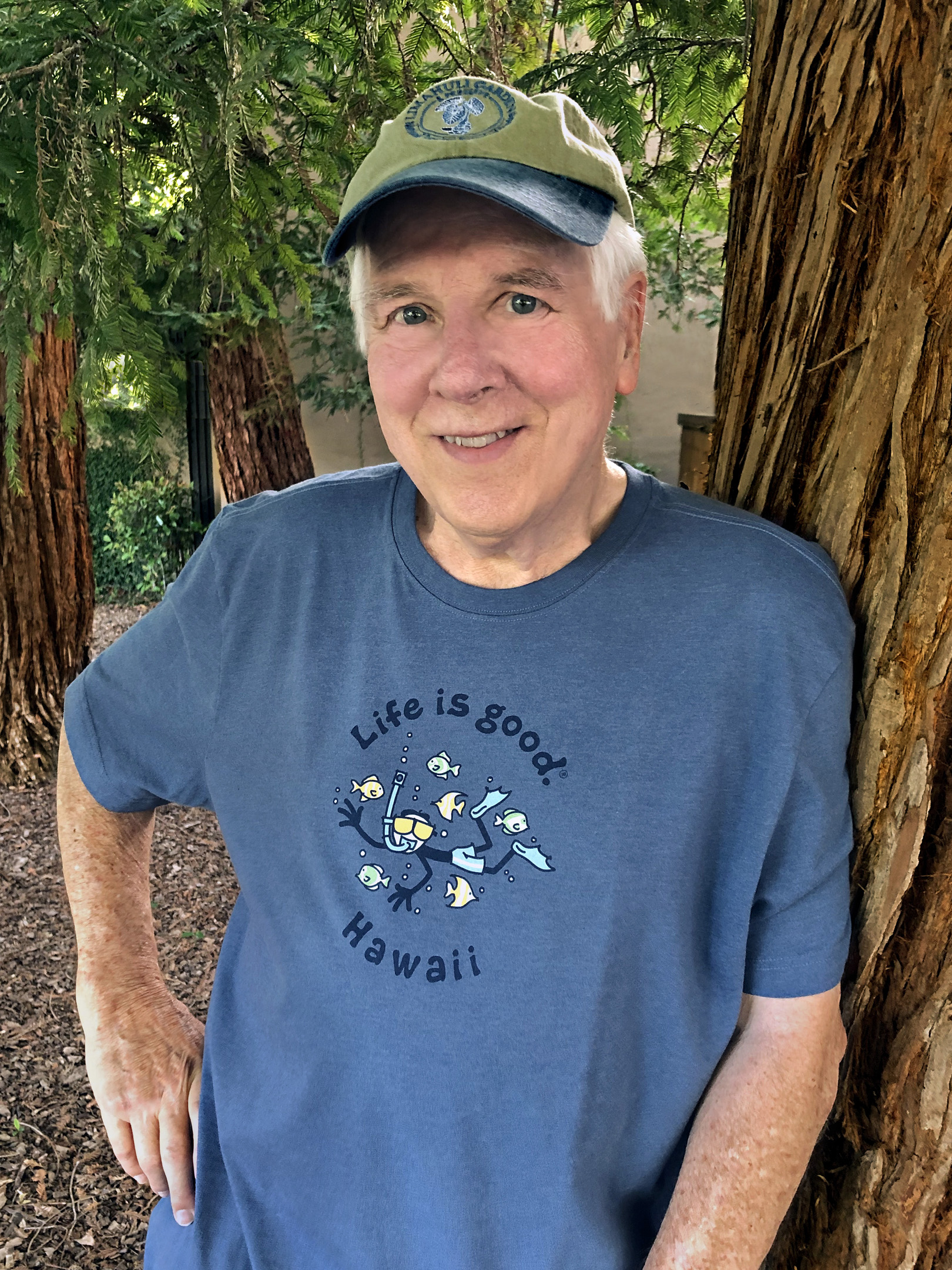
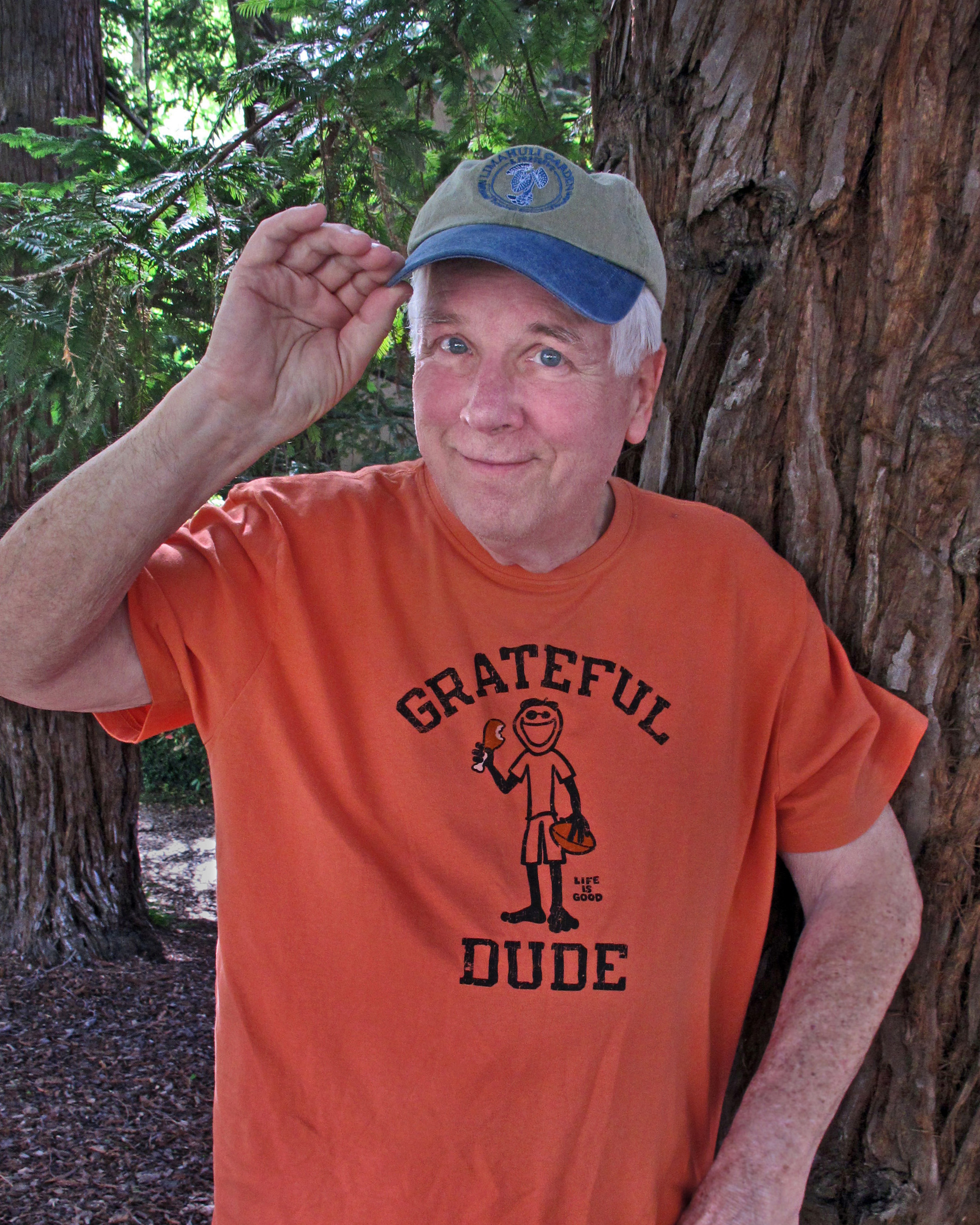
RDS LifeIsGood shirt from SueBear

Dick in one of the lovely Life Is Good shirts sent by our friend Sue-bear Butler.

I’m pleased that this poem I wrote about Dick has found a home in an online literary journal I’ve long admired—but you have to be 60 or older to submit. I am, and I did. And they accepted it!

Click here and scroll down to see my piece “Stopped” in the special “Life-Changing Moments” section of Persimmon Tree.


Posted in Uncategorized | 7 Comments

Hello, Faddah

haag-family-pix-orange REDO

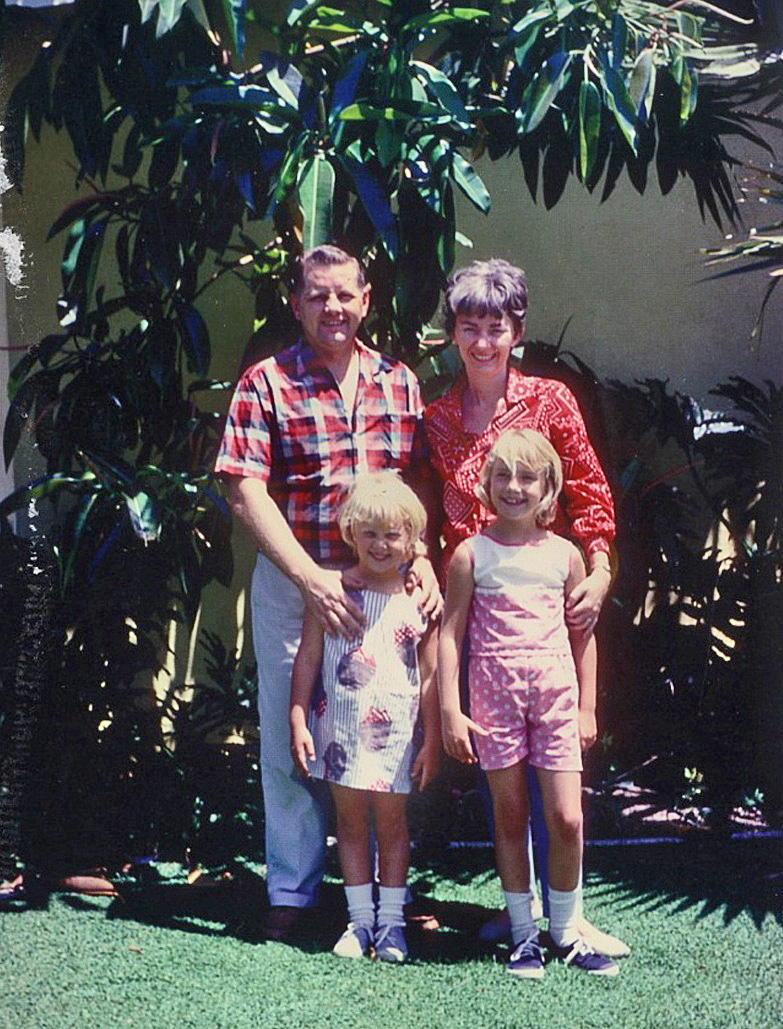
Roger and Darlene Haag with daughters (from left) Donna and Janis, Orange, California, circa 1965 (photo by Grandpa James Keeley)

Dear Dad,
our father, Roger, who art in heaven:

The little girls in this photo couldn’t understand
why you moved them far from a town called Orange
to a lake called Folsom, pulling them away from

sidewalks begging for roller skates and bikes,
away from Disneyland, to a rural life of poison oak
and no sidewalks and taking the bus to school

and summer heat the likes of which we’d never felt.
But you and Mom taught us to waterski on that lake,
and we learned to avoid the poison oak, spending

hours walking in the state park across the road,
plopped on our bellies in spring grass, surrounded
by wildflowers—blue dicks, shooting stars and lofty

lupine, the artistic Indian paintbrush, and oh,
the poppies that bobbed their happy heads at us,
a different kind of orange, welcoming us home.

Thank you and love,

Jan and Donna
Father’s Day 2019


In memory of Roger E. Haag

1930–2004

Posted in Uncategorized | 3 Comments

Swimming with ducks

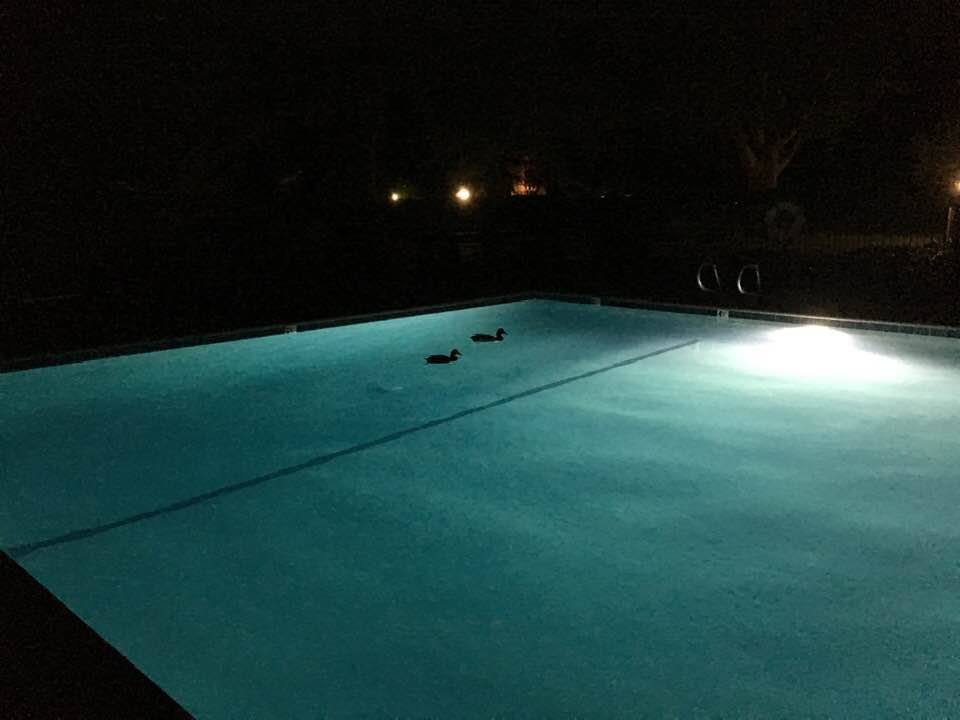
ducks in pool

Under a half slice of lemon moon
on a still-warm summer night,
I slip quietly into the water next
to the ladder—not walking down
the steps as usual.

I often have the pool to myself
in the sultry dark, but tonight
I share the water with two
professional swimmers who don’t
seem to mind a human sculling
and breast stroking her way
down their chlorinated pond.

Male and female, these mallards,
hovering over the top step in the shallow
end, keeping an eye on me as I stop
a respectful distance away—
no flip turns tonight. I forgo
the freestyle and opt for gentler
strokes, watch them bob silently
on my small wake.

Finished, I hoist myself up the ladder,
fetch my towel and watch as first
he, then she, swims down the middle
lane, then hangs a sharp left
to the same ladder, flapping
themselves up on the deck.

They waddle to the wading pool
and hop in, circling, one after the other,
doing their laps in the aqua pond
where I hope they will remain
undisturbed for as long as they
wish to swim.

Posted in Uncategorized | 4 Comments

Hawaii Jan rocks

Hawaii Jan migrated to California last week for some family milestones (graduations and the like) with her folks in El Dorado Hills. We hadn’t seen her since our unplanned stay on her island of Oahu in January. Among her many kindnesses to us, Jan found us a house to rent for a couple of weeks after Dick’s surgery. That house, though it was in chilly Pearl City, was a godsend—a pu’uhonua o honaunau (place of refuge) where Dick could rest and recover in the care of our dear friends Cora and Connie, who flew from in the mainland to perform that labor of love.

To distinguish us, Dick long ago dubbed us Hawaii Jan (though she, like me, was also born in California) and California Jan. Our fathers (born in the same summer of 1930 with pale blue eyes) both had jobs, houses and families in Long Beach when they took new jobs in the Sacramento area in the mid-’60s. Hawaii Jan’s dad, Skip Shuman, worked as a Sacramento Bee photographer with Dick.

It turned out on this visit that Hawaii Jan was on a tight schedule, and Dick and I were also a bit busy, so when our respective schedules didn’t mesh for a lunch date, we figured we’d see Jan another time. But Skip called Dick and said that it was pretty important that Dick see Jan this trip. I couldn’t join them, but Dick drove up to El Dorado Hills to meet them. And it turns out that Jan had something important to give Dick.

This:

es0060 rds life is good snorkel jake

This is a one-of-a-kind replica of the shirt that was cut off Dick when he collapsed in cardiac arrest Jan. 15. The shirt is no longer made, and a couple of our friends have been scouring websites looking for a replacement. But we figured, oh, well, we got Dick back—that’s most important. And more than one friend sent us other terrific Life Is Good shirts to help make up for the lost one.

But Hawaii Jan makes miracles happen. Not only did she find us a house to rent for two weeks on Oahu (very difficult to do on a week’s notice), but she also brought me, among many other comforts, a big pink sweatshirt blanket that warmed me up in our way-too-cold hospital room where I slept for 12 nights. And, while Dick was still in the hospital, Jan picked me up and took me to, of all places, a local bowling alley for some outstanding local diner food. And she drove me to see the rental house before we went there to help me figure out the area. She also came to Dick’s departure ceremony at the airport before he flew home in February where he was honored as an AED survivor.

In short, Jan Lake is a gem, which we already knew. And we also knew that she has connections in the T-shirt world (she worked for the Hawaii company Crazy Shirts for years, setting up their catalog shoots, and now works for a company buying products for gift shops in Hawaii). But what we didn’t know is that that one of her connections is, as she says, “a local boy, Michael Paz (aka Pazzy).” His company, Project Aloha (projectaloha.com), makes T-shirts, caps and other aloha wear. But, Jan told us, he also creates art for Life Is Good.

And because Jan can move mountains, she persuaded Pazzy to make a replica shirt for Dick, which she presented to him on her most recent trip to see her folks.

As you might imagine, there was much exclamation and not a few tears from the man who had his T-shirt and his custom-made camera vest cut off him Jan. 15. He had an extra vest at home, thank goodness, but the shirt, we figured, was irreplaceable.

Not if you know Hawaii Jan, it turns out.

Thank you, Jan Lake and Michael Paz, for this latest act of great kindness. We’ve been touched, once again, by the miracle of love that has surrounded us throughout Dick’s Great Adventure. And now Dick can walk in the world with his newly repaired heart wearing the T-shirt that spelled it out for us the day of his rebirth: Life Is Good.


J5967 hawaii jan california jan copy

Hawaii Jan and California Jan, January 2019 (photo by Dick Schmidt while still in ICU)

Posted in Uncategorized | 10 Comments

Us

e-JLH RDS Pebble Beach-SML

(Photo by Sue Lester)

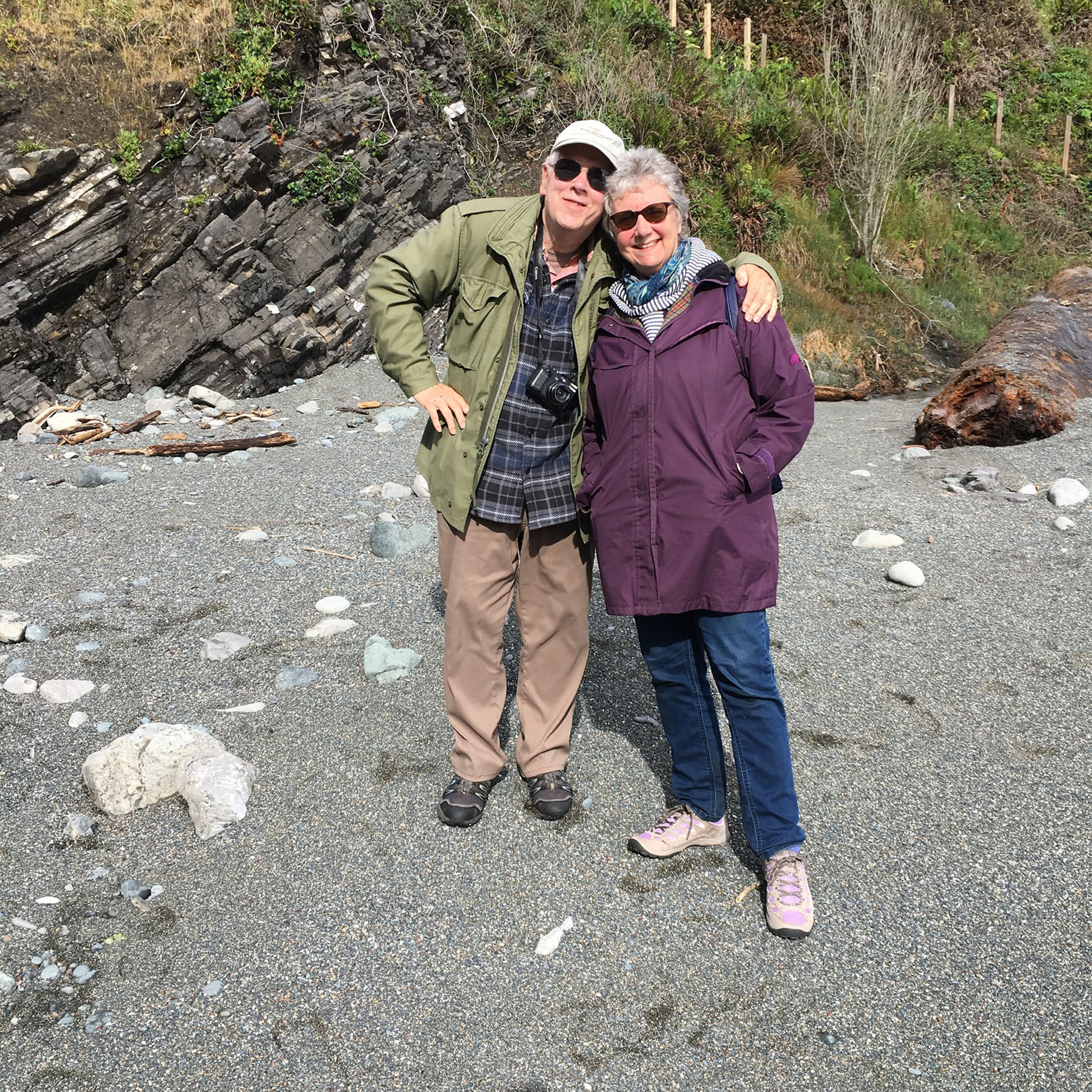
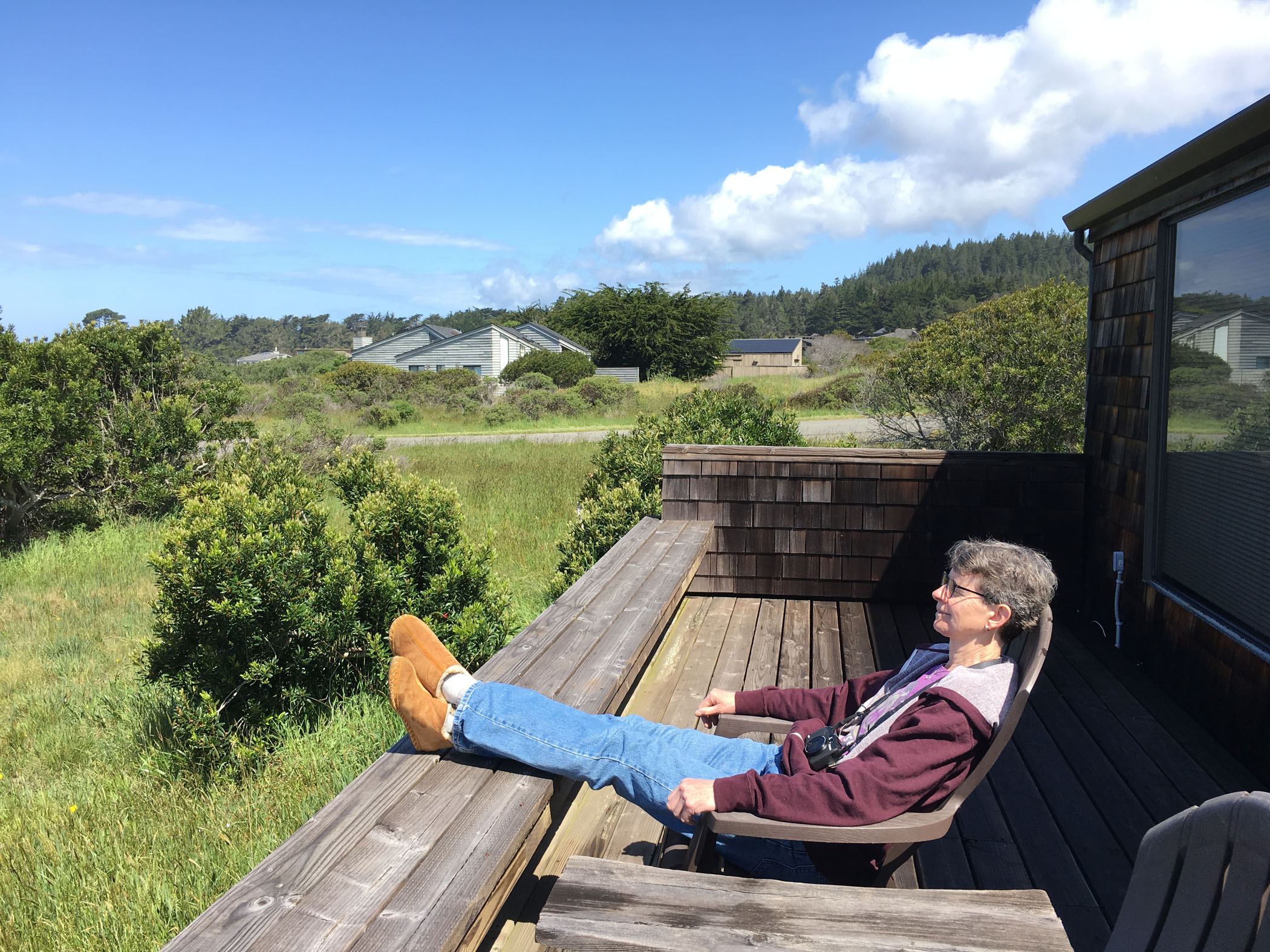
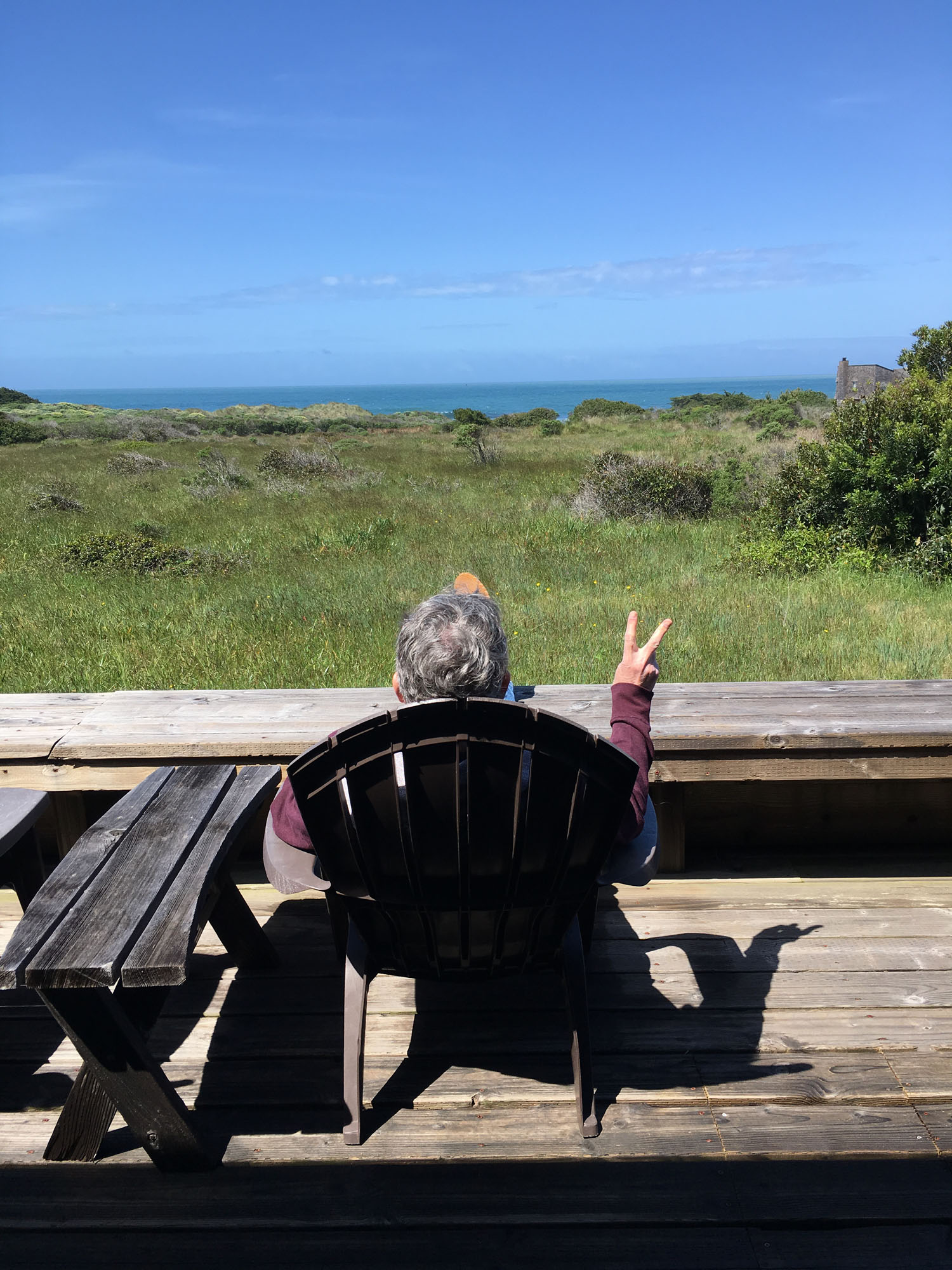
Us. Because life is good… especially at the seashore where we celebrated (quite belatedly) Dick’s 76th birthday, which was in February.

After I had to return to Sacramento Feb. 1, Dick celebrated (gently, quietly) as he recovered in a rented house in Honolulu from heart surgery with our two friends, Cora Johnson and Connie Raub, who literally flew to his side to care for him. This past weekend Dick and I happily celebrated together on the other side of the Pacific Ocean with our dear friend Sue Lester at The Sea Ranch on the north edge of Sonoma County.

And we walked the gorgeous bluff-top trail and, when the tide allowed, went down to rain-soaked sand because it was mostly a wet weekend, but then we scampered outside like happy marmots when the sun beamed, soaking it up before the next shower. Then we’d nestle inside (like marmots who prefer being dry) and talk and eat and read and nap.

e-SML deck sun-0468

Sue-babe

Sue is (other than my sister) my longest-tenured friend on the planet. We grew up next door to each other next to a lake called Folsom where I followed her through our patch of state park as best friends do. She was always a head taller and a year older (she still is), but now that we’re in our sixth decades, I’ve got lots more gray hair than Sue. We have been fortunate that we found work we love (Sue’s a veterinarian in Nevada City) in places we love. And while we have not raised children, we have cared for innumerable pets and loved ones and houses and plants.

Sue is important in my life because she has been a witness to so much of it. She has parts of the story no one else has, as I have parts of hers. She has also adored my two main men, the one who was born 67 years ago today (hey, Clifford, my dearest companion spirit!) and died in 2001, as well as the one who died and was returned to me in January (Dickie!). She has a master’s in zoology for which she toiled among ocean invertebrates in, among other places, Bermuda, a warm-ocean spot.

This past weekend Sue and Dick and I migrated to the cold ocean of the North Coast, accepting the weather that came at us and over us. Because it’s never too often to be grateful and happy for each day we get to breathe together on the planet.

e-SML peace-0465


Posted in Uncategorized | 1 Comment

This is not an obituary

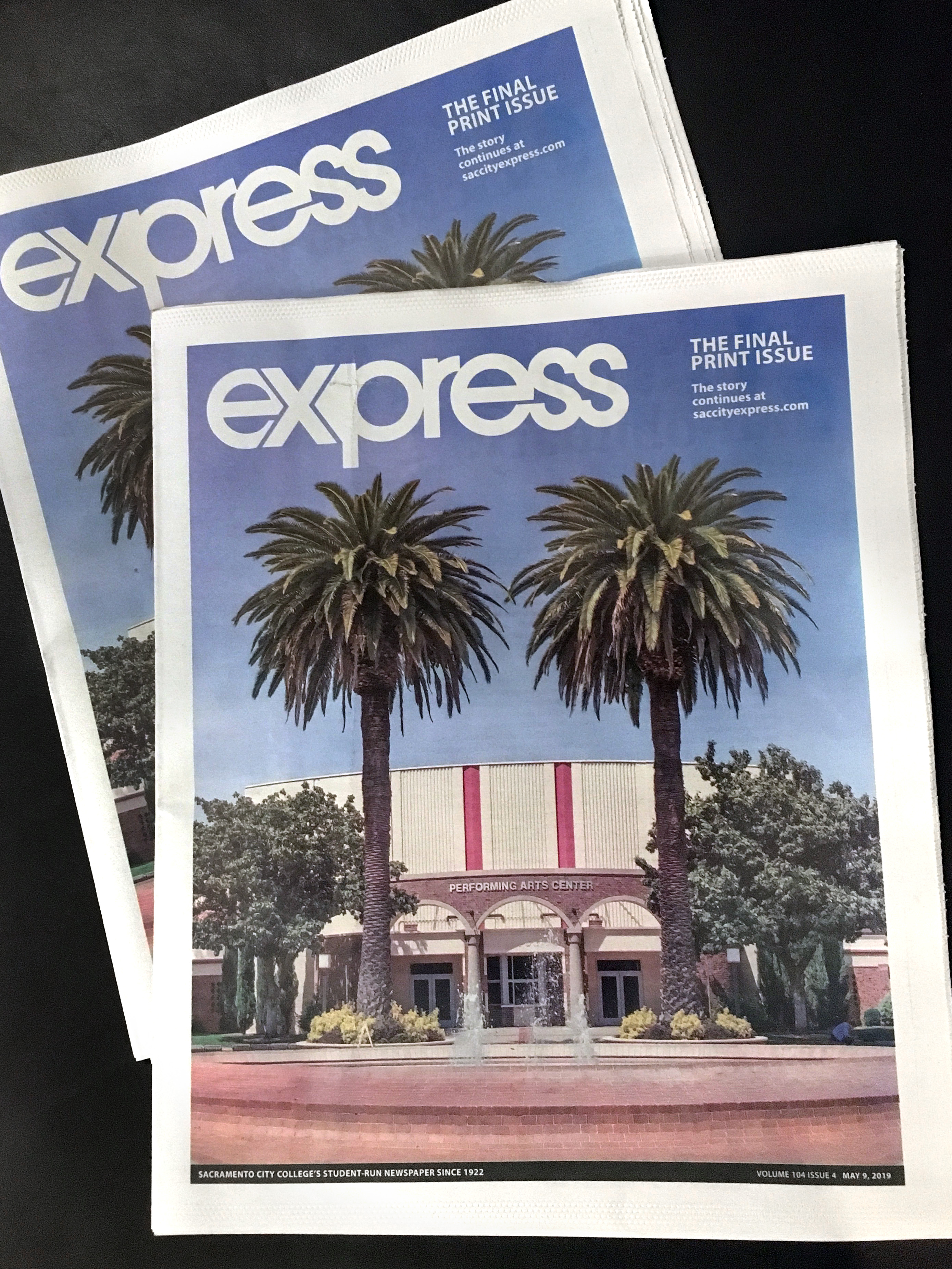
This is what I wrote for the final print edition of my students’ newspaper, which landed on newsstands May 9 at Sacramento City College. So proud of the editors and staffers who worked very hard to make the final 24 pages truly beautiful ones.

express cover REDO

You are holding in your hands the last printed Express newspaper at Sacramento City College.

As one of a couple dozen advisers of the paper since its beginnings as The Blotter in 1922, I have to say that this is a bittersweet moment. The paper itself is not ending; in fact, it’s thriving with new content every day of the academic year at saccityexpress.com. But it’s time to bring a close to its monthly existence on newsprint. Beginning in the fall semester the Express will be a completely online publication.

This reminds me of another important moment in the paper’s history, when Ginny McReynolds was hired in 1986 to replace longtime journalism instructor and adviser Jean (“Doc”) Stephens, who was retiring. The story has become part of our history: Jean made no secret of the fact that she didn’t want to have to deal with computers, which were very much becoming a part of newspapers. So it was Ginny who ushered in the first small Macintosh computers into the Express lab, and she and her students set about learning the new technology to put out the paper.

“When I came here in 1986, I was extremely grateful to have been chosen for the job and I was nervous,” recalls Ginny, who is currently associate vice president of instructional services at City College. “My whole first staff of editors had been Jean’s students, and it wasn’t an easy transition for any of us. But, before long, we formed our own team, and Jean was very helpful and supportive of my work.”

Ginny also notes that as the program transitioned to using computers, she had “enormous help from people who actually knew what they were doing. Over the years, all of that has changed a number of times, but it has always been a kind of ‘each one, teach one’ situation. Without very savvy tech-savvy colleagues and students, I would never have been able to facilitate that!”

My journalism colleague Dianne Heimer also oversaw a major technological shift when she advised the paper—creating an online version of the Express as with the new century in 2000. Dianne, who is retiring this month, brought the paper into the digital age.

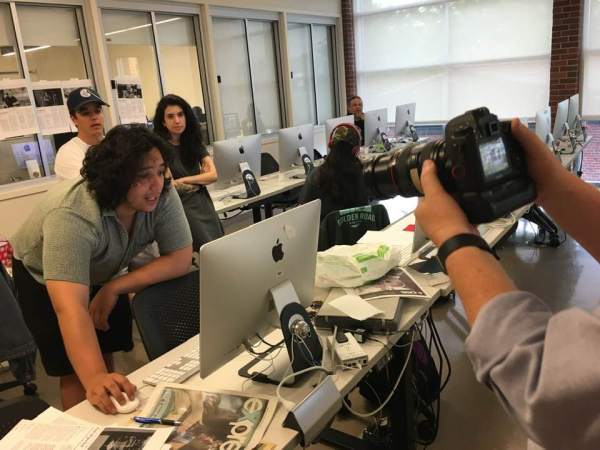
Randy Ravenstorm in lab

Ravenstorm Labarcon, design adviser, works on the final print issue of the Express.

None of this would have been possible without thousands of dedicated students, who, since 1922, have made up the staffs of The Blotter, the Pony Express and the Express. We have included the names of as many of those former staffers as we could find in our staff box on these pages.

The goal of the journalism department has not changed since the days of the first newspapers on campus: to educate students in the skills and ethics of journalism so that they can continue their educations in the field, if they choose, or go to work as professional communicators. Many have done both. We are proud to point to Pulitzer Prize-winning photographer Ron Edmonds, who was a photographer on the Express in 1968.

But we are equally proud of young journalists who did outstanding work while reporting and photographing for the Express.

When a student was shot and killed on campus Sept. 3, 2015, Express editor-in-chief Kris Hooks and news editor Vienna Montague immediately went to work. Most of the immediate coverage was put up instantly on the Express’ social media platforms and on our website. Local news outlets were following our reporting that day. Our Express editors put up stories first online and then decide which stories to include in the monthly print editions, from the coverage of the reaction to the death of former City College student Stephon Clark and decision this year not to prosecute the city police officers who shot and killed him.

As we’ve been looking at the end of the printed editions of the Express, I’ve struggled for ways to write about this. One of my former writing students, Dawn Orosco, put it this way in the final stanza of a poetic tribute to print newspapers:

But still, this is not an obituary —
newspapers will never die
They will always be held;
they will always be opened —
forever recycled
in my bank of memory.

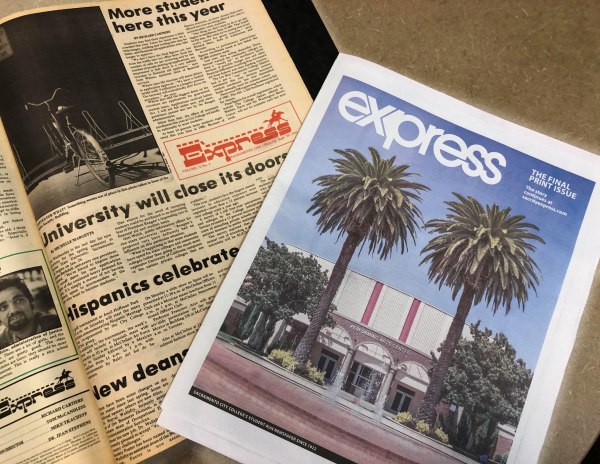
old new expresses

Expresses 1981 and 2019 (Photo by Randy Allen)

It’s been a great run on newsprint, and we are grateful for the support of literally thousands of (before 1959) Sacramento Junior College and (after 1959) Sacramento City College students, faculty, staff and administrators who have read (and sometimes railed at) the Express. The paper has been an ongoing practice in democracy and the First Amendment—not without disagreement and challenges—but it has largely succeeded as the voice of students reporting on other students and their college experience.

Here’s to many more years as that student voice, in whatever form of delivery is appropriate to the changing times. In the meantime, the Express will still be going strong each academic year at www.saccityexpress. We hope you’ll continue the journey with us.

Jan Haag and Randy Allen
Express advisers, spring 2019

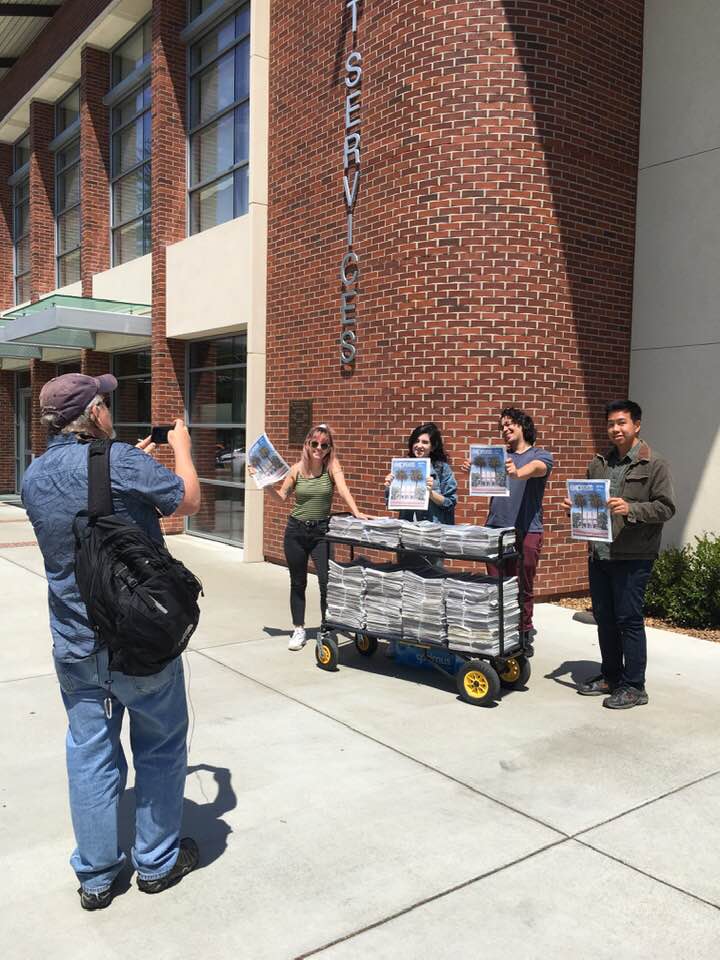
Randy editors deliver

Photo adviser Randy Allen commemorates the delivery May 9, 2019, of the final print edition of the Express newspaper at Sacramento City College by its staff (from left, Danielle McKinney, Rose Vega, Ravenstorm Labarcon and Luan Nguyen).

Posted in Uncategorized | 5 Comments

Is a nurse ever really on vacation?

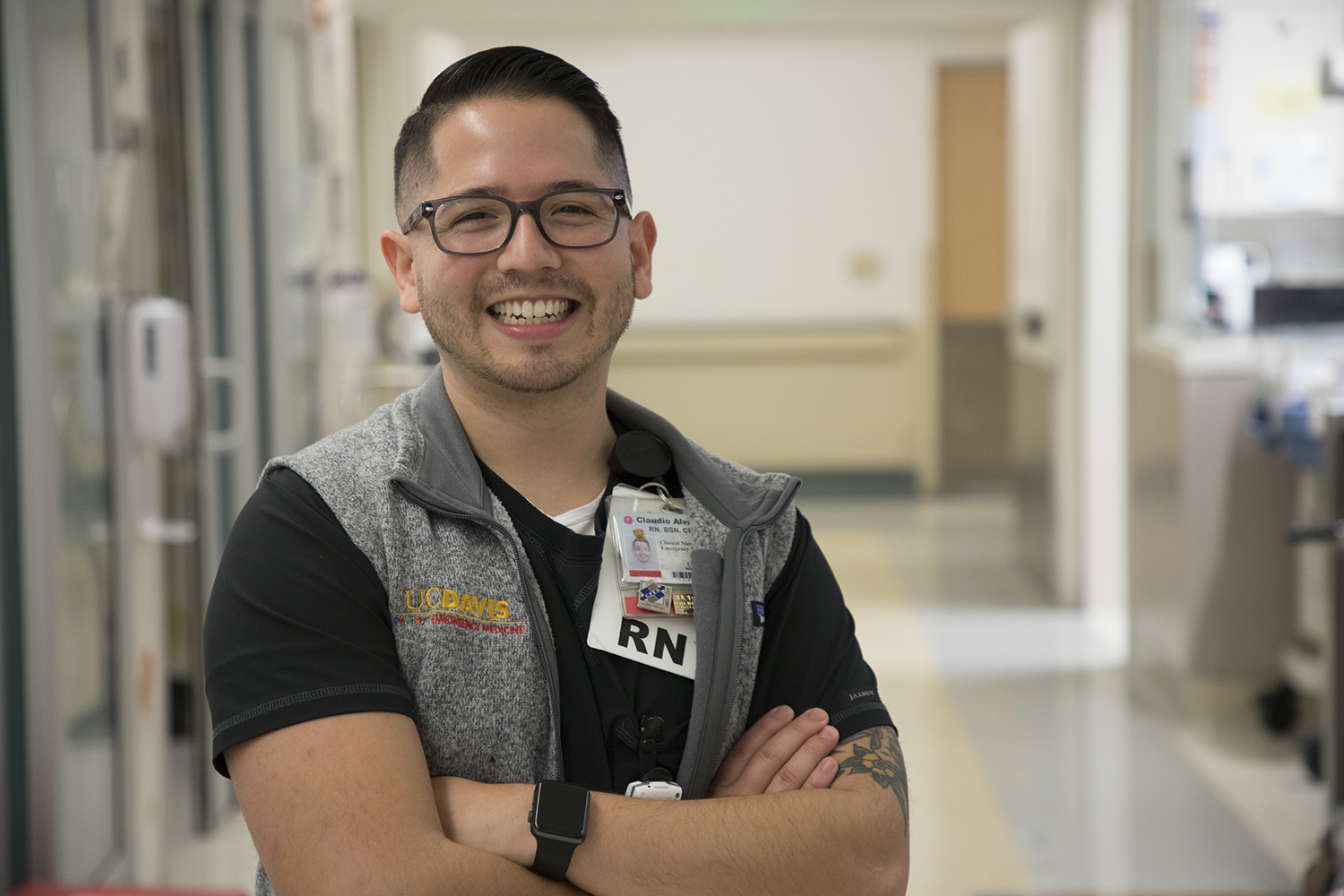
Claudio_8170_5x7

Claudio Alvarado (photo by Charlie Casey/UCD Health)

That’s the great headline on this UC Davis Health story about one of Dick’s saviors, Claudio Alvarado, who sank to his knees beside me on mine seconds after Dick’s collapse in Honolulu Jan. 15.

Claudio—as you may remember if you’ve been following this story—was in line behind us to board Hawaiian Airlines flight 20 bound for Sacramento that day with his partner, Camron Calloway.

“I’m a nurse,” Claudio said to me as I wondered if I should start CPR. I moved aside to let Claudio do what he does professionally as a nurse in the Emergency Department at the UCD Medical Center in Sacramento.

The rest, as they say, is history. (You can read an earlier post about Claudio and Camron here, if you like.)

We are grateful to Charlie Casey, senior public information officer at UCD Health, for interviewing both Dick and Claudio to write this story for the UCDMC community .

I’m also delighted by the fact that as of this summer I can call Claudio a colleague of mine at Sacramento City College where we are both professors. He’s been hired as a full-time nursing professor and starts working with SCC nursing students doing their clinical practice over the summer. In the fall, he’ll teach a full load of classes in addition to his job at UCDMC.

As Dick says of Claudio in this story, “That dude is a hero.”

He so is!

Posted in Uncategorized | 2 Comments

Stopped

Before my brain could begin
to process it—you, falling to the airport
floor, pulse fluttering in your neck
until someone rolled you onto your back,
and the fluttering stopped—
Loss opened the shuttered door
in my heart, walked through again,
stood next to me, put his arm
around me, and said, “There, there.”

We stood there, Loss and I,
watching as strangers knelt around
you, a perfect halo of helpers.
Grief showed up, lending his warmth
to our little huddle. “Hey, girl,”
said Grief, old friend that he is.
“Don’t watch—or maybe, do.
It’ll help later.”

Then Hope joined us, nudging me.
“Take a picture, honey,” she whispered.
“If he comes back, he’ll ask
if you got a picture.”

That made me smile; Hope knows
us so well. I extracted myself
from Grief’s gentle arms and said,
“Excuse me,” without explanation,
because Grief understands.

I stepped into the glory of humanity
around you, took out my phone and
snapped an image of you there,
a large man pumping your chest,
a smaller one holding your head,
checking your pulse, another arriving
with a machine, someone placing
pads with wires on your chest.

“You know,” Loss whispered, trying
to prepare me, “this doesn’t always work.”

But Hope grabbed my hand and,
though no one else did, sang out,
“Clear!” a second before one
of the helpers pushed the button.
And suddenly, there you were, pale
blue eyes open, eyelashes fluttering,
the throng around you able to breathe again,
you, back on our side.

“Bye-bye,” Loss said, releasing me.
“For now,” Grief said, already fading.
“There you go,” Hope whispered,
as my life restarted with one
heartbeat:

yours.

(Also published here. Thanks to Persimmon Tree for including “Stopped” in their special section, “life-changing moments.”)

e-pink azaleas-0002 copy

Posted in Uncategorized | 7 Comments

He lives!

CHURCH INTERIOR balcony

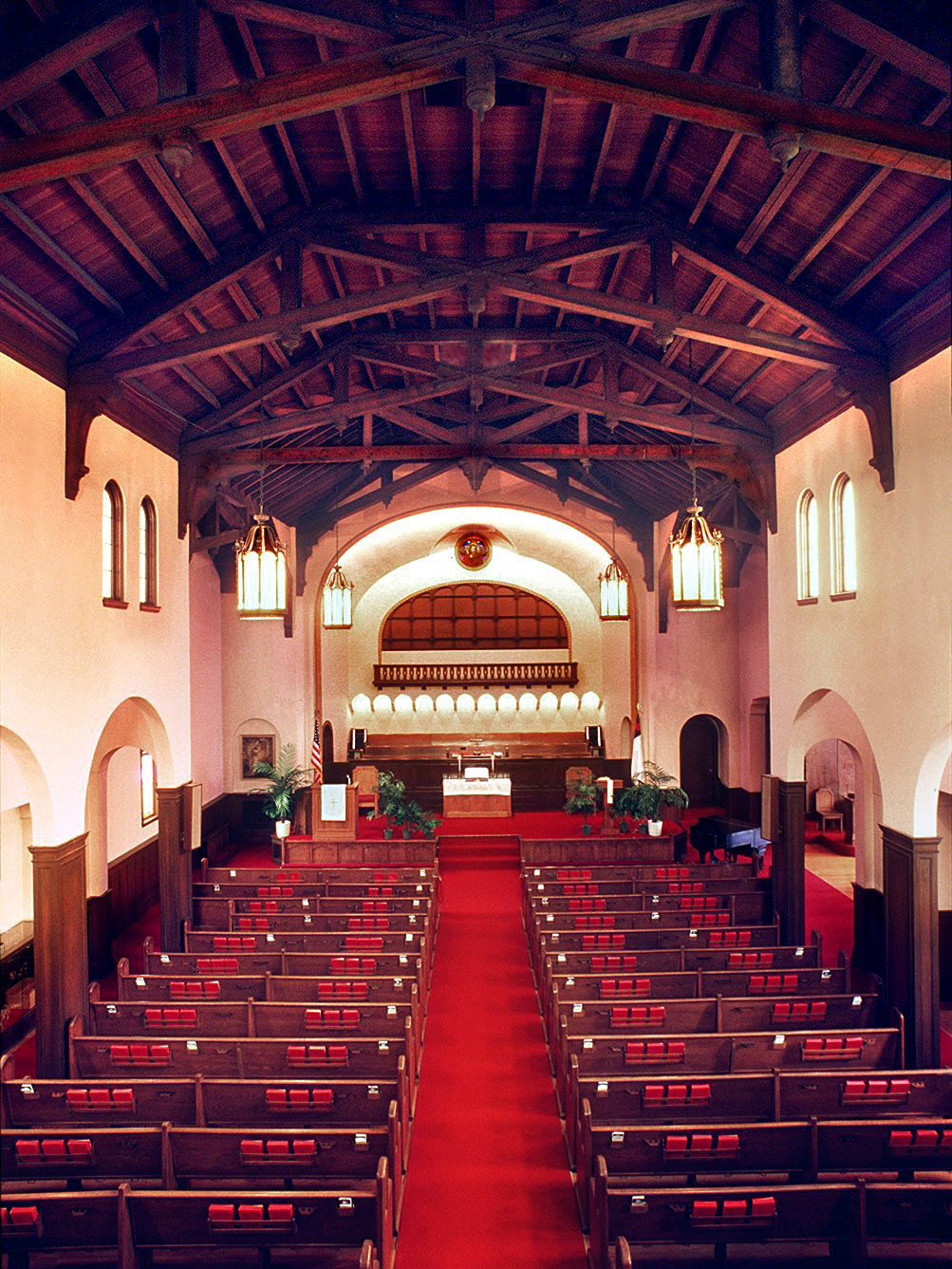
Faith United Methodist Church (photo/Dick Schmidt)

After retrieving my nametag from the tall usher in the foyer, I quietly opened the door and snuck into the Methodist Church called Faith that Dick and his family have considered theirs for decades.

The pre-service Easter music wafted up to the exposed beams holding up the pitched ceiling, and I was delighted, as I slid into the pew next to Dick and his cousin Ron Saylor, to see a friend of mine sittin’ in at the grand piano. Rachel Kang, a professor of music at Sacramento City College where I also teach, gave me a quick wave, never missing a note.

Though I’m not an official member of Faith United Methodist Church in Sacramento, I pop in periodically with Dick. Easter is one of those special occasions—not just for the religious reasons but because it was Easter 1999 when Dick’s mother attended church there for the last time before she died nine weeks later. Dick’s parents and many of his relatives, including his sister and her family, have been an integral part of the backbone of that church. His mother and sister played organ and piano there; his father sang in the choir and sat on the church board. Dick’s cousins Leonard and Naomi Schmidt have served for decades as lay leaders and shared their musical talents—directing the choir, playing the organ and piano, and (my favorite) leading and performing in the Faith handbell choir.

To sit in Faith church is, I believe, an act of homage and love on Dick’s part, in memory and honor of his family and loved ones, and I’m always honored to be there.

This Easter, though, we also had people to thank—lots of people who had written and called and sent supportive messages after Dick’s cardiac arrest Jan. 15 and subsequent triple bypass in Honolulu in January. From Pastor Barbara Horikoshi-Firebaugh to Ron Saylor to friends like Elaine and Loring Pollock and Sara Zeigler, this would be the first time Dick got to hug some of them since returning from Hawaii.

It was also a chance for us to stand next to Ron, a Methodist minister himself with a lovely singing voice, and listen to him sometimes take up the melody, sometimes come in with a nice harmony. Dick remembers a much younger Ron, fresh from his home in Canada, coming to visit Faith church in 1961 and becoming quite taken with Dick’s cousin Carol, a fine pianist and composer. They later married and had two sons.

Easter is all about resurrection, and though it embarrasses Dick that I keep referring to his, I have to say that sitting next to him in church this Easter brought home the great emotional weight I’ve been carrying since Jan. 15. Especially when we were singing lyrics like the ones in “Christ the Lord Is Risen Today”:

Made like him, like him we rise,
and
Where o’ death is now thy sting?

I felt myself getting teary as I thought of The Resurrection of the man whose ascendance into heaven is the bedrock of the faith of these people of Faith. And then I had only to glance at the man next to me to feel more tears spill as we sang, “He lives! He lives!”

I know Dick is not the first person to come back to life at the hands of compassionate strangers who administered CPR and shocked his heart with a defibrillator. There may have been others like that in church, too. But this is my resurrected one, and when I think of that, I am moved to tears. I hope to be less emotional about it someday, but right now I dissolve while trying to sing, “You ask me how I know he lives? He lives within my heart.”

Like the son of God, “he walks with me and talks with me along life’s narrow way,” as the song says.

I see his hand of mercy, I hear his voice of cheer,
and just the time I need him, he’s always near.

For a few minutes there in an airport in Honolulu, I came face to face with the knowledge that Dick will not always be near. This was not news to me, but I hadn’t experienced it with him. I have lived through the death of a husband and have had literally hundreds of sweet examples of that one returning to me—in sleeping and waking moments—as my companion spirit. But, as I told Dick, although it’s not up to me, I really want to hold his hand of mercy and hear his voice of cheer for as long as possible.

So I did what I usually do in church. When it was time to sing, I clutched a first, a second, then a third tissue as the tears came and my nose ran, and I tried to make a joyful noise with my voice breaking. (It can’t hit high notes very well any more either.)

I held the hymnal given in memory of Dick’s mother, her name just inside the cover, and felt his hand close to mine, and I sang my gratitude—to the heavens, to God and his resurrected Son, to all the saints and companion spirits who helped return my beloved to me, here on earth.

Posted in Uncategorized | 4 Comments