I am pleased to say that a story I wrote about Dick’s heart adventure has been published in the June issue of Sacramento Magazine. (You can read the whole story below, if you like.)
It’s an odd enough sensation to be sitting in a hospital in Honolulu, watching your beloved sleep most of the time following the cardiac arrest that felled him and his literal jolt back to life. It gets a bit more odd when, after posting about said event on social media, you get an email from a longtime friend/magazine editrix. “Can you write a version of this story for me?” asked Krista Minard. Some people might be annoyed by such a request at a time like that. But give me a good writing assignment, one with a powerful narrative and interesting details (which this one certainly was), and I’m on it.
Not only did working on the bare bones of what became “Departures and Arrivals” occupy me in the freezing hospital as we waited to learn about further tests and eventual surgery for Dick, it also reminded me (former journalist that I am) that there’s nothing as good as taking notes as things happen… as opposed to trying to remember details later. So, with Dick’s permission to tell the story as it unfolded, I did.
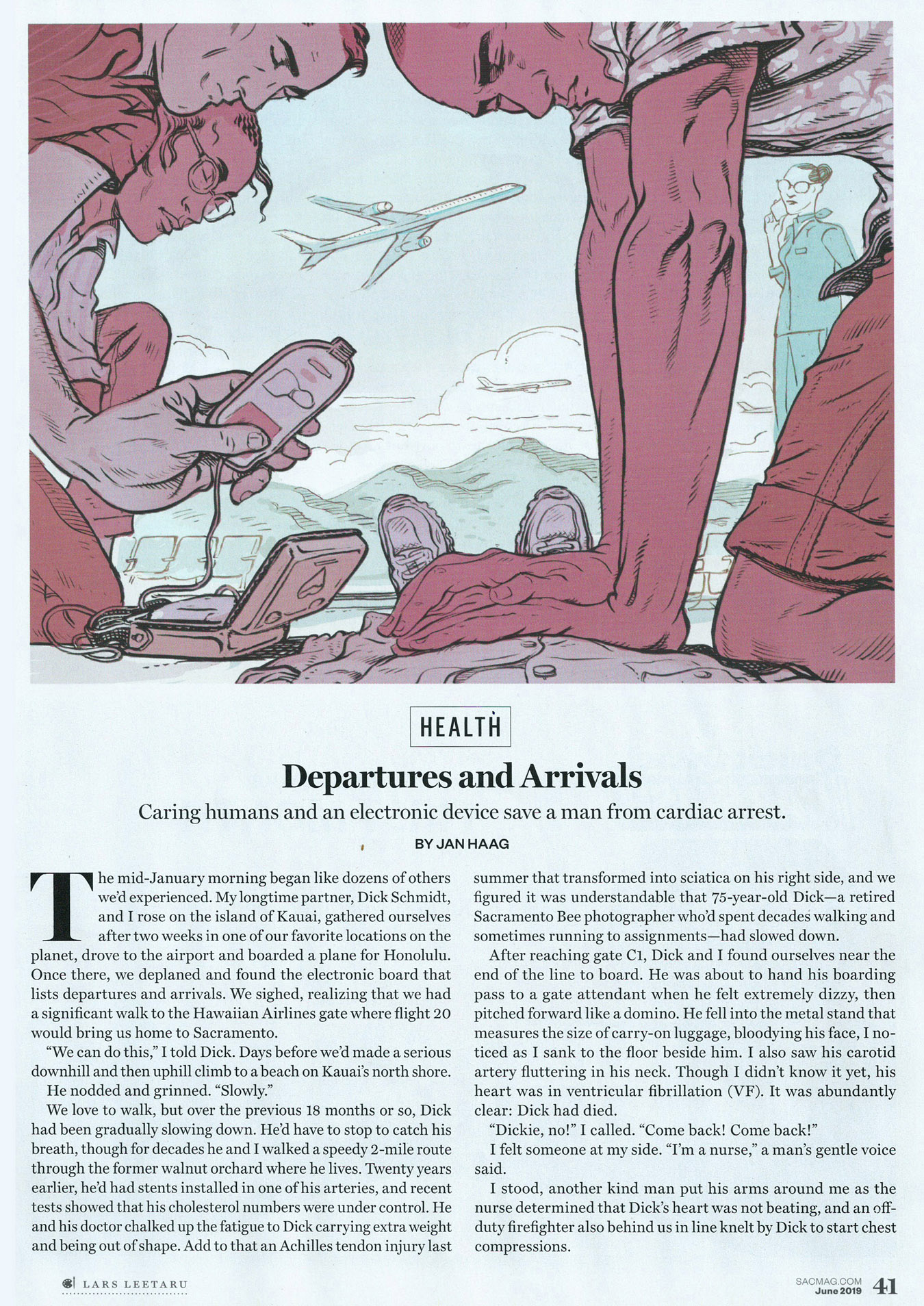
The illustration for the story by artist Lars Leetaru is impressively close to the actual scene.
I don’t know if Krista knew how much she was saving me at the time, giving me something else to occupy my mind, but that assignment focused me and produced posts for this website (click on “Dick’s Great Heart Adventure” on the home page, if you haven’t read those posts and would like to). It was a win-win for us both.
I love to tell the story about how I was the editor of Sacramento Magazine in the early 1990s (the last century!) when Krista Hendricks, as she was then, was hired as our receptionist—a job she didn’t particularly want and, she’ll tell you, she wasn’t particularly good at. She wanted to be a writer for the magazine, but we weren’t hiring writers and she was, frankly, at that point not ready for such a job. But she let me know she wanted to write, and offered to type up copy for me (in those days we took stories written on paper and typed them into our little Macintosh computers). On her own time she also typed transcripts of interviews I did with journalists for my master’s thesis. And she proved to be a fine feature writer. I gave her as many assignments as she wanted, and Krista became a huge asset to Sac Mag, as we call it.
She left us to work for the Neighbors section of The Sacramento Bee for a time, but came back to do freelance writing for us at the magazine, and eventually she was hired as a writer/editor. And after I left the magazine—and another editor was named and she left the magazine—they wisely made Krista the editor, a job she’s held for more than 25 years.
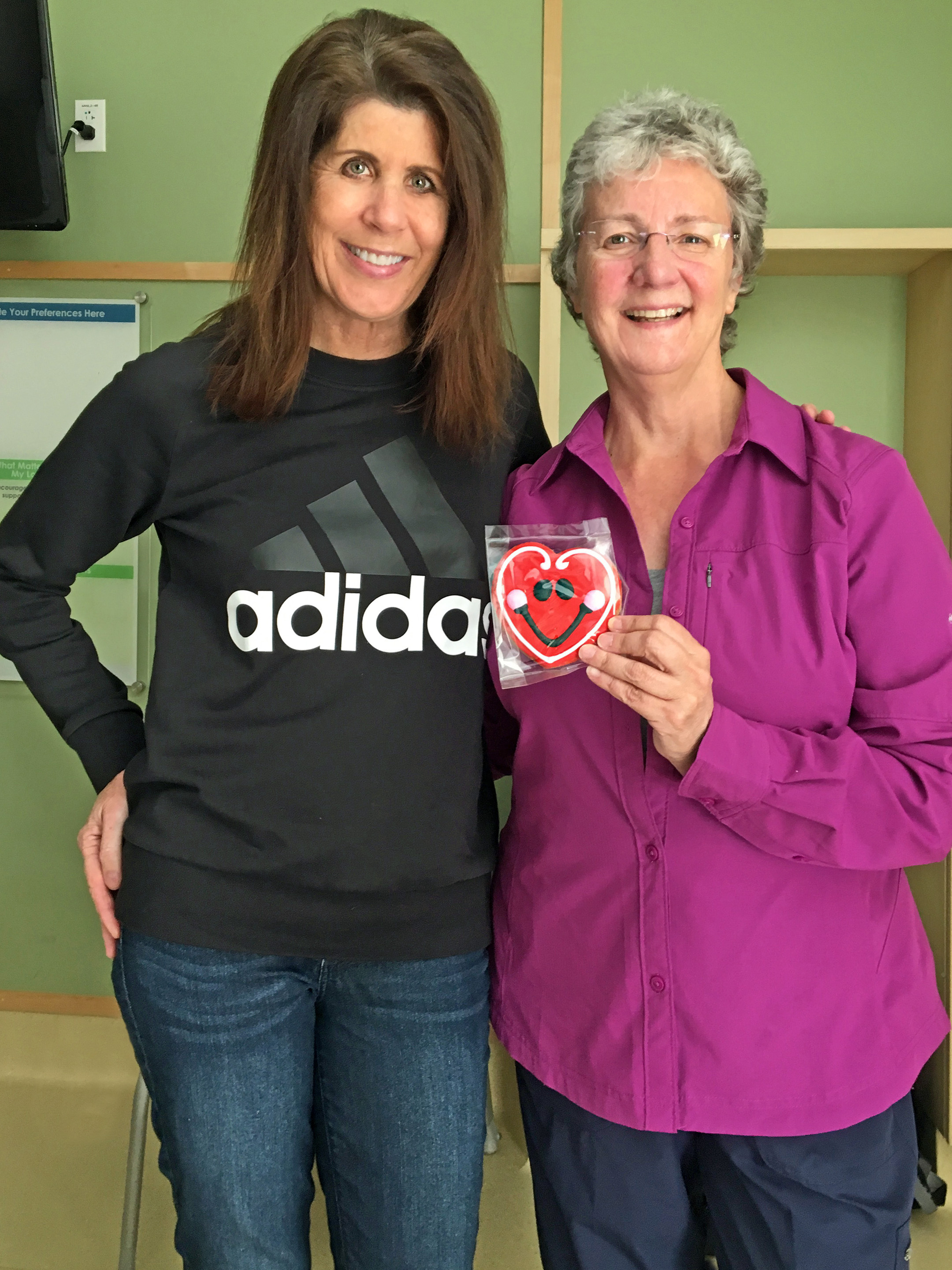
Every now and then she asks me to write something for her, or I volunteer an essay, which has been a lovely thing for us and the magazine, too. The travel pieces I’ve done about Hawaii have included Dick’s photos, too. Krista’s a terrific copy editor, and I rely on her to edit some of my longer projects, including all three books published by River Rock Books, the tiny press I run with my good friend and colleague Katie McCleary. In fact, here’s Krista and her daughter Anna at our most recent River Rock Books debut of Ed Cole’s novel, “The Love Story of Pinky Wollerman.” (You can get an electronic version of the book here. There should be printed copies available soon on Amazon, too.)
Thanks, Krista, for once again putting Dick and me in print… and online!
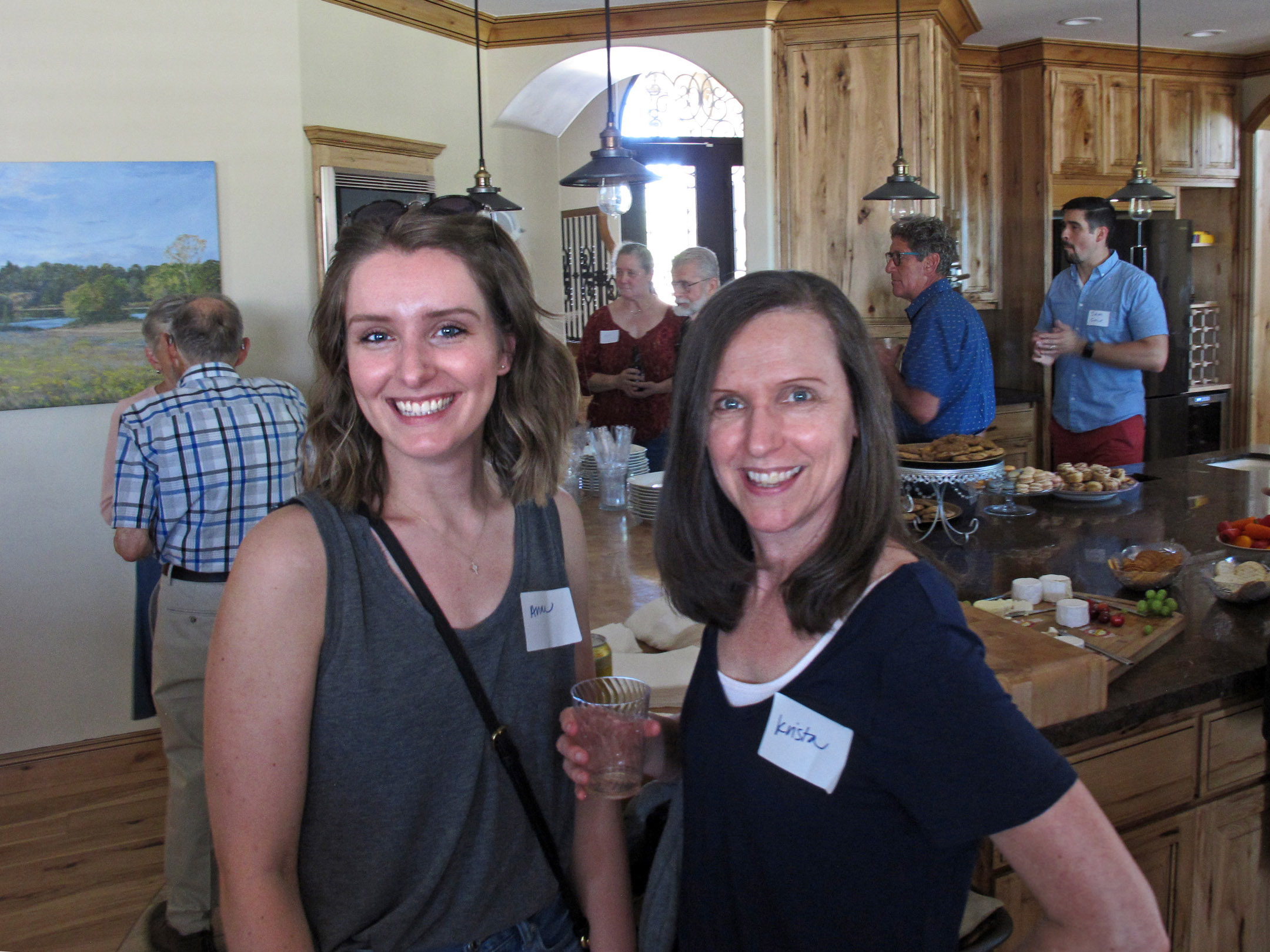
(from left) Anna and Krista Minard
Departures and Arrivals:
Caring humans and an electronic device save a man from cardiac arrest
Jan Haag
The mid-January morning began like dozens of others we’d experienced. My longtime partner Dick Schmidt and I rose on the island of Kauai, gathered ourselves after two weeks in one of our favorite locations on the planet, drove to the airport and boarded a plane for Honolulu. Once there, we deplaned and found the electronic board that lists departures and arrivals. We sighed, realizing that we had a significant walk to the Hawaiian Airlines gate where flight 20 would bring us home to Sacramento.
“We can do this,” I told Dick. Days before we’d made a serious downhill and then uphill climb to a beach on Kauai’s north shore.
He nodded and grinned. “Slowly.”
We love to walk, but over the previous 18 months or so, Dick had been gradually slowing down. He’d have to stop to catch his breath, though for decades he and I walked a speedy two-mile route through the former walnut orchard where he lives. Twenty years earlier he’d had stents installed in one of his arteries, and recent tests showed that his cholesterol numbers were under control. He and his doctor chalked up the fatigue to Dick carrying extra weight and being out of shape. Add to that an Achilles tendon injury last summer that transformed into sciatica on his right side, and we figured it was understandable that 75-year-old Dick—a retired Sacramento Bee photographer who’d spent decades walking and sometimes running to assignments—had slowed down.
After reaching gate C1, Dick and I found ourselves near the end of the line to board. He was about to hand his boarding pass to a gate attendant when he felt extremely dizzy, then pitched forward like a domino. He fell into the metal stand that measures the size of carry-on luggage, bloodying his face, I noticed as I sank to the floor beside him. I also saw his carotid artery fluttering in his neck. Though I didn’t know it yet, his heart was in ventricular fibrillation (VF). It was abundantly clear: Dick had died.
“Dickie, no!” I called. “Come back! Come back!”
I felt someone at my side. “I’m a nurse,” a man’s gentle voice said.
I stood, another kind man put his arms around me as the nurse determined that Dick’s heart was not beating, and an off-duty firefighter also behind us in line knelt by Dick to start chest compressions.
Those people, we learned much later, turned out to be Claudio Alvarado, a UC Davis Medical Center pediatrics emergency nurse, and Salesi Maumau, a Honolulu firefighter who grew up in Elk Grove. Unbeknownst to me, a Hawaiian Airlines employee called 911 and another, Chris Ohta, ran for an AED, an automated external defibrillator, which are placed 90 seconds apart in Hawaiian airports, close enough to run to them. When Chris returned, Claudio and Salesi applied the AED pads, Chris called “clear!” and the machine delivered a massive shock into Dick’s chest.
It turns out that AEDs don’t restart hearts; in fact, they stop VF so the heart can have a chance to restart itself. When the AED is on and attached to someone, it analyzes the heart every two minutes and will only deliver another shock if it detects VF or certain types of ventricular tachycardia (VT). In Dick’s case, one shock brought him back among the living.
All this took about three minutes.
By then EMS personnel were with us, and our two angels whose names we didn’t yet know boarded the plane, having saved the life of a stranger. Within minutes Dick was loaded onto a gurney, having no idea what happened to him. Once in the ambulance, on our way to the hospital, as I sat shaking in the front seat, I could hear him talking to the EMT in back, giving correct answers to questions.
I knew then that our lives had changed forever, thanks to the kindness and skills of strangers. What neither of us knew, however, was how many angels would emerge in the days and weeks to come to put our Humpty Dumpty back together again, how much aloha would be extended to us at every turn, how many times we would look at each other and say, “Wow.”
•••
More “wows” came that day and the ones that followed. After being transported to Kaiser Moanalua Medical Center—which happens to not only be the closest hospital to the airport but also our health care provider—Dick was tended to by a host of tender folks in the emergency department, all of whom wanted to hear the story. We told it again and again, scarcely believing it ourselves. No, Dick said, he didn’t see a white light or a tunnel. He felt dizzy and then felt nothing. He thought he’d merely fallen when he woke up and saw people around him.
Dick’s split lip was sutured by the first of many medical people, all of whom appeared like white-coated angels. He was moved into a single-bed room, and nurses found me a pull-out chair/bed. We settled in as best we could with what we had in our backpacks because our luggage had flown home without us. The room was cold, but everyone who walked in—including those with warm blankets—brought a generous, concerned heart.
The day after Dick’s comeback, a miracle arrived in the form of two women, Pamela Foster, RN, and Jenna Tanigawa, from the AED Institute in Honolulu. The Institute places AEDs all over Hawaii and offers free training to people of all ages about how to use the devices. Pamela, a former ER nurse, came to Hawaii after being invited by Chief Martinez Jacobs, the state Department of Transportation airport fire chief, to create an AED program in Hawaiian airports. They told us that AEDs have been used on 69 people at 13 airports in Hawaii since August 2006. Fifty of those people arrived at hospitals with their hearts beating.
Dick is the 50th survivor, Pamela told us. That’s a significant number for him. Last year was the 50th anniversary of Dick’s first trip to Hawaii, which is, of course, the 50th state.
Another wow.
I sat in the hospital for days, watching Dick sleep a lot, as he gradually grew stronger. Tests revealed that his heart was repairable—not with more stents, as we had hoped, but with a coronary artery bypass graft (CABG). The doctors wanted him to recover for at least a week before surgery. I missed the first two weeks of a new semester, but my colleagues at Sacramento City College pitched in to find subs to cover my classes. Friends on island brought and sent us things to keep us warm and comfortable in the hospital.
My little chair/bed was parked by a big window in Dick’s room out of which I could see the Moanalua valley for which the hospital is named. Big eucalyptus trees with their peeling bark revealed striking greens and luscious browns. Every time I’d turn my eyes away from the window to see Dick propped up in bed, sleeping, I’d think, “He’s here. He’s here.”
•••
On the sixth day after Dick’s cardiac arrest, 5 a.m., Blood Guy knocks softly on the door. He’s the third person who’s walked in our room in the last half hour, which they don’t do in the better hotels, and this is one expensive place to stay. The first two took Dick’s vitals, weighed him, pulling off all the blankets in this too-chilly room, removing the pillows, one of them holding the heavy heart monitor. They call out a number in kilos, which means nothing to us, then replace his pillows and blankets, which I will have to get up to adjust because I’ve learned how he likes them.
When Blood Guy knocks and enters with his kit with small vials wearing different colored plastic caps and his rubber band tourniquet and, of course, his stabber, like everyone else who shows up in room 329, he’s curious about our story.
Barely awake, Dick gives him the 30-second version.
“Sorry your vacation ended this way,” says Blood Guy, then adds, as most people do, “but it’s good, I guess, that you didn’t get on the plane or that you weren’t in flight. I’m sure you want to get home, though.”
“Glad to be here,” Dick says, and he means it.
And even at this early hour, my eyes and brain fuzzy, I detect the sincerity, the layers of meaning in those four words. And so softly that Blood Guy—as he prepares to turn off the light and let us try to sleep—can’t hear, I say, “Me, too. Me, too.”
•••
One day I got a text from Pamela Foster saying that Camron Calloway wanted to visit. Camron, it turned out, was the man who put his arms around me in the airport as his partner Claudio Alvarado, the UC Davis nurse behind us in line, worked on Dick. Camron is a courier for the Air Force who flies in and out of Honolulu regularly, and he appeared in his light-colored camos to tell us their story.
Camron likes to board planes early, which he’s entitled to do as an active-duty military man, but Claudio was lagging behind that day. Camron was annoyed at his partner, and by the time he and Claudio made it to gate C1, they found themselves near the end of the boarding line. Behind us.
“They shouldn’t have even been there,” Foster told us the day after Dick’s cardiac arrest. “They should have already been on the plane.”
But two weeks later there was Camron in Dick’s hospital room, pulling out his smart phone and getting Claudio via Facetime so the four of us could laugh and wipe our eyes as we got to meet two of our on-the-spot angels.
There was the wow of Dr. Nicholas Dang, the cardio-thoracic surgeon who, because Dick asked, ungloved during surgery to shoot video on his iPhone of Dick’s unrepaired, beating heart. He did the triple bypass and then shot Dick’s repaired, “snappy” heart, as Dr. Dang called it. Two days after surgery Dr. Dang and I stood at Dick’s ICU bedside, all of us watching the videos, marveling at the difference: How many of us get to see our own hearts in action?
So many angels appeared. One of our favorite doctors, Diana Kim, who followed Dick from beginning to end, stopped by almost daily. Erin and Jamie, two visiting nurses, followed us from the regular floor to the ICU after Dick’s surgery. Erin, we joked, literally gave Dick time when she found a clock for his ICU room that didn’t have one. That clock turned out to be a metaphor for our experience: From the moment of his cardiac arrest, everyone we came in contact with gave Dick more time on the planet.
There was the wow of two of Dick’s longtime friends, Cora Johnson and Connie Raub, flying from their homes in Nevada and Colorado, respectively, to spend another two weeks caring for Dick after I needed to return home to teach. We rented online a house in Pearl City from someone we didn’t know who turned out to be a retired Kaiser psychiatrist and her husband. We later learned that they took that house, which was for sale, off the market to rent to us.
Two days before I flew home, Jenna Tanigawa arrived at our rental house to not only train Cora, Connie and me in CPR and use of the AED but also to give us our own AED to take home. We hope never to have to use it on anyone, but, as Pamela Foster suggested, we will carry it in the car in case we see someone collapse as Dick did.
A couple of weeks later, after celebrating his 76th birthday, Dick, Cora and Connie flew back to Sacramento. Dozens of people gathered at the airport in Honolulu where all this began exactly one month earlier—fire and rescue personnel, including Fire Chief Jacobs, Pamela and Jenna, Salesi and his wife Eryn—for a Celebration of Life with speakers and leis and much aloha.
Salesi acknowledged Claudio’s role and downplayed his own, saying, “He took the lead. I just did compressions.”
Then Pamela stepped to the mic and said, “That’s what it’s all about.”
Indeed it is. Without someone performing CPR and someone else finding an AED to apply the shock if it is needed, statistically people who collapse in VF or VT have a low chance of survival. We learned that AEDs don’t hurt the victim; in fact, AEDs are the best and often only chance to bring someone back to life.
Dick continues to recover well, walking daily and increasing his mileage, not having to stop and catch his breath, regaining strength, self confidence and momentum. Everywhere we go, we look for AEDs. We think often of the instant and permanent community we became part of in Honolulu, people who live the definition of aloha, whom we can’t thank enough. They are our ohana now, as we are theirs—family bonded in the sweetest way by their kindness and care for a traveler in need—who, thanks to them, continues to move forward in the rest of his lifetime journey.