Tea lady

•IMG_0155a

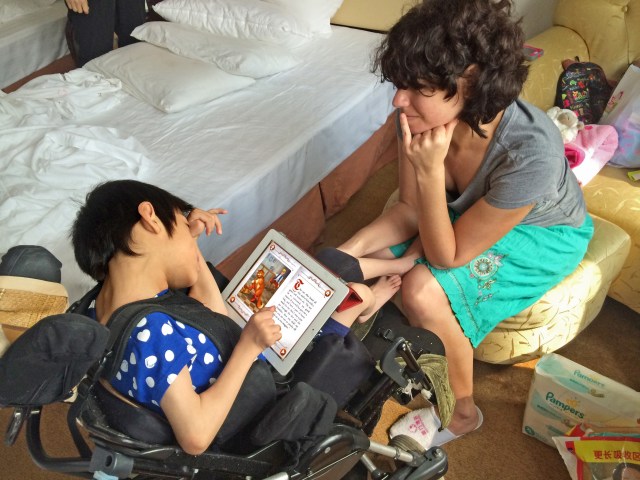
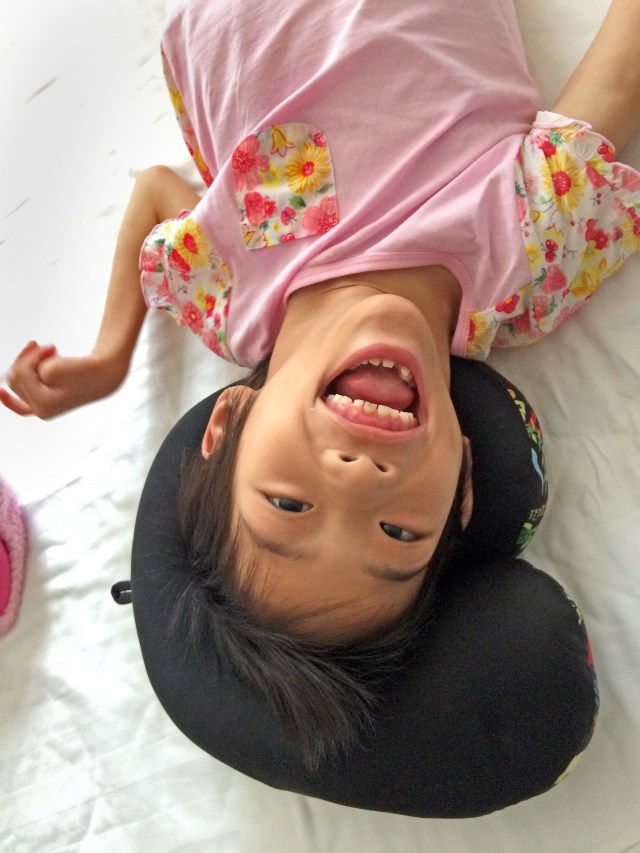
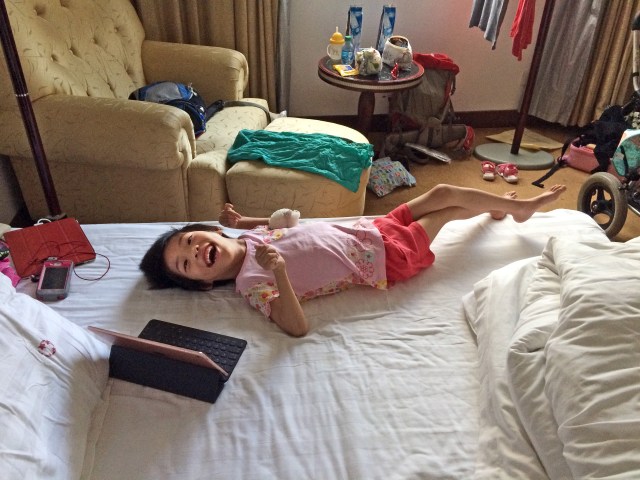
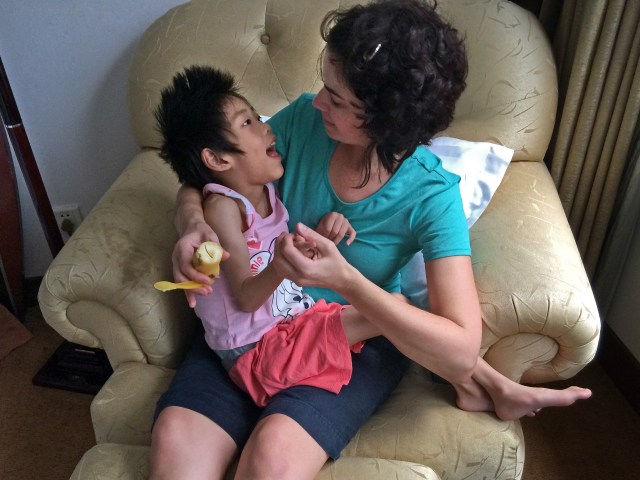
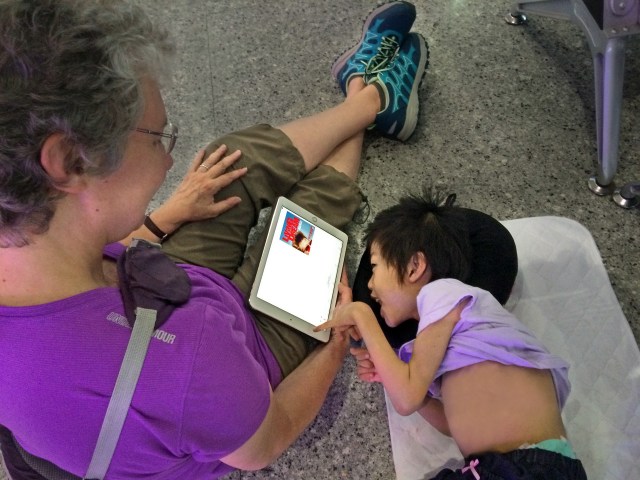
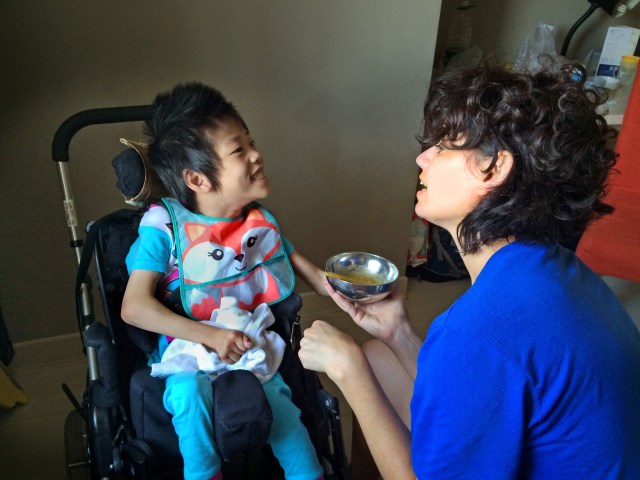
While waiting for her paperwork to be completed in Guangzhou, Annie enjoys listening to a story on the iPad.

(#12 in the Annie series)

Guangzhou was at the center of the massive tea trade that existed between China and Europe during the 19th century.
—Wikipedia entry

The thing about adoption in China is that you end up waiting. For days. After her medical appointment and initial paperwork in Guangzhou, Annie and her entourage had to wait for three days for their interview at the U.S. Consulate and, assuming all went well, to obtain Annie’s U.S. visa.

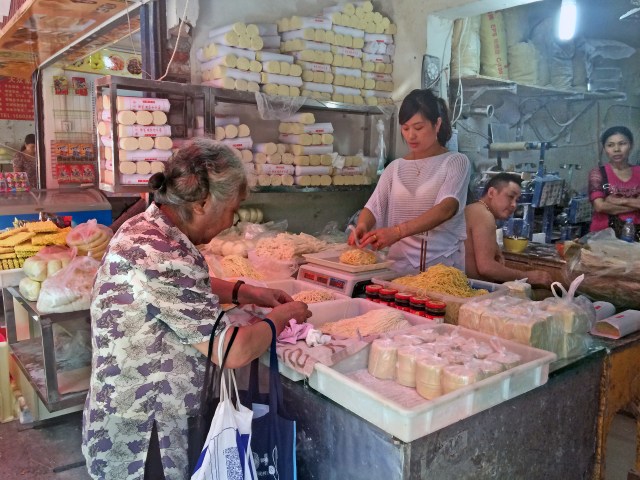
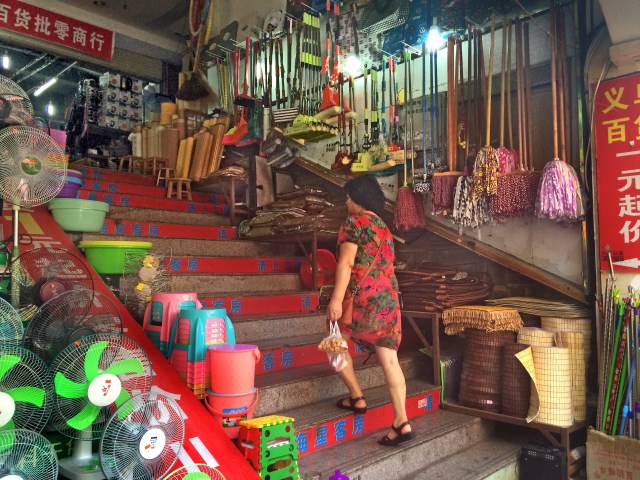
In the meantime, we took twice-daily walks around the Tianhe distric near our hotel, getting out to see what we could see. Nikki wanted to make sure I got to do some “fun stuff” in China, too, and, knowing how much I love tea, she took me to a tea shop on a side street not far from our hotel. “This city is all about tea,” she said, and later, when I looked it up, she was, of course, right. The largest wholesale tea market in the world with more than 1,000 tea vendors (some report 3,000 vendors) is in the Fang Cun district of Guangzhou. We didn’t make it there, but the tea shop Nikki knew provided a sweet experience.

Tea was the main economic reason the British commandeered the province they called Canton beginning in the 1700s. (They had to rename it? They couldn’t pronounce Guangdong, the province’s actual name?) There was a huge warehouse district in Guangzhou that for centuries was known for its tumultuous tea trading that resulted in nefarious dealings with shady characters. The phrase “all the tea in China” certainly applies here, though tea is grown in many parts of China. And, according to one book on tea, the Brits introduced tea production as well as consumption to India to compete with the Chinese monopoly. It’s been big business for centuries.

•IMG_0162a

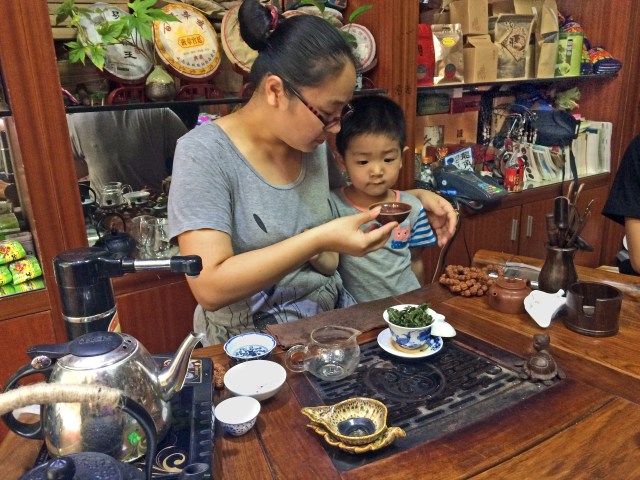
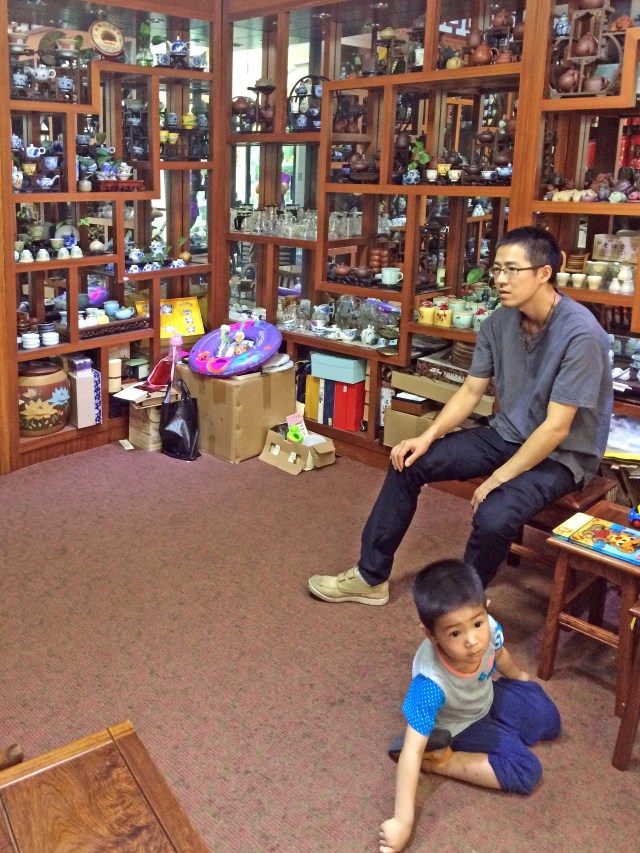
The tea lady and her son.

The tea shop where we sampled a half dozen different blends turned out to be owned by a young woman and her husband, who had their little three-year-old boy in the shop. “Shop” is a generous term, though it’s tidy and friendly—it’s one smallish room with three walls lined with shelves on which there are some nice ceramic teapots and cups. There’s a longish table set up with three small stools in front, which is where you sit to sample tea brewed and poured into tiny cups by the tea lady. If you like what you taste, you can buy some, but that’s not required.

The tea lady speaks some English, which was nice, though she and Nikki spoke quite a bit in Chinese, too. When she beckoned us to sit opposite her at the low table, she presented a list of a dozen different kinds of tea, from which we could choose and sample.

•IMG_0193aWe started with tie guan yin, one of the great classes of tea, which is known, according to the list, “for its cancer preventative and intelligence stimulating properties.” It’s a very mild tea, very pale at first. I learned that Chinese tea is properly prepared by pouring more water over the tea, which darkens with each pour. The tea lady also used a specific pot for a specific tea and began the procedure by pouring hot water over the pot, which apparently, if I correctly understood the tea lady’s pantomime, makes the pot smooth and lovely over time. She used very little tea to scoop into the pot and strained it with a ceramic strainer before pouring it into a clear glass container. The colors of the different teas ranged from flaxen to the color of a coconut husk. One was the palest green. From there, she poured it into our cups and hers.

All the tea was wonderful and, like noodles and dumplings, has set a new standard for those things for me. We tried da hung pao, also an oolong, which is supposed be an anti cancer tea, help with reduction of cholesterol and blood fat, memory enhancement and lowering blood pressure. Nikki says oolong tea works so well for removing bacteria and oil that she’s used it in place of dish soap. She also says that you never know which of these attributes might be true and which are hooey. But I don’t care. I love this tea.

Especially the pu’er (or pu-erh) tea, which is a variety of aged and fermented dark tea from the province of Yunnan that gets darker with each pour but has no caffeine, and is, according to the sheet (and I’m quoting exactly as it was written in English):

  • modest nature, warming stomach
  • conducive to lose weight, nourish and beautify the face
  • serving as an aid to sleeping

•IMG_0173a

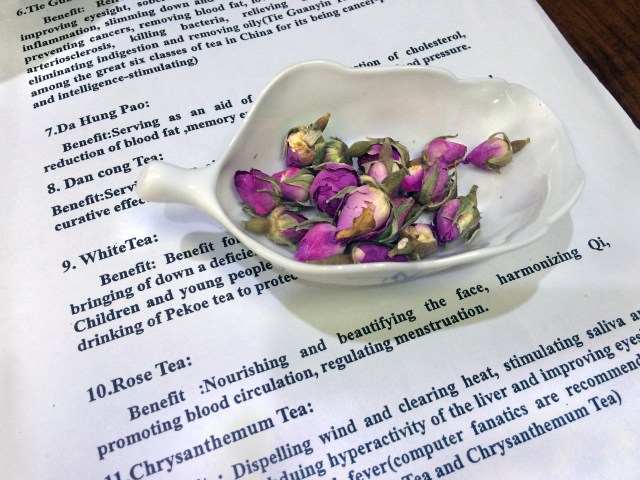
But my favorite was the delicate rose tea, which I’ve had before, which stays very pale, getting a bit more green with each pour but doesn’t take on a rose color. In fact, the tea lady said, if it does get pink, it’s been artificially colored. You can see the benefits of rose tea in the photo above.

Also we learned that, ideally, rose tea, green tea and tie guan yin are best kept in the fridge; pu’er, white and English teas can be kept at room temperature.

•IMG_0196a

White tea.

Nikki loves white tea, and so do I, and we learned that the most expensive white tea has only the newest, whitest leaves. Other white teas are blends of white teas have green leaves in it, too. White tea is of “benefit for the stomach, dispelling damp, abating fever, brining down a deficiency fire and eliminating pathogens. Colder and young people are strongly recommended to have a regular drinking of pekoe tea to protect the eyes and strengthen the body.”

•IMG_0184a

Chrysanthemum tea only takes one flower (right) to make a lovely small pot.

I bought a pretty big bag of white tea, which we will share, and Nikki bought a small plastic container of chrysanthemum tea (which turns a lovely yellow using only one blossom) and is good for dispelling wind and stimulating saliva and reducing thirst. That last one amused Nikki. “Well, yeah,” she said, “you’re drinking it.” My favorite note about the chrysanthemum tea says, “Computer fanatics are recommended to have a regular drinking of green tea and chrysanthemum tea.” I have no idea why.

•IMG_0191aI also bought three lovely ceramic tea containers. In all, I spent 800RMB, which surprised Nikki when I told her (she’d gone down the street to get us lunch to take back to the room). That’s about $119, not inexpensive, but lovely tea from a kind tea lady who asked polite questions about Annie and told me about their 6-year-old daughter, who was at school that day. Summer vacation is about to start—it’s two months long here—and I imagine she’ll have both kids with her in the shop, their daughter and their energetic boy who wants to ride his scooter, and whose father played with him as we sampled tea.

•IMG_0200a

The tea lady’s husband and their son.

The word for “family” is ohana in Hawaiian, and that feeling of ohana is very present in China. The sense of family (which typically includes friends, too) feels very Chinese to me—indeed, is universal—and it’s been lovely to see parents who clearly cherish their children, like the Tea Lady and her husband, who are no longer limited by law to having only one. We have felt that everywhere there we’ve encountered children, including the orphanages. “Family means not being left behind or forgotten,” as they say in the movie “Lilo and Stitch” (also set in Hawaii). I was happy to help support a young family obviously working hard to earn their living.

And I’m going home with not all, but some of the tea in China, which will remind me of this place every time I sip it with my ohana in my very far away home in California.

•IMG_0209a

After the tea shop and lunch, cake at Starbucks!


Posted in Bringing Annie Home | 6 Comments

Cinderella slipper

•IMG_0323a

(#11 in the Annie series)

What girl doesn’t like new clothes?

Aunt Jan was hoping the opportunity would arise to stroll into a Chinese kids’ clothing store (or two) with Nikki and Annie and have them pick out some new clothes. Though her new Hello Kitty suitcase arrived with two scrapbooks about her life in China (the most precious things, for sure), Annie’s clothing was rather… well, haphazard. Nikki says the orphanage dresses the kids in whatever’s handy that (sorta) fits them, which is understandable.

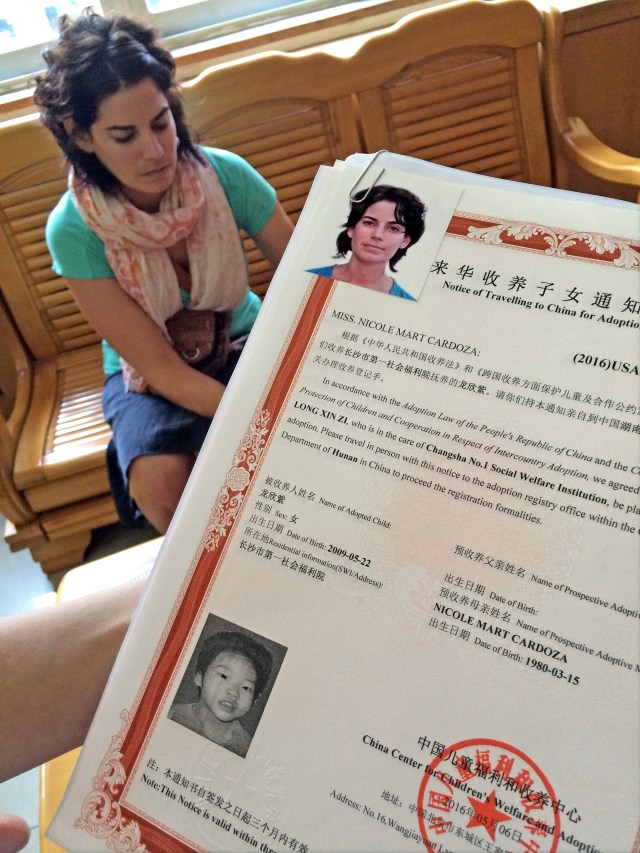
But as Nikki also said when she saw the clothes Annie came with: “Are you kidding me with this?” In her new pink Hello Kitty suitcase were three well-worn boys’ T-shirts, one with a cartoon character toting two large guns and a pair of way-too-big pants.

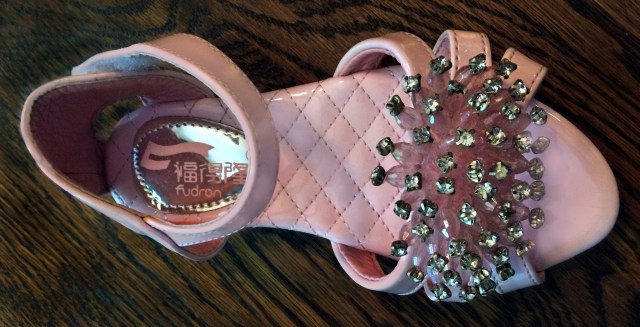
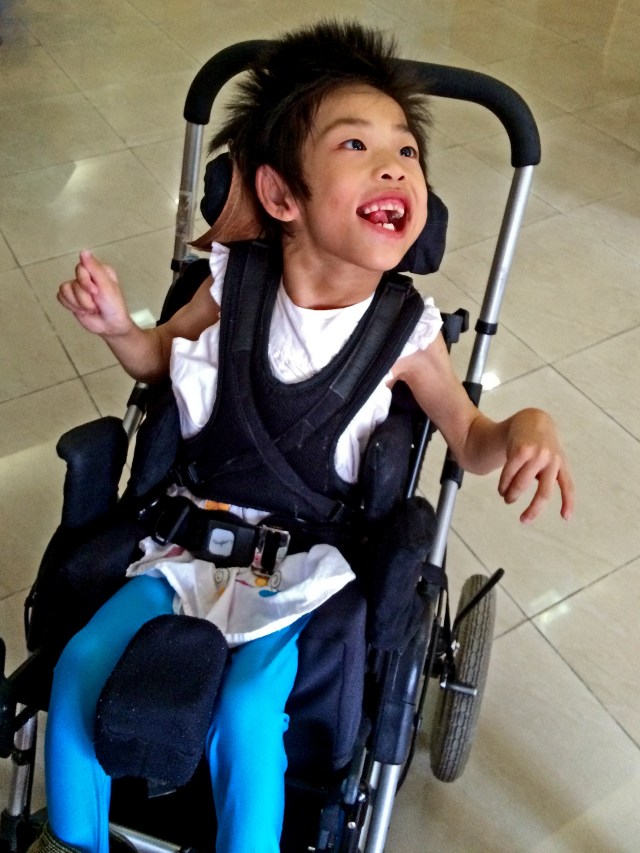
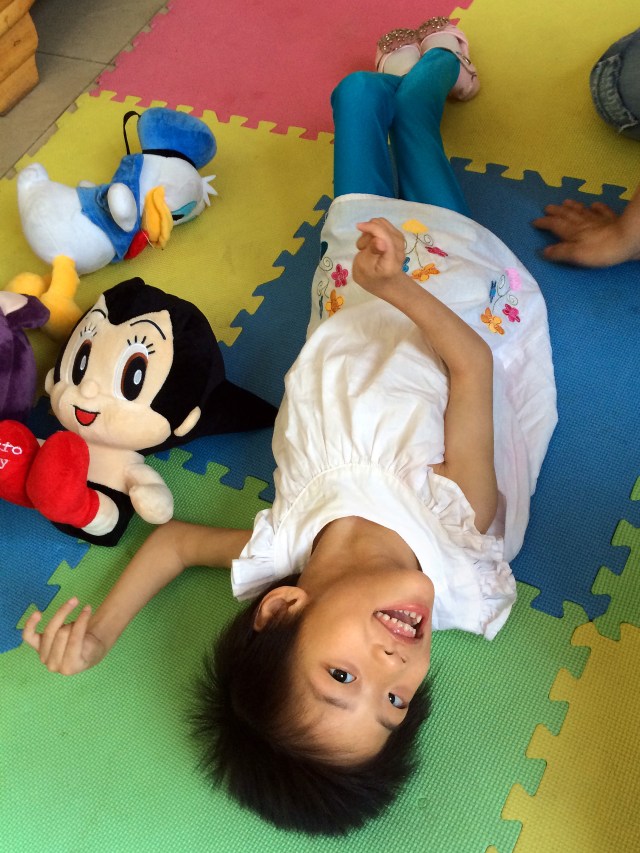
Her special going-away outfit, which we think was lovingly chosen (and perhaps purchased) by Annie’s favorite ayi (caretaker auntie) consisted of long turquoise leggings, a sleeveless white top with flowers (rather pretty) and pointy-toed party sandals with a sparkly flower on them.

Nikki says the Chinese love their bling, and we do see a lot of it here. There’s nothing wrong with that—for Annie, though, it doesn’t make sense. The day after Nikki picked up Annie, Nikki went to a children’s clothing shop down the street from our hotel and found simple pink sandals with one strap around the ankle and one over the toes to allow more freedom of movement for Annie’s long toes. The party shoes definitely didn’t have much toe room.

Still, we later learned at The Lighthouse that Annie’s ayi chose the sparkly sandals, so that makes them special. This is the woman who frequently cared for Annie and who also cared most for Annie. We were so touched by her obvious affection and concern for Zuh-Zuh (I’m spelling her Chinese nickname phonetically). She did not look at Annie as just another mouth to feed—she clearly adored Annie—which endeared the ayi to us.

The problem was that Nikki had taken one of the party shoes with her when she bought Annie’s more practical sandals. Without meaning to, she left the party shoe at the store. She hoped no one would notice, but Annie’s ayi saw the new shoes when we went back to The Lighthouse. Only one of the party shoes survives, but Nikki didn’t say that, of course.

So it was clear that, as well as new shoes, new clothes were also in order. Nikki brought a few things, including new jammies, with her from Sacramento. But she’d guessed at sizes. Annie is very slender and long, so some of those clothes didn’t work all that well either.

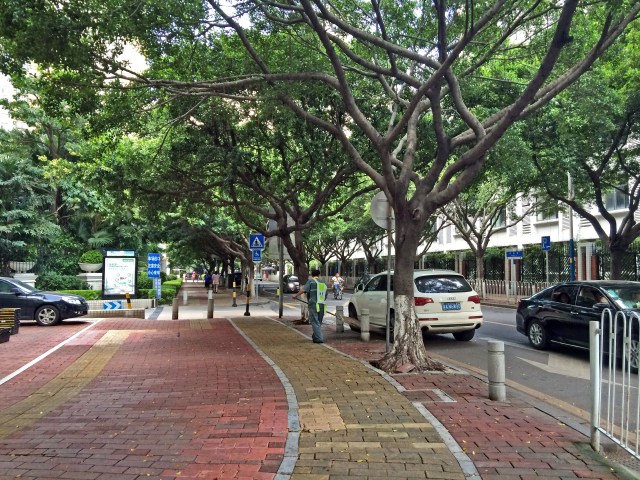
Yesterday on our afternoon stroll (Annie loves getting out to look around, and who can blame her?) in Guangzhou, we shopped. This is a lovely district of brick sidewalks lined with mango trees), we found a Family Mart, a chain that sells kids’ clothes. Nikki, who is a champion bargain bin shopper, dove into one piled high with sale summer clothes and began finding possibilities. And here’s what I loved: She showed her selections to Annie so she could offer her opinion. Annie was delighted to say “good” (“hao) or “not good” (“bu hao”) in Mandarin, and, I was amused to see, had definite likes and dislikes.

I found a couple of cute T-shirts I thought would look good on Annie, but she nixed them. Not a problem; it was fun to discover what she likes… shades of pink, it turns out, and a red polka dotted bathing suit. (We hope to swim at John and Anne’s apartment complex pool in Hong Kong.) And, for the first time in many years, Aunt Jan got to buy someone little girl clothes.

I don’t mind saying that when my niece Lauren was born on my 29th birthday, July 30, 1987, I greeted her with, “I’m your Aunt Jan. You’re gonna love me; I’m gonna buy you things.”

3516 jan laurenCR

Aunt Jan and Lauren a few years ago… and a bunch of years ago at Disneyland, too. (Photo by Dick Schmidt)

I did buy her things, though I hoped she would love me for other reasons. Turned out she did (still does) and her brother Kevin, too, who came along a couple of years later, and I bought him stuff, too. I liked buying Kevin clothes, but he was far more interested in toys, especially the Big Loader with its skip loader, dump truck and tractor. Lauren had more to say about what she wanted to wear (dresses!) from the time she was about 2. I quickly learned to ask her opinion when buying things, and she was happy to give it. (And by the way, Happy Almost 29th Birthday, Lauren! You’re as young as I was when you arrived!)

Annie, on the other hand, has been mostly dressed in boys’ hand-me-downs. Nothing wrong with that, but it turns out that she really loves girl clothes. At the store in Guangzhou she really liked a sweet white sleeveless top with cherries on it as well as a pair of flamingo shorts. Her taste ranges, in other words.

•IMG_0229aC

Annie seems to like pinks and purples best.

We came back to the same store the next day because… well, there was more shopping to be done and (hello!) GREAT SALE! As Nikki was going through the bargain bin again looking for shorts, Annie’s eyes were riveted to a pair of dress sandals with sparkly silver on them and the word LOVE across each toe in large letters. Not really appropriate daily footwear, like the sparkly sandals, but Nikki, who scored big points for being Good Sport Mama, tried one on Annie. I held up Annie’s head and Nikki held up her foot so she could see the sandal. Big grin. She loved it.

Nikki sighed and asked a clerk for the other sandal, which took awhile since the clerks, who, the day before, had hovered around us like bees, we’re now equally aggressively ignoring us. Nikki noted that Sunday is their restocking day, and we customers were in the way. While the clerk was locating the other shoe, I spotted a pair of Minnie Mouse plastic clogs in blue and pink and showed them to Annie. She brightened. Nikki slipped one on, and success—Annie’s long toes fit nicely without being crunched in them. More practical footwear.

The clerk returned with the fancier sandals in a box. Big moment of decision. Nikki held up one fancy sandal and one Minnie clog for Annie and asked her which one she preferred, adding that she could only have one pair. There was a pause; we could hear the wheels turning in her head. Much to our surprise, she chose the Minnie clog.

“I figured she’d go for the bling,” Nikki said. “That’s very Chinese.”

“It’s very American, too,” I added, thinking of my mom, the Sweet Adeline, who loves her bling. If it sparkles or is in the rhinestone family, so much the better. Nothing wrong with that.

But in this case we were all about the practical as well as pretty—shirts with wide necks and snaps to fit over Annie’s head and shoulders, since she can’t lift her arms to easily put on shirts. Shorts with trim waists so she doesn’t lose her drawers when she’s picked up or moved.

So Aunt Jan happily bought a pile of tops and shorts on sale and one pair of Minnie clogs to add to Annie’s growing wardrobe. The hand-me-down, boy T-shirts were on their way out. But the one sparkly party shoe left from the pair Annie arrived in will go home with her.

IMG_0847aC

“It’s her Cinderella slipper,” I told Nikki, “the one that got left behind at the ball. The one with all the love in it.”

Nikki liked that, both of us thinking of Annie’s ayi who bought those shoes and put them lovingly on Annie’s feet the last day Annie was in her care, who then pushed her into a reception room at the Civil Affairs Center and presented Annie to her new mama. Who will take her far away, to become American, go to school and have physical therapy and new friends and a whole new life. One with a lot of pink clothes and shoes, too, and, quite likely at some point, some fancy new party shoes.

•IMG_0284a

One of Annie’s new outfits and her new pink sandals on the floor in the background.

Posted in Bringing Annie Home | 6 Comments

Guangzhou walkabout

•IMG_0020aC

Best way to eat a banana with a spoon: out of its own cup! Annie and Nikki in Guangzhou.

 (#10 in the Annie series)

Wherever you go, go with all your heart.
—Confucius (whose real name was Kong Qui)

More than 30 embassies and consulates from all over the world have offices in Guangzhou, according to Wikipedia, many of them in the Tiahne district, and the U.S. consulate is the only one of five U.S. consulates in China that processes adoption visas. So all Americans adopting a Chinese child come through this city. Including us.

•IMG_0042aGuangzhou (population about 13 million, the third-largest city in China) has a history that dates back about 2,200 years (also from Wikipedia, which I consider a not-bad source, especially if you consult the footnotes at the ends of entries that lead you to better sources). So we arrived deep into the night in Guangzhou (pronounced Gwan-jo), the capital of Guangdong (formerly called Canton) province, south of Hunan province (where we were in Changsha) and just north of Hong Kong, where we began and will end our trip.

Got that? Not to worry if you don’t. Here’s the important thing:

Because this is embassy/consulate territory and many high rises sprout into the sky like long-stemmed silver weeds, this neighborhood feels more prosperous, more upscale than anything we saw in Changsha. Many Westerners live in the Tiahne district, including, once upon a time, Nikki.

•IMG_0018aC

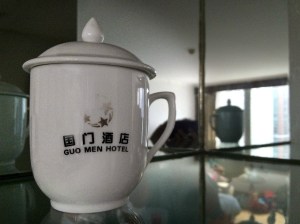
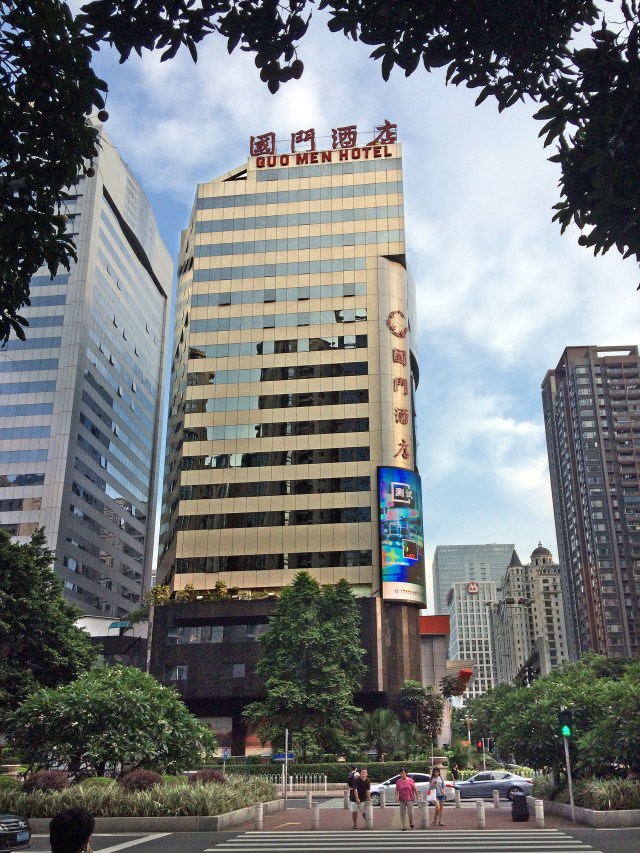
Our hotel, the Guo Men, is an older hotel, but very classy. It has Chinese-style beds, which is to say plywood “mattresses” with a whisper of fabric on them. I have built an impromptu platform of pillows to sleep on—by no means soft but more tolerable for this wimpy American. (Nikki and Annie are much more hardy and sleep just fine on their hard surface.) The hotel sits across the street from a McDonald’s and three coffee houses, one of which is a Starbuck’s. (In contrast, we saw no Starbuck’s in Changsha.) This area is, for the most part, more wheelchair-friendly, except for the ten sweeping steps up to the hotel. There is no ramp that we can find, so we lift Annie’s wheelchair up and down every time we come or go, though if one of the nice, young doormen is on duty, he will usually help us. (Unexpected bonus: I am losing a few pounds and building up some serious arm muscles.)

•IMG_0030a

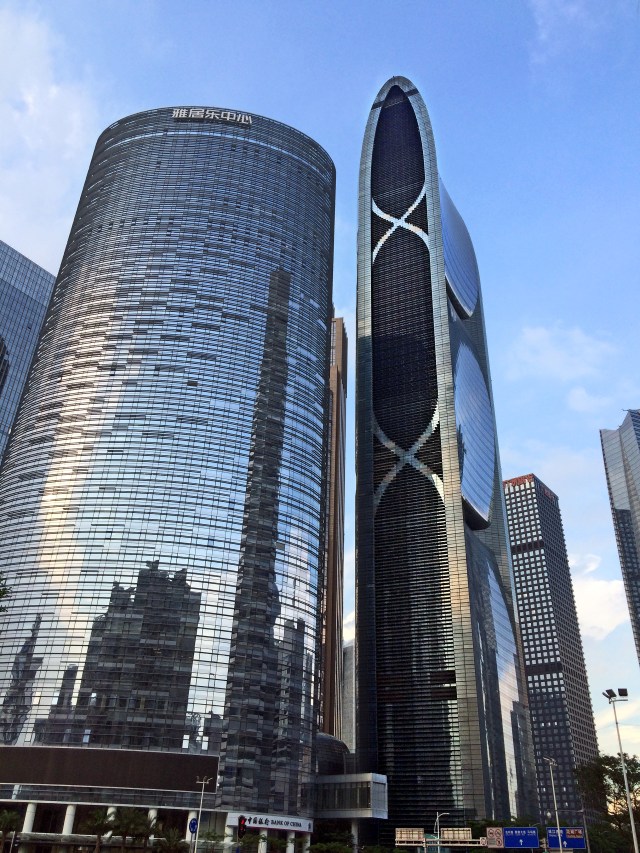
Mind-bending architecture in Guangzhou… why?? how??

•IMG_0014a

The view from our hotel window… I think of it as the Batman building.

And, as in Changsha, the sky is surprisingly blue here, too, on the edge of the Pearl River Delta, one of the largest in China. It’s still beastly hot and humid in this monsoon season—the breeze does not cool you; it just teases you with what might be—but we are clearly no longer in Kansas. This is a little more like Oz, actually. There really are yellow brick sidewalks in places.


•IMG_0044a

Yellow (and red) brick sidewalks in the Tiahne district of Guangzhou.

If Changsha was the place to pick up Annie and complete the Chinese paperwork, we are in Guangzhou to do the American business that will let Nikki bring her home as a U.S. citizen. In both cities we’ve had translators. In Changsha we had the services of the very capable Wendy; in Guangzhou Elsie does the honors. (I love that these Chinese women have taken on American names for their work, which I bet no one in their families calls them at home.) We could not do what we need to do without them, and we are most grateful for their assistance.

•IMG_0048a

Our hotel, the Guo Men.

We also continue to use what we’ve learned from others on this trip. For example, I had no idea that you could eat a banana in its own jacket with a spoon (see photo at the top of this post). Nikki calls this the ayis’ banana hack, the way the Chinese carers fed kids bananas in the orphanage. You cut a banana in half and use a spoon to moosh up the ’nana and then feed it to the kid. You have two halves, so you can save one, if you want. Is that genius, or what?

There is much to see in Guangzhou that we will not see on this trip—it is a bastion of Chinese history, from the Guangdong Museum of Art to the Guangdong Folk Art Museum to the Guangdong Museum of Revolutionary History. I’d have loved to tour the Nanyue Royal Tomb Museum, going back, as it does, through two millennia (that’d be 2,000 years) of the province.

I mean, really… 2,000-plus years. This boggles my mind. In California we’ve got white people history back about 160 years, though native people can certainly claim a couple of millennia, too. We, unfortunately, don’t have museums, though, that cover that span of time or those people. In China, they do. The Zhenhai Tower at the Guangzhou Museum dates back to 1380 (that’s a year, not a time, though they do keep 24-hour time in China). I love telling my students that although Johannes Gutenberg invented a printing press with movable type about 1440, the Chinese were doing the same thing a couple of centuries before that. (Gutenberg was no slouch—he figured out a formula for high-quality printing with metal type and oil-based ink. Not to take anything away from the man: He was the guru of movable type… in Europe.)

•IMG_0021a

The Chinese were printing with movable type centuries before Gutenberg.


•IMG_0023a

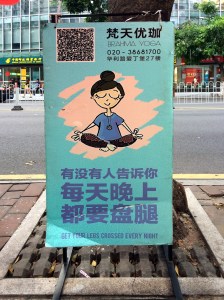
Yoga is everywhere!

But the Chinese got there first. China likes to be known for the four great inventions: papermaking, the compass, gunpowder and printing. But (hello!) the Chinese also figured out how to make beer, mechanical clocks, porcelain, and how to harvest silk for paper and cloth, to name a bunch. Not to mention how to spoon-feed a kid a banana out of its own jacket.

So anyone who thinks this place is not civilized needs to look again. These folks invented civilization long before most other civilizations. Don’t get me wrong: China has made me even more appreciative of my privilege and good fortune to be from the United States (not that I wasn’t before). But the people (who speak Cantonese, by the way, not Mandarin, as they do where Annie comes from) are what will stay with me.

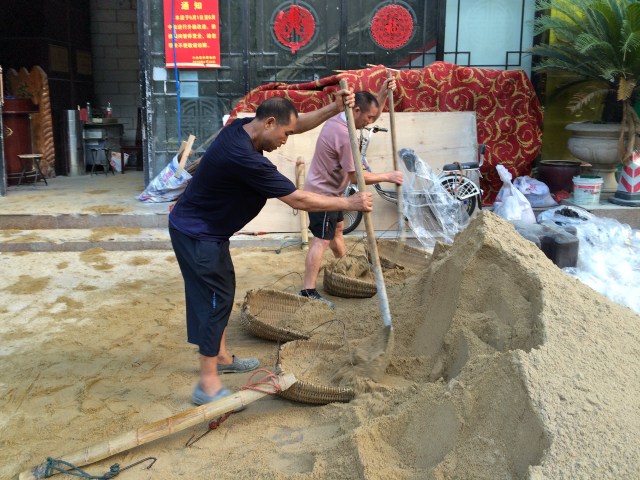
Look at these men on a construction crew, for example. Some of their ancestors may have immigrated to California in the 1850s to build the Central Pacific Railroad through the Sierra Nevada. San Francisco’s Chinatown (the oldest in North America, established in the 1840s) has the highest per-capita concentration of Chinese Americans of any city in the U.S., many of them from Guangdong province or Hong Kong. Some of Annie’s people and their descendants live very close to her in Sacramento!

•IMG_0032a

•IMG_0035a

•IMG_0039a

•IMG_0041aC

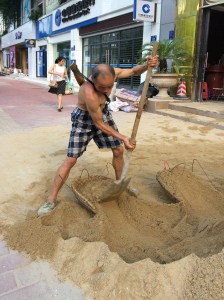
Guangzhou old and new: from the traditional laborer (foreground) to the modern, cell phone-carrying kind (rear).

This is what I’m going to tell Annie someday when I show her these photos in her next photo album, the ones Aunt Jan will assemble for her from this journey.

“These are the people you come from,” I will say. “You come from Lucy and the ayis and your friends at The Lighthouse and The Butterfly House. But you are also from strong women fluent in two difficult languages like Wendy and Elsie who work as interpreters for people adopting children. And see these men shoveling sand into bamboo baskets, then attaching them to carrying poles or yokes and taking them in a building for construction? The shirtless man had to be 70 or more, lithe and strong and working so very hard on a hot summer day.

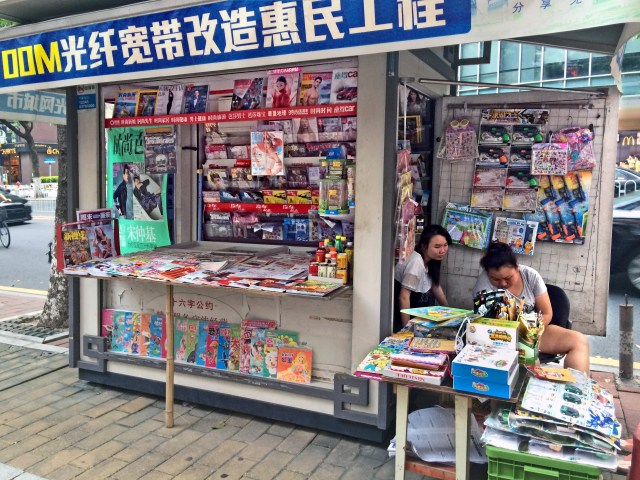
“You are from the noodlemakers and the fruit sellers, the doughnut man and the women who clean hotel rooms, the doorman, the yoga teachers and yogis, the women working at the newsstand, the business people and educators and the young people who work at McDonald’s.”

I will tell her how much I learned during my brief time in China, as I know her new mama will tell about her many years of experience in Annie’s home country. And I will say:

“These are your good people, people to be proud of, as we are proud of you.”


Posted in Bringing Annie Home | 6 Comments

Time is a southbound train

•IMG_9879a

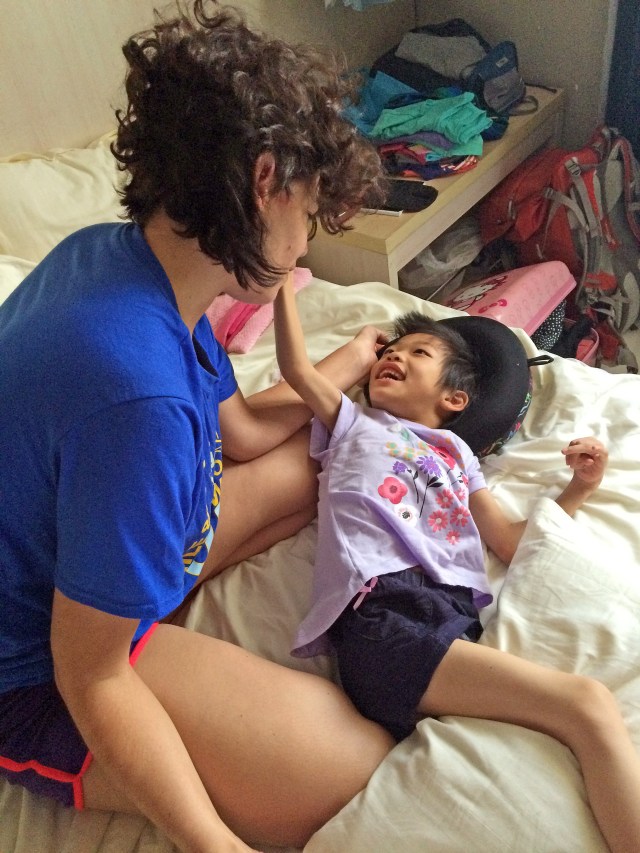
Annie likes touching Nikki’s curly hair.

(#9 in the Annie series)

Moving day. And not just a small move, a large one involving getting a kid and her wheelchair and all our belongings to a train station across the city and into a crowded station, negotiating obstacles like escalators because this part of China is rarely accessible, and boarding a fast train to Guangzhou, Canton, hundreds of miles from Changsha. Neither Nikki nor I know how many miles, but traveling at 200 mph for a good three hours would probably reveal the distance if I’d ever figured out how to do word problems. But I didn’t, and it doesn’t matter. It amounted to a very long afternoon in a hot, muggy train station that tested the patience of all three of us.

•IMG_9910a

Wendy reviews Annie’s documents with Nikki on our last morning in Changsha.

Translator Wendy came by before we left with Annie’s final documents, including her Chinese passport with her visa for her journey to the U.S. We knew we’d miss Wendy. She was an excellent translator and of great help to us at some difficult moments. We wanted to take her with us, but left her with chocolate as a thank you for all her assistance.

•IMG_9923a

Our final van ride in Changsha.

Then we boarded the now-familiar van with its kind and gentle driver for one last trip to the Changsha train station where we emerged, as expected, into the wall of heat that we’d experienced when we arrived.

We waited in a section of the Changsha train station covered (oddly, we thought) by a huge expanse of glass ceiling, which, of course, turned the place into a greenhouse. Annie was a good sport for quite a while, though we felt so bad for her, withering in the heat. On the one hand, you’d think she’d be more used to it than we are, which she probably is. But given the logistics, the bumping around, the noise and all the people—chaos like she’s probably never seen—it was traumatic.

•IMG_9933a

Trying to cool off in the sweltering train station.

And an hour after we arrived, when we learned that our 3:15 p.m. train had been delayed but no one could say how long, Nikki decided to go trade our tickets for another train bound for Guangzhou.

•IMG_9949a

A tour guide waits for her group’s train at the Changsha train station.

The problem was that Nikki couldn’t get us tickets on anything before a 6 p.m. train, which meant an even longer wait. And, to add insult to already sweating misery, the train we were supposed to be on did show up about 45 minutes late, and we could’ve been enroute by 4 p.m. Nikki was kicking herself for trading in the tickets. “The lady I talked to didn’t want to trade them, but this is China, and I thought we might be waiting all night here,” she said.

•IMG_9946a

Train station snack of mandarin oranges.

That would have been bad since we had a 9:30 a.m. meeting with the translator in Guangzhou for Annie’s medical appointment. That’s a must-happen, a deal-breaker if it didn’t, because that would mean no U.S. visa in Annie’s shiny new red Chinese passport. No visa, no U.S. entry.

So we relocated to the slightly cooler end of the station—the part not under high glass windows where the sun was beating down—and found seats in the less crowded area. And that’s when Annie lost it. Great big wails of discomfort and unhappiness. Nikki and I wanted to wail, too, but we’re the grownups, we reminded ourselves. We’d had not a little frustration and teeth gnashing the day before, listening to Annie rage as her little heart broke with the realization that she wasn’t going back to the orphanage where her friends and her ayis were, that she was stuck with these two crazy white ladies who were taking her God knows where, even though one of them kept trying to tell her things in bad Chinese, and the other lady was just unintelligible (what was that gobbledygook she was saying?).

•IMG_9954a

The long wait for the train to Guangzhou.

Nikki sprung Annie from her chair and, as I unfolded the changing pad on the train station floor, Nikki set her on it, hoping she’d be more comfortable there. Annie was having none of it. She wailed and thrashed her stiff limbs, furious, and our blood pressures rose and none of us wanted to be there, but we were stuck until that train came.

None of us had had lunch, and while still in her chair, Annie’d eaten the yogurt and the applesauce Nikki’d brought, but that wasn’t a proper meal. And it didn’t seem to make her feel better.

•IMG_9959a

McDonald’s to the rescue!

So there we were with a hot and upset child when it occurred to me to do something I never do at home anymore—I ran to the train station McDonald’s and, in a rare moment of independence in a place where I have very little Chinese, managed to order two meals by pointing to the numbers of the meals on the menu—one double cheeseburger and one Chicken McNuggets. And Sprite because it comes with crushed ice you can trust, Nikki says, and I hadn’t had anything resembling ice for more than a week in the hottest conditions I’ve ever encountered. (Have I mentioned that it’s generally been about 95 degrees with 80 percent humidity and little to no breeze?) I drank a bit of the soda—again, something I never do at home anymore—just for the cold of it.

I brought it all back to where Nikki was trying to comfort Annie—which still wasn’t working. People were walking by staring at this kid with the twisted limbs like gnarled tree roots on the floor, probably wondering, “What the heck?” We’d had a lot of stares, which we expected, some of them hostile, which didn’t help. We hadn’t yet encountered so much stink eye, as they say in Hawaii, in a single day. But we also got looks of sympathy, and one young couple handed me a small wrapped piece of candy as I desperately fanned Annie with a folder I’d brought with me. (There were no foldable, paper fans for sale to be found. In Changsha. And I’d been looking. No fans. Don’t they come from here?!)

I sat on one of seats where we’d piled our belongings as Nikki sat on the floor with Annie. I ate the double cheeseburger, surprised at how good it was. When I’d walked across the station to McD’s, I employed a little walking meditation with a lot of helpushelpushelpus, asking for any available miracles the companion spirits might be able to bestow. Now would be good, I thought. One was, it turned out, that I was able to order food in a country where I don’t speak the language and actually find a young man behind the country who tried his best basic English on me. Never have I been so grateful for English language learners.

But we still needed another miracle… fast.

After I gobbled my burger and fries, I urged Nikki to eat, which I knew would be difficult, since she was so upset. So I said, “I’ll sit with Annie,” and we traded places—me on the floor and Nikki on the seat also holding one of our backpacks. I thought to grab my new iPad, which I had loaded up with music the day before I left home. I’ve been singing to Annie, and I tried again with our Top 6 Annie Hits: “Tomorrow,” “The House at Pooh Corner,” “The Wheels on the Bus,” “Let’s Go Fly a Kite,” “Mother Duck” and, of course, “Supercalifragilisticexpialidocious.” She seems to like my singing, or at least be amused by it. This time my singing brought a momentary cessation of tears, but not good enough, Aunt Jan.

Antsy-McClain-2014-07-05-1281-1024x681

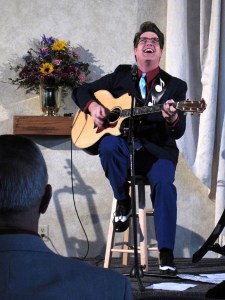
Antsy McClain in concert

And then I thought of Antsy. I had maybe nine songs on the iPad by Antsy McClain and the Trailer Park Troubadours, including such hits as “One Less Trailer Here in Pine View Heights,” “Living the Dream” and, oh, yes, “When You’re Laughing.” Which turned out to be the perfect song for the occasion.

As soon as I hit “play” and Antsy’s resonant baritone came out of my iPad, tears sprang to my eyes. It must have been hearing a familiar voice when I needed one. Antsy has become a good friend of Dick’s and mine. He and I edited (and he designed) a magazine for his fans called Enjoy the Ride, which was a lot of fun.

•IMG_9971a

I needed that happy Antsy song with a catchy tune and good beat. I didn’t much care if the song did anything for Annie; it was all about me in that moment. But (whaddya know?) we got our miracle. Within seconds of hearing his voice, Annie’s tears stopped, her eyes were riveted to the iPad, and a small smile began to creep across her face. Then a grin. Then an Annie chortle. I sat there on the floor of the Changsha train station, boogie-ing from the waist up, singing along with Antsy:

Ladies and gentlemen, children of all ages
May I have your attention—here it is for all it’s worth
Life is a circus—it’s crazy, outrageous
It’s the greatest show on earth

Three rings are goin’, there’s always somethin’ happening
Acrobats and jugglers and a human cannonball
My face is painted; I’m here to keep you laughing
Helpin’ you smile through it all.

The world’s a brighter place when you’re laughing
I love to see your face when you smile
A stranger’s just a friend waitin’ to happen
Inside us all there’s a wide-eyed child.

•IMG_9961a

Antsy sings to Annie, a wide-eyed child.

She loved it. I played all the Antsy songs I had on my iPad, and Annie was riveted to the screen, fascinated by his voice. I tried other music, but her favorite was the guy with the fabulous pompadour and the goofy glasses (James Taylor came in second place, but it was a distant second). So I played Antsy over and over for a good 45 minutes, until it was time to load Annie into her chair and head to the train platform.

It turns out that Nikki had seen Antsy and the Troubs when they played the Palms Playhouse in Winters. And Dick and I had, just two weeks before I left for China, gone up to the Troubs’ annual camping extravaganza, Woodflock, in Red Bluff, California (aka one of the hottest places in Northern California that now doesn’t seem so bad to me]. I did a writing session there for 37 Flamingoheads, as his fans call themselves, and people wrote and read like angels on a hot day, which, given what I know now, barely tips the heat meter of the world. But oh, they were on fire, and it was a beautiful thing, listening to all those words that flowed out of people.

I thought of those people and their good writing after we put Annie in her chair. That made me smile. We still had some time (our 6 p.m. train didn’t arrive till 6:30), and Nikki had the brilliant idea to try ice cream from McD’s, with strawberry, Annie’s favorite flavor. So she headed over there and brought back a cup of the cold stuff. I spooned it into Annie’s mouth as fast as I could, and she loved it.

•IMG_9973a

Annie’s first train ride from Changsha to Guangzhou.

She also loved her first train ride. (I loved my second fast train ride in China, too.) Who doesn’t love watching the world whizz by in a blur of color and images, all of them new to you? Though exhausted, Annie took to it like a trooper before Nikki pulled Annie out of her chair and let her lie across two seats, where she fell asleep.

We didn’t get to Guangzhou till 9:30 and then had to find a driver, who turned out to be a sweet, skinny man with a mini van who barely got Annie’s chair into the back and had to tie down the door with a piece of flimsy looking string. Annie had to lie on the back seat with her head in Nikki’s lap and I had to ride in the front seat with my eyes closed because, even at that hour, with less traffic than during the day, it was a bit of a wild ride. We got into our room a bit before 11, which meant we could make the medical appointment the next day. We were all beyond spent, but we made it.

Here’s the thing: We got several miracles that helped on a difficult day, including McDonald’s (something I never thought I’d say) in Changsha and a resourceful man and his mini van in Guangzhou.

e0063 antsy

Antsy McClain

The biggest miracle, though, came from a songwriter who really did grow up in trailer parks and later became a fine painter and a songwriter. His sweet songs calmed and amused a little girl he may never meet, and she, like so many other fans, was captivated by his voice, his energy, his kindness. Antsy has five kids of his own and a grandchild; this guy understands kids, even if his music is (sorta) meant for grownups.

I hope to always remember this moment: Antsy’s voice floating from an iPad to Annie’s ears. One of his songs is “Time Is a Westbound Train,” a wistful ballad with a lovely metaphor. Once we were on the train, I set the iPad on Annie’s wheelchair tray and played it for her. She squealed and grinned as she watched the world whiz past the big windows, though we were heading south. Didn’t matter. Time is a southbound train, too.

For the record, Annie also really likes Antsy’s song, “Living in Aluminum,” and when she understands English, I’m gonna teach her Antsy’s Aluminum Rule:

Thou Shalt Enjoy the Ride

Despite the bumps life has thrown at her, I’m pretty sure she already is.

Antsy Jan3

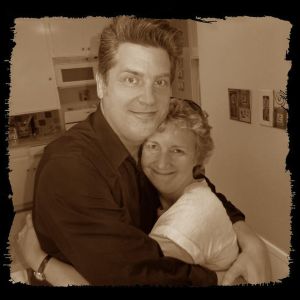
Antsy and Jan, summer 2015

Shameless plug for my friend: Here’s a video of Antsy McClain performing “When You’re Laughing” with tuba player Josh Cutchin at a performance in Davis, California, in May 2008. If you like the song, you can buy it on iTunes or at your favorite online music retailer. It’s on the “New Good Old Days” album. You can learn more about Antsy McClain and the Trailer Park Troubadours at www.unhitched.com.


Posted in Bringing Annie Home | 8 Comments

Five little ducks

•IMG_9698a

(#8 in the Annie series)

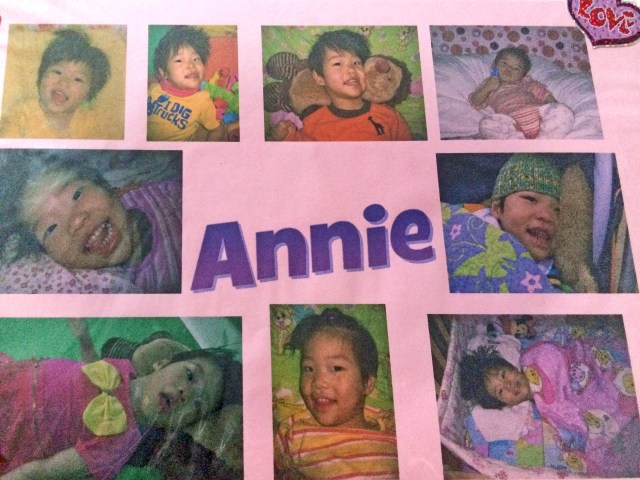
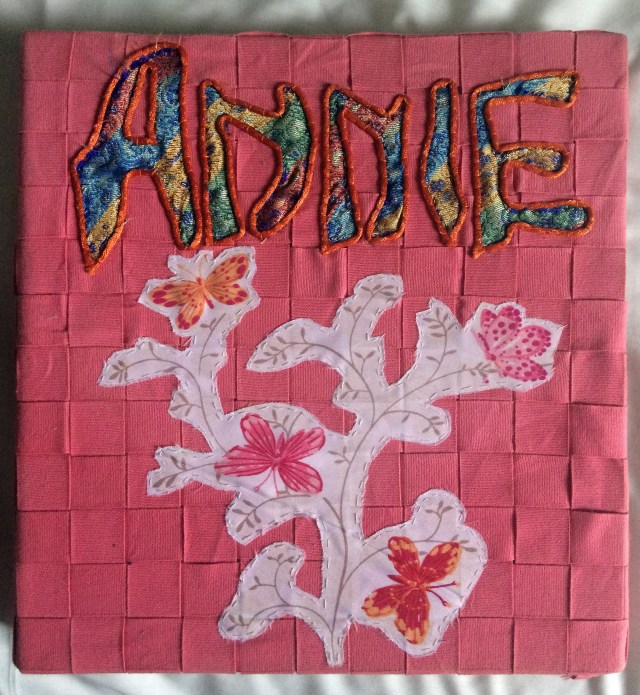
As Annie napped on our third day in Changsha, I looked through her scrapbooks. She came to us with two of them in her pink Hello Kitty suitcase—one from her first home at The Butterfly House and the second from her most recent home at The Lighthouse. There must be a Chinese character for “beautiful” and “heartbreaking” together—at least, I hope there is—because these scrapbooks are both.

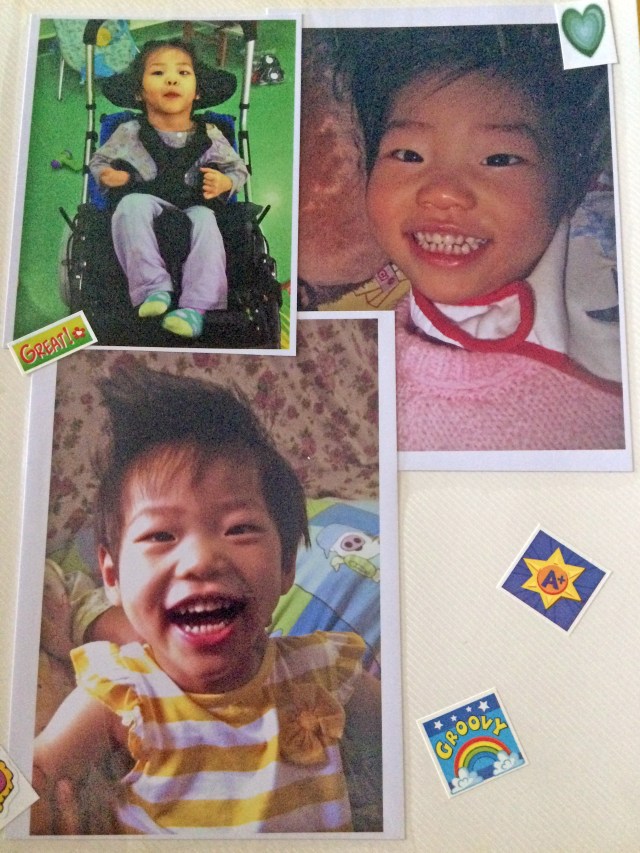
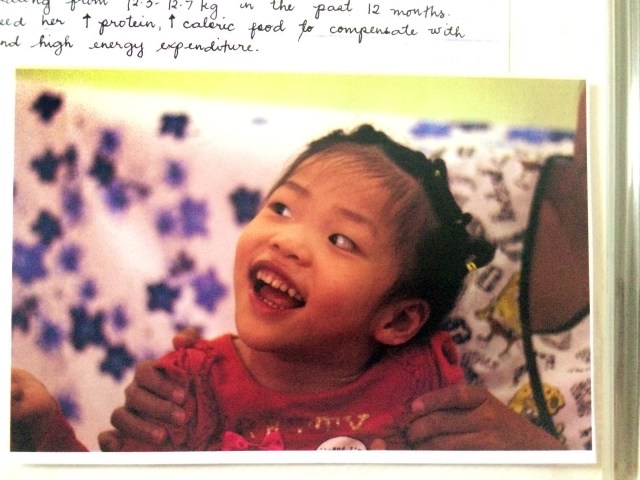
They are, among many things, testament to Annie’s life before Nikki and to the many people who have loved her. They are filled with letters in Chinese and English from her ayis and volunteers and staff who have deeply cared for and adored Annie. There are photos of Annie at all different stages of her life and written stories about her, too.

Here’s one of her scrapbooks:

•IMG_9738aC

Is this sweet or what? It was kept by The Butterfly House, the hospice where Annie lived when she was found May 22, 2010. Her age was estimated to be 1, and her birthdate was assigned exactly a year on the day she was found—May 22, 2009. For three years the good people at The Butterfly House loved and nursed little Annie, and, when she was doing well, she was moved to The Lighthouse, where she spent her most recent three years. She turned 7 on May 22 this year.

There is so much to ooh and ahh over in these precious volumes. But the entries that really tug at my heartstrings are the ones about her wheelchair. Annie didn’t have a chair for the first few years, and because she can’t sit up on her own, it meant she spent most of her time lying down or being held. She had a stuffed hedgehog named Wei-Wei that supported her head while lying, I learned from her scrapbook, but, as is true now, she had no vertical stability.

Enter a volunteer from Hong Kong named Andy, who spent time with Annie, charmed by her “megawatt smile,” it says in the scrapbook. (That bright smile has grown even brighter as she’s gotten older.) “He was captivated by Annie’s loving heart and wanted to do something significant to help her.” Apparently Andy (I don’t see a last name for him) returned to Hong Kong and with his wife Lesley raised money for a specialized wheelchair for Annie—the one she has now.

“Annie loves people, and we think her own chair will increase her interaction with visitors,” it says in her scrapbook under her photo with Andy. “She will be able to make eye contact more easily, and volunteers will be able to take her outside for a walk.”

We have learned this, too: She loves walks. Her chair made that possible.

Andy and Lesley and some Hong Kong scouts raised money for Annie’s wheelchair, which is a sporty, aluminum-framed model. Nikki is certain that it must have cost several thousand dollars. And the entries in her scrapbook about getting that chair leap off the page with joy:

“Her specially made chair has arrived, and she absolutely loves it. We are so grateful to Andy, the Hong Kong scouts and all friends who contributed to this incredible gift. Thanks to you, this unique and precious child can feel the joy of greeting her friends at eye level. She can see the world like other children, instead of always looking up. She has the ability to move within her environment instead of having to wait and hope that others will move to her.”

On another page with a picture of a smaller, happy Annie in her chair, it describes her as “sitting up like a queen in her new throne.” And a very good writer has added:

•IMG_9723a

Photos from Annie’s scrapbook.

“This chair has changed her experience of the world and opened up a new perspective for her. But even more than that—it speaks to her heart and tells her that she is valued and that she is worthy. And that is a message her heart can always hold on to.”

I was sitting on my bed in our hotel room in Changsha, looking at this story, reading bits of it to Nikki, trying not to let my tears drip on the scrapbook. It is a most incredible record of Annie’s life. The idea that someone is an “orphan” can summon some horrifying images. While it’s true that Annie was abandoned, she made a new family at two different places that became home to her, filled with adults and other children who love her and will think of her wherever she goes.

•IMG_9724a

A younger Annie.

—-

When Lucy brought Annie’s medications to us the day she was delivered to Nikki, Lucy suggested that we come to dinner two nights later with some of the staff of The Lighthouse. She offered to set up a dinner at a restaurant near us so we could join their weekly gathering. It turned out to be very close—just across the street, though we had to walk a couple of blocks to find a safe place to cross the street at dinner time/rush hour.

We were a bit late, and it turned out that The Lighthouse folks had reserved a private room upstairs in the restaurant—up stairs, literally. No elevator. But Lucy, a can-do woman from Singapore, seemed undaunted by the barrier. She convinced Nikki that they could carry Annie up two long sets of stairs, and a couple of The Lighthouse folks came to ceremoniously escort the queen and her chair to her dining room. There we met the other staff members who had come for dinner, a very nice group of people who have made it their life’s work to teach and support the children of the Lighthouse.

•IMG_9756aC

Lucy (right) feeds Annie dinner at the restaurant.

Lucy had ordered a variety of dishes that were brought in and placed on what we might call a large lazy susan—a circular tray that turns in the middle of the table. We ate family style after Clive gave the blessing, and Nikki caught up on news of people who had worked at The Lighthouse.

When we were done, Lucy and a couple of the other staffers stood up and, looking at Annie in her chair across the table, burst into the five little ducks song in English:

Five little ducks went out one day
Over the hill and far away
Mother Duck said, “Quack, quack, quack, quack,”
But only four little ducks came back

Here’s the amazing thing: Not only does Annie love this song, but she also sings along! Lucy paused before she got to the “quack quack quack quack” part, and all heads at the table swiveled to Annie. Much to our surprise, we heard her say, “quack, quack”! It took her a bit to get the words out, but they were a recognizable “quack.” Nikki and I were as delighted as if Annie had up and recited a whole poem.

She knows a song! In English! She can sing along! Lucy continued with great flourish and arm motions:

Four little ducks went out one day
Over the hill and far away
Mother Duck said, “Quack, quack, quack, quack,”
But only three little ducks came back

Lucy has been saying to Nikki since we got here, “Annie is very smart,” and we are seeing this, too. She’s tracking with everything being said in Chinese, and she understands more English than we realize.

Three little ducks went out one day
Over the hill and far away
Mother Duck said, “Quack, quack, quack, quack,”
But only two little ducks came back

Clearly this is true. As my father used to say, “There’s nothing wrong with her thinker.” Lucy kept singing and so did Annie:

Two little ducks went out one day
Over the hill and far away
Mother Duck said, “Quack, quack, quack, quack,”
But only one little duck came back

And the saddest verse:

One little duck went out one day
Over the hill and far away
Mother Duck said, “Quack, quack, quack, quack,”
But none of the five little ducks came back

Lucy sported her saddest face at this development, none of the ducks coming back. But then, she wound up for the big finish:

Sad Mother Duck went out one day
Over the hill and far away
Mother Duck said, “Quack, quack, quack, quack,”
And all the five little ducks came back

•IMG_9773aC

Much rejoicing at the happy ending. And as we’ve learned, Annie loves a big finish when it comes to songs. She quacked for all she was worth on the last verse, and at the end there was much laughter and applause around the table from some of the adults (and two kids) who knew her best.

The queen’s entourage carried her down the stairs, too, when it came time to leave, and everyone bid Annie a fond farewell. After we went out into the steamy Changsha night to walk back to our hotel, Lucy strapped on her helmet, got on her scooter (a primary mode of transport in Changsha) and waved at us.

“Bye-bye!” she said, which, it turns out, means the same thing in Chinese as it does in English.

Annie grinned at her computer teacher. Nikki and I waved, and we walked to our temporary home carrying in our hearts a familiar tune that we can sing—not just to—but with Annie.


Posted in Bringing Annie Home | 2 Comments

Changsha walkabout

•IMG_9741aC

(#7 in the Annie series)

Here’s how China has changed, Nikki says, in the four years since she was last here:

—There’s not nearly as much smoking in public as there used to be. Typically, only men smoke and fewer seem to be. Also there are “no smoking” signs in a lot of places, including restaurants and hotels and at elevators.

—Likewise, you don’t see people spitting on the street as much. Or dog poop on the street. Or people (usually men) just taking a piss on the street or in a corner.

—You find more western, pedestal-style toilets, though Nikki prefers to use the squatty potties (my term) that amount to a porcelain hole in the floor, which are more sanitary, she says. Otherwise, women climb on top of the pedestal and squat anyway. TMI, right?

China is still hotter than snot, though, in summer with humidity of the sort that leaves you noodle limp the moment you leave an air conditioned space. And not all public spaces (particularly restaurants) pop for A/C. They have big fans that move around the hot air, and locals seem fine with that. I can’t believe I’m envious of Sacramento, which this week is sporting 105-degree days. We say this as if we know otherwise, but many of us Californians don’t know the difference: But it’s a dry heat. Right now I’d love me some dry heat.

If on this journey I have had Chinese food forever redefined for me, I now also have a new definition of “hot.” In weather and in food. (Hunan loves its chiles!) My privilege as a white, college-educated female professor comes blaring at me here, too. I understand now why so many people in the world think of Americans as “rich.” We are, by comparison. I have a whole house to myself (though I will have a new housemate and a new cat by the time I get home). I own a car and drive myself to work at a college each day. I am beyond fortunate, and while I know this very well because there are plenty of people who have far less than I in my very city, it’s even more obvious in China.

•IMG_9597a

Annie in Changsha Skypes with her grandparents in California.

Also, closer to my very city, Nikki’s parents (who live in Camino, a good hour from Sacramento) got to meet Annie today via Skype. She got to hear her new grandparents’ voices and see them in fuzzy images from 7,000 miles away, which continues to seem like a miracle to me. They all sounded delighted to meet each other.

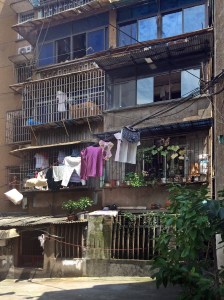
•IMG_9609aAfter the chat with her folks, Nikki took Annie and me out to the local street market, not far from the super market, to see the sights. There, down side streets, under apartment buildings with bars on the windows and balconies, the street vendors lay out their wares in a tradition so timeless you can imagine the meat guy’s grandfather hanging parts of animals on hooks for people to peruse and buy.

•IMG_9626aC

Live fowl and frogs at the market.

You can envision earlier generations presenting the live chickens and pigeons, the live frogs and crawdads and fish, ogle the greens and red of new chiles spread on the ground to pick through and take home for dinner.•IMG_9628aC

•IMG_9610a

The noodle shop

frying donuts

The doughnut man.

I loved the doughnut guy, though I’m pretty sure he wouldn’t recognize that designation. He was a youngish man standing behind two vats of steaming oil, plunking in hanks of dough and retrieving them, cutting them into smaller pieces and offering them in a paper tray to passersby. We had stopped so Nikki could give Annie some juice on that steamy afternoon (as they all are in summer). I looked behind us, saw the doughnut guy, who gave me a nice smile.

“What’s he making?” I asked Nikki, who looked up from Annie’s juice box.

“Fried dough,” she said. “Doughnuts. They’re usually pretty good. Try some.”

Though I generally avoid sugar, the smell convinced me, and I gestured to the doughnut man that I wanted to buy one of the little paper trays. He smiled again and said something in Chinese. I looked to Nikki.

“Fifteen,” she said.

“Fifteen RMB?” I said. That’s about $2.

“Yep,” she said.

So I withdrew the cash from my shoulder pack and gave it to the man, who gave me a paper tray with a slender pointed stick protruding from a piece of fried dough. I bit into it. Heaven. I don’t know what it was—there was nothing fancy to it—but it was, in that moment, the best version of a doughnut I’d ever eaten. On a blindingly sweaty day amidst hundreds of Chinese in a street market.

•IMG_9614a

The tofu shop

I tore off a tiny piece for Annie. “Doughnut?” I said to her now that she was finished with her juice. As if she understood me, she flashed her big Annie grin, opened her mouth. I popped in the bit of fried dough. She had her usual wide-eyed chewy look, and as the piece worked its way to the back of her mouth, she swallowed and then opened her mouth again. I popped in another piece.

•IMG_9613a

Keeping all the eggs in one basket.

“Good stuff, huh?” I said, and Nikki, who didn’t want any doughnut, laughed. We all did as I took bites and gave Annie bites until we continued walking down the street looking for an indoor pharmacy. Nikki wanted more sleep medication, which you can buy over the counter in China (apparently you can buy just about any drug you want over the counter in China). We found it at the second pharmacy we went to, where a kind man behind the counter came out and gave Annie a lavender balloon on a stick, which earned him a big Annie grin of appreciation.

Annie makes a friend

Annie makes a friend.

And as we came out of the pharmacy, an older woman with kind eyes came toward us on the street. We’d gotten used to the looks of puzzlement from many people, of shock and disgust from others. I knew that people in China were not used to seeing a physically disabled child in a wheelchair. But this woman came toward Annie and greeted her in Chinese. Annie lit up, and Nikki talked to the woman a bit. She bent down to talk to Annie a bit more. Whatever she said pleased Annie, who chortled. Annie had made a friend.

Nikki said later that the people who approached us, who asked nicely about Annie, were likely to have had experience with people with disabilities before. “Maybe they had a child with a disability, or someone in their family,” she said. “Or a friend.” We saw their interest as one of compassion, of friendliness, unlike the people who would pass by saying things in Chinese that Nikki could understand—things Nikki didn’t want to repeat to me. These things annoyed Nikki to no end, and a couple of times, she’d say things in Chinese to let them know she understood. But mostly—and this must have taken supreme acts of self control—she held her tongue.

•IMG_9660a

The housewares store

This is how life will be now. Some people will be unkind; some will be curious. Others will look away; some will ask questions. It’s gonna be exhausting dealing with all that. And I’m sure there will be times when Nikki is not going to want to have to educate people about cerebral palsy and how it affects her daughter.

•IMG_9677a

Nikki, Annie and the noodle man

But the doughnut man, the nice woman who stopped and chatted—these are our people. As was the noodle guy who runs the small, modest shop behind our hotel. Nikki had gotten noodles from him before—lovely, melt-in-your-mouth noodles and broth that have forever spoiled me for store-bought ramen. And when we came back with Annie, he seemed happy to see Nikki and also said hello to Annie and me. She ordered for us all, and he set to work.

“I’m going to ta•IMG_9673ake her back to the room,” Nikki said to me, which was a good idea given the heat.

I knew what to do, though neither of us spoke the other’s language. “I’ll pay him and bring back the food,” I said.

“Perfect,” she said, and she explained this plan to the man before she and Annie wheeled away to our hotel around the corner.

I stood there in the alley looking up at the apartments with the barred windows (is that to keep people in or from falling out?), at the laundry hanging on lines from so many windows. In this all humidity, I wondered, does it ever dry? How long does that take?

•IMG_9686a

The noodle shop

And in about ten minutes, the noodle man came and got me, beckoned me inside to load up our noodle bowls with chiles or pickled veggies or onions. I put some of each in Nikki and Annie’s bowl, just the onions in mine. He grinned at me and fastened plastic lids onto the bowls for me.

It struck me again: We are all one in spirit, but we are not all the same. Not all Chinese are unkind about difference, any more than all westerners are compassionate toward it. But a genuine smile reaches beyond language and borders and imagined boundaries. And we, in this small corner of a huge country, have someone traveling with us who has the best smile, who opens doors and hearts in ways she can’t begin to know. Are we lucky or what?


Posted in Bringing Annie Home | 5 Comments

You’ve got a friend in me

•IMG_9794a

Listening to music before breakfast.

(#6 in the Annie series)

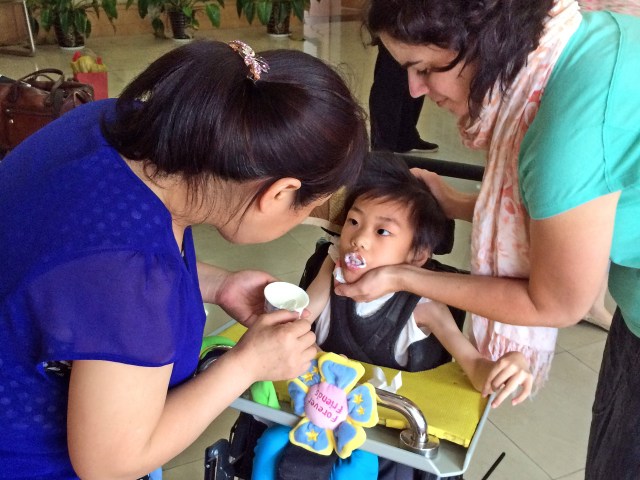
We began our Wednesday when Wendy came to pick us up in the same clean van that took us to get Annie two days before. There was a different driver, but he drove with the same carrying-precious-cargo finesse as the first driver. Wendy had learned that we needed to go back to the Civil Affairs Center to retake Annie and Nikki’s family portrait. The first one was done against a red background, which seemed very China-ish to me. Apparently, it was supposed to be done against a white background.
•IMG_9812a

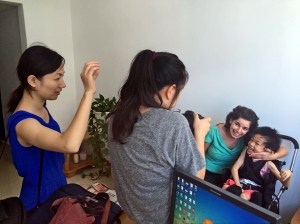
Retaking the Cardoza family portrait.

This did not thrill Nikki, but the paperwork was still in progress—we had a couple of days before Annie’s Chinese passport and visa came through—so she wisely did not want to rock that boat. But we also had appointments that morning to visit the two facilities that have housed Annie since she was given up when she was about a year old—the Butterfly House hospice where she spent her first three years and The Lighthouse, the ICC orphanage, where she has spent her most recent three years. Wendy was most apologetic for adding another stop to the agenda, but it wasn’t her fault, we assured her.

So after changing and feeding and dressing Annie earlier than any of us wanted, we met Wendy and the van driver and obediently returned to the same third floor office where Annie and Nikki’s first portrait was taken. Mother and daughter posed against a white background for a second family portrait with me, the documentarian, taking photos of their photo shoot.

•IMG_9821a

Nikki and Annie visit The Butterfly House, where Annie was nursed back to health.

We bid Wendy farewell for the moment, and then the nice van driver took us the Butterfly House, which is in the same building as the Welfare Center, the Chinese orphanage as well as convalescent and old folks’ home. Lyn Gould and her husband Alan and helpers have transformed one of the floors into a bright, welcoming space that receives ill or dying children. Lyn is an English nurse, and she has brought the idea of palliative care to a place that typically doesn’t offer such services. Though Butterfly House has relocated to a new floor since Annie was a resident and Nikki volunteered there, it felt familiar to them both. This was where they met in 2010, not long after Annie was brought in, though only one of them remembers this.
•IMG_9829a

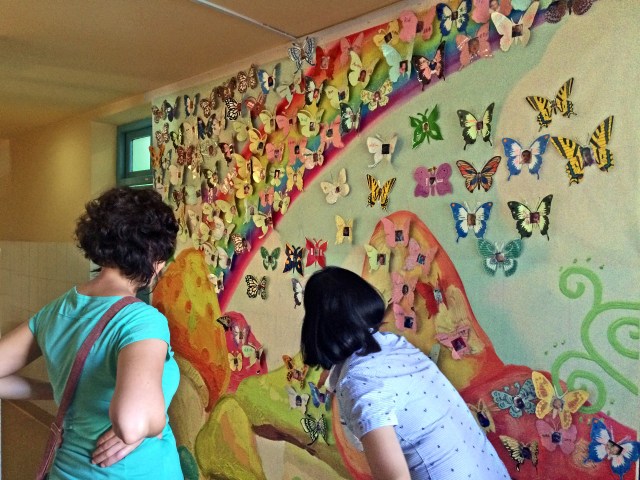
The butterflies decorate the wall at the Butterfly Children’s Hospice in Changsha.

Unfortunately, Lyn and her other nurse, Katie Hill, both of whom are Nikki’s good friends, were in England during our visit. Still a few kind women showed us around, and we got to see some of the butterflies currently in residence. One, a little five-month-old girl, laid very still with a feeding tube the size of a rice noodle snaking into one nostril. Another, a four-year-old boy with a heart condition, played happily on the floor with a young volunteer from England. And without anyone saying so, I knew that if these children were here, they were not expected to live long.

But neither was Annie when she was brought here in 2010, small and starving, bound up with her spastic muscles. Lyn and Katie and Chinese nannies and volunteers saved Annie, and it was meaningful to see where she’d come from. Not all their butterflies survive (that’s why it’s called Butterfly Children’s Hospice), and Annie is a huge success story.
•IMG_9834a copy

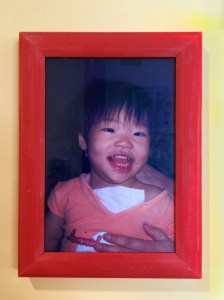
A much younger Annie.

I watched her carefully to see if she recognized some of the adults who gathered round her chair, exclaiming over how much she’d grown. She grinned her fabulous Annie grin, and it seemed that she did. Her photo is still on a bulletin board—a much smaller Annie, a chubbier Annie with big cheeks and longer hair. (Nikki doesn’t love Annie’s current haircut, which sticks straight up; neither does Lucy, who asked The Lighthouse staff not to cut Annie’s hair, but they did. It leans toward the punk, as if she’s rocking an early David Bowie look.) In the photos she looked happy, flashing the same bright smile, and she seemed delighted to see the people there now, who were equally happy to see her. It’s a happy place, the Butterfly House.

We couldn’t stay long since we had an 11 a.m. appointment at The Lighthouse, Annie’s most recent home. We went to retrieve more medication, since she’d come with none and Lucy was not given much. The idea was that Nikki would receive a month’s worth since she wasn’t sure when she could see a pediatrician once they returned to Sacramento. But we also wanted to see more examples of the physical therapy Annie had gotten, and Lucy invited us for lunch. Nikki told Annie where we were going and that she could also say goodbye to her friends.

That may have been our biggest mistake.

•IMG_9839a

Staff at the Lighthouse, including her ayi (third from left) greet Annie as she returns for a visit.

Lucy and other staff members met us at the front door, as excited to see Annie as she clearly was to see them. The Lighthouse building is an older facility, not nearly as bright and lively as The Butterfly House, but clearly staffed with people who love these kids, each of whom has a disability. On the second floor we got to see the computer room where Lucy holds class, crammed with wheelchairs and kids on perhaps eight older computers. One girl in a chair had control of only her chin to operate the computer. “She used to have more movement,” Lucy told us later, “but now she’s like this.”

This broke our hearts, but it made clear what happens to kids who don’t have the benefit of ongoing professional physical therapy and treatment. They deteriorate, and if they’re not adopted, they stay at The Lighthouse as adults or transfer to the Welfare Center. It’s a dismal life. That’s why Lucy told Nikki there’s nothing for Annie in China, that she needs to come to California to have a hope of a better life, of more mobility, to go to school, to learn English and perhaps go to college, become a professional one day.
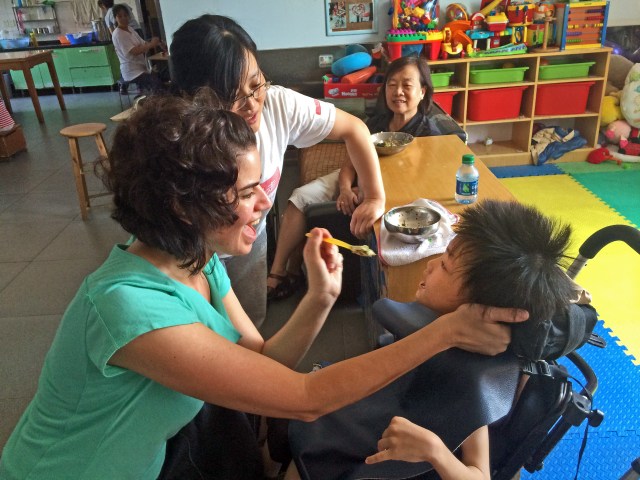
•IMG_9860aAnnie ate it all up—literally—as one of the Chinese care-ers (as they’re called) fed her a heaping bowl of rice and showed Nikki a more helpful feeding technique. We were also shown specifically what kinds of exercises they’d been giving Annie daily and the standing frame she was placed in to let her be truly vertical for a few hours each day. Because she has no head control (though Lucy said Annie used to until recently) and she can’t sit up unaided, Annie was doomed to a horizontal life until a couple of volunteers several years ago raised the money to buy her special wheelchair.

Nikki got more medications from a nurse downstairs just before we left, and many people—staff and kids—crowded around to say goodbye to Annie. She smiled, but as we wheeled her outside and Nikki and the van driver lifted her chair into the van, Annie set up a howl of protest. And we immediately understood: She thought she was going home to The Lighthouse, not home with Nikki. All the preparation the good people at The Lighthouse had done to get Annie used to the idea of adoption was gone in an instant.

It was a tense ride, major rage spilling out of this small, thin person the whole way. By the time we got her back to the hotel, Annie was still howling, red in the face and truly pissed. I imagined her thinking that she’d been double-crossed by these two foreign ladies, and she was not to be mollified. Nikki laid Annie on the bed and sat with her, talking, trying to calm her, to no avail.

Nikki and I looked at each other with oh, shit, what have we done looks as a child we barely knew sobbed out her broken heart in front of us. The rage turned to pure sadness and back to outrage again. It was painful to listen to. And it went on and on and on. I wanted to crawl into a corner and cry myself, and I was pretty sure Nikki did, too.

After almost two hours of nonstop Annie wailing, Nikki asked me to go to the super market (two words here, in English, on the green neon sign on the top of it) and buy some candy for Wendy, our translator. Wendy was the one who took me to the super market Monday to pick up some Annie supplies we needed—diapers, yogurt, juice—and has been so super helpful that we wanted to give her a gift. (We hadn’t thought to bring one from home.) Lucy had suggested chocolate, so I went in search of something nice. It was a relief to leave that room packed with sorrow and upset, get into the hot elevator and let the furnace of a Changsha afternoon hit me in the face.

Before I went outside, though, I found a place to sit just off the lobby on one of the stairs that leads down to the dining room. Shaking and distraught, I just had to hear Dick’s voice. We’ve been gone seven days, and I hadn’t called him, though we’d been corresponding through texts and emails. I had signed up for an international phone plan for $30, but it also cost a buck a minute. That’s not why I hadn’t called. I didn’t want to sound like I was whining. I chose to make this trip, after all. I knew it would have its challenges.

I figured it would be about 12:30 p.m. in Sacramento, and I dialed Dick’s number, hoping he’d be there. He answered on the third ring, and just hearing his “hello” made me cry. He is my rock and cheerleader, and while I know he’d been cheering us on from afar, it was not the same as talking to him daily. And I’d had some trouble sending texts and emails to him for reasons neither Nikki nor I could fathom. I turned the phone off and on a lot, hoping to rejigger the thing into connecting with China Mobile. It doesn’t always work. It’s China, Nikki reminds me.

“Janis!’ he exclaimed.

“Dickie!” I hollered back. “Is it OK to call you now?”

“Sure,” he said. “What time is is there?”

“3:30 p.m. Thursday the 22nd,” I said. “What time is it there?”

“It’s 12:30 a.m. Wednesday,” he said.
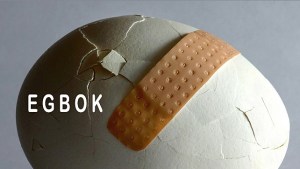
•EGBOK chinaI had not done the math right—California is 15 hours behind China time—but it didn’t matter. Dick, my lifeline, was there. I could hardly talk for the sobbing. I poured out the difficulties of our day and cried, and he said all the right things, especially EGBOK: everything’s gonna be OK. I remembered my little card he’d made for me with a cracked egg bearing a Band-Aid with the EGBOK inscription on it. I was carrying it in my little tummy pack with my passport. If I ever needed an EGBOKing, it was today.

“I know it’s just a hard day, and it’s gonna get better,” I told him between tears, “but Nikki and I are just so tired and feeling it, and she’s miserable. Annie’s sobbing out her little broken heart, and we wonder if we’ve made it worse by taking her back to see her friends. But we got some good information at The Lighthouse—better positions for feeding Annie and physical therapy stuff and her medications.”

I went on and on, and he listened, and I cried some more and began to feel the heaviness in my heart lift, and that made me cry more because how lucky am I to have this amazing man loving me and supporting this wild notion from so far away? Way lucky.

So I talked for a good half hour (“It’s gonna be an expensive phone call,” he said. “I don’t care,” I said, and I didn’t. This is therapy, after all, and a buck a minute is cheap therapy), And after we hung up, I dried my tears and went back up the stairs and down another set of stairs into the lobby and out into the walloping heat of a Changsha summer afternoon.

(What I wouldn’t learn until later is that Annie eventually calmed down, and Nikki said they’d had a good talk, Nikki explaining what was going to happen—including rides on trains and an airplane—selling the whole concept of coming to live in California directly from mama to daughter. And Annie seemed to understand, Nikki said, so that by the time I came back to the room, they were both smiling and playing one of the games on the iPad together.)

As I made my way to the grocery store, about five city blocks away, I felt a little lighter for the talking. I reminded myself to pay attention, that the big danger is crossing the street—traffic is crazy and pedestrians do not have the right of way here—but Nikki had shown me how to cross the big street in two shorter sections, taking refuge under an overpass jammed with parked cars. I was in search of unrefrigerated yogurt we could take with us the next day on the train to Guangzhou and chocolate we could leave behind for Wendy. China does not have fancy chocolate, but Nikki suggested that I might find Almond Roca or Dove’s.

I crossed the big street in two sections and then across another side street (“cross when other people do,” Nikki had advised, and I did) and made my way across a corner parking lot jammed with well-used motorbikes. It looked as if they might be for rent. On every corner men sit on motorbikes, a mini taxi service, ready to ride people to destinations.

I went up the store’s concrete steps (no ramp) and pushed through the long, thick, vertical strips of plastic that serve as the front door to the store and within three steps found myself in front of a tall air conditioner. I stood there for a little bit, cooling, and then went in search of chocolates. Fairly easily I found the chocolate aisle and there was the Dove’s, so I grabbed a decent-sized container and a kids’ container of M&Ms in one of the cartoon images of the talking candy.

The yogurt, however, proved elusive. I could easily find the refrigerated kind, but Nikki had specified the unrefrigerated version. I located the familiar cartons of milk in all kinds of flavors (again, doesn’t need to be kept cold) and juices, but could not find anything that looked like kids’ yogurt on the shelves. I wandered for a good half hour, even asked a clerk who had no English, and I didn’t know the Chinese word for “yogurt” (should’ve asked Nikki before I left).

I sighed, frustrated by all the products I didn’t recognize, grateful for ones that also had English on them. It had been a tough day. I was not going back without the damn yogurt. I would find a way. It had to be there. And just as I was about to fall back into despair—over a broken-hearted orphan we were about to transport by train and plane back to a strange land, over my own ineptitude—a miracle. A voice in my head I know so well it might be my own, which, in a way, it is after all these years:

Turn around, Toots.

It was Clifford’s voice, my companion spirit, my husband who died in 2001. I feel him often, but it’s rare that I hear him. In, of all places, a Chinese grocery store at the end of a series of aisles looking at what seemed to be large boxes of juice.
IMG_0336-Buzz Lightyear

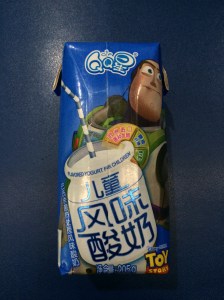
Buzz Lightyear to the rescue!

I did an about face and there, stacked at the end of an aisle of cookies (Oreo seems to be a universal word), Buzz Lightyear’s goofy face grinned up at me from a large blue box. More juice, I thought, but then I peered more closely and saw Woody and Jessie on the front of the box, too, and the words: “Flavored yogurt for children.” I almost burst into tears right there in the store. I couldn’t tell what flavor it was (we’d heard that Annie likes strawberry), but I didn’t care. Dick had helped earlier; now Clifford and “Toy Story” saved me.

You’ve got a friend in me, indeed.

I hefted one of the big blue boxes with nice plastic handle and walked to the checkout counter, a silly grin spreading across my face. I had the chocolate, two kinds. I had, in my wandering a found a pair of child’s nail clippers for Nikki to use on Annie (she’d tried my big ones last night, and they didn’t work). I hoped I would understand how much to pay. And I walked up to a completely open checkout stand, a woman watching me as I unloaded my little blue bag that Nikki had gotten the day before when she purchased new clothes and sandals for Annie.

It came to 131.7 RMB (renminbi, Chinese currency), less than $20. I hauled out 131 RMB and proudly presented it to the checker, who pointed to the .7 on the screen. I found another single RMB and gave it to her and got back 30 cents in three small bills worth 10 cents each. Success!

I put my purchases in my bag (apparently they don’t do that for you) and walked through the long, vertical plastic flaps back into the afternoon heat, feeling triumphant. I could feel both a thankyouthankyouthankyou and an EGBOK rising in my throat. And there on the hot, busy street I said them aloud several times with great gratitude.

And without even trying, as I walked, I sang to myself, channeling a little Randy Newman:

You’ve got a friend in me
When the road looks rough ahead
And you’re miles and miles
From your nice warm bed
You just remember what your old pal said
Boy, you’ve got a friend in me
Yeah, you’ve got a friend in me

By the time I got back to the room, Annie and Nikki had had a good talk, Nikki said, and they were smiling at each other again. Peace had been restored.

And later that evening before bedtime we took a selfie, all three of us, relieved that the storm had passed, knowing that when that rough road comes, we can call on our companion spirits and reassure each other (sing it with me):

You’ve got a friend in me.
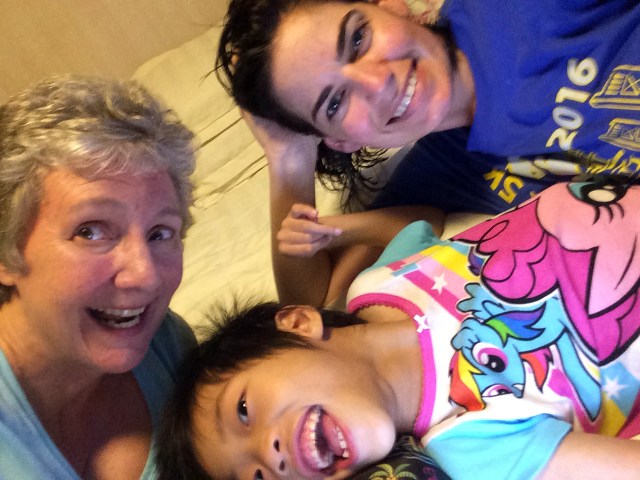
•IMG_9868a

Posted in Bringing Annie Home | 15 Comments

Tomorrow

•IMG_9544a

Annie eats her first breakfast with Mama.

(#5 in the Annie series)

To be honest, when I learned that Nikki was going to adopt Annie, and I decided to accompany Nikki to retrieve this child from a place called Changsha, China, I did not automatically think of the musical. Which is weird because I love “Annie.” (My family and I adored the cast album with Andrea McArdle, the original Annie who could really belt out a show tune.) It was only when Dick said, “She’s little orphan Annie,” that I made the connection. I wasn’t sure if Nikki would love this reference.

Nevertheless, I began practicing Annie’s big number in the shower:

The sun’ll come out, tomorrow,
Bet your bottom dollar there’ll be sun.
Just thinking about tomorrow clears
Away the cobwebs and the sorrow
Till there’s none.

When I’m stuck with a day that’s gray and lonely,
I just stick out my chin and grin and say,
The sun’ll come out tomorrow,
So you gotta hang on till tomorrow
Come what may

Tomorrow, tomorrow
I love ya tomorrow,
You’re only a day away.

I do this in the shower because, although I come from people who are fine singers, mine is not the best voice. Still, I do love to sing… alone, in the car, in the shower. Everyone sounds good in the shower—great acoustics in that small tiled space where inhibitions have been thrown to the wind, along with your clothes. So I just sing my heart out. I wasn’t sure I had all the lyrics right—it’d been a long time since I’d sung them—but I decided that now was time to get them down again, emblazoned in my fading brain, because if ever a kid named Annie had a song, this was it.

So the day after Nikki adopted Annie, we were all having a rough day. She was experiencing lots of gas and bloating and discomfort, poor thing. We were going nuts with unanswerable questions: Are we feeding her the wrong stuff? It’s what we were told was her usual diet: noodles and rice soup and tofu, some small bits of meat and veggies, yogurt (which is the consistency of milk here). She’s also gotta be under tremendous stress and have separation issues, right? And Nikki says kids with CP have digestive issues. But it’s painful to watch Annie try to work on a bowel movement—she’s gasping and crying, and we feel like big meanies here. Is it always this way for her? What should we do or not do to help?

So while Nikki went out to do some shopping (for sandals to replace the dress-up shoes she came in, as well as some new T-shirts and shorts), Annie and I stayed in the hotel room. I went into major Aunt Jan Distraction Mode, looking at some of the kids’ programs Nikki put on her iPad, which is really now Annie’s iPad. She had some simple kids’ games—one consists of bubbles floating up from the bottom of the screen; you reach out and touch the bubbles on the screen and they pop. She had already started to understand this concept the day before when Nikki pulled out the iPad during the long wait at the bank. One game has different shapes and colors that float on the screen—you touch them and they say things like “purple star!” And that same game puts what look like big piano keys in different colors on the screen, and when you touch them, lo and behold, they play an octave.

As she laid on the bed on her side, Annie’s eyes glued to the iPad, I guided her little clenched left fist to the screen and helped her touch the shapes and the piano keys. Big smiles. Giggles. So I played the keys at random, making up spontaneous little songs. She chortled and snorted. We’d heard she liked music, but she liked even more that I sang along to it.

Thus encouraged, I sang her song:

The sun’ll come out, tomorrow,
Bet your bottom dollar there’ll be sun.
Just thinking about tomorrow clears
Away the cobwebs and the sorrow
Till there’s none
.

Her black eyes riveted to mine, she stared at me and made little Annie noises that until that moment I hadn’t recognized as anything but noises. But as I sang, her voice got louder and in a similar rhythm, and I realized that she was vocalizing. She was singing along.

X2 aunt jan annieC

Aunt Jan and Annie sing along to music on the iPad in Changsha.

“Are you singing?” I asked, as if she could understand English.

She grinned at me, her open-mouthed, many-toothed Annie grin and squawked at me. I kept singing and she did, too, and when I stopped, her face fell. So I started again:

The sun’ll come out, tomorrow…

Big smiles, very happy child, so I sang it to the end, complete with the big finish, the Annie in front of me cackling with her big grin:

Tomorrow, tomorrow
I love ya tomorrow,
You’re always a day away
.

I went thrAnnie red dressough the whole song at least five times, circling back to different verses here and there, too. Great audience, this kid.

I admit that I am hugely tickled that Annie loves her song—who doesn’t love an appreciative audience? Nikki likes “Tomorrow,” too, and looks forward to showing Annie the movie when they get home. And we both hope that someday she can sing it herself, belting it out with all the Broadway bravado of, well, Annie. She’s certainly got the music in her.


Posted in Bringing Annie Home | 8 Comments

Annie’s people

(#4a in the Annie series)

This post is from the blog of Butterfly Children’s Hospices, the people in Changsha who first cared for Annie when she was found in such bad shape. It’s deeply moving and really gives the scope of her seven years and how far she has come. I’m flattered that they used some of my photos to tell this story. Thanks, Butterfly Hospices!

Here’s the link if you’d like to see it on the Butterfly Hospices site: http://butterflyhospice.org/annies-people/

Annie4

Our blog has been giddy with good news recently. It seems this is a season of restoration for many of our children. Robert is home in the States, Jack is meeting his family soon, and Sabrina, Katelyn, Charlotte and Calvin have all been matched with loving families. And there is another former Butterfly home in the States – our precious Annie is now a daughter!

Annie came to us in dire straits. Her body was pulled so taut with spasms that her ankles curled back and touched the back of her head. Our staff were afraid – how do you touch a child who is pulled and contorted and tight as a bow string? They didn’t know how to reach the little person inside that stricken body. They were scared she would snap if they tried.

Annie very sick-BHouse

Later it became hard to imagine that our Sunshine Annie was ever that same terrified girl. Once she was fed and loved with her spasms were controlled, we learnt that she was outgoing, funny and warm.

Annie-BHouse-being fed

She was cheeky and clever, drawn to people and excitement. She was the girl who loved being tickled and always wanted to go faster!

Annie-chair

She was kind too – she didn’t complain when smaller children were getting attention but waited for her turn.  She delighted people with her mega-watt smile, and gave everyone an extra special reason to hurry to work. It was always easy to love Annie.

Annie hoodie

Eventually Annie moved into the care of International China Concern. They continued working with her on communication and other life skills. She was loved and settled. Life was good enough. But  Annie still didn’t belong to anyone. Everyone she met loved her, but eventually they all went home. Volunteers would return to their work or studies, travellers would board a plane, even her ayis had to clock off sometimes. Annie’s heart was overflowing with love, but she needed somewhere that love could settle forever.

The story of how Annie and her mama became family is not ours to tell – enough to say it was full of twists and turns. It involved searches for apartments, files locked and released, heartache and celebration. Annie’s mama is a therapist who has spent years working in China. She flew to her daughter on prayer and hope, with the support of her dedicated family and an awful lot of planning. She is fiercely committed to her girl, and in this for the long haul, right from Day One.

And it was a long haul – but finally, after much planning and working, it was time. Annie’s Mama crossed the ocean to bring her daughter home. It was a beautiful, joy-drenched occasion. This is the moment they officially met.

Annie meets Mama

Together Annie, her Mama and her aunt explored the city, read, played, laughed and got to know each other.

Annie laughs with Mama

Annie & Mama walk

They moved on to Guangzhou for Annie’s visa, before taking the big flight home to the USA.

Annie & Mama portrait

When they arrived, they were met by more love – adoring grandparents and friends were at the airport to greet them and rejoice with them.

Annie's family

Finally Annie belongs – these are her people. And we are so happy.

Posted in Bringing Annie Home | 2 Comments

Annie

•IMG_9354a

(#4 in the Annie series)

She was up at 6, as she has been every day for the past three years at The Lighthouse, the International China Concern (ICC) orphanage in Changsha, Hunan province, in south-central China. Her ayi (Chinese nanny and the word for “auntie”—pronounced “i-ee”) had gotten her up, wiped her face with a wet washcloth and dressed her in her going-away outfit—a pair of turquoise long pants with a sleeveless white blouse-dress with embroidered flowers on it, as well as a pair of shiny pink sandals with a sparkly fake flower on each of them. Her ayi would have lifted Annie into the child-size wheelchair specially made for her several years ago. They would have put Annie and her chair into a vehicle for the ride to the civil affairs office where Annie would be delivered to a woman who has spent the last four years preparing to bring a Chinese child to Sacramento.

And when her ayi wheeled Annie into the third floor reception room of the civil affairs office, Nikki Cardoza became a mother. It was June 20, 2016, and two lives were changed forever.

•IMG_9364aC

Annie with her ayi from The Lighthouse and Nikki.

Nikki’s eyes got big and a little watery when she saw Annie wheeled in. She’d last seen Annie four years ago, just before leaving China as an ICC volunteer. Nikki spent 10 years volunteering to help orphaned kids in China and for three years supervised short-term volunteers for ICC in Changsha and Hengyang. She knew she wanted to adopt a Chinese child when she came back to Sacramento in 2012 and, as a single person, set about doing so. She had to do three major things: complete her bachelor’s degree (in government at Sac State), get a job (working for an education lobbyist) and buy a house (a condo in Sacramento’s Greenhaven area). Then, she told me, she wanted to go to China and adopt a child.

I remember taking her out to eat when she came home, and in my memory she told me then that she wanted to adopt this little girl named Annie, who was then about 3 and had cerebral palsy. Nikki says she didn’t know which child she specifically wanted to adopt at first, but when she saw Annie listed on the ICC website as a candidate for adoption, she knew this was the child for her. Nikki had been at Butterfly House, the hospice, when Annie arrived in 2010, then in very bad shape.

So to see the two of them look into each other’s eyes—Annie from her wheelchair, Nikki bending over to greet her daughter—was the sweet moment that I had traveled nearly 7,000 miles to see.

“Hello, Annie. I’m really happy to see you,” Nikki said in Chinese.

Annie’s ayi was saying, “Are you happy to see Mama?”

Annie grinned and made a sharp “ah” sound, which is her version of the Chinese word for “yes.”

•IMG_9371aCWhen she was found abandoned on the side of a busy Changsha street on May 22, 2010, the state welfare center gave Annie the name Long Xin Zi. She’s been known as Zi-Zi (roughly pronounced zuh-zuh), her Chinese nickname by her Chinese nannies. Her last name, Long, is given to honor the year she was thought to be born, the year of the dragon. It was decided that she was about a year old, so her birthday is May 22, 2009, but no one truly knows when she was born or who her parents were.
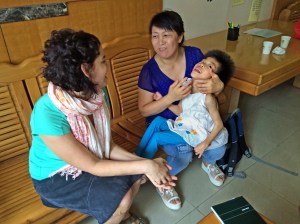
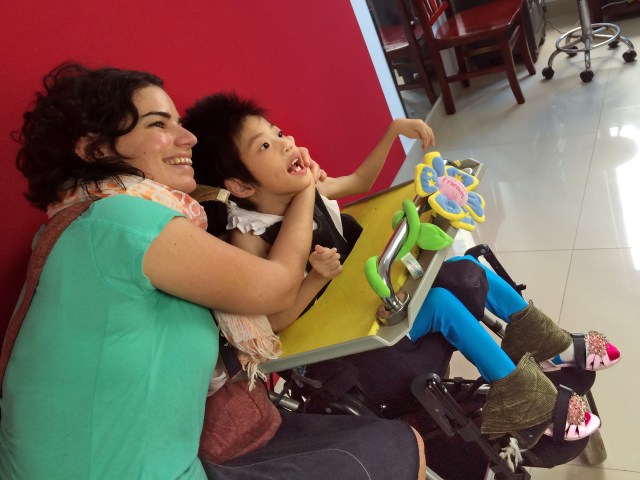
She was dying then, a tiny thing unable to eat, and the Chinese welfare center shipped her to Butterfly House, a hospice founded by Nikki’s good friend Lyn Gould. It was Lyn and another nurse, Katie Hill, as well as volunteers, who saved Zi Zi’s life and named her Annie, who figured out how to feed the little one gone rigid with cerebral palsy. That’s where Nikki met Annie. She lived there for about three years and then, because she was not dying, was transferred to The Lighthouse.

•IMG_9390a

Nikki, Annie and Ayi

My iPhone was burning up with all the photos I shot of the adoption proceedings that took nearly five hours. We spent a long time with Annie’s ayi, a motherly woman who talked to Nikki a lot about Annie’s schedule, food preferences and medications. They got Annie out of her chair, put her on a thick mat on the floor and moved Annie into her favorite sleep positions (propped up on her side) and exercise positions (on her tummy so she can practice lifting her head). I took notes as Nikki asked questions and Wendy, the translator, translated exceptionally well. (We were deeply impressed with Wendy, who is from Changsha, went to university here, majoring in tourism, and used to work for the civil affairs office. Now a mother herself of a 7-year-old boy, Wendy translates for English-speaking adoptive families.)

•IMG_9407a

Ayi demonstrates proper positioning for sleep and rest for Annie.

We moved to a different room to complete the paperwork where Nikki and Annie had a photo taken against a red backdrop (is that by government decree?). The photographer suggested taking Annie out of the wheelchair, which Nikki wisely nixed. “They don’t want her to look disabled,” she said, crouching by the wheelchair, her face near Annie’s.

•IMG_9492a

Posing for the formal family adoption photo.

China always wants to put its best foot forward, to save face, Nikki says. People with physical disabilities are rarely seen in public here.

Wendy took Nikki and Annie to the bank next door to the civil affairs office, where Nikki had to pay her adoption fees, and we got a lot of puzzled looks from patrons, some of it stink-eye, as they say in Hawaii. People clearly had no idea why that odd-looking child strapped into the wheeled contraption was with two foreigners, both of them white women. People with disabilities are hidden here; kids often die young from malnutrition or maltreatment, Nikki says. There is absolutely no future for someone like Annie in China. That’s not to say that people aren’t compassionate here (look at the Chinese nannies, among others), but we westerners who think that people like Annie can have productive, happy lives are odd to most Chinese.

•IMG_9418aCThe bank also took far longer than we are used to because it was not as if you wait in line for a teller. You take a number and sit. And sit and sit and sit, in this case for a good hour. This apparently is not unusual. A kind man let Nikki go in front of him after he watched us interact with Annie in her chair. Even after the wait and Nikki paid her fee, Wendy waited for a receipt for another 15 minutes.
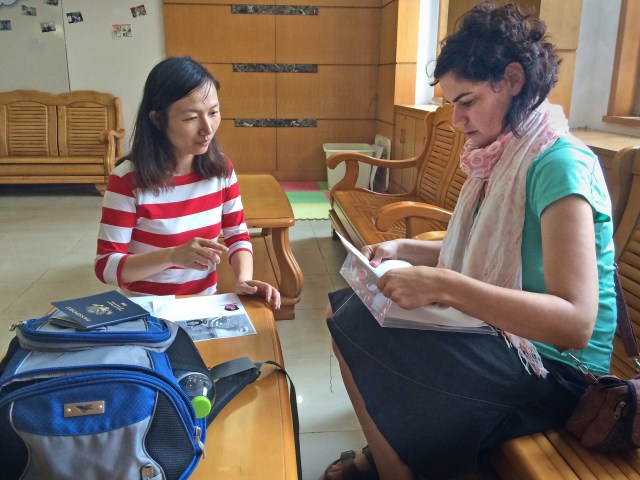
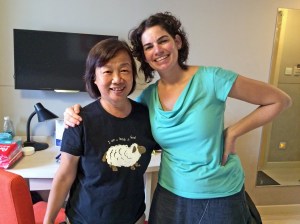
“Everything is difficult in China,” Nikki says. “Nothing is easy. You can’t just run an errand.”

•IMG_9504aC

Playing a game on the iPad.

She also frequently says, “That’s China,” about things that seem odd or don’t make sense to us. Yet she loves China and its people. I asked her on the plane what she loved most about China, and she said, “I have to think about that.” It occurred to me that’s not because Nikki doesn’t feel great affection for the place but because she doesn’t know where to start. And I thought again how amazing she is—to work in this country for a decade (though, to be fair, some of that time was in Hong Kong, which is “not China,” as everyone tells me, and a much easier place to live), spending time with dying kids at Butterfly House, traveling throughout the country with volunteers, doing missionary work, too.

Neither of us had eaten breakfast, and by the time we got back to our hotel with Annie, it was 2:30. Wendy kindly took me to the grocery store down the street to buy diapers (Annie didn’t come with any), bananas, yogurt, milk and apple juice for our new roommate. I could not manage a Chinese market without help (almost no English on packages), so Wendy  hailed a taxi and we rode the five blocks to the market. It was my third Chinese version of Mr. Toad’s Wild Ride, and I heeded Nikki’s advice to close my eyes and not look. (The van driver who took us all to and from the civil service center drove very smoothly and gently, taking into account his special passenger in the wheelchair.)

•IMG_9346aC

Translator Wendy and Nikki go over adoption paperwork before Annie arrives.

I assured Wendy that I could walk back to the hotel by myself—she had to go pick up her son by 4—and made my way up Chegnan Avenue in the thick air feeling very accomplished. Though it wasn’t far and I wasn’t hiking up any major hills, I still had to stop a couple of times under trees that provided only thin shade and rest a bit. I think the only times I’ve sweated this much were when I was in a steam room. On purpose. There is no need to apply daily face moisturizer here.

But I came back to room 601 to find Nikki and Annie and Lucy, who is a teacher at The Lighthouse, Annie’s computer teacher, actually. Lucy is from Singapore but has volunteered for ICC for 20 years. She plans to retire and return home next month. She brought Annie’s medications that had been forgotten earlier. While we were still at the Civil Affairs Center, Wendy had called ICC and told them about the missing medications. Lucy volunteered to bring them to our hotel. She’d been waiting for us in the hotel lobby for two hours.

•IMG_9518a

Lucy and Nikki

Lucy was patiently going over the meds—for sleep, for relaxing the muscles, for seizures—with an overwhelmed Nikki. She and Lucy worked together; they’re old friends, which was just what Nikki needed. Lucy, with her patient voice and long experience with Annie, could reassure Nikki in ways no one else could in that moment. I wanted to hug Lucy.

And Wendy called to say that she’d found an easier way to purchase train tickets for the trip to Ghangzhou on Friday. (There sometimes is an easier way to do things in China, if you know whom to ask.) She found someone who would go buy the tickets for a small fee so we wouldn’t have to get to the train station and do so.

•IMG_9471aC

Getting reacquainted.

We felt delivered by two unexpected angels—Wendy and Lucy—as well as the kind, thoughtful van driver and the young man who went to buy our train tickets. I am reminded of this again and again: Help always arrives when you need it.

And after Annie’s nap and a painstaking round of spooning mashed-up pills into her tight-lipped mouth, Nikki went downstairs and got food from Quan Deli where we’d eaten at the night before. It’s our place, we decided. It’s right here, it’s easy, and it’s good. Never have simple noodles and vegetables, rice and soup tasted so good.

•IMG_9485aC2

Ayi feeds Annie yogurt—a favorite!

So we took turns eating our dinner at the long desk in the room, Nikki stopping to feed Annie bits of noodles and rice and meat, me standing behind Annie in the chair, holding her floppy head more or less straight so she could eat without choking. It is a tiring procedure for all of us, and we greatly admired Annie’s ayi who could shovel yogurt so quickly and efficiently into Annie’s open mouth with one hand holding her chin and the other pressing her forehead back into her wheelchair. We have a lot to learn about how to feed this child, among many other things.

•IMG_9527aCWe are all exhausted by 8 p.m., and Annie is propped on her side in Nikki’s bed, eyes closed, mouth open, her head cradled by my squishy neck pillow decorated with brightly colored Hawaiian words on it. Nikki is very close to sleep, too. Tomorrow I will point out to Nikki one of my favorite Hawaiian words on the pillow—ohana. It means family. Annie, who has had fine ohana of caretakers and volunteers in China, has a new family eagerly awaiting her arrival in California. Nikki has enlarged her family by one, by extraordinary means. She does not see herself this way, but I do—as one of the heroines of this story, scooping up this princess with the fancy shoes to deliver her to a future of possibilities unavailable in her native land.
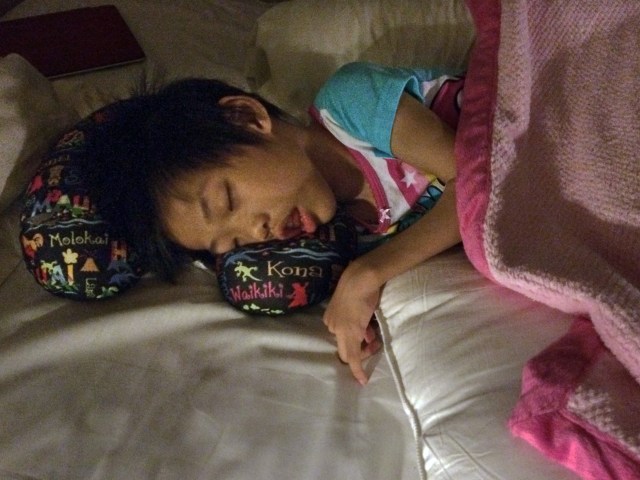
The other heroine, of course, is the strong little girl who survived and thrived against heavy odds with the help and love of many people, both Chinese and foreigners—Long Xin Zi, now Rosie Suzanne (Annie) Cardoza—asleep on her new mama’s bed, dreaming, I hope, very sweet dreams.

•IMG_9530aC


Posted in Bringing Annie Home | 10 Comments